
Chapter 3 — Full chapter
Chapter 3 — Full chapter
Chapter 3 — Stakeholder Communication Strategies for Circular Fashion
Chapter purpose
This chapter reframes circular communication as a multi-stakeholder practice, not only a consumer-facing marketing activity. Learners are introduced to the idea that sustainability and circularity messages must be adapted according to the audience, the decision context, the level of knowledge, the evidence required, and the communication channel.
Rather than asking only “How do we communicate sustainability?”, this chapter asks: who needs to know what, why do they need to know it, and what action or decision should the communication support?
This is especially relevant for designers, SMEs and fashion ecosystem actors, because circularity depends on coordination between many actors: internal teams, suppliers, manufacturers, retailers, customers, repair services, resale platforms, policymakers, investors, educators and local communities.
Introductory Note
Sustainability communication does not begin with a campaign, claim or content plan. It begins with the organisation’s understanding of its impacts, material priorities, stakeholders, responsibilities, and business model. These elements determine what the organisation needs to change, what evidence it must collect, and what it can communicate credibly.
Communication can translate strategy, support stakeholder participation and make progress accountable, but it cannot define material priorities or substitute for operational change. When communication is developed before the underlying strategy, responsibilities and evidence are established, it risks becoming selective, disconnected, or misleading.
This module therefore assumes that communication follows — and remains connected to — materiality assessment, stakeholder engagement, circular business-model decisions, governance and implementation.
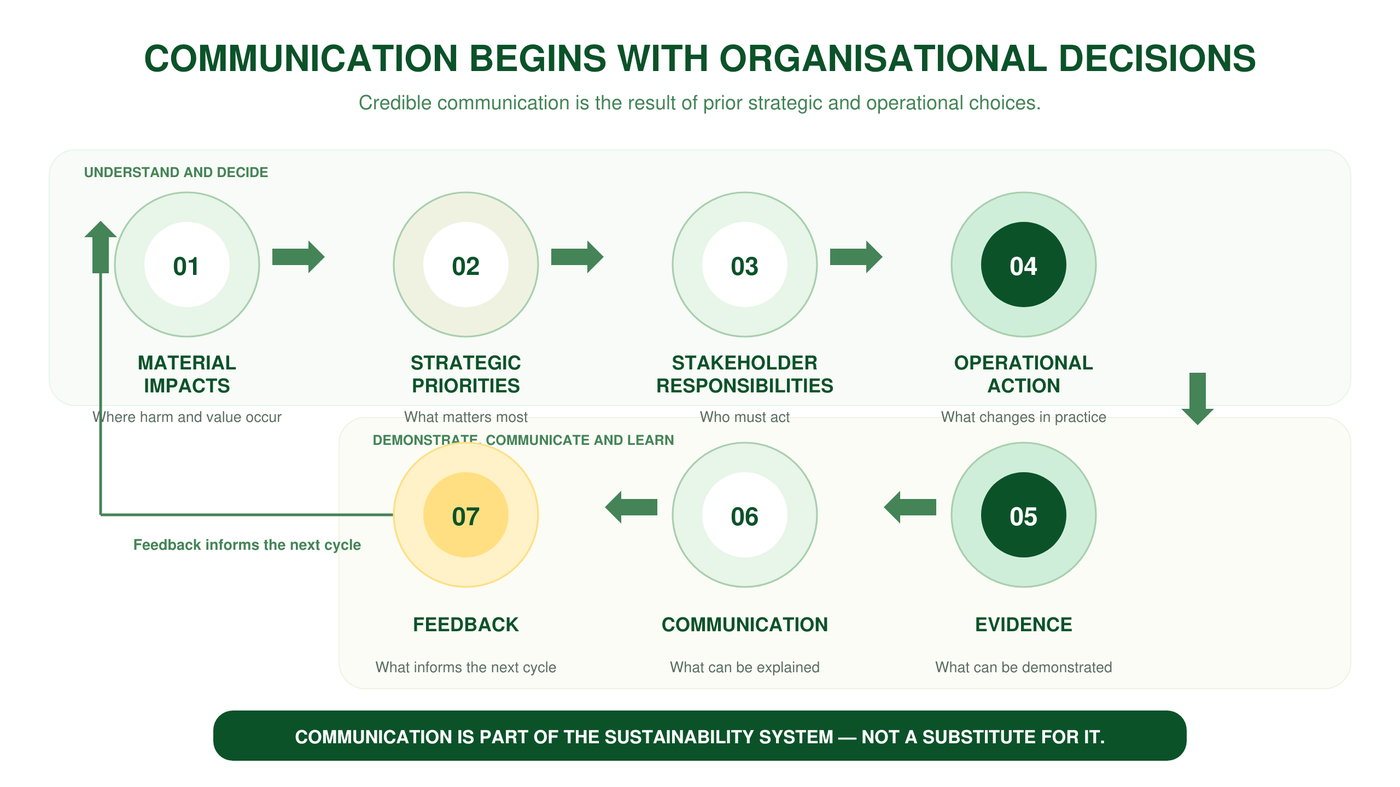
Figure 3.1. Communication Begins with Organisational Decisions. Credible sustainability communication emerges from the identification of material impacts, strategic priorities, stakeholder responsibilities, operational action, and evidence. Communication and feedback form part of this wider sustainability system; they do not replace it.
Chapter overview
Circular communication is not one message repeated across all channels. A product claim, a supplier briefing, a sales deck, a customer care script, a policy brief and a social media campaign may all refer to the same sustainability initiative, but they should not communicate it in the same way.
This chapter introduces stakeholder communication as a practical planning tool. Learners will identify the different people and organizations involved in a circular fashion initiative and define what each stakeholder needs to know, what evidence they need, which tone is appropriate, and which channel is most effective.
The chapter also shows how communication gaps can create confusion, inconsistency, greenwashing risk, and missed opportunities for collaboration.
Time: ≈ 2.5–4 h · reading & activities (2 h) · assignment (1–3 h) · quiz (10 min).
Introduction — Communication beyond the consumer
Fashion communication is often associated with consumer-facing activities: campaigns, product pages, labels, social media, newsletters, store displays, or press materials. These are important, but they are only one part of the communication ecosystem.
Circular fashion requires a broader communication approach. A designer may need clear circular design criteria. A sourcing team may need material specifications. A supplier may need technical requirements. A salesperson may need safe language for customer conversations. A retailer may need substantiated claims and compliance information. A policymaker may need evidence of social, environmental, or regional relevance. A funder or investor may need to understand risk, scalability, and impact.
This means communication should not be treated as a final layer added after the product or service is developed. It should be part of the circular strategy itself. Good communication helps align internal teams, support responsible claims, build trust with external audiences, and enable circular actions such as care, repair, reuse, take-back, rental, resale, or recycling.
For SMEs, this is especially important because teams are often small and roles overlap. The same person may be responsible for product development, marketing, customer relations, and partnerships. A simple stakeholder communication framework can reduce mistakes and make communication more coherent.
The key idea of this section is that communication is not only about what a brand says externally. It is also about how information moves inside and around the organization so that circularity can actually be implemented.
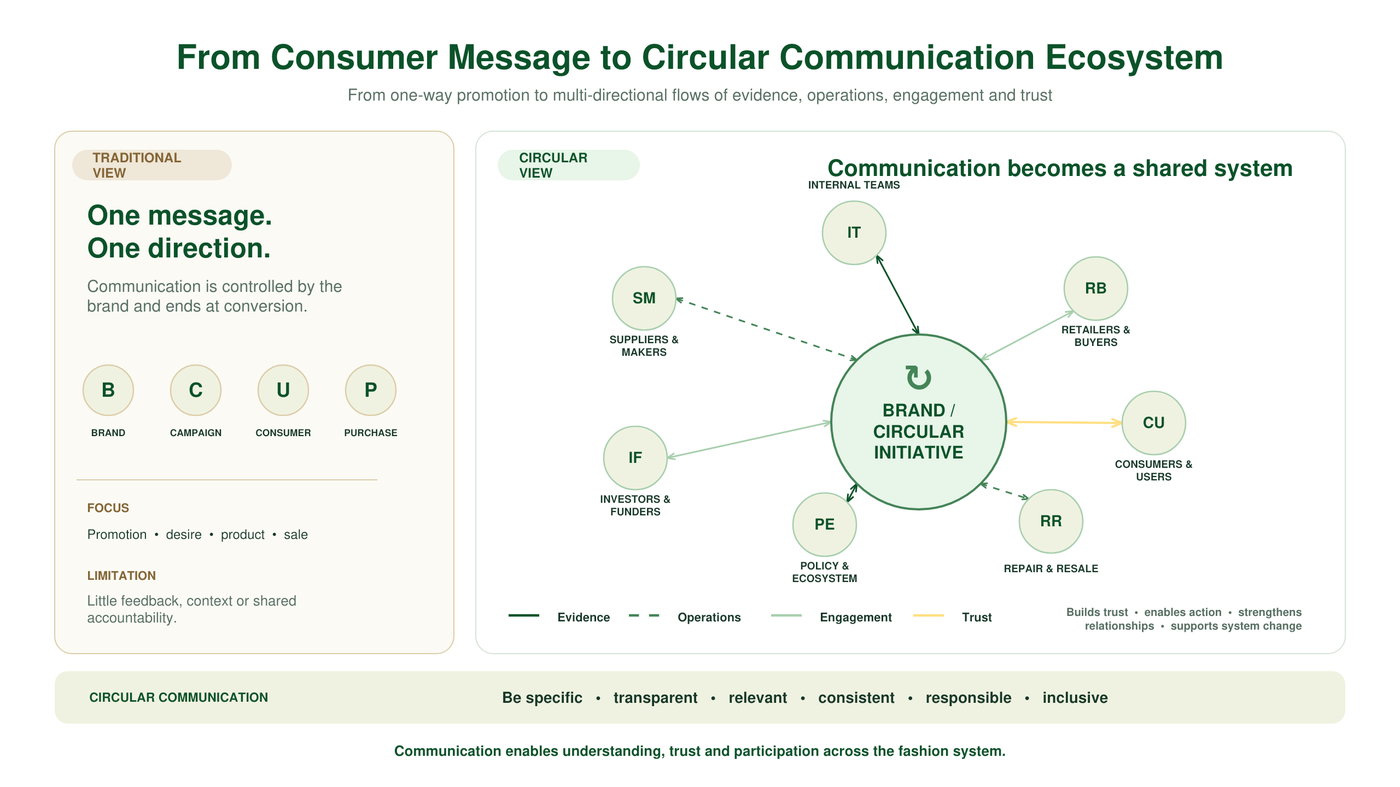
Figure 3.2. Circular fashion communication moves beyond one-way promotion. It requires a shared flow of evidence, operational information, engagement, and trust between multiple stakeholders. The goal is not only to communicate a product, but to make circular action understandable, credible and possible.
In this chapter:
- 3.1 Sustainability communication ecosystems
- 3.2 Stakeholder information needs and evidence levels
- 3.3 Defining the Communication Objective
- 3.4 The Stakeholder Information and Communication Matrix
- 3.5 Common risks in stakeholder communication