
Chapter 2 — full chapter
Chapter 2 — full chapter
2.5.1 Case Example — Materra: Regenerative Cotton as a Connected System
Materra designs and implements regenerative cotton programmes with farming communities in India. Its model connects agronomic support, farmer training, climate-resilient practices, fibre sourcing and impact data, helping brands engage more directly with the conditions in which their cotton is grown.
The programmes are adapted to local farming contexts rather than imposing a single universal checklist. Depending on local needs, practices may include reducing synthetic inputs, applying integrated pest management, using crop residues as mulch, improving water retention, supporting soil biodiversity and keeping nutrients circulating within the farm system.
Materra also emphasises that farmers must be treated as partners in the transition. Training, financial incentives, adequate compensation and risk-sharing are essential because farmers carry much of the practical and financial risk associated with changing agricultural practices. Traceability and farm-level data are used to connect fibre sourcing with information about programme implementation and outcomes.
The case demonstrates that regenerative design is not simply the selection of a preferred cotton fibre. It involves designing the relationships, support systems, information flows and purchasing commitments that enable landscapes and farming communities to become more resilient over time. Materra states that its programmes have expanded from 21 participating farmers in 2022 to approximately 5,000 farmers across three Indian states. Materra — Regenerative Cotton and Materra — Impact
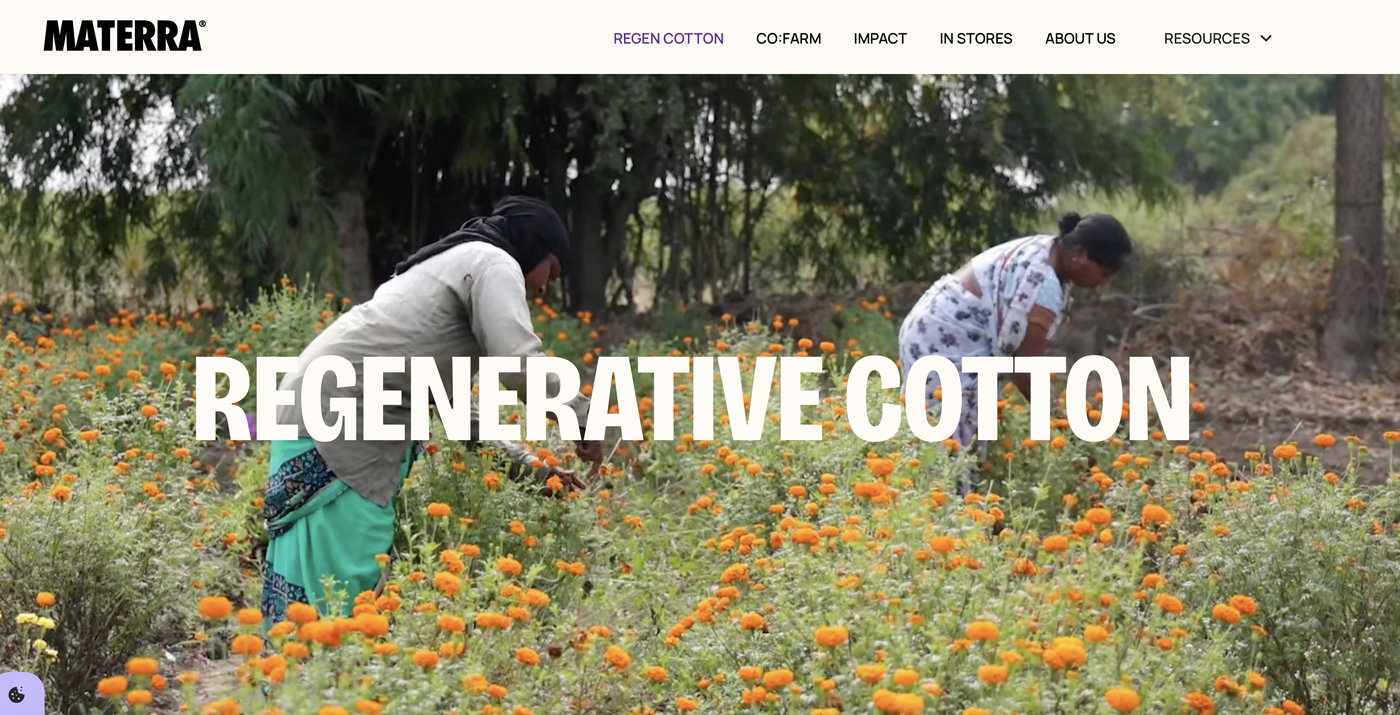
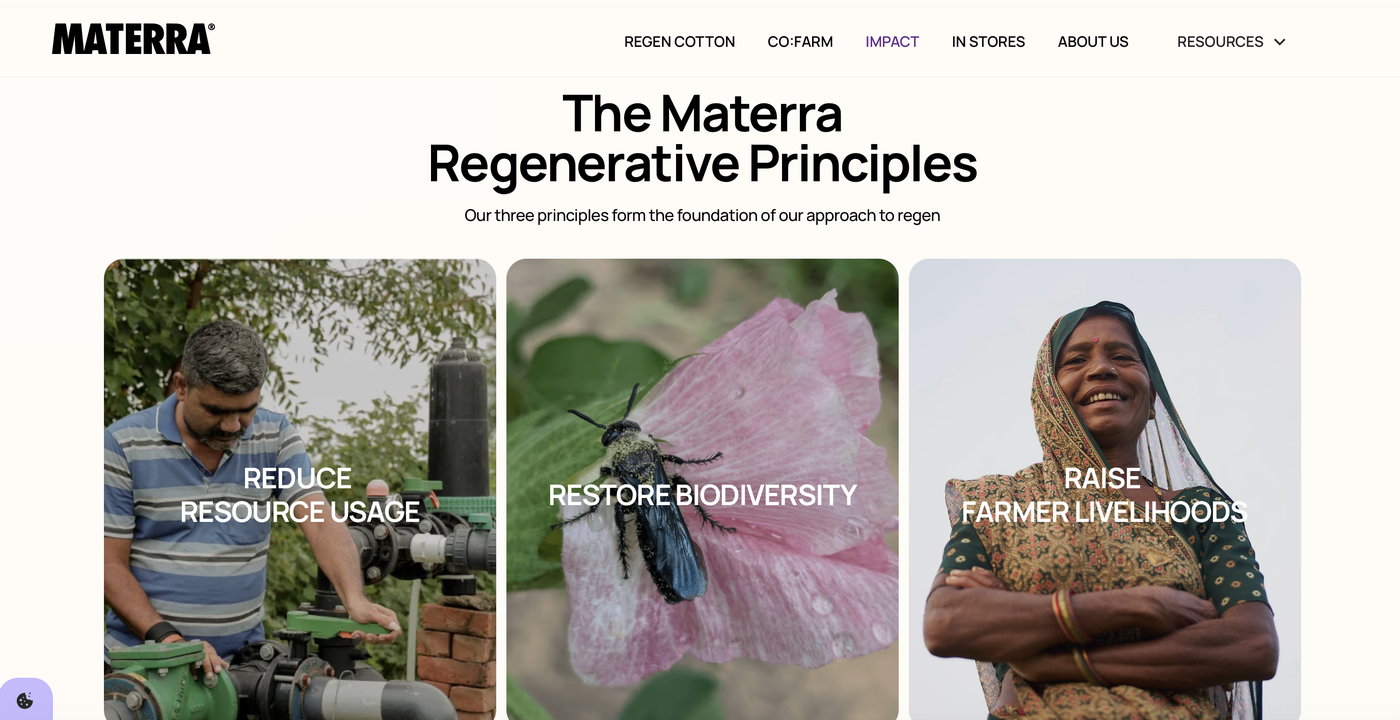
Figure 20. Materra connects regenerative cotton cultivation with farmer support, traceability, impact data and brand sourcing. The case illustrates regeneration as a long-term system of ecological practices, shared responsibility and supply-chain relationships—not simply a characteristic of the finished fibre.