Chapter 2 — full chapter
| Site: | FashionKIC Learning Platform |
| Course: | Circular Design Strategies |
| Book: | Chapter 2 — full chapter |
| Printed by: | Guest user |
| Date: | Sunday, 1 November 2026, 3:20 AM |
Table of contents
- Chapter 2 — Design Approaches for Circular and Regenerative Innovation
- 2.1 Ecodesign: Reducing Impacts Across the Lifecycle
- 2.2 Cradle to Cradle: Designing Safe Material Cycles
- 2.3 Biomimicry: Learning from Living Systems
- 2.4 Biodesign: Designing with Living Organisms
- 2.5 Regenerative Design: Restoring Ecosystems and Communities
Chapter 2 — Design Approaches for Circular and Regenerative Innovation
This chapter introduces the design approaches that fashion uses to move beyond linear product development: ecodesign, Cradle to Cradle, biomimicry, biodesign and regenerative design. Each approach asks a different question about materials, processes and systems, and each is presented here with a case example and a critical assessment.
The approaches overlap in some areas but they are not interchangeable, and none of them guarantees a circular outcome on its own. A nature-inspired garment may still use materials that cannot circulate safely, and a bio-based material may require harmful processing or inappropriate disposal conditions. Each approach is therefore treated as a design choice that has to be tested against evidence, functional performance and the lifecycle consequences it produces.
Another way of moving beyond linear design is to draw on approaches that rethink how products relate to materials, production processes, living systems and the communities on which fashion depends.
Ecodesign, Cradle to Cradle, biomimicry, biodesign and regenerative design contribute different perspectives to circular innovation. They overlap in some areas, but they are not interchangeable. Ecodesign seeks to reduce environmental impacts; Cradle to Cradle plans safe material cycles; biomimicry learns from living systems; biodesign works with organisms or biological processes; and regenerative design seeks to restore and strengthen ecological and social systems.
None of these approaches automatically guarantees a circular or sustainable outcome. A nature-inspired garment may still use materials that cannot circulate safely, while a bio-based material may require harmful processing or inappropriate disposal conditions. Designers must therefore understand what each approach contributes, where its limits lie and how its environmental implications can be evaluated.
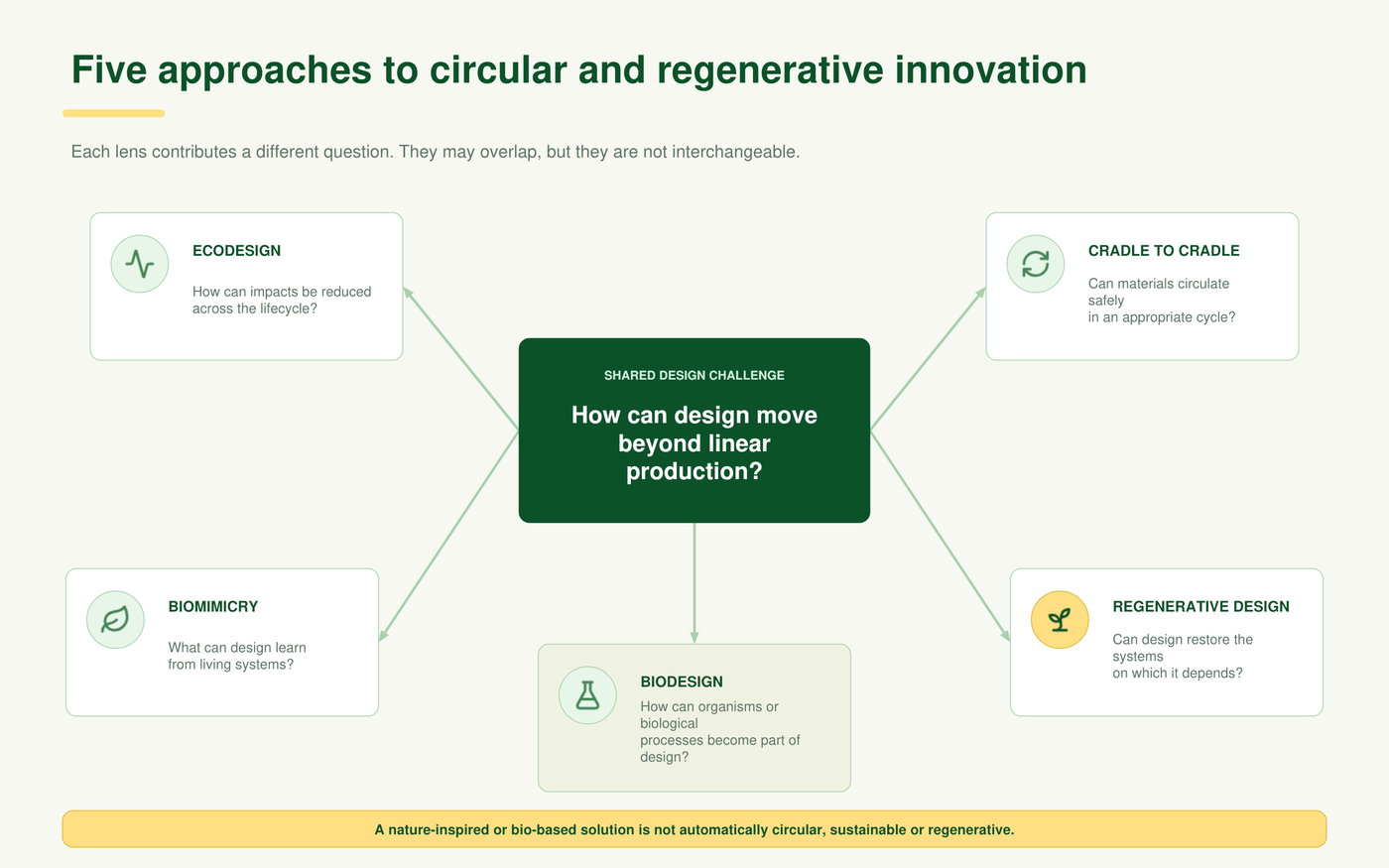
Figure 13. Five approaches supporting circular and regenerative innovation. Ecodesign reduces lifecycle impacts; Cradle to Cradle plans safe material cycles; biomimicry learns from living systems; biodesign works with organisms and biological processes; and regenerative design seeks positive ecological and social outcomes.
Biodesign and regenerative design can generate new materials, processes and relationships, but their environmental benefits should not be assumed. A biologically produced material may still require intensive processing; a regenerative approach may improve impacts at one stage while shifting them elsewhere; and an innovative material may remain difficult to repair, separate or recycle. These trade-offs reinforce the need to evaluate design choices across the full product life cycle rather than judging them by a single attribute or claim.
Life cycle thinking and Life Cycle Assessment provide methods for examining these wider consequences, comparing alternatives and identifying where a solution may reduce one impact while creating another.
In this chapter:
- 2.1 Ecodesign: Reducing Impacts Across the Lifecycle
- 2.2 Cradle to Cradle: Designing Safe Material Cycles
- 2.3 Biomimicry: Learning from Living Systems
- 2.4 Biodesign: Designing with Living Organisms
- 2.5 Regenerative Design: Restoring Ecosystems and Communities
2.1 Ecodesign: Reducing Impacts Across the Lifecycle
Ecodesign integrates environmental considerations into product development. Instead of evaluating impacts only after a product has been created, it considers them alongside function, quality, cost, aesthetics and technical performance from the beginning of the design process.
In fashion, ecodesign can influence fibre selection, material efficiency, dyeing and finishing, production waste, durability, care requirements, packaging, distribution and end-of-life options. Its purpose is not simply to replace one material with another, but to identify where design decisions can reduce impacts across the product lifecycle.
Ecodesign and circular design are closely related but not identical. Ecodesign may improve a linear product by reducing water, energy, waste or chemical use. Circular design additionally asks how products and materials can remain in use, retain value and support future cycles. A lower-impact product is therefore not necessarily circular, just as a circular strategy does not automatically reduce every environmental impact.
Design prompt
Are we reducing impacts within the current product system, or redesigning the system so that products and materials can circulate?
2.2 Cradle to Cradle: Designing Safe Material Cycles
Cradle to Cradle challenges the assumption that materials inevitably become waste. Products should instead be designed so that their components can circulate as nutrients within either biological or technical systems.
This requires more than designing for recyclability. Designers must understand a product’s complete material composition, including dyes, finishes, coatings, adhesives, threads, prints and trims. They must also identify a realistic pathway through which each material can be collected, separated and processed after use.
The framework therefore connects material health with circularity. A material cannot circulate safely if it contains substances that harm people or ecosystems, and a theoretically recyclable material has limited circular value if no suitable collection and processing system exists. The current Cradle to Cradle Certified standard evaluates products across Material Health, Product Circularity, Clean Air and Climate Protection, Water and Soil Stewardship, and Social Fairness. Cradle to Cradle Products Innovation Institute
2.2.1 Biological and Technical Nutrients
Biological nutrients are materials designed to return safely to biological systems through an appropriate pathway, such as controlled composting, biodegradation or nutrient recovery. Being natural or bio-based is not sufficient. Cotton, wool or cellulose-based fabric cannot be considered a safe biological nutrient if its dyes, coatings, finishes, synthetic threads or trims introduce harmful substances or prevent biological processing.
Technical nutrients are materials intended to remain within industrial systems through maintenance, reuse, repair, refurbishment, remanufacturing or recycling. Polyester, nylon, metals and other technical materials are not automatically incompatible with circularity. However, their composition and construction must allow them to retain value and be identified, separated and recovered.
Products may contain both biological and technical nutrients, but these should be compatible or easily separable. Blended fibres, elastane, laminates, coatings and permanent adhesives can contaminate both pathways. The intended cycle must therefore be considered when specifying the entire material system—not only the main fabric. Cradle to Cradle — Circular product design
Design prompt
Is the product intended for a biological cycle, a technical cycle or a clearly separable combination of both?
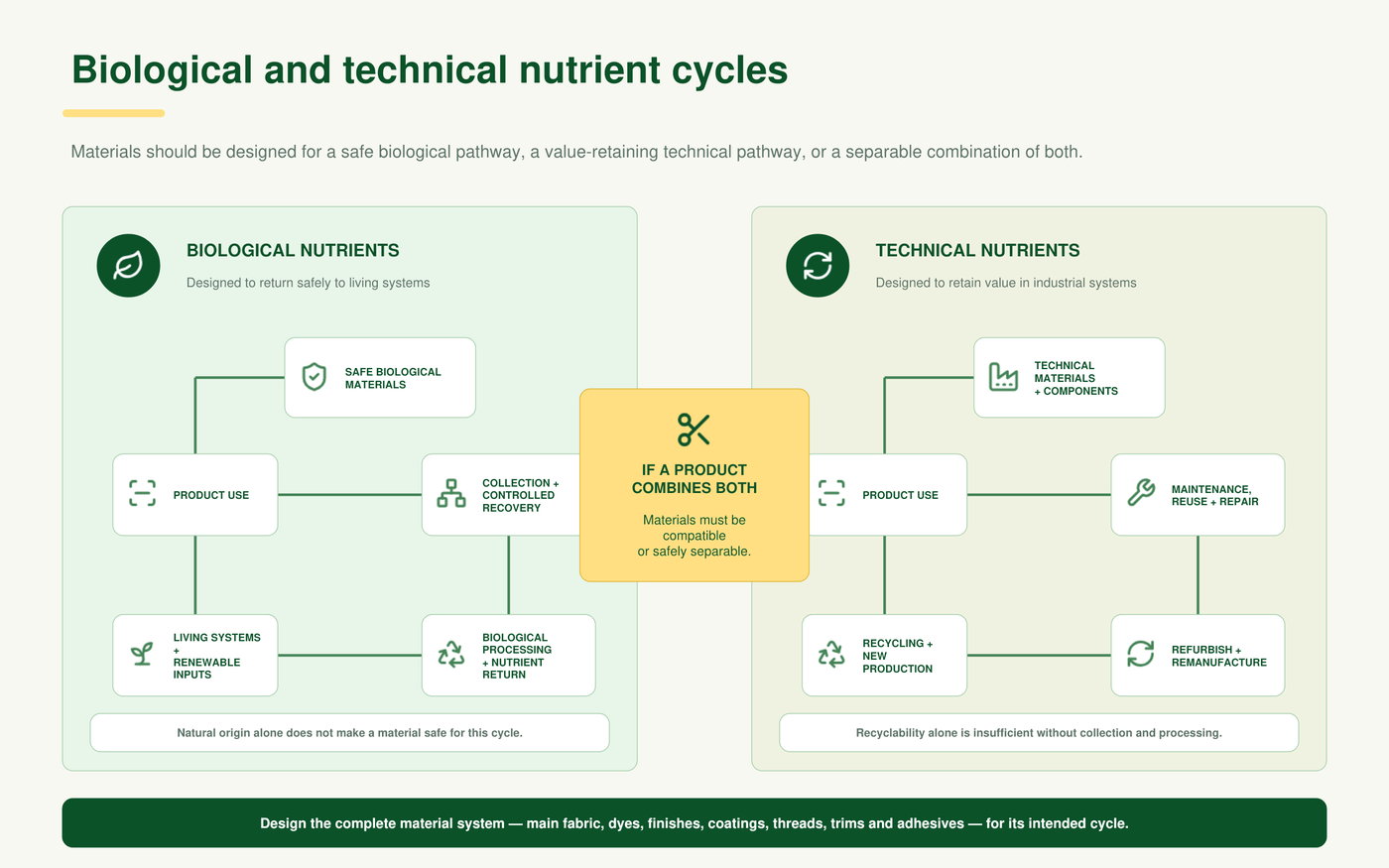
Figure 14. Biological and technical nutrient cycles. Biological nutrients are designed to return safely to living systems through an appropriate recovery pathway, while technical nutrients retain value through reuse, repair, refurbishment, remanufacturing and recycling. Products combining both require compatible or safely separable materials.
2.3 Biomimicry: Learning from Living Systems
Biomimicry studies how living organisms and ecosystems perform functions and translates those strategies into design. It can investigate how nature creates colour, regulates temperature, constructs lightweight structures, adapts to changing conditions, uses local resources or circulates materials.
This differs from simply reproducing the appearance of nature. A fabric printed with leaves is nature-inspired, but it is not necessarily biomimetic. Biomimicry focuses on understanding and emulating the function, process or system behind a biological strategy. Biomimicry Institute — Biomimicry Toolbox
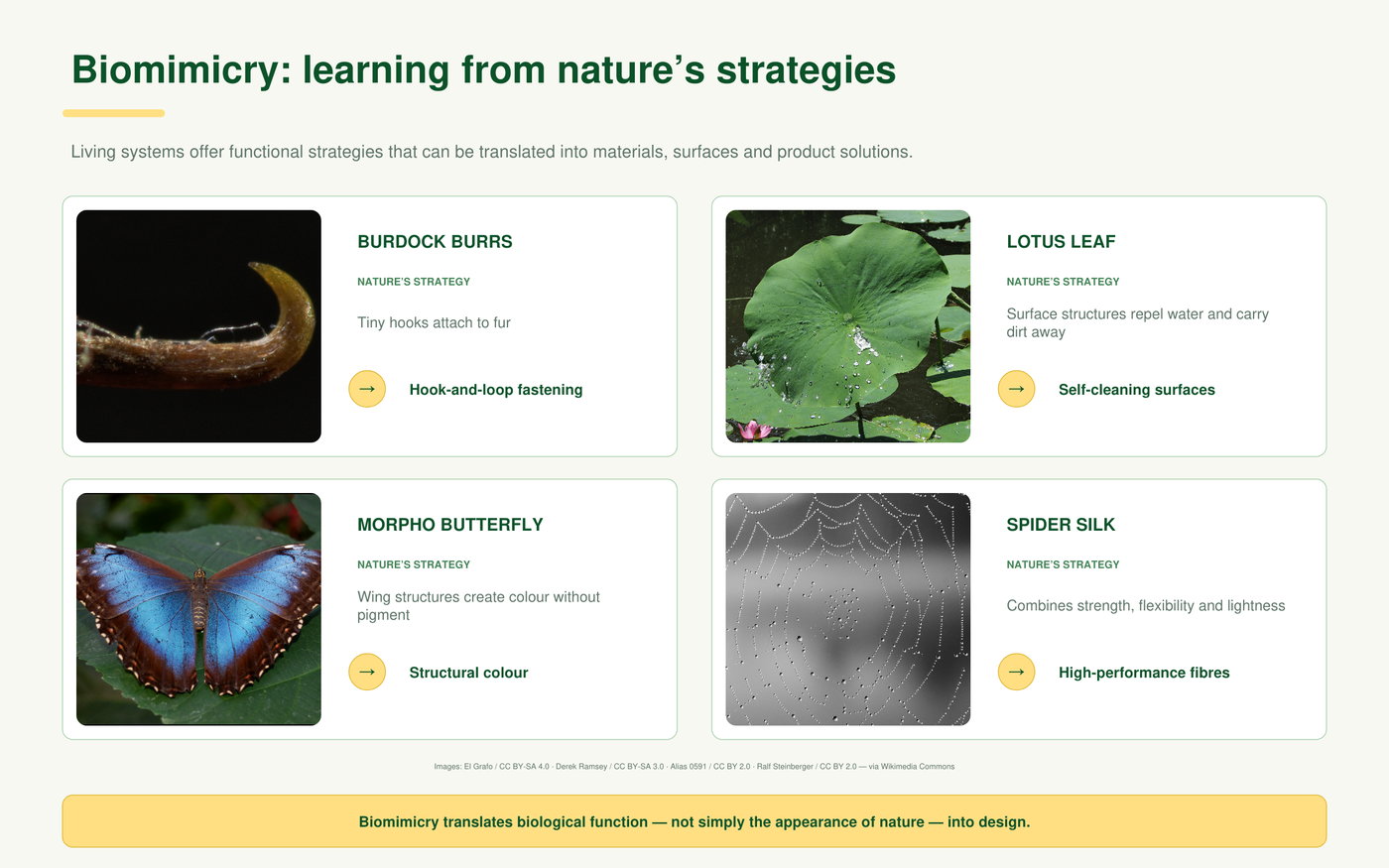
Figure 15. Biomimicry translates strategies found in living systems into design solutions. Burdock burrs inspired hook-and-loop fastening; lotus leaves inform self-cleaning surfaces; butterfly wings demonstrate structural colour; and spider silk inspires strong, lightweight and flexible fibres. Biological inspiration does not automatically make a product sustainable: its materials, production impacts and future circulation must still be evaluated.
In fashion, biomimicry can influence silhouette, surface, structure, movement, material development and manufacturing. However, biological inspiration is not evidence of circularity. The resulting product must still be assessed in relation to material safety, durability, production impacts and future recovery.
2.3.1 Case Example — Iris van Herpen: Nature-Inspired Design, Biomimicry or Biodesign?
“Through biomimicry I look at the forces behind the forms in nature, these patterns and natural cycles are my guide to explore new forms. I continue to ask, can emotions be materialised? I believe it's possible to merge, stir and sculpt our senses through a sensitive balance of textures, shapes and colors.”
- Iris van Herpen
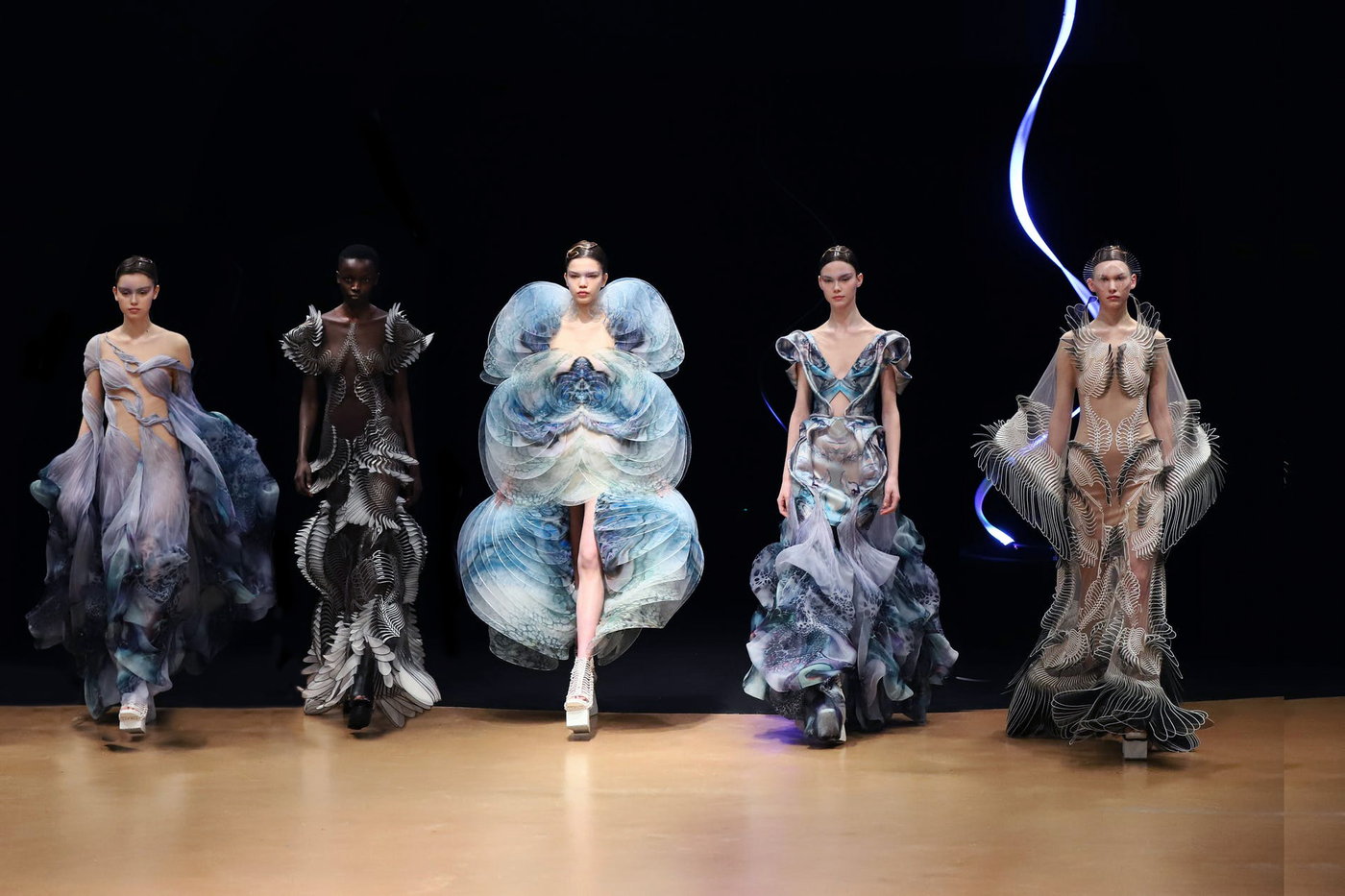
Iris van Herpen’s work demonstrates why the boundaries between nature-inspired design, biomimicry and biodesign are not always clear. Her collections frequently translate marine organisms, cellular structures, neurological networks and invisible natural forces into sculptural silhouettes, surfaces and movement. In many garments, however, nature’s primary contribution is formal and aesthetic: it influences how the piece looks, moves or is constructed, rather than providing a biological strategy that performs a particular function.
This differs from functional biomimicry. A textile inspired by the microscopic structure of a Morpho butterfly wing emulates a biological mechanism to produce colour without pigment. A garment that resembles a marine organism may be visually powerful, but resemblance alone does not make it biomimetic or environmentally beneficial.
Van Herpen’s Living Look, created for the 2025 Sympoiesis collection in collaboration with biodesigner Chris Bellamy, moves the practice into a different territory. The translucent garment was inhabited by approximately 125 million bioluminescent Pyrocystis lunula algae, which emitted light in response to movement and touch. The algae were grown in seawater, encapsulated in a specialised nutrient gel and maintained under carefully controlled humidity, temperature and circadian conditions. The garment therefore had to be cultivated and cared for rather than simply manufactured. Iris van Herpen — The Living Look
This piece is better understood as biodesign than conventional biomimicry because living organisms become active participants in the garment. It also challenges familiar ideas of materials, authorship, care and product lifecycles. Yet experimentation with living systems does not automatically make a garment circular or regenerative: its energy requirements, supporting materials, lifespan, scalability and end-of-life conditions must still be examined.
Key distinction: Nature-inspired design interprets nature’s appearance; biomimicry emulates how nature performs a function; biodesign works directly with organisms or biological processes.

https://vimeo.com/1176497243?fl=pl&fe=vl

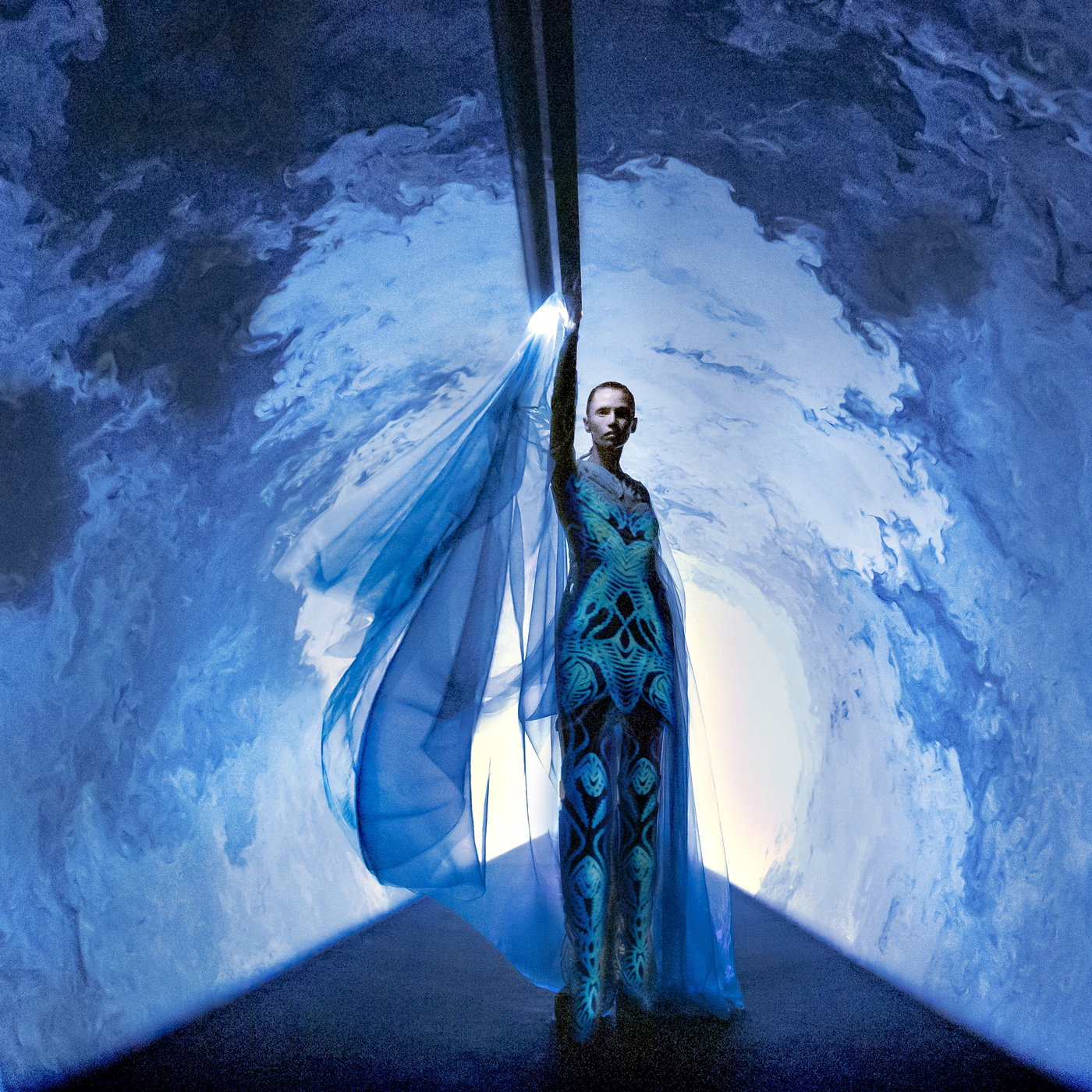
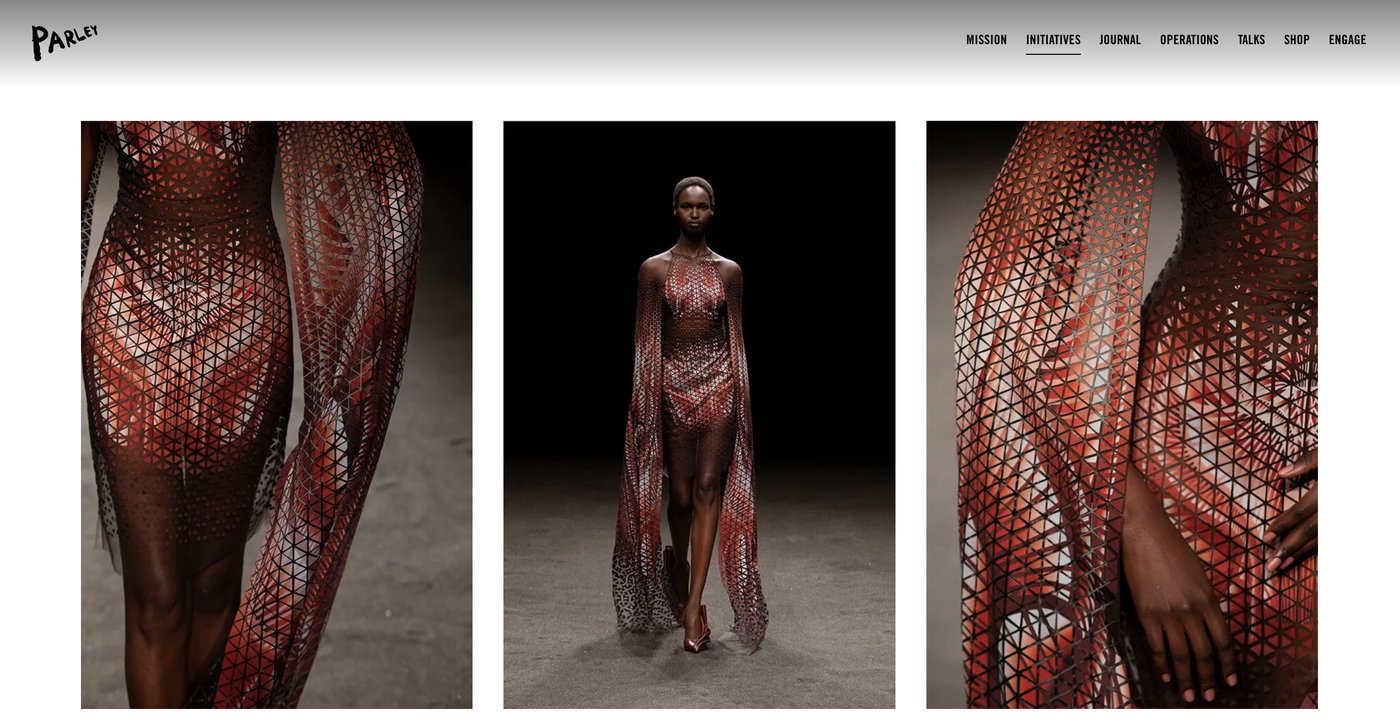
Figure 16. Different relationships between nature and design in Iris van Herpen’s work. Sensory Seas (2020) translates marine organisms and neurological structures primarily into form, texture and movement, illustrating nature-inspired design. The Holobiont dress, created with Parley Ocean Plastic®, combines biological inspiration with recycled-material innovation, although the environmental contribution comes from the material rather than from biomimicry itself. The Living Look from Sympoiesis (2025), developed with biodesigner Chris Bellamy and inhabited by bioluminescent algae, represents biodesign, as living organisms actively participate in the garment. Together, the examples show why nature-inspired aesthetics, functional biomimicry, sustainable material innovation, and biodesign should not be treated as interchangeable concepts.
2.3.2 Reflection prompts
- Where does visual inspiration end and functional biomimicry begin?
- Does working with a living organism necessarily produce an environmental benefit?
- How does a living garment change the designer’s responsibility for care, maintenance and end of life?
2.4 Biodesign: Designing with Living Organisms
As the Living Look illustrates, design enters a different territory when organisms or biological processes become active participants in the creation or functioning of a product. This is the field of biodesign.
While biomimicry learns from living systems, biodesign incorporates living organisms, cells, enzymes or biological processes into the development of materials and products.
This can include growing materials from mycelium, producing pigments through bacteria, developing cellulose through microbial fermentation or using biological processes to treat textile waste. The designer’s role may expand from selecting finished materials to creating the conditions in which materials grow, transform or decompose.
Biodesign can also alter conventional fashion processes. When a material is grown directly into a shape, produces its own colour or responds to environmental conditions, it may no longer need to follow the sequence of fibre production, spinning, weaving, cutting, sewing and finishing. However, biological origin does not remove the need to assess durability, coatings, additives, energy use, scale and appropriate end-of-life conditions.
2.4.1 Case Example — Faber Futures: Project Coelicolor
Faber Futures’ Project Coelicolor, developed by Natsai Audrey Chieza in collaboration with Professor John Ward at University College London, investigates how the soil-dwelling bacterium Streptomyces coelicolor can produce colour for textiles.
Rather than manufacturing a conventional dye and applying it to finished fabric, the process cultivates pigment-producing bacteria in direct relationship with protein fibres such as silk. By adjusting growth conditions and developing specialised tools and protocols, the designers can influence colour, pattern and placement.
The project’s Assemblage experiments show how the biological process can also influence garment construction. Individual pattern pieces are dyed before assembly, allowing bacterial growth to become part of the planning of the garment rather than merely a decorative finishing stage.
Faber Futures reports that the method can produce colourfast results without conventional dyeing chemicals and with substantially reduced water use. The project demonstrates how organisms can become collaborators in design, while also revealing new requirements involving laboratory knowledge, incubation time, consistency and scale. Faber Futures — Project Coelicolor and Assemblage 002
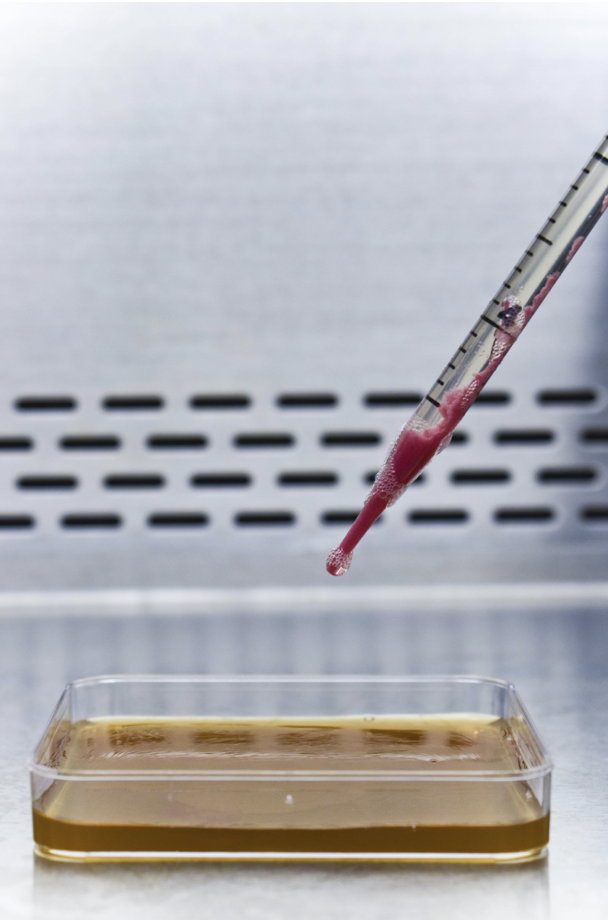
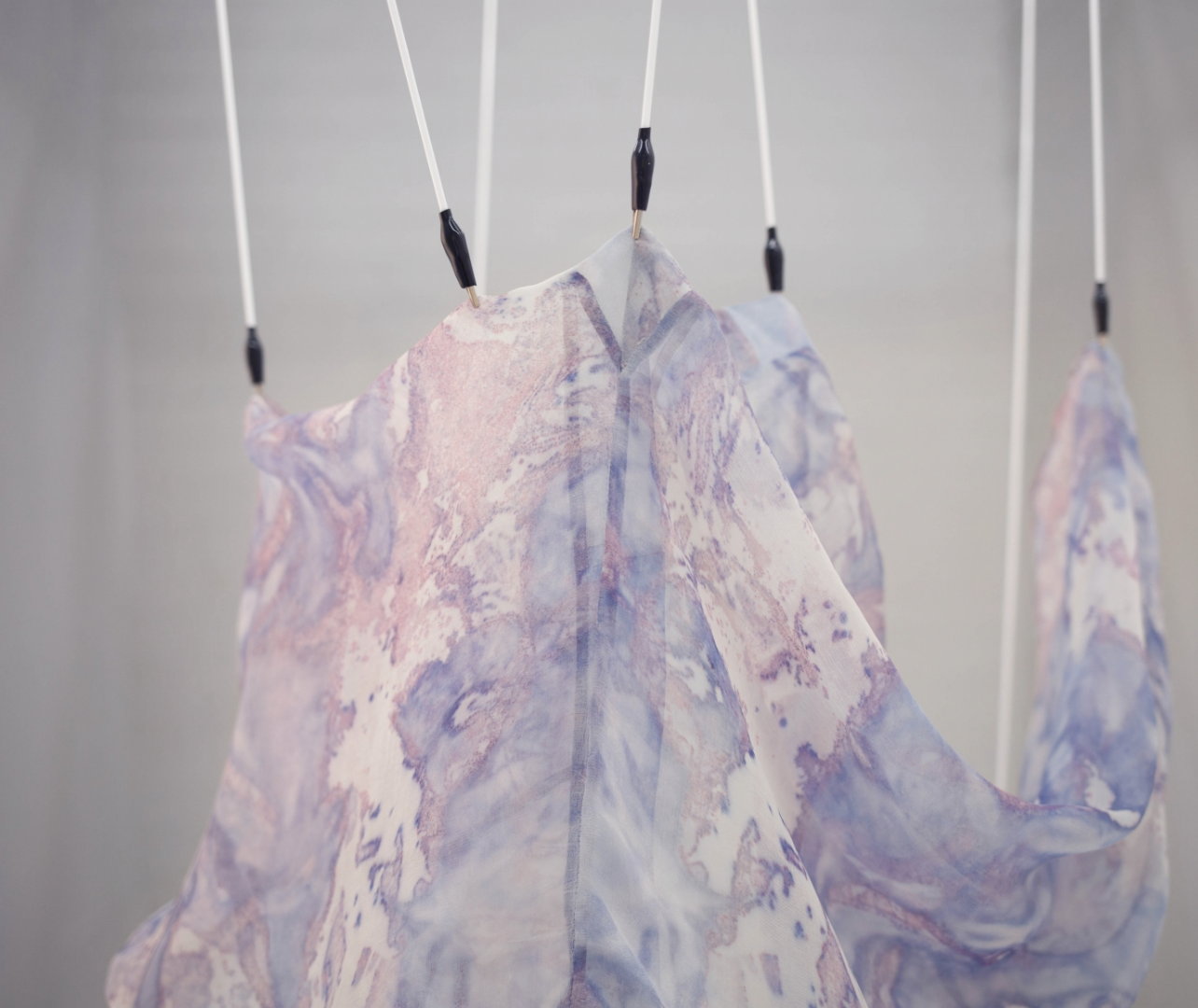
Figure 17. In Project Coelicolor, pigment-producing bacteria are cultivated in direct relationship with silk. Biological growth influences colour, pattern, process and garment construction, demonstrating how microorganisms can become active participants in textile design.
2.4.2 Case Example — Modern Synthesis: Microbial Weaving
Modern Synthesis develops materials through a process it calls microbial weaving. Bacteria fed with sugars produce nanocellulose — a fine and strong form of cellulose —directly onto a natural textile structure. By controlling the conditions and pattern of bacterial growth, the process can generate lightweight composite materials with different shapes, thicknesses, textures and performance characteristics.
The technology emerged from Jen Keane’s This Is Grown project, in which bacterial nanocellulose was grown to form the upper of a shoe. Modern Synthesis has since collaborated with GANNI on an experimental version of its Bou Bag and contributed bacterial nanocellulose to the Korvaa concept shoe.
The case demonstrates how biodesign can move beyond replacing one conventional material with another. Biological growth becomes part of fabrication, while designers work with microorganisms, textile structures and growth conditions as interconnected design variables. As the technology remains at an early stage, its scalability, complete material composition, durability and end-of-life pathways must continue to be assessed.
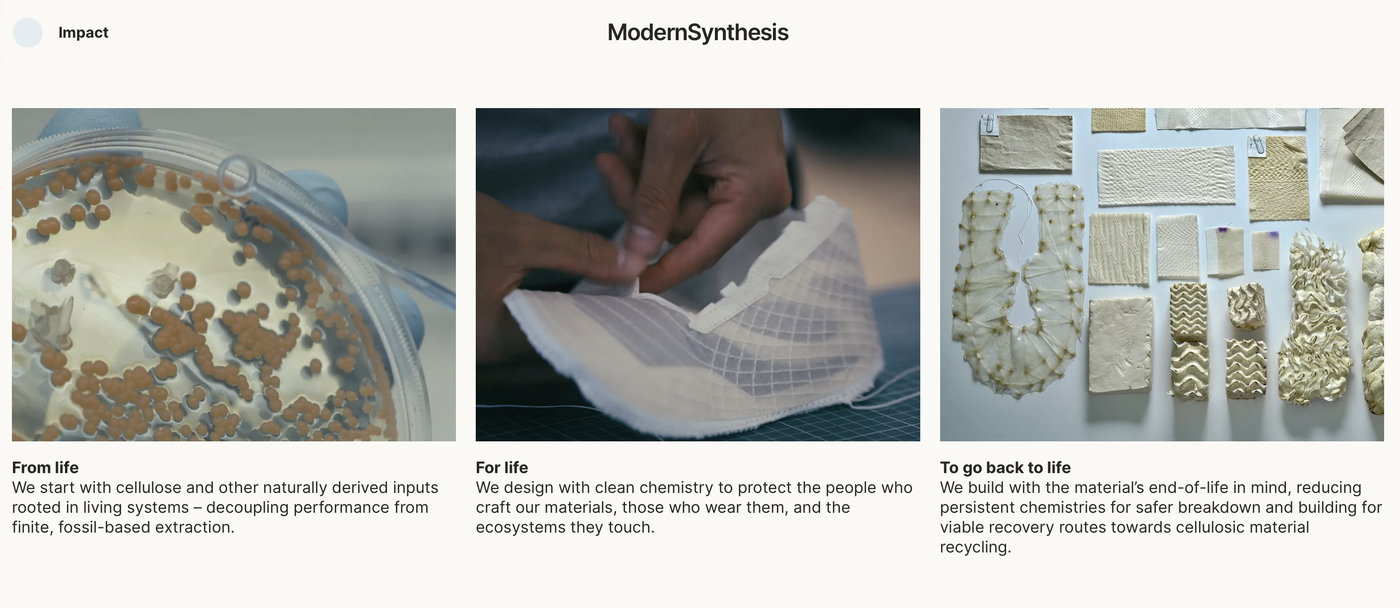
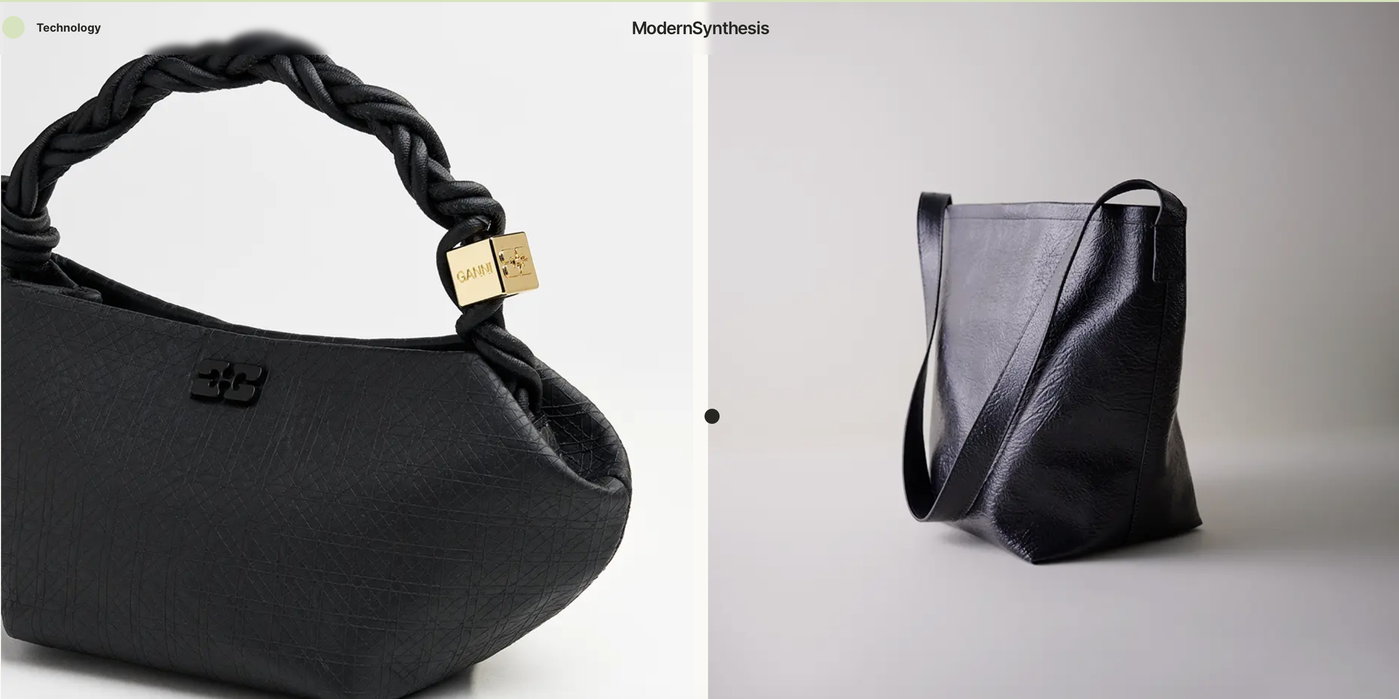
Figure 18. Modern Synthesis uses bacteria to grow nanocellulose directly onto textile structures. Its microbial weaving process illustrates how biological growth can influence material composition, surface, form and manufacturing, rather than simply producing a substitute for an existing fabric.
2.5 Regenerative Design: Restoring Ecosystems and Communities
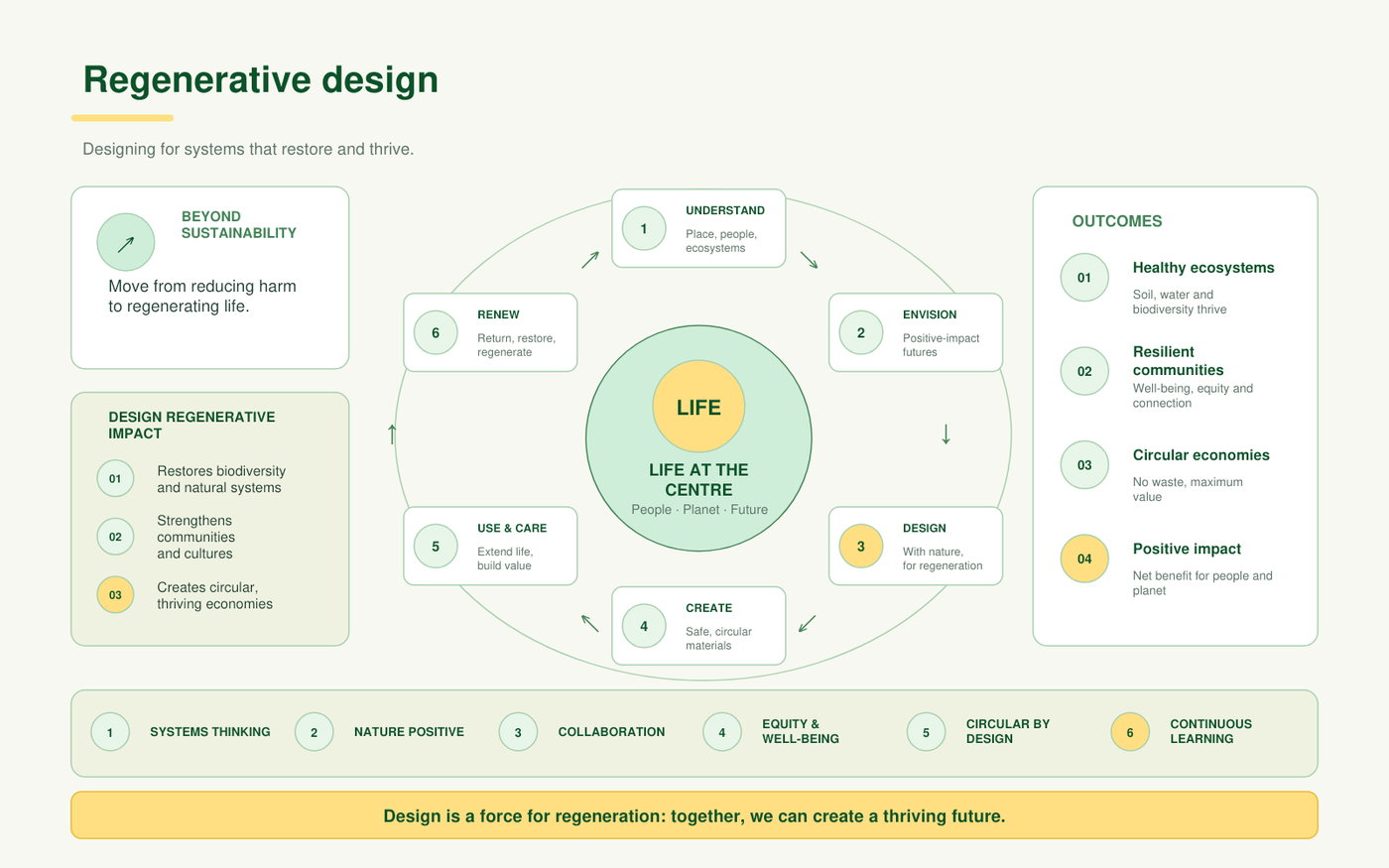
Figure 19: Regenerative design goes beyond reducing harm. It asks whether fashion products, materials, and business models can support healthier ecosystems, communities, and resource cycles.
Regenerative design broadens the focus from reducing product impacts to strengthening the ecological and social systems that make production possible.
In fashion, this may involve restoring soil health, increasing biodiversity, improving water cycles, building regional skills and infrastructure, strengthening farming communities or creating fairer and more resilient local economies. Regeneration is therefore not a property of a finished fibre or garment alone. It depends on relationships between landscapes, people, production practices and long-term governance.
A garment made with a fibre described as “regenerative” is not automatically a regenerative product. Designers and brands must understand where the material comes from, what farming or production practices are used, how outcomes are measured and whether value is shared across the system.
Regenerative design asks a more ambitious question than impact reduction: can the activity help improve the systems from which it draws resources?
2.5.1 Case Example — Materra: Regenerative Cotton as a Connected System
Materra designs and implements regenerative cotton programmes with farming communities in India. Its model connects agronomic support, farmer training, climate-resilient practices, fibre sourcing and impact data, helping brands engage more directly with the conditions in which their cotton is grown.
The programmes are adapted to local farming contexts rather than imposing a single universal checklist. Depending on local needs, practices may include reducing synthetic inputs, applying integrated pest management, using crop residues as mulch, improving water retention, supporting soil biodiversity and keeping nutrients circulating within the farm system.
Materra also emphasises that farmers must be treated as partners in the transition. Training, financial incentives, adequate compensation and risk-sharing are essential because farmers carry much of the practical and financial risk associated with changing agricultural practices. Traceability and farm-level data are used to connect fibre sourcing with information about programme implementation and outcomes.
The case demonstrates that regenerative design is not simply the selection of a preferred cotton fibre. It involves designing the relationships, support systems, information flows and purchasing commitments that enable landscapes and farming communities to become more resilient over time. Materra states that its programmes have expanded from 21 participating farmers in 2022 to approximately 5,000 farmers across three Indian states. Materra — Regenerative Cotton and Materra — Impact
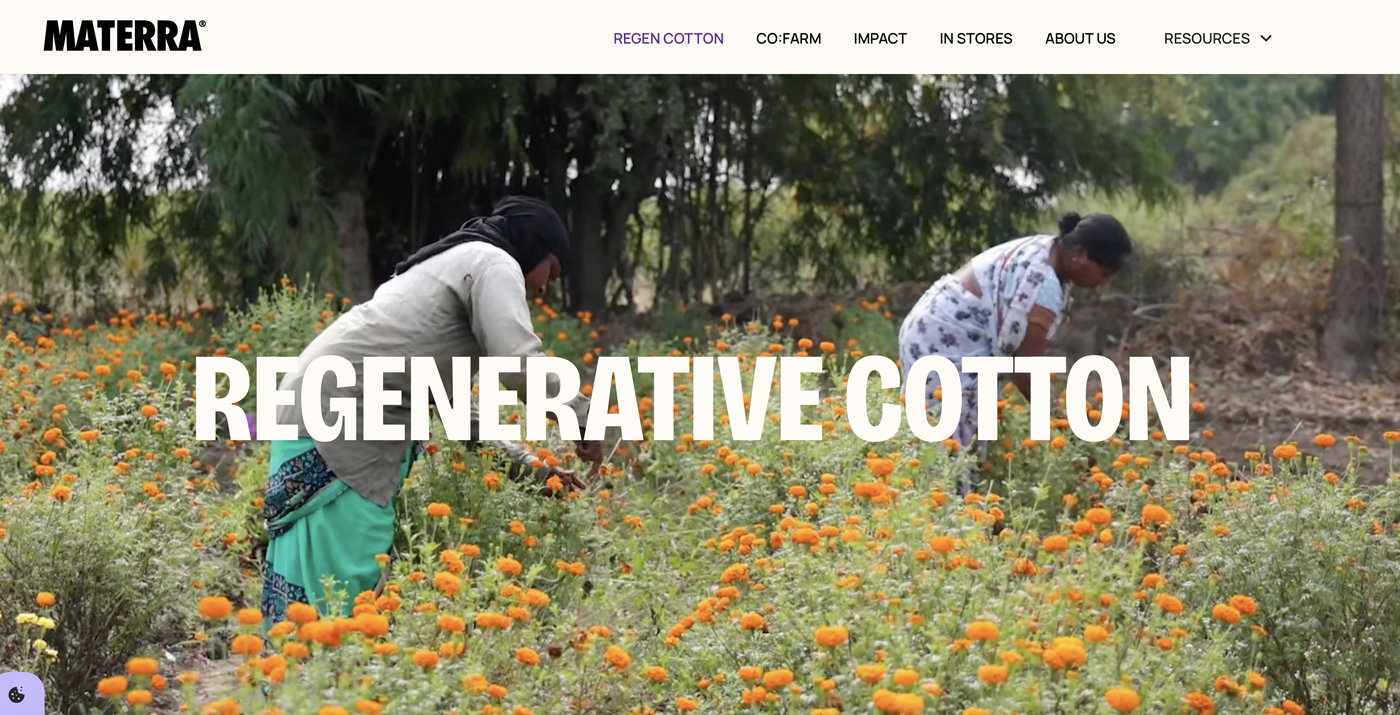
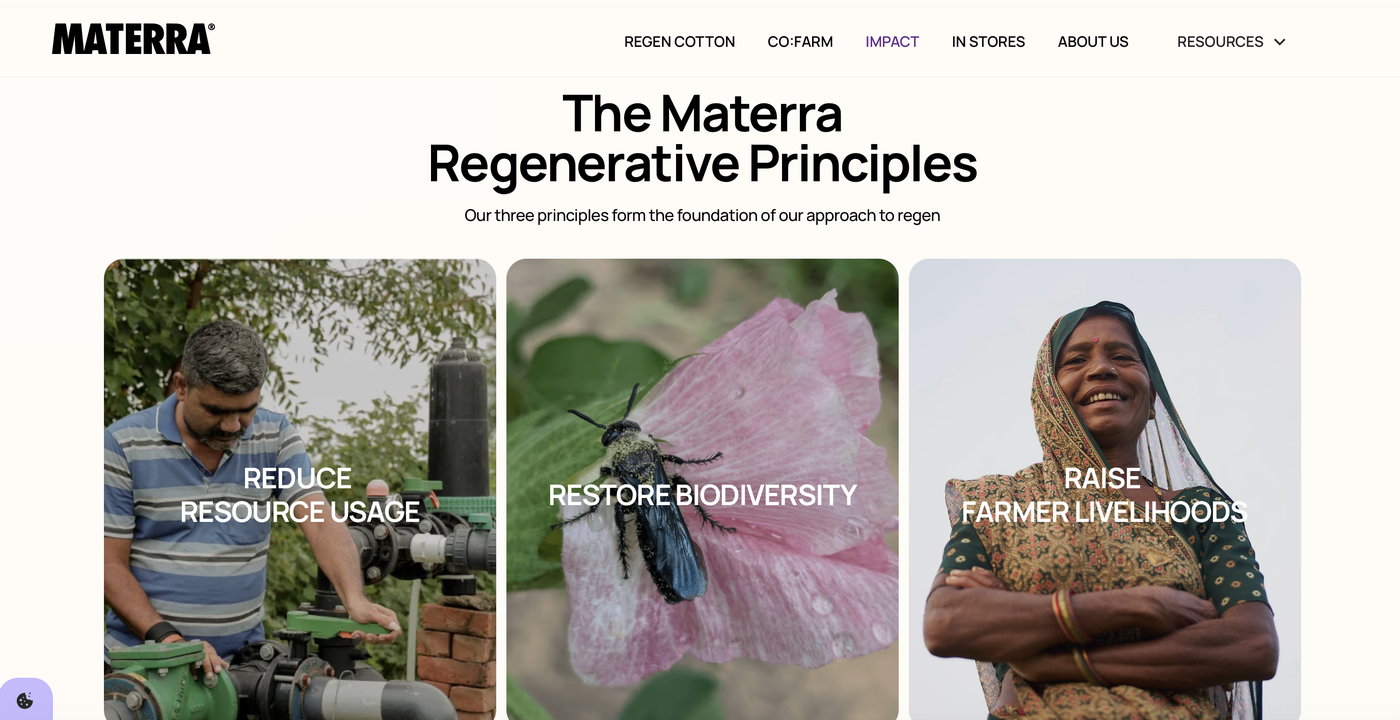
Figure 20. Materra connects regenerative cotton cultivation with farmer support, traceability, impact data and brand sourcing. The case illustrates regeneration as a long-term system of ecological practices, shared responsibility and supply-chain relationships—not simply a characteristic of the finished fibre.
2.5.2 Industry Connection — From Innovation to Textile Application
Materra is also part of the innovation network supported by PDS Group. Through PDS Ventures and Portugal-based Positive Materials, the group connects early-stage material innovators with textile development, manufacturing capacity and potential brand applications.
The wider network includes solutions working at different points in the material system: Materra in regenerative cotton; Nature Coatings in bio-based black pigments made from wood waste; Bananatex in plant-based textiles; and Evrnu’s NuCycl technology in fibre-to-fibre recycling. These should not all be classified as regenerative design. Instead, together they demonstrate how an industrial platform can support several complementary transition pathways, from regenerative sourcing and bio-based inputs to recycling and circular material development. Positive Materials — About and PDS Ventures
Key distinction: Materra is the regenerative-design example. Positive Materials and PDS provide the broader innovation and industrial context through which different material solutions may be developed and brought closer to market.