
Chapter 2 — full chapter
Chapter 2 — full chapter
2.4.2 Case Example — Modern Synthesis: Microbial Weaving
Modern Synthesis develops materials through a process it calls microbial weaving. Bacteria fed with sugars produce nanocellulose — a fine and strong form of cellulose —directly onto a natural textile structure. By controlling the conditions and pattern of bacterial growth, the process can generate lightweight composite materials with different shapes, thicknesses, textures and performance characteristics.
The technology emerged from Jen Keane’s This Is Grown project, in which bacterial nanocellulose was grown to form the upper of a shoe. Modern Synthesis has since collaborated with GANNI on an experimental version of its Bou Bag and contributed bacterial nanocellulose to the Korvaa concept shoe.
The case demonstrates how biodesign can move beyond replacing one conventional material with another. Biological growth becomes part of fabrication, while designers work with microorganisms, textile structures and growth conditions as interconnected design variables. As the technology remains at an early stage, its scalability, complete material composition, durability and end-of-life pathways must continue to be assessed.
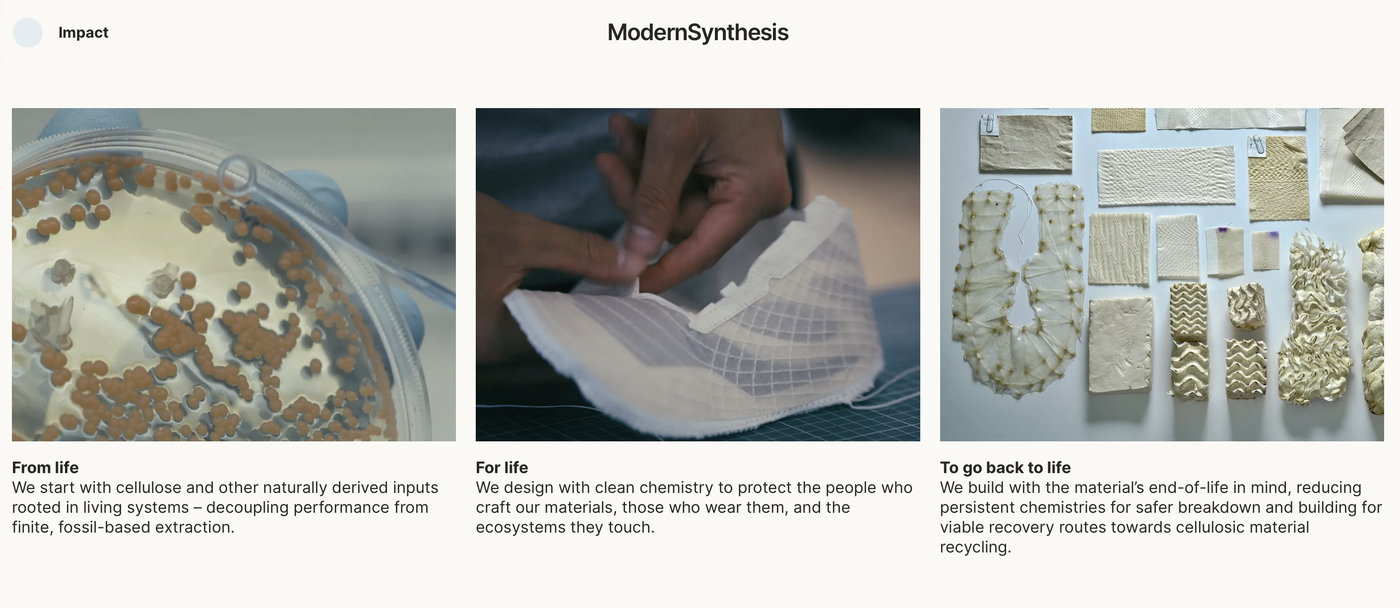
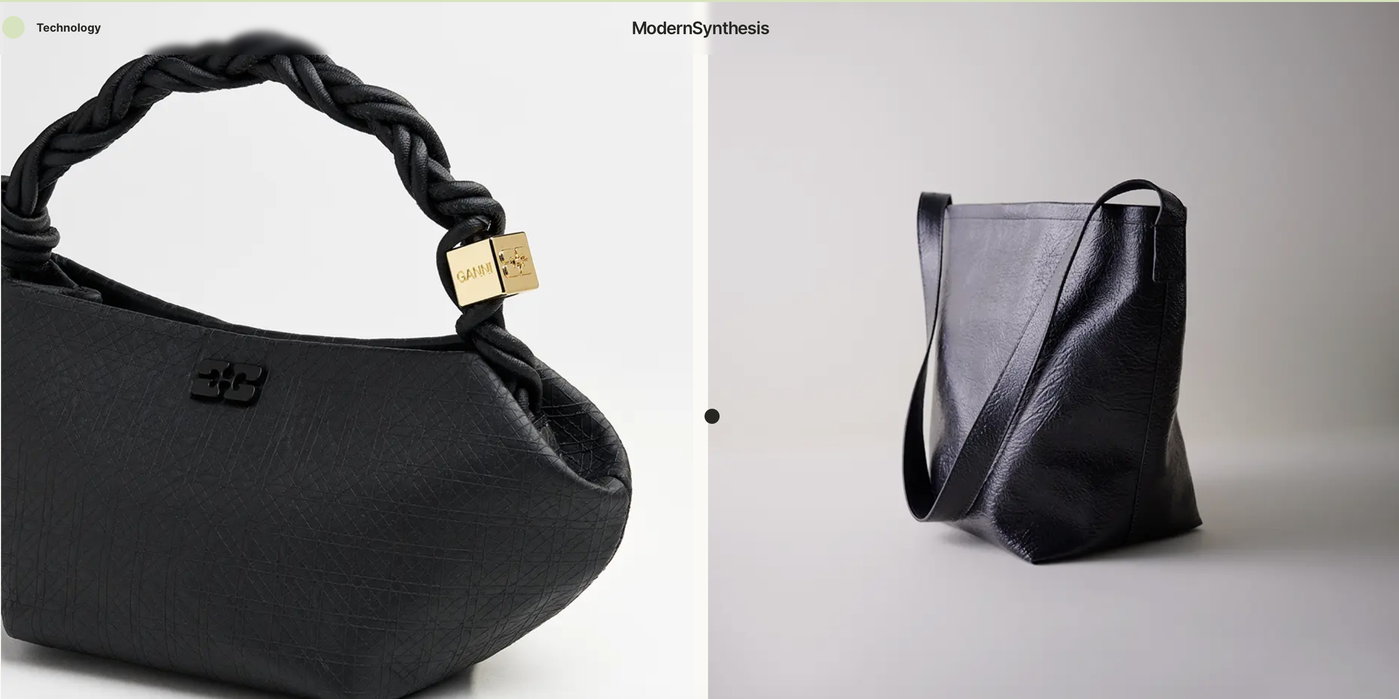
Figure 18. Modern Synthesis uses bacteria to grow nanocellulose directly onto textile structures. Its microbial weaving process illustrates how biological growth can influence material composition, surface, form and manufacturing, rather than simply producing a substitute for an existing fabric.