
Chapter 2 — full chapter
Chapter 2 — full chapter
2.3.1 Case Example — Iris van Herpen: Nature-Inspired Design, Biomimicry or Biodesign?
“Through biomimicry I look at the forces behind the forms in nature, these patterns and natural cycles are my guide to explore new forms. I continue to ask, can emotions be materialised? I believe it's possible to merge, stir and sculpt our senses through a sensitive balance of textures, shapes and colors.”
- Iris van Herpen
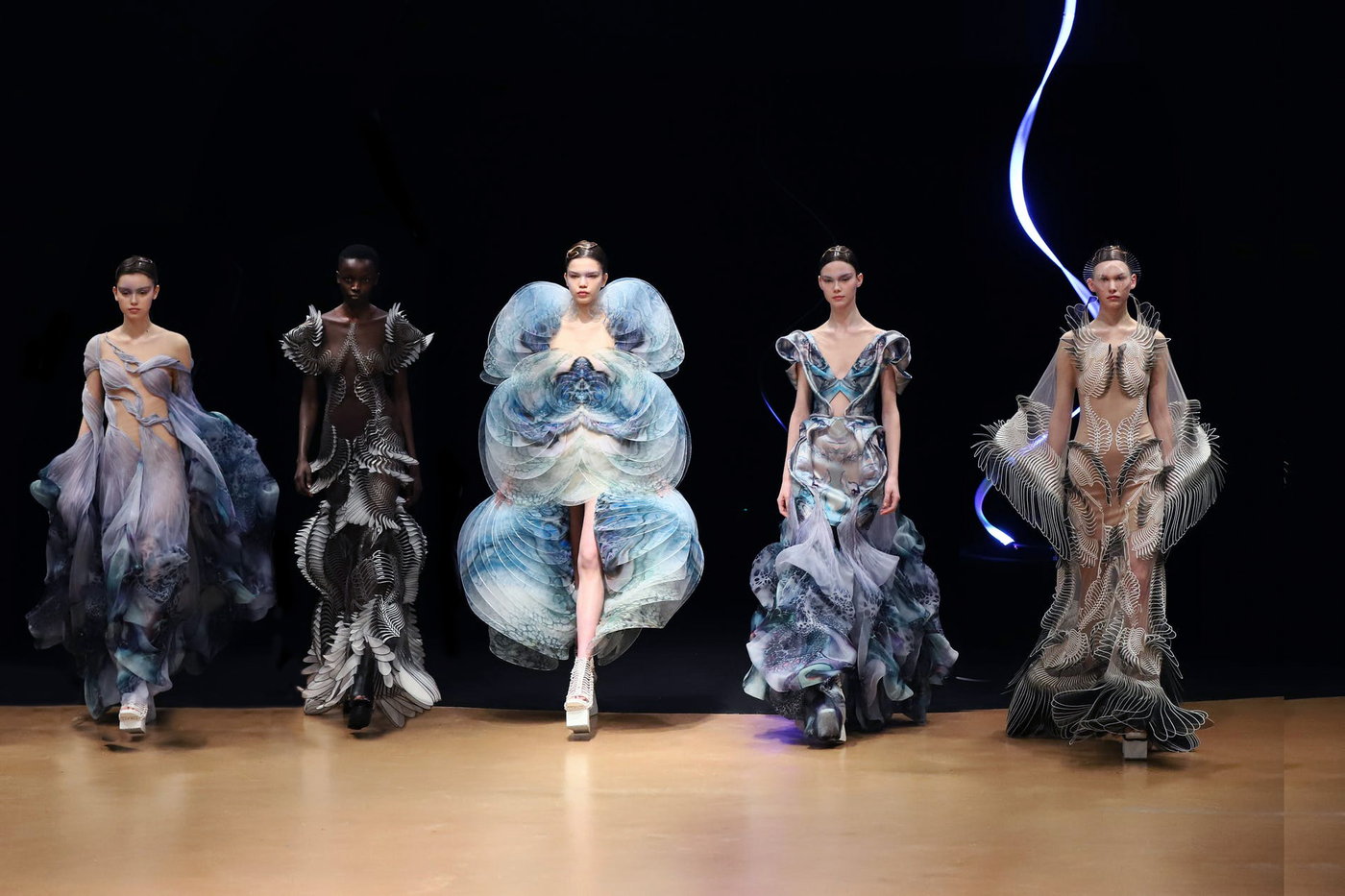
Iris van Herpen’s work demonstrates why the boundaries between nature-inspired design, biomimicry and biodesign are not always clear. Her collections frequently translate marine organisms, cellular structures, neurological networks and invisible natural forces into sculptural silhouettes, surfaces and movement. In many garments, however, nature’s primary contribution is formal and aesthetic: it influences how the piece looks, moves or is constructed, rather than providing a biological strategy that performs a particular function.
This differs from functional biomimicry. A textile inspired by the microscopic structure of a Morpho butterfly wing emulates a biological mechanism to produce colour without pigment. A garment that resembles a marine organism may be visually powerful, but resemblance alone does not make it biomimetic or environmentally beneficial.
Van Herpen’s Living Look, created for the 2025 Sympoiesis collection in collaboration with biodesigner Chris Bellamy, moves the practice into a different territory. The translucent garment was inhabited by approximately 125 million bioluminescent Pyrocystis lunula algae, which emitted light in response to movement and touch. The algae were grown in seawater, encapsulated in a specialised nutrient gel and maintained under carefully controlled humidity, temperature and circadian conditions. The garment therefore had to be cultivated and cared for rather than simply manufactured. Iris van Herpen — The Living Look
This piece is better understood as biodesign than conventional biomimicry because living organisms become active participants in the garment. It also challenges familiar ideas of materials, authorship, care and product lifecycles. Yet experimentation with living systems does not automatically make a garment circular or regenerative: its energy requirements, supporting materials, lifespan, scalability and end-of-life conditions must still be examined.
Key distinction: Nature-inspired design interprets nature’s appearance; biomimicry emulates how nature performs a function; biodesign works directly with organisms or biological processes.

https://vimeo.com/1176497243?fl=pl&fe=vl

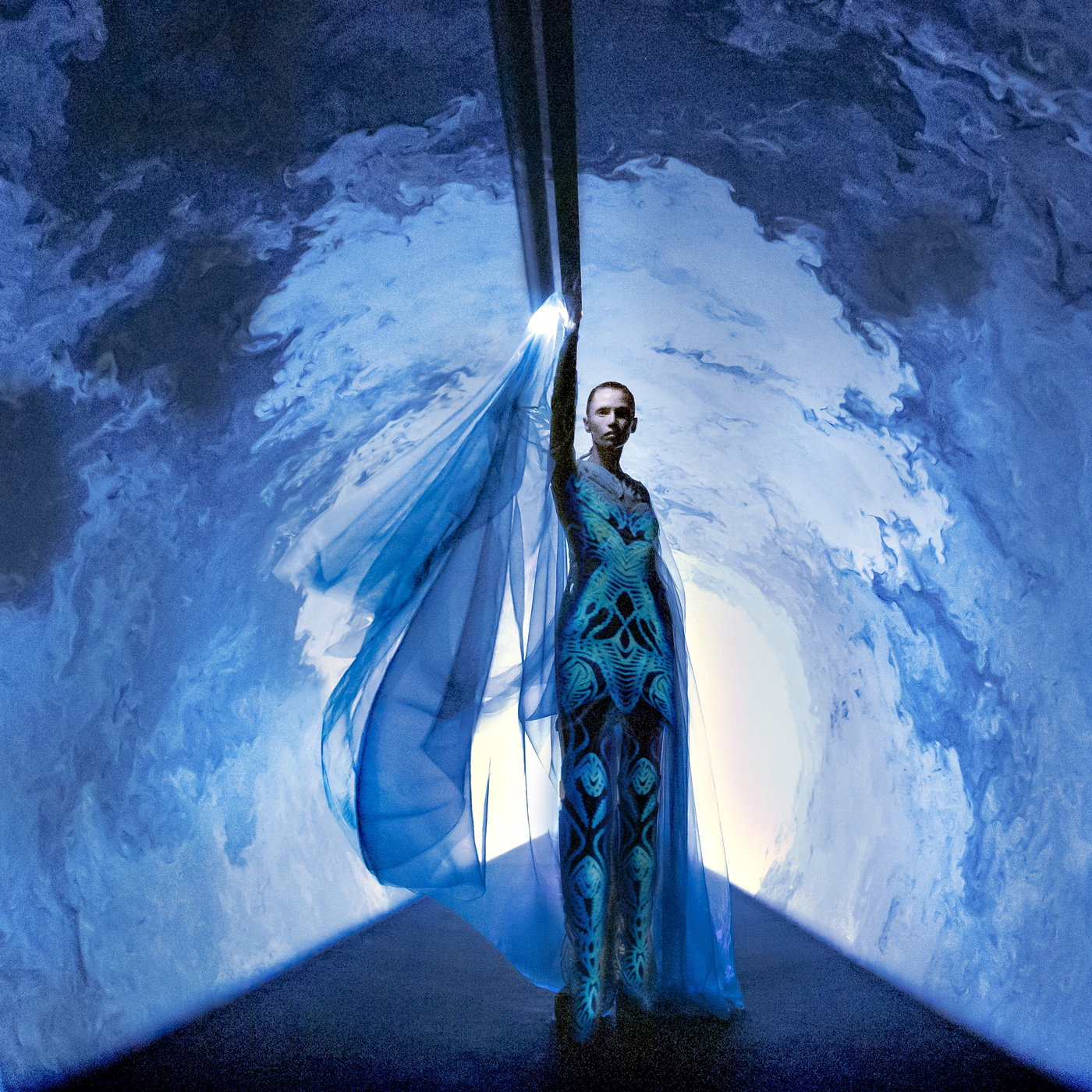
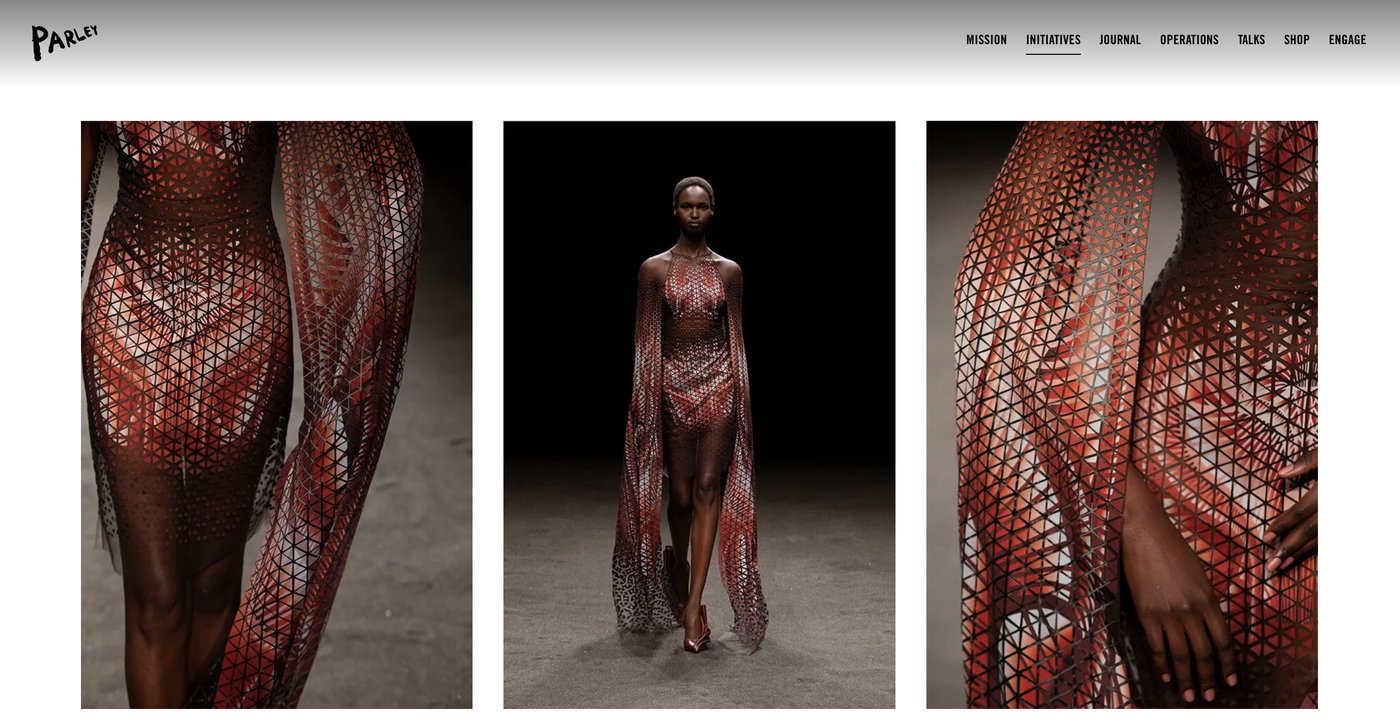
Figure 16. Different relationships between nature and design in Iris van Herpen’s work. Sensory Seas (2020) translates marine organisms and neurological structures primarily into form, texture and movement, illustrating nature-inspired design. The Holobiont dress, created with Parley Ocean Plastic®, combines biological inspiration with recycled-material innovation, although the environmental contribution comes from the material rather than from biomimicry itself. The Living Look from Sympoiesis (2025), developed with biodesigner Chris Bellamy and inhabited by bioluminescent algae, represents biodesign, as living organisms actively participate in the garment. Together, the examples show why nature-inspired aesthetics, functional biomimicry, sustainable material innovation, and biodesign should not be treated as interchangeable concepts.