
Chapter 2 — full chapter
Chapter 2 — full chapter
2.2.1 Biological and Technical Nutrients
Biological nutrients are materials designed to return safely to biological systems through an appropriate pathway, such as controlled composting, biodegradation or nutrient recovery. Being natural or bio-based is not sufficient. Cotton, wool or cellulose-based fabric cannot be considered a safe biological nutrient if its dyes, coatings, finishes, synthetic threads or trims introduce harmful substances or prevent biological processing.
Technical nutrients are materials intended to remain within industrial systems through maintenance, reuse, repair, refurbishment, remanufacturing or recycling. Polyester, nylon, metals and other technical materials are not automatically incompatible with circularity. However, their composition and construction must allow them to retain value and be identified, separated and recovered.
Products may contain both biological and technical nutrients, but these should be compatible or easily separable. Blended fibres, elastane, laminates, coatings and permanent adhesives can contaminate both pathways. The intended cycle must therefore be considered when specifying the entire material system—not only the main fabric. Cradle to Cradle — Circular product design
Design prompt
Is the product intended for a biological cycle, a technical cycle or a clearly separable combination of both?
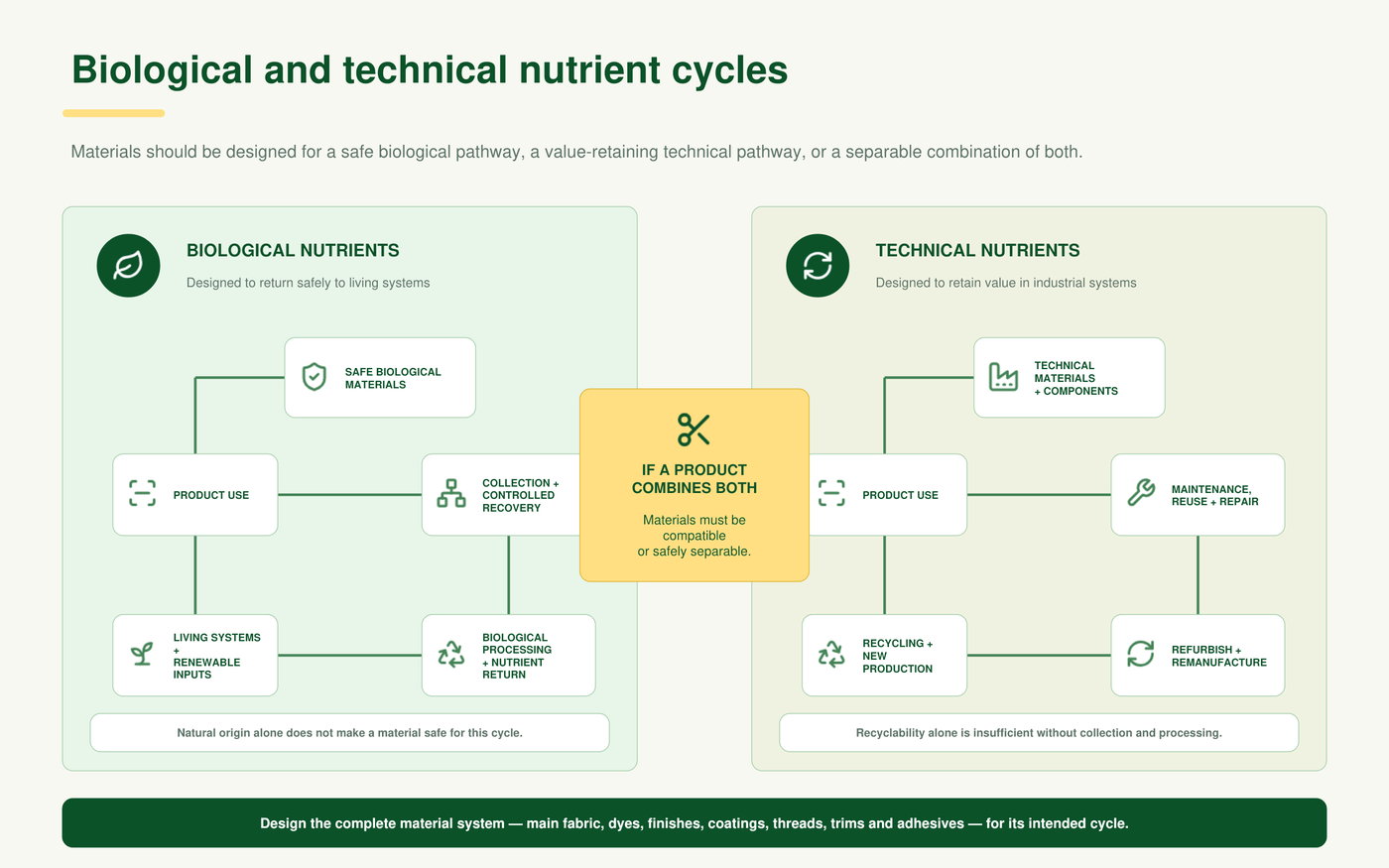
Figure 14. Biological and technical nutrient cycles. Biological nutrients are designed to return safely to living systems through an appropriate recovery pathway, while technical nutrients retain value through reuse, repair, refurbishment, remanufacturing and recycling. Products combining both require compatible or safely separable materials.