
Chapter 5 — full chapter
Chapter 5 — full chapter
5.3.2 Veja Responsible and Transparent Sourcing — what the premium pays for
Learning question: which part of this sourcing model can be decided by a designer or a small brand, and which part depends on a price point the market has to accept?
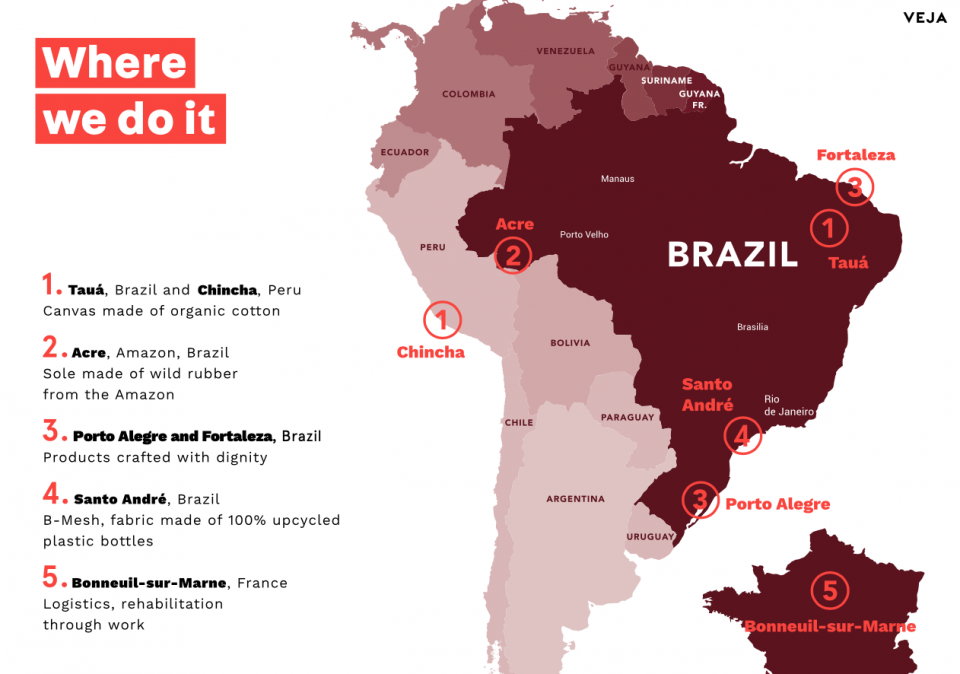
VEJA launched its project in 2004 and built its sourcing model around direct, longer-term relationships with producer organisations. The company reports two-year price contracts and pre-financing of up to 50% of harvests. In 2024, 1,350 cotton-producing families in Brazil and Peru supplied more than 280 tonnes, with VEJA paying approximately three times the market price for cotton. For Amazonian rubber, VEJA reports working with more than 2,500 families in 22 associations and paying approximately five times the market price per kilogram of CVP, including quality and environmental-service bonuses. Keep the cotton and rubber figures distinct and update them as company reporting changes.
Reality check: paying above market price and pre-financing harvests are possible because the products are sold at a price point that carries those costs, and the figures are reported by the company. Above-market payment is not by itself evidence of working conditions beyond the cotton and rubber producers involved, and the model does not transfer automatically to a brand whose cost structure or volumes differ. Read the case as a sourcing model with a specific economic base, not as a general template.
https://project.veja-store.com/en/single/transparency
VAUDE Case Study
VAUDE is a German outdoor equipment and apparel company known for products for hiking, mountaineering, cycling, camping, and everyday outdoor use. Vaude uses strict supplier selection, traceability systems, long-term supplier partnerships, and certified materials. The company publicly reports supplier performance and integrates environmental and social criteria into purchasing decisions.
Reality check: the publicly available evidence is the company’s own supplier reporting and communication. It documents the management approach and the criteria applied rather than verified outcomes for each product; before generalising, ask which suppliers, which criteria and which measured results are covered.

FOR YOUR SME / BUSINESS CASE: set a measurable material and supplier-evidence policy for the next two collections. For example, define a verified preferred-material threshold, limit fibre families where this does not compromise performance or durability, and request valid certificates plus scope and transaction documentation. Build the target from your baseline and supplier quotations rather than using a generic cost premium. Environmental claims made to consumers must be specific, substantiated and clear about scope. Directive (EU) 2024/825 had to be transposed by 27 March 2026 and national measures apply from 27 September 2026. Reference: https://eur-lex.europa.eu/eli/dir/2024/825/oj/eng