
Chapter 4 — full chapter
Chapter 4 — full chapter
4.2 The EU Circular Textiles Framework
The EU Strategy for Sustainable and Circular Textiles establishes the direction of travel: textile products placed on the EU market should become more durable, repairable, recyclable, safer and increasingly made with recycled fibres, while producers take greater responsibility across the lifecycle. The strategy is a policy framework. Its ambitions become enforceable through separate legal instruments and product-specific measures.
The Ecodesign for Sustainable Products Regulation, in force since July 2024, creates a framework for product-specific ecodesign and information requirements. Textile apparel is a priority product group in the 2025-2030 ESPR Working Plan, but the detailed textile requirements still depend on a future delegated act. Teams should therefore prepare for likely performance and information needs without presenting draft criteria as current legal obligations.
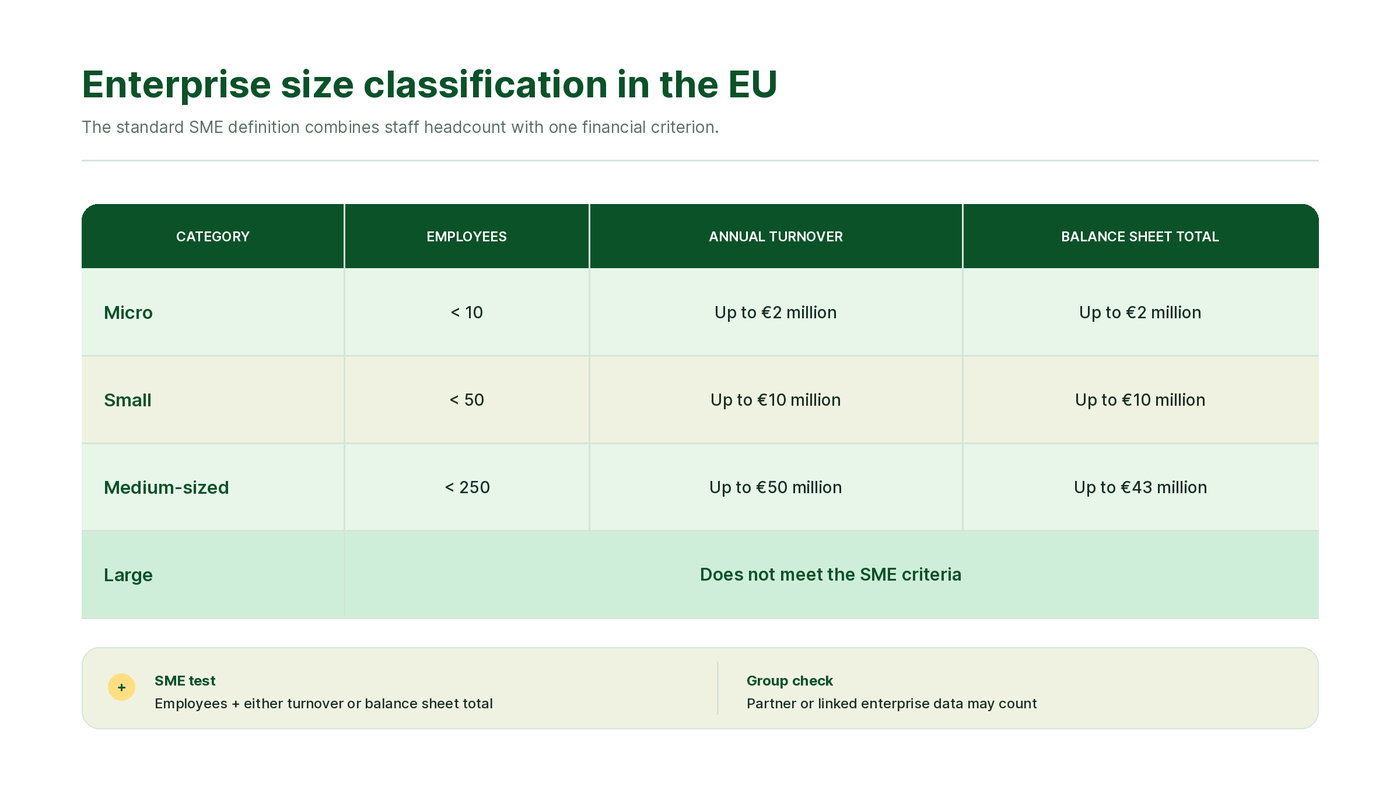
Two parts of the ESPR are already especially visible to fashion businesses. First, from 19 July 2026 large enterprises are prohibited from destroying unsold apparel, clothing accessories and footwear, subject to defined derogations. Medium-sized enterprises enter the prohibition from July 2030; micro and small enterprises are exempt from the EU-level ban, although national rules may go further. Second, the EU Digital Product Passport Registry became operational on 20 July 2026. This provides the common indexing infrastructure, but it does not mean that final textile DPP content requirements are already mandatory.
The 2025 amendment to the Waste Framework Directive requires Member States to establish EPR schemes for listed textile, textile-related and footwear products by 17 April 2028. Producers will finance defined collection and waste-management functions, and fees may be modulated using ecodesign criteria when the relevant ESPR measures exist. Separate collection of textiles has already been required in the EU since 1 January 2025. Together, these rules connect product decisions more directly to collection, sorting, reuse, and recycling costs.
Other requirements remain essential. Regulation (EU) No 1007/2011 governs textile fibre names and related composition labelling. REACH restricts hazardous substances and establishes chemical obligations relevant to materials, finishes, and articles. Directive (EU) 2024/825 strengthens consumer protection against greenwashing and early obsolescence practices; Member States must apply the transposed rules from 27 September 2026. It restricts, among other practices, unsupported generic environmental claims and sustainability labels that are not based on a certification scheme or established by public authorities.
The Omnibus package reduced the number of companies subject to mandatory corporate sustainability reporting and due-diligence requirements. However, it did not remove the product-level transition, affecting textiles. SMEs may be outside the scope of the CSRD or CSDDD while remaining subject to requirements concerning product design, chemicals, labelling, producer responsibility, environmental claims and, progressively, product data.
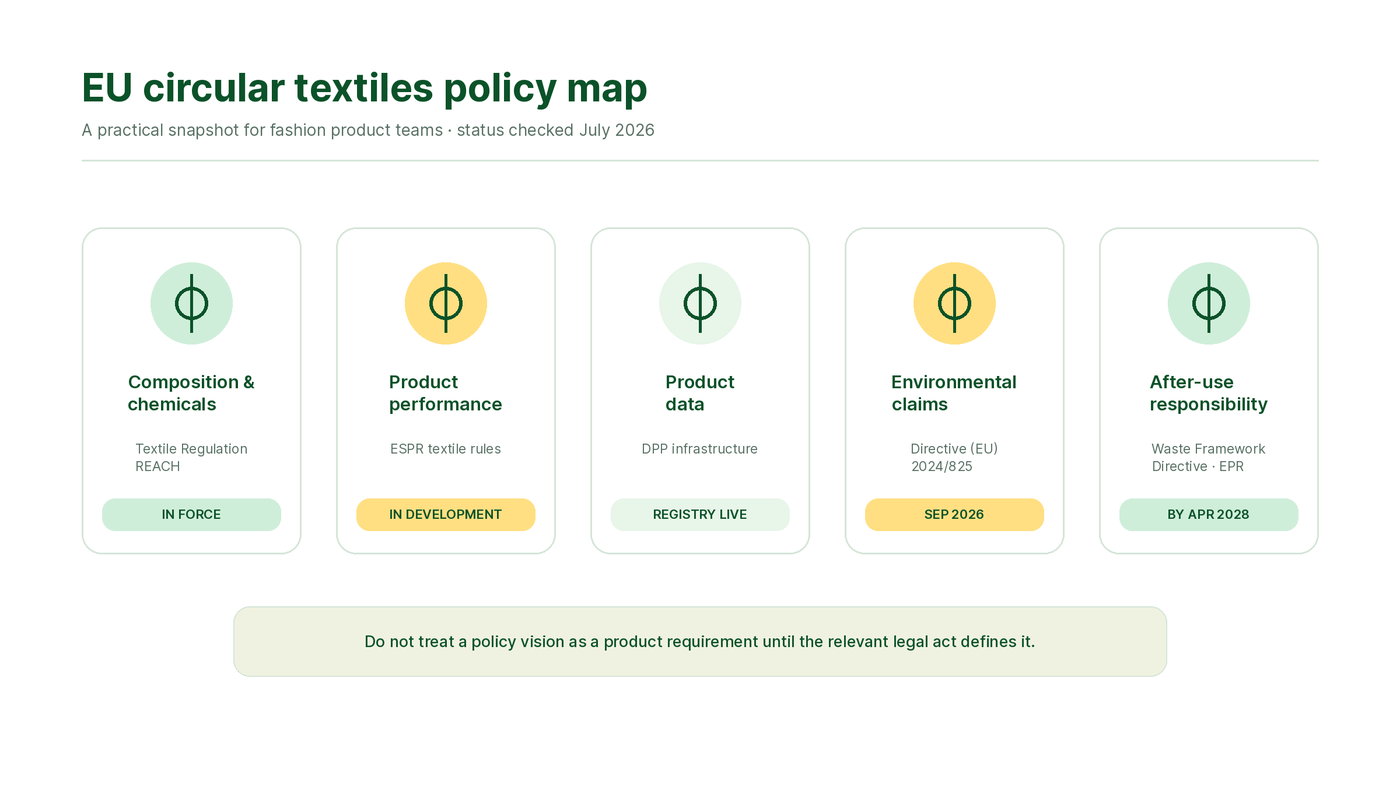
Figure X. EU circular textiles policy map. The regulatory landscape connects composition and chemical safety, emerging product-performance rules, product data, environmental claims, and after-use responsibility. Status checked July 2026.
Table 3.2. EU regulatory horizon for product teams
| Area | Current status (July 2026) | Design or business implication |
|---|---|---|
| Fibre composition and chemicals | Existing textile labeling and REACH obligations apply. | Maintain an accurate bill of materials; verify fibres, trims, finishes and restricted-substance evidence. |
| ESPR textile product rules | Framework is in force; textile-specific requirements are under development. | Build durability, repairability, material identification and data readiness into briefs now. |
| Unsold products | EU prohibition applies to large enterprises from 19 July 2026; medium enterprises from 2030. | Improve demand planning and prioritise resale, donation, reuse or other permitted value-retention routes. |
| Digital Product Passports | EU Registry is operational; textile content and application dates are not yet final. | Create structured, version-controlled product data and define data ownership before choosing technology. |
| Environmental claims | Directive (EU) 2024/825 applies through national law from 27 September 2026. | Replace vague claims with specific, evidenced, and clearly scoped statements. |
| Textile EPR | Member States must establish schemes by 17 April 2028. | Track markets, product volumes and design features that may affect fees and end-of-use routes. |
GFA RESOURCE: Policy Matrix: EU 2026 and Mapping of Global EPR for Textiles — Global Fashion Agenda, updated February 2026. GFA’s mapping tracks textile EPR schemes worldwide: in the EU, separate textile collection has been mandatory since 1 January 2025, and the revised Waste Framework Directive — in force since 16 October 2025 — requires EPR schemes in all Member States by 17 April 2028, with fees to be eco-modulated on ESPR design parameters. SMEs placing products on the EU market should plan now for EPR registration, reporting and eco-modulated fees that reward durable, recyclable, recycled-content design. Source: https://globalfashionagenda.org/wp-content/uploads/2023/06/GFA-Policy-Matrix-EU-2026.pdf.
RESOURCE INSIGHT: EU Ecodesign for Sustainable Products Regulation (ESPR) — European Commission, 2024. In force since 18 July 2024, the ESPR is the cornerstone of the EU's approach to sustainable and circular products. It introduces a Digital Product Passport, bans the destruction of unsold textiles and footwear, and will set delegated ecodesign requirements - durability, reparability, recyclability - for textiles and other priority product groups. Source: https://commission.europa.eu/energy-climate-change-environment/standards-tools-and-labels/products-labelling-rules-and-requirements/ecodesign-sustainable-products-regulation_en.