
Chapter 4 — full chapter
Chapter 4 — full chapter
4.1 Regulation as a Design Input
Regulation increasingly shapes what circular design means in practice. Requirements concerning durability, repairability, restricted substances, fibre composition, product information, claims and producer responsibility can all change the design brief. Treating them early can reduce redesign, testing delays, unsupported claims, blocked market access, and products that cannot enter viable recovery pathways.
The useful question is not simply “What does the law say?” but “What must the product team do differently?” A policy signal becomes operational only when it is translated into a product requirement, assigned to an owner and connected to evidence. For example, a requirement for reliable material information affects the bill of materials, supplier declarations, trim identification, data governance, and any future data carrier. A requirement linked to durability affects fabric testing, seam specifications, component selection, and quality control.
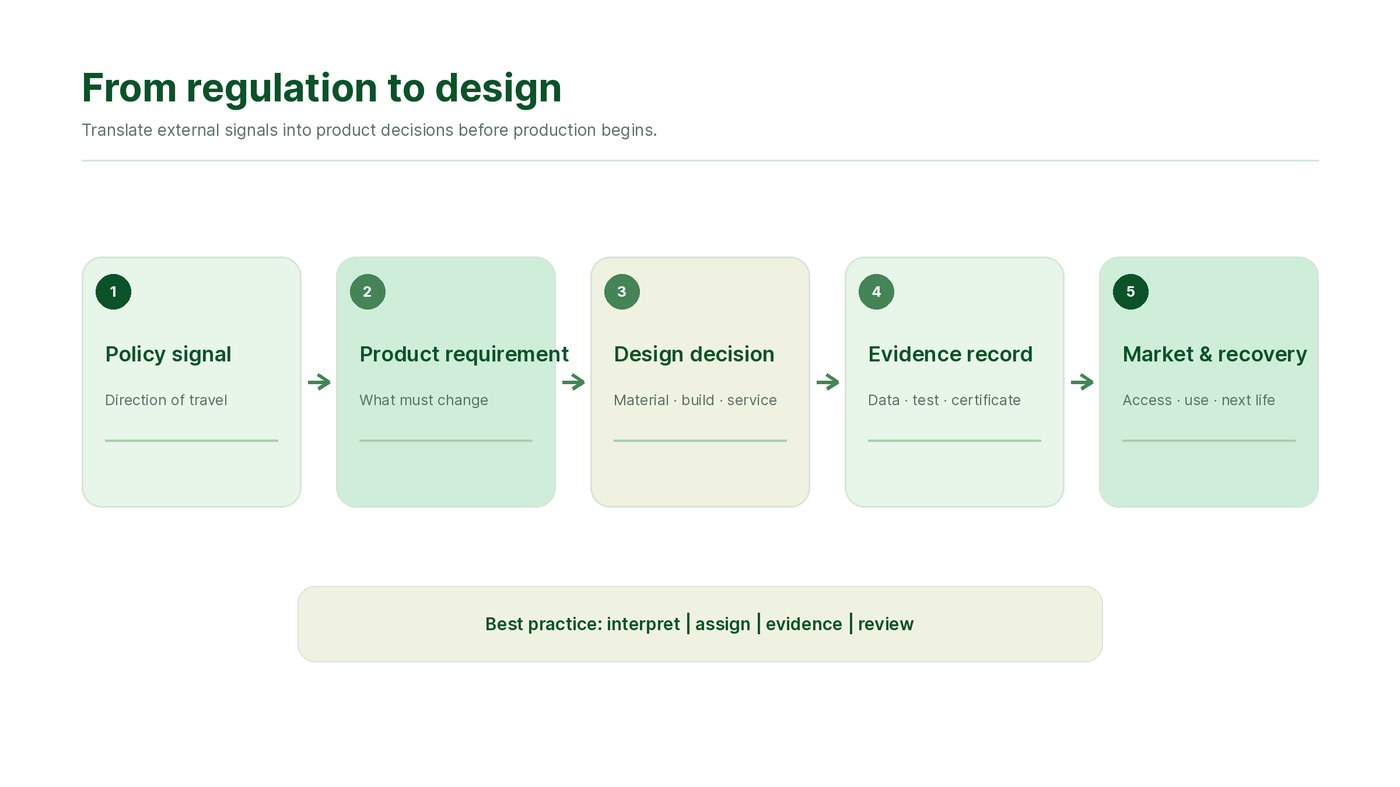
Figure X. From regulation to design. External requirements create value only when they are translated into product specifications, design decisions, evidence records and viable market or recovery outcomes.