
Chapter 3 — full chapter
Chapter 3 — full chapter
3.5.1 Case Example — unspun × Eckhaus Latta: From Technology to Desirable Fashion
Conventional garment production usually involves weaving flat fabric, cutting pattern pieces, and sewing them together. This process can generate cutting waste, require several production stages, and encourage companies to manufacture stock before knowing exactly what will be sold.
unspun’s Vega™ technology explores a different production model by weaving three-dimensional garment forms directly from yarn. In its collaboration with Eckhaus Latta, the technology was used to create 3D-woven garments presented as part of the brand’s Spring/Summer 2024 collection. The process produced woven forms shaped as garment components, reducing the cutting and conventional assembly normally associated with trouser production.
The collaboration is important because it positioned advanced manufacturing within a recognisable fashion context. Eckhaus Latta’s experimental approach to materials and form helped demonstrate that production innovation does not need to result in a generic technical prototype. Technology became part of the collection’s design language and creative identity.
The case also shows why innovation should be evaluated in relation to the specific problem it addresses. Three-dimensional weaving may reduce cutting waste, simplify assembly, and support more responsive production. It does not automatically resolve the impacts of fibre production, dyeing, energy use, durability, or end-of-use.
Its wider contribution will depend on material choices, production efficiency, commercial accessibility, and whether manufacturing closer to demand genuinely reduces unsold inventory. The aspirational value of the collaboration lies in connecting technical change with desirable fashion while leaving these wider questions open to assessment.
Source: unspun — Eckhaus Latta × Vega™
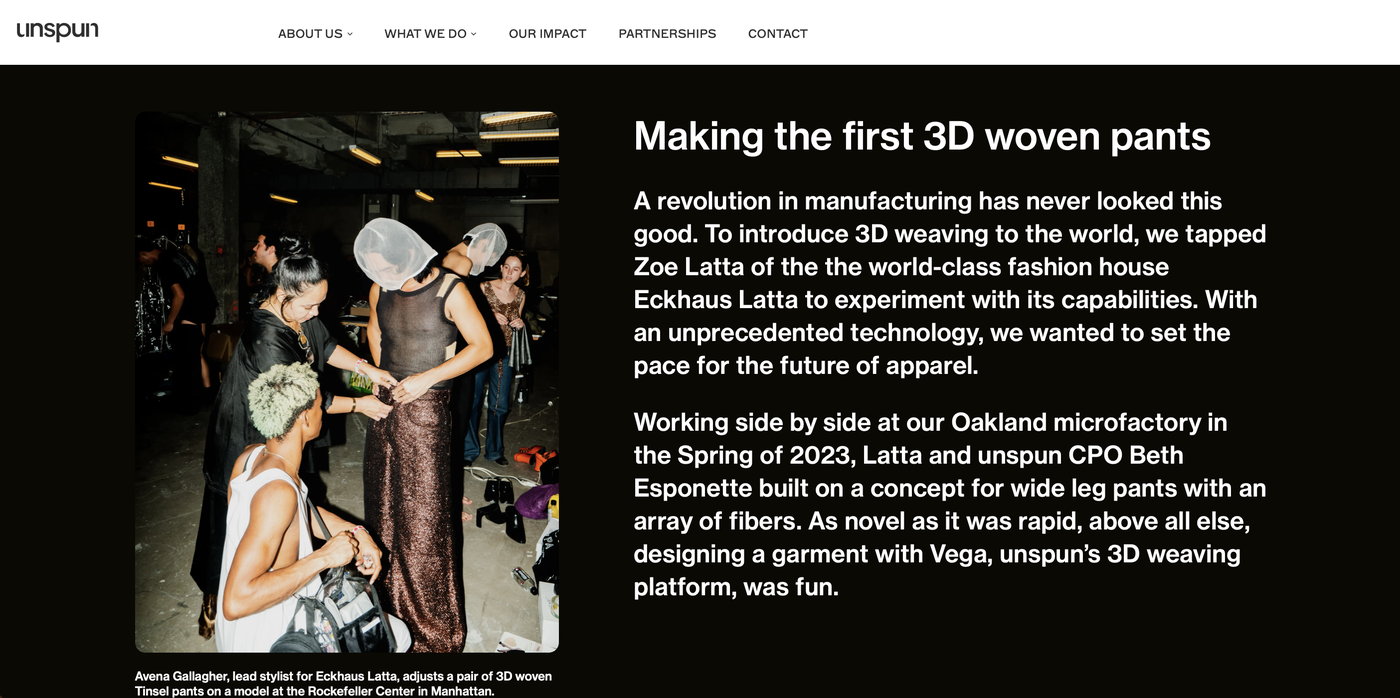
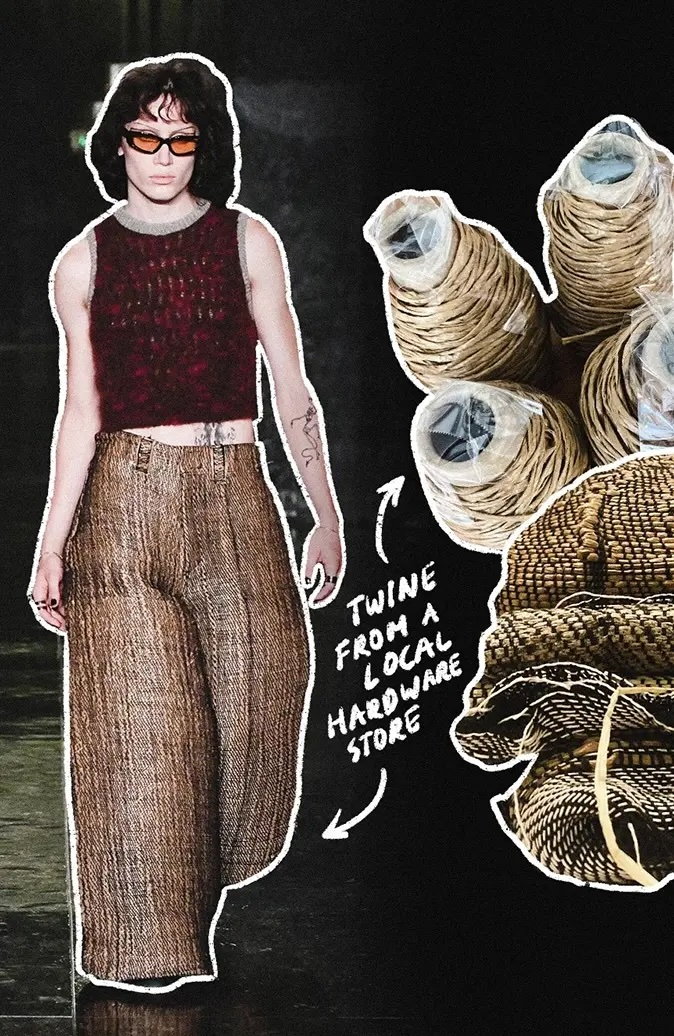
Figure X. 3D-woven garment from the Eckhaus Latta × unspun collaboration, presented as part of the Spring/Summer 2024 collection. The project used Vega™ technology to explore how three-dimensional weaving could reduce conventional cutting and assembly while contributing to an experimental fashion language. Source: unspun.