
Chapter 3 — full chapter
Chapter 3 — full chapter
3.3 Material and Product Complexity
Material and product complexity are one of the main technical barriers to textile circularity. Blended fibres are common because they can improve durability, softness, stretch, price, or performance. However, they can also make sorting, separation and fibre-to-fibre recycling more difficult, especially when composition is unclear or feedstock quality is inconsistent.
Other product elements also create complexity. Coatings, finishes, prints, elastane, linings, bonded layers, trims and accessories may affect recyclability, repairability and material health. They can also contaminate recycling streams or make disassembly too costly.
Design can reduce these barriers by simplifying material strategies, using compatible materials, avoiding unnecessary trims, designing detachable components, improving durability, and providing clear product information. The aim is not to remove all complexity, but to ensure that every material and component can justify its role in performance, use, and future recovery.
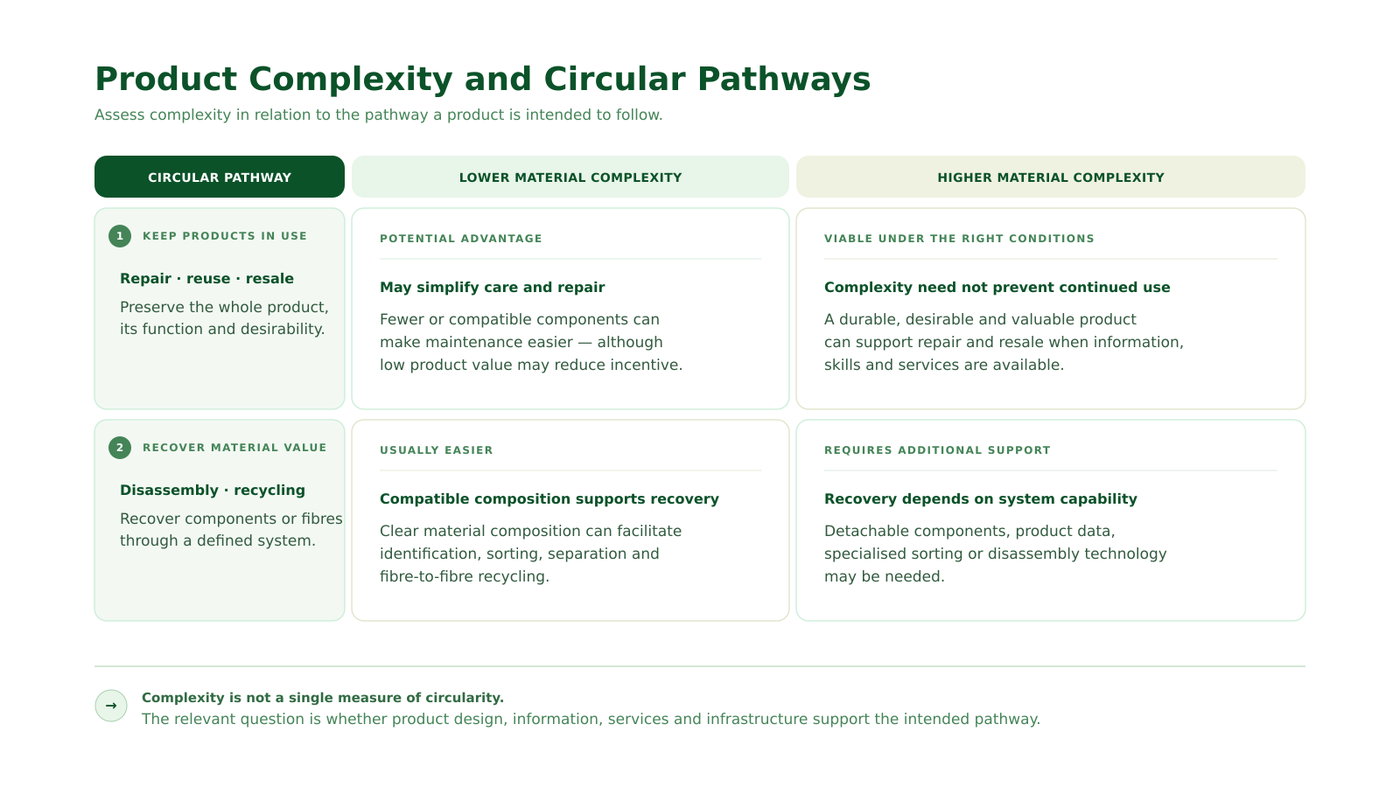
Figure X. Material and product complexity across circular pathways. Material composition and construction complexity affect circular strategies differently. Simpler products may facilitate sorting and recycling, while more complex products can still support repair, reuse and resale when they are durable, desirable and supported by appropriate services and information.