Chapter 3 — full chapter
Chapter 3 — full chapter
3.2.1 Case Example — Renewcell/Circulose: When Technical Innovation Is Not Enough
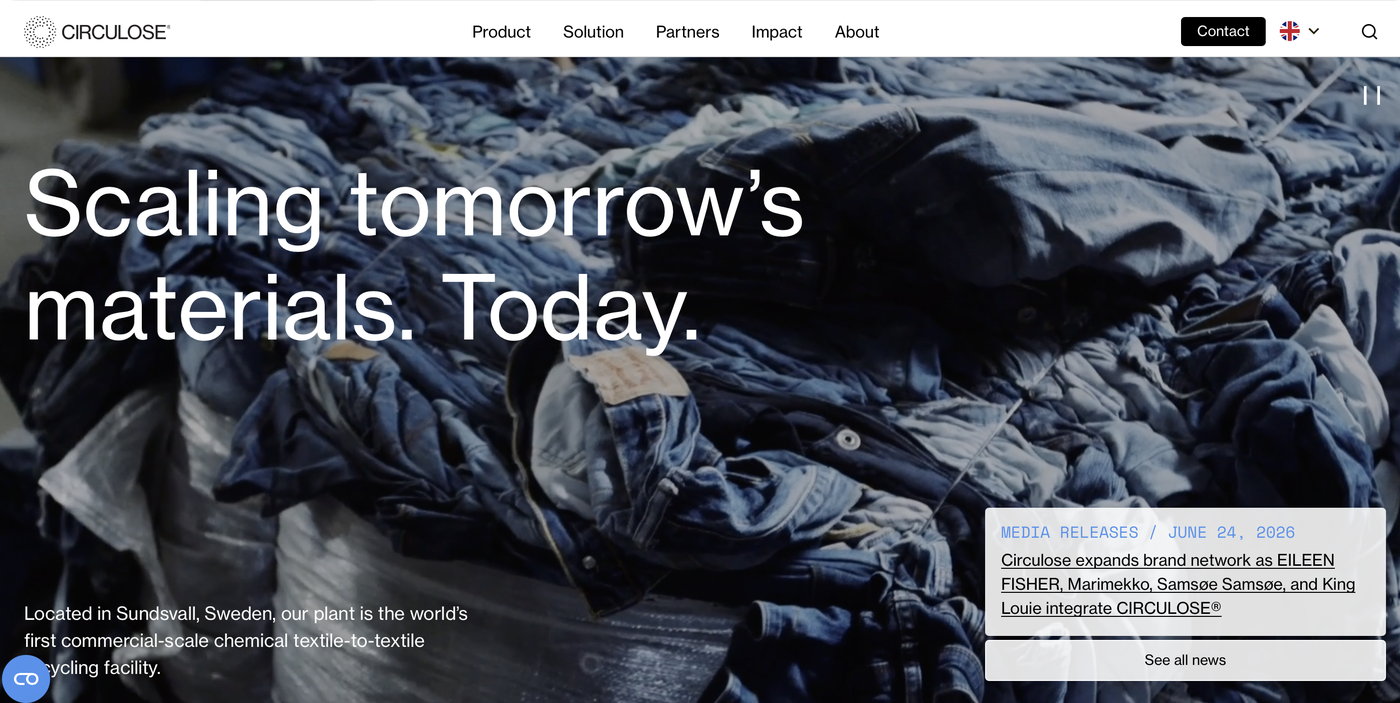
Renewcell, founded in Sweden, developed CIRCULOSE®—a recycled dissolving pulp from discarded cotton textiles—to replace virgin wood pulp in viscose and lyocell. The company invested in an industrial facility to scale textile-to-textile recycling, gaining industry recognition. However, despite progress, Renewcell filed for bankruptcy in 2024 due to slow sales and insufficient funding, revealing that demonstrating a circular tech's viability isn't enough; market conditions matter.
CIRCULOSE® couldn't go directly from recycling to finished garments. Its adoption depended on complex coordination across the supply chain, with price premiums increasing at each stage. Brands showed interest, but this didn’t translate into consistent, large-scale orders.
Renewcell's assets were acquired by Altor and relaunched as Circulose. The new model emphasizes supply chain integration, traceability, conversion support, and pricing to reduce costs. Brands are now expected to commit more fully to replacing virgin materials, rather than using the recycled material in isolated products.
This case shows that technological innovation alone isn’t enough to shift a linear system. Success requires aligned incentives, investment, supplier readiness, and demand. Designers can influence demand, but implementation depends on sourcing, finance, production, and corporate strategy decisions.
Reflection prompt:
Why did a proven industrial-scale recycling solution fail despite technological viability? What actors, commitments, and market conditions are needed to make circular material innovation commercially viable?
Sources: Circulose — FAQ and Circulose Impact.