
Chapter 1 — full chapter
Chapter 1 — full chapter
1.1 Fast Fashion as a Design and Business Model Problem
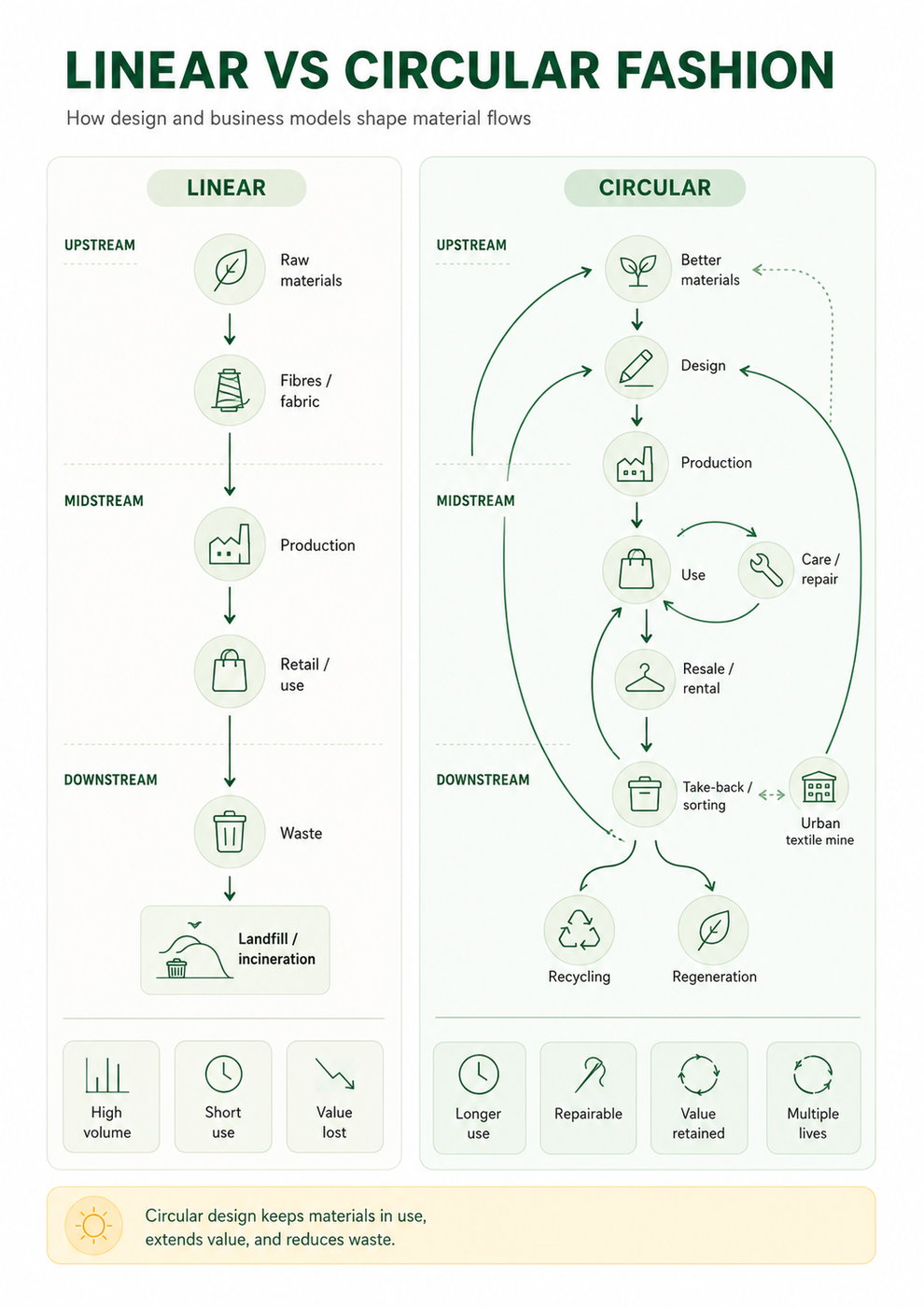
Figure 1. Linear and circular fashion compared across the textile value chain. In fast fashion, business model pressures shape design decisions towards speed, low cost, and short use cycles. Circular design starts from a different logic: keeping products and materials valuable for longer through durability, repair, reuse, recovery and better system coordination.
Fashion was not always organised around rapid production and disposal. Before the Industrial Revolution began transforming textile production in the second half of the 18th century, textiles and garments were costly and labour-intensive to produce, and were commonly maintained, repaired, altered, reused, and passed on. The Industrial Revolution mechanised textile production, enabling clothing to be manufactured at an increasing scale and lower cost. From the 1990s onwards, the emergence of fast fashion accelerated this shift, introducing shorter production cycles, more frequent collections, and increasingly disposable consumption patterns. Today, much of the industry operates through a linear “take–make–use–waste” model: resources are extracted and transformed into fibres, yarns, fabrics and garments, sold, often used for a limited period, and then discarded. In this one-way flow, value is created through production and sale but rapidly lost through underuse, short use cycles, and disposal.
In fast fashion, this linear logic is intensified by business models based on high volumes, low prices, speed to market, and constant novelty. These commercial pressures shape design briefs from the beginning: products are often designed to be produced quickly and cheaply, rather than to last, be repaired, circulated between users or returned safely into material systems. Silhouettes, materials and constructions are frequently optimized for rapid trend cycles and low production cost, not for durability, repairability, recyclability, or multiple lifecycles.
This makes fast fashion both a business model problem and a design problem. The first upstream issue is not only which fiber, seam or trim is selected, but the commercial logic that defines what the product is expected to do: sell quickly, follow a trend, reach a low price point and be replaced soon after. Once that logic is embedded in the brief, many circularity barriers become almost inevitable. A blended fabric may be difficult to recycle; a bonded lining may prevent disassembly; weak seams may shorten the useful life of a garment; complex trims may complicate sorting; trend-led aesthetics may make a product feel obsolete long before it is physically worn out.
This linear model also represents a major economic loss. Less than 1% of the material used to produce clothing is recycled into new clothing, resulting in the loss of more than USD 100 billion in material value every year. At the same time, short use cycles and premature disposal mean that garments lose much of their potential value before the materials themselves reach end of life adding up to more than USD 500 billion in value is lost every year due to clothing underutilisation and the lack of recycling.
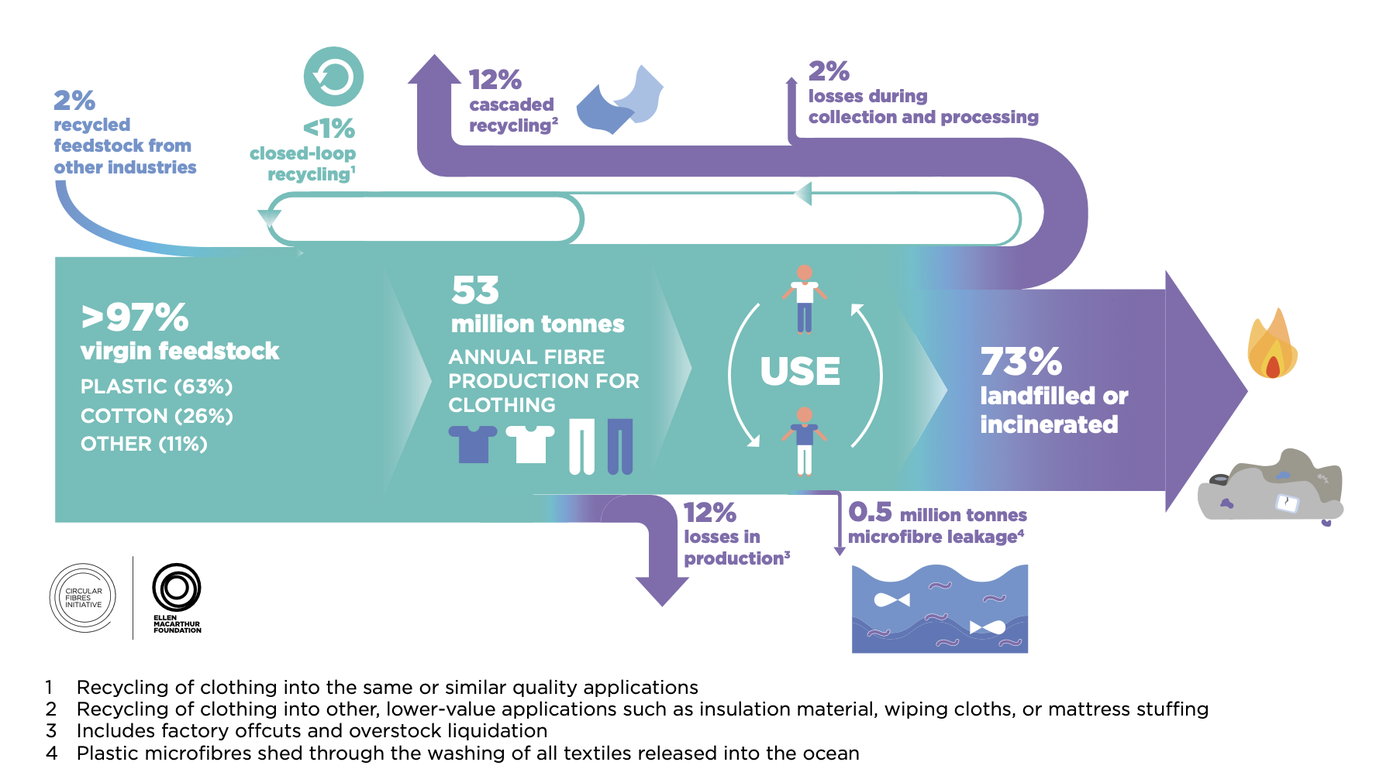
Figure 2. Global material flows for clothing in 2015, showing that more than USD 100 billion in material value is lost annually due to low clothing-to-clothing recycling and high rates of landfill and incineration. Source: Ellen MacArthur Foundation, A New Textiles Economy: Redesigning Fashion’s Future (2017), p. 20.
RESOURCE INSIGHT: A New Textiles Economy: Redesigning Fashion’s Future — Ellen MacArthur Foundation, 2017. Fashion's linear 'take-make-dispose' model wastes more than USD 500 billions of clothing value every year: garments are worn less and thrown away faster, while production has doubled in 15 years. The report sets out a vision for a new textiles economy built on circular principles - eliminate waste, keep materials in use, regenerate natural systems - with concrete actions for industry and policymakers. Source: https://www.ellenmacarthurfoundation.org/publications/a-new-textiles-economy-redesigning-fashions-future.