Chapter 1 — full chapter
| Site: | FashionKIC Learning Platform |
| Course: | Circular Design Strategies |
| Book: | Chapter 1 — full chapter |
| Printed by: | Guest user |
| Date: | Sunday, 1 November 2026, 3:20 AM |
Chapter 1 — Circular Design Principles

This chapter introduces circular design as a decision-making framework for fashion product development. It explains how circular design differs from linear design logic and why circularity must be considered before production begins, rather than being treated as an end-of-life solution.
Learners are introduced to circular concepts applied along the textile chain — from raw materials and polymers to fibres, yarn, fabric, finishing and end products — as a set of designable interfaces where circular or linear logic can be embedded. The chapter also frames garments as multi-life assets that can move through use, repair, resale, rental, remanufacturing, and recycling pathways.

Source:
Ellen MacArthur Foundation – Fashion and the Circular Economy Deep Dive
Fashion design does more than define how a product looks. It shapes how materials are combined, how a garment is produced and used, how easily it can be maintained or repaired, and what can happen to it when its first period of use ends. Many of the conditions that determine a product’s environmental impact, useful life, and future value are therefore established during the design process.
Circular design responds to this responsibility by moving away from the assumption that garments will follow a single journey from production to disposal. Instead, it considers how products, components and materials can remain in use, circulate through multiple lives, and retain value over time. This requires designers to think not only about the object itself, but also about the systems, services, and business models that support it.
Circularity is not a single aesthetic, material choice, or technical checklist. It is a way of making interconnected decisions while recognising real constraints and trade-offs. To understand why this shift is necessary, the chapter begins by examining how the dominant fast-fashion model embeds linearity, acceleration, and replacement into both product design and business strategy.
In this chapter:
- 1.1 Fast Fashion as a Design and Business Model Problem
- 1.2 The Circular Textile Chain and Urban Textile Mines
- 1.3 Design for Multiple Life Cycles
- 1.4 Life Cycle Thinking and Life Cycle Assessment as Design Tools
1.1 Fast Fashion as a Design and Business Model Problem
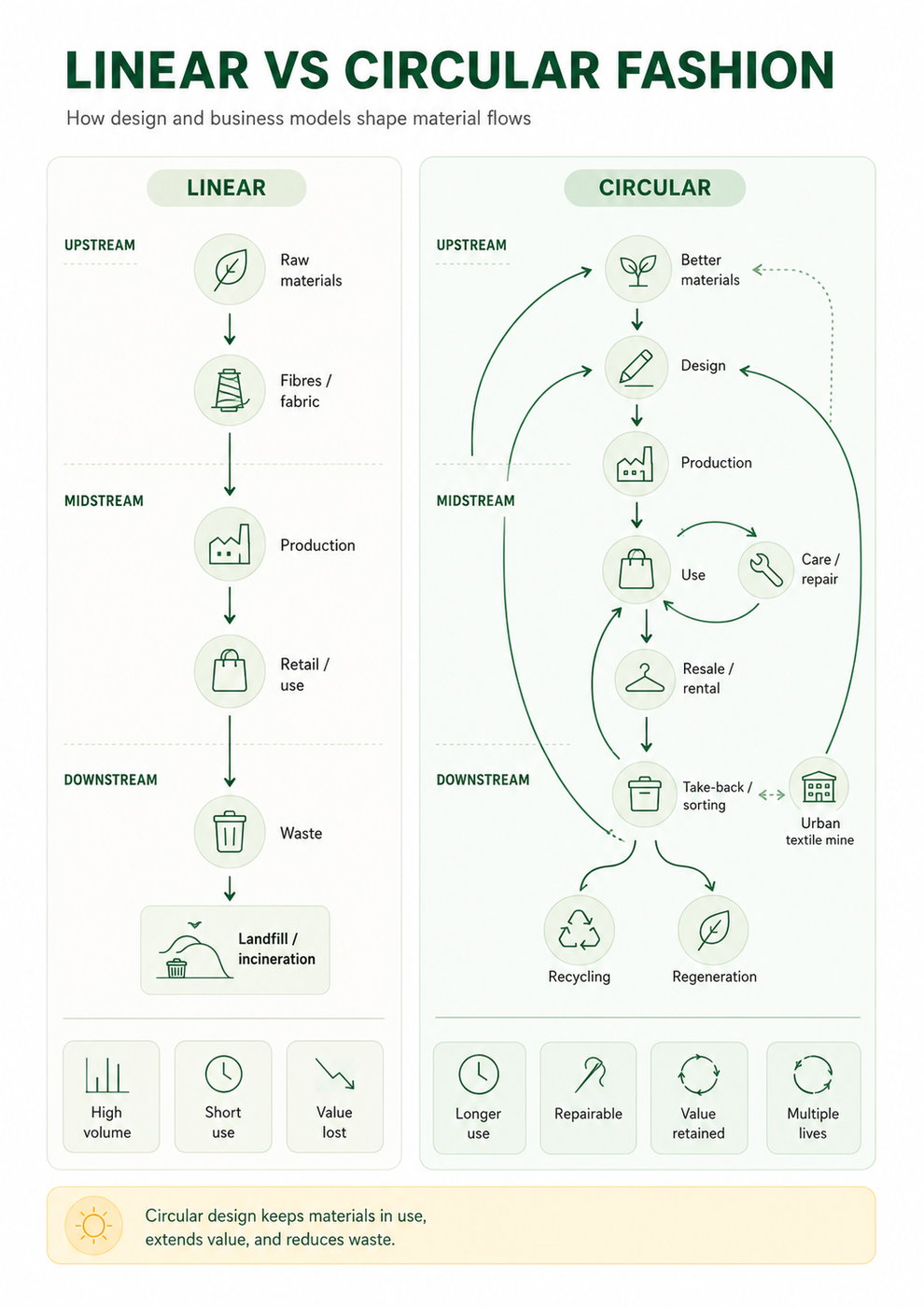
Figure 1. Linear and circular fashion compared across the textile value chain. In fast fashion, business model pressures shape design decisions towards speed, low cost, and short use cycles. Circular design starts from a different logic: keeping products and materials valuable for longer through durability, repair, reuse, recovery and better system coordination.
Fashion was not always organised around rapid production and disposal. Before the Industrial Revolution began transforming textile production in the second half of the 18th century, textiles and garments were costly and labour-intensive to produce, and were commonly maintained, repaired, altered, reused, and passed on. The Industrial Revolution mechanised textile production, enabling clothing to be manufactured at an increasing scale and lower cost. From the 1990s onwards, the emergence of fast fashion accelerated this shift, introducing shorter production cycles, more frequent collections, and increasingly disposable consumption patterns. Today, much of the industry operates through a linear “take–make–use–waste” model: resources are extracted and transformed into fibres, yarns, fabrics and garments, sold, often used for a limited period, and then discarded. In this one-way flow, value is created through production and sale but rapidly lost through underuse, short use cycles, and disposal.
In fast fashion, this linear logic is intensified by business models based on high volumes, low prices, speed to market, and constant novelty. These commercial pressures shape design briefs from the beginning: products are often designed to be produced quickly and cheaply, rather than to last, be repaired, circulated between users or returned safely into material systems. Silhouettes, materials and constructions are frequently optimized for rapid trend cycles and low production cost, not for durability, repairability, recyclability, or multiple lifecycles.
This makes fast fashion both a business model problem and a design problem. The first upstream issue is not only which fiber, seam or trim is selected, but the commercial logic that defines what the product is expected to do: sell quickly, follow a trend, reach a low price point and be replaced soon after. Once that logic is embedded in the brief, many circularity barriers become almost inevitable. A blended fabric may be difficult to recycle; a bonded lining may prevent disassembly; weak seams may shorten the useful life of a garment; complex trims may complicate sorting; trend-led aesthetics may make a product feel obsolete long before it is physically worn out.
This linear model also represents a major economic loss. Less than 1% of the material used to produce clothing is recycled into new clothing, resulting in the loss of more than USD 100 billion in material value every year. At the same time, short use cycles and premature disposal mean that garments lose much of their potential value before the materials themselves reach end of life adding up to more than USD 500 billion in value is lost every year due to clothing underutilisation and the lack of recycling.
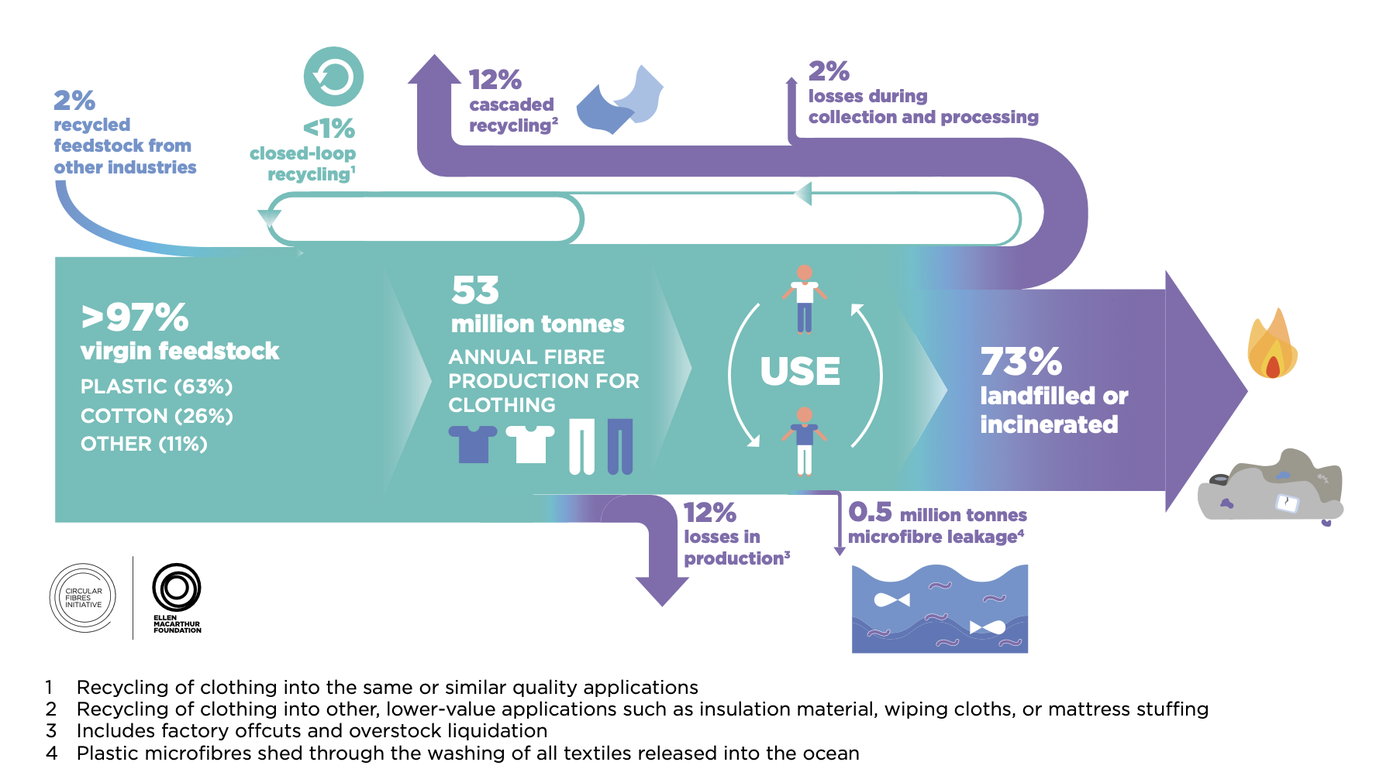
Figure 2. Global material flows for clothing in 2015, showing that more than USD 100 billion in material value is lost annually due to low clothing-to-clothing recycling and high rates of landfill and incineration. Source: Ellen MacArthur Foundation, A New Textiles Economy: Redesigning Fashion’s Future (2017), p. 20.
RESOURCE INSIGHT: A New Textiles Economy: Redesigning Fashion’s Future — Ellen MacArthur Foundation, 2017. Fashion's linear 'take-make-dispose' model wastes more than USD 500 billions of clothing value every year: garments are worn less and thrown away faster, while production has doubled in 15 years. The report sets out a vision for a new textiles economy built on circular principles - eliminate waste, keep materials in use, regenerate natural systems - with concrete actions for industry and policymakers. Source: https://www.ellenmacarthurfoundation.org/publications/a-new-textiles-economy-redesigning-fashions-future.
1.1.1 Circular Business Models and Real-World Trade-offs
Circular design becomes commercially durable when product architecture and value capture are aligned. If a company earns only from the first sale, the financial return from repair, resale or multiple ownership cycles may accrue mainly to users or third parties, even though the company may still benefit through quality, reputation, compliance and lower material risk. Business models that include repair, resale, rental, take-back, refurbishment or product-as-a-service allow the company to participate more directly in the value retained after the first sale.
The appropriate model depends on the product and market. A brand does not need to operate every circular pathway itself, but it should identify who captures value, who carries the cost and which partners make repair, resale, return or recovery feasible. The design brief and the value-creation model therefore need to be developed together.
Circular design is also connected to business model choices. If a company depends on selling more new products every season, design decisions will often support short cycles and replacement. If the business model includes repair, resale, rental, leasing, take-back, or remanufacturing, the product must be designed differently from the start. It may require stronger construction, replaceable components, clearer material information, timeless or adaptable aesthetics, and systems that support return, sorting, and recovery.
In this sense, circular design is not only about materials or construction. It is about aligning product design, user experience, value creation, and recovery pathways. Circularity is therefore not an afterthought added at the end of a product’s life. It is a design logic that must shape decisions from the first brief.
However, circular fashion is not a frictionless transition: each strategy solves some problems while potentially creating others.
Designing for circularity requires navigating trade-offs rather than applying universal solutions.
FOR YOUR SME / BUSINESS CASE: concrete numbers first. A €60 T-shirt worn 30 times costs €2.00 per wear; worn 120 times it costs €0.50 per wear. According to WRAP, extending the active life of clothing by just 9 months reduces its carbon, waste and water footprints by roughly 4–10% each. For an SME this means: specify durability (seam strength, colour fastness) and repair information in the design brief now — it costs almost nothing at the drawing stage and shows up directly in fewer returns, fewer complaints and higher resale value later.
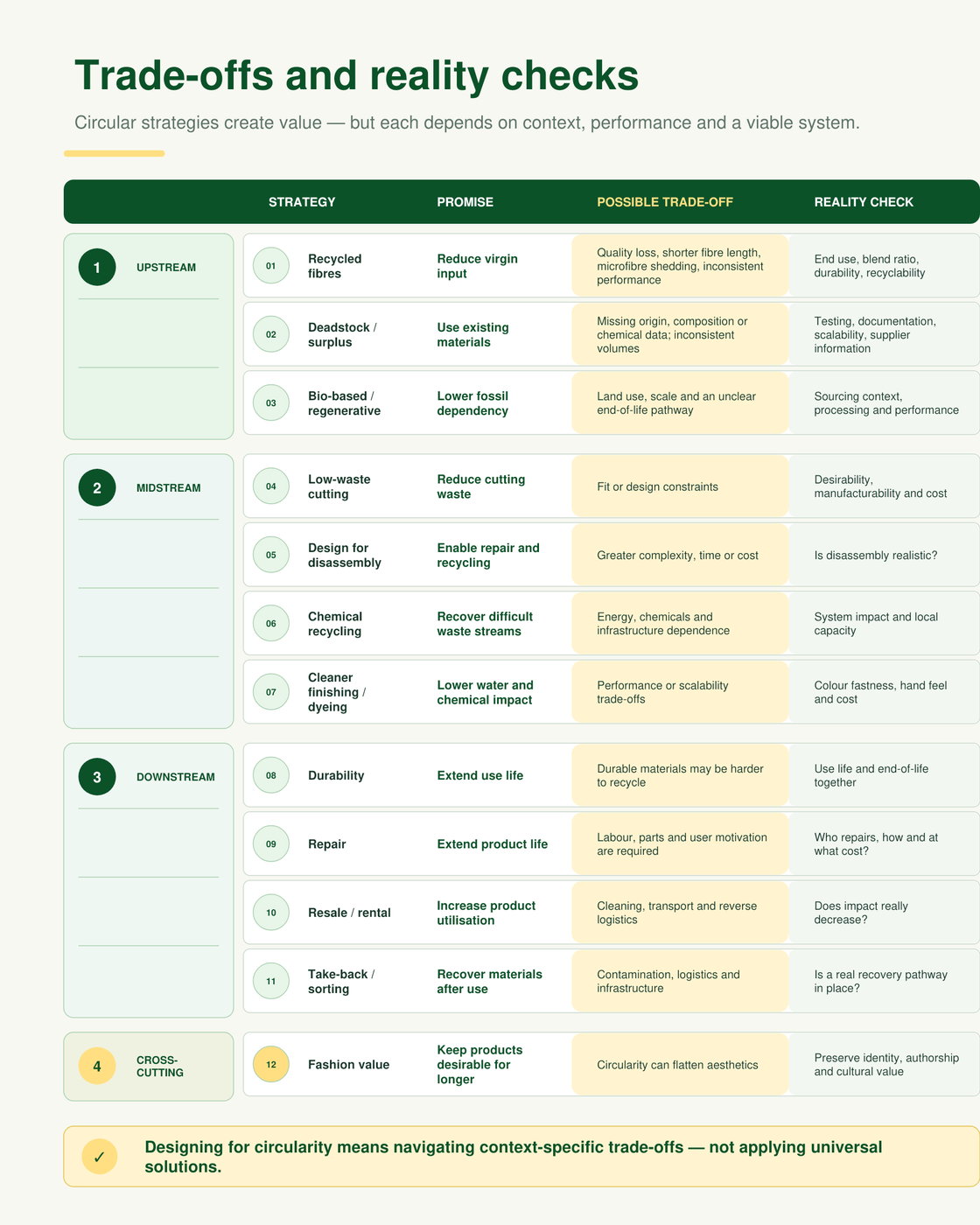
Figure 3. Trade-offs and Reality Checks in Circular Fashion. Circular design decisions rarely produce benefits across every impact area. A strategy may preserve product or material value while increasing energy use, transport, cost, or operational complexity. Trade-offs should therefore be assessed across the full lifecycle and in relation to the product’s intended use, expected lifespan, and available infrastructure.
1.1.2 Critical Reflection — Can fashion be circular if its creative system is extractive?
Circularity is often discussed in relation to materials, products, and waste. However, the fashion system can also be extractive in the way it uses people’s time, skills, and creative labour. Behind every collection, campaign and fashion show is a wide network of assistants, interns, pattern cutters, stylists, photographers, producers, set designers, casting professionals and other freelancers. Their contribution is not always adequately recognised or remunerated, and access to the industry may depend on accepting unpaid internships, low-paid entry-level positions, unpaid overtime or financially insecure freelance work.
This is not only a labour issue but also a question of whose creativity the industry can afford to include. When professional entry and progression depend on being able to work for little or no pay, opportunities become concentrated among those with sufficient financial support. A fashion system cannot be considered sustainable if it preserves materials while exhausting or excluding the people whose labour creates its cultural and commercial value.
At the most visible end of this system, luxury creative directors may be responsible for multiple annual outputs across Spring/Summer, Autumn/Winter, resort, pre-fall, menswear, womenswear and couture, alongside campaigns, collaborations and continuous digital content. Although their position and remuneration differ substantially from those of interns and precarious freelancers, the accelerated calendar exposes the same underlying expectation: the continuous production of novelty, regardless of the time required for research, reflection and creative development.
In 2015, Raf Simons left Dior after publicly questioning the speed of fashion and the limited time available for reflection and creative development. His departure, after producing six Dior collections a year, became an important reference in debates about the human and creative consequences of the fashion calendar. More recently, the high turnover of creative directors across luxury houses has renewed questions about commercial pressure, constant novelty, and the time required to build a coherent creative vision. These departures have different causes and should not all be interpreted as acts of protest, but together they expose tensions within the current system.
In 2020, designers and industry leaders—including Dries Van Noten, Gabriela Hearst and Marine Serre—called for a reset of the fashion calendar, proposing fewer products, better alignment with real seasons, reduced travel and less waste. Gucci’s Alessandro Michele also announced that the brand would reduce its annual shows from five to two.
These examples raise a wider circular design question: can products be designed for longevity within a system organised around permanent acceleration and replacement?
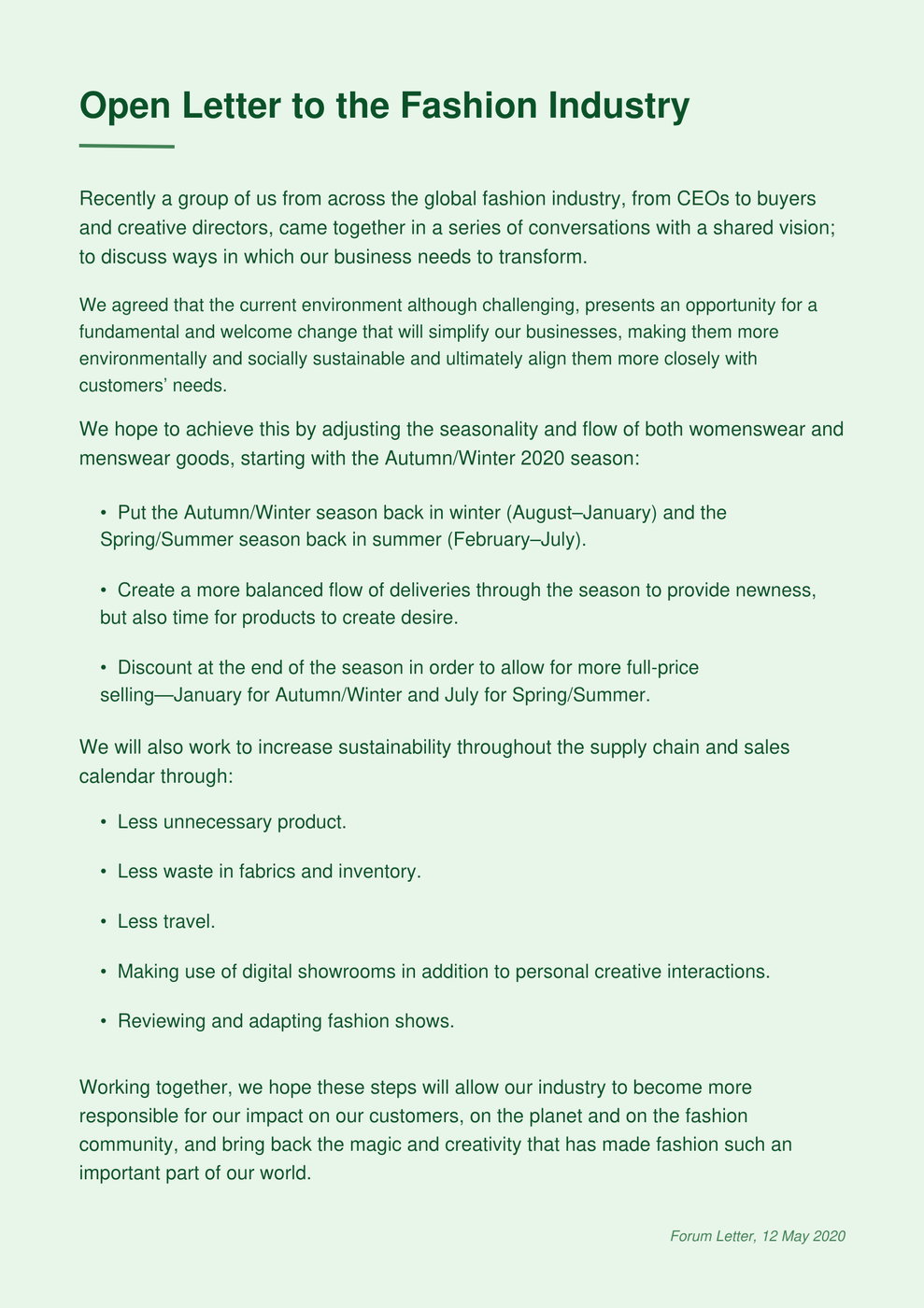
Figure 4. Open Letter to the Fashion Industry, published on 12 May 2020 following discussions led by Dries Van Noten, Andrew Keith of Lane Crawford and Shira Sue Carmi of Altuzarra. Its initial signatories included designers, executives and retailers such as Joseph Altuzarra, Gabriela Hearst, Marine Serre, Tory Burch, Craig Green, Erdem Moralioglu, Mary Katrantzou, Proenza Schouler, Acne Studios, Jil Sander, Nordstrom, Bergdorf Goodman, Selfridges and Mytheresa. The major luxury groups LVMH and Kering were not represented on the published signatory list. The initiative called for a more seasonally aligned calendar, fewer unnecessary products, reduced fabric and inventory waste, less travel, and a reassessment of fashion-show formats.
In the years that followed, some of the practices accelerated during the pandemic became embedded in the industry, particularly the use of digital showrooms, more flexible presentation formats and, for some brands, a reduction or consolidation of seasonal presentations. However, the wider system did not fundamentally slow down: multiple collections, frequent product drops and strong pressure for continual newness remain characteristic of much of the fashion market. The Open Letter can therefore be read less as a completed industry reset than as an important articulation of tensions that remain unresolved between longevity, commercial growth and the accelerated fashion calendar. Source: Forum Letter (2020), Open Letter to the Fashion Industry. Original text and signatories documented by Vogue Business, Fashionista and The Fashion Law
Designed and developed by FashionKIC, based on Forum Letter (2020), Open Letter to the Fashion Industry.
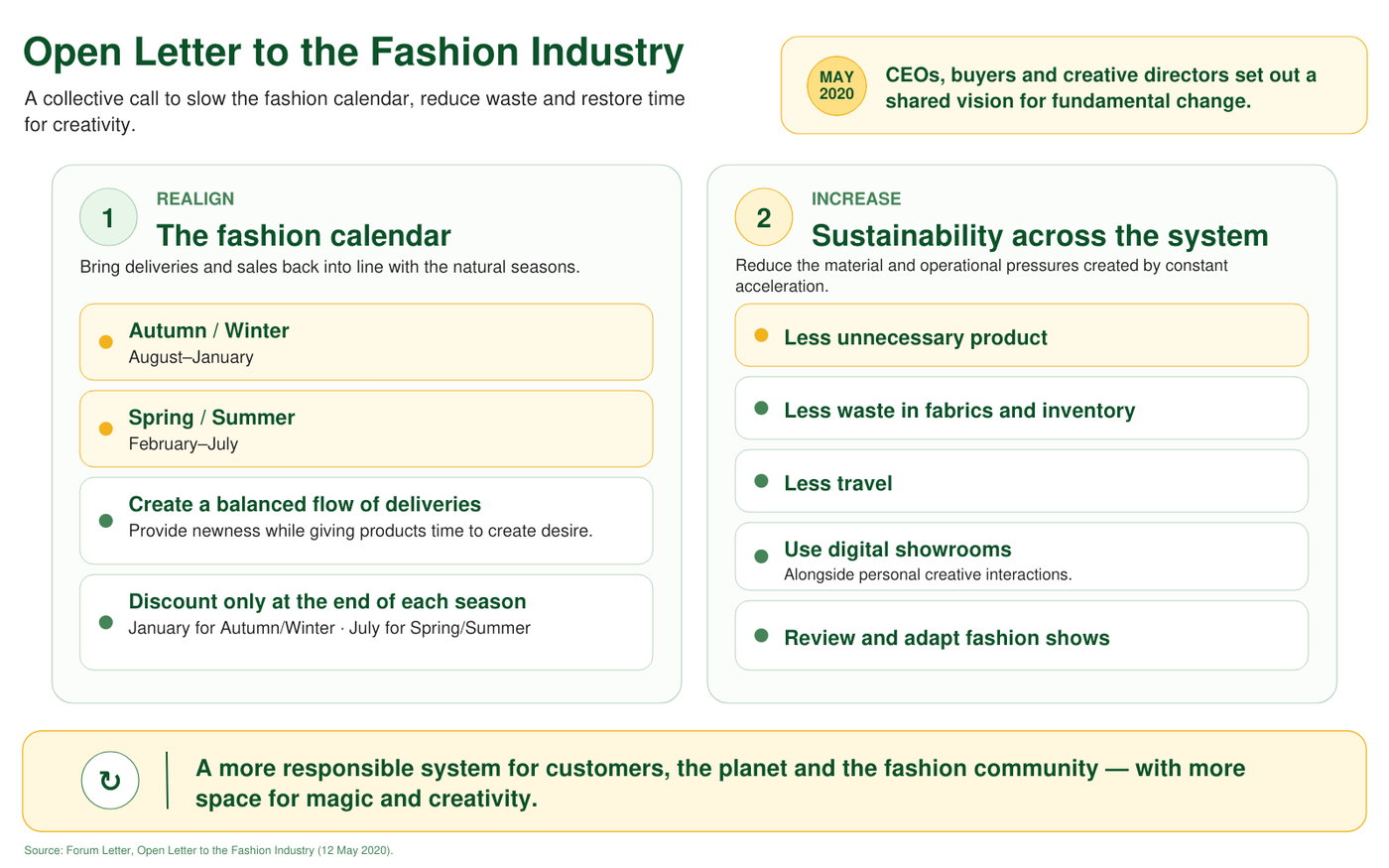
Figure 5. Key proposals from the 2020 Open Letter to the Fashion Industry, calling for a realignment of the fashion calendar and coordinated action to reduce overproduction, waste, and operational pressure across the industry. Adapted from Forum Letter (2020), Open Letter to the Fashion Industry, published 12 May 2020.
Sources
BoF — Raf Simons
Vogue — Dior departure
Vogue — Fashion Open Letter
Vogue — Gucci calendar
Diversity & Inclusion in the Fashion Industry
Good Work Review: Job Quality in the Creative Industries
A Quantitative Baseline of Job Quality in the Creative Industries
1.2 The Circular Textile Chain and Urban Textile Mines
To understand where circular value can be retained, recaptured, or lost, it is necessary to move beyond the individual product and examine the textile chain as a connected system.
The textile chain can be understood as a sequence of transformations: raw materials or polymers become fibres, fibres become yarns, yarns become fabrics, and fabrics are finished, cut and assembled into products. In a circular model, however, this is not simply a one-way chain. It becomes a system of potential loops through which products, components, and materials can circulate and retain value.
The idea of the “urban textile mine” adapts the broader concept of urban mining to textiles. Cities, households, wardrobes, resale platforms, donation systems, and post-consumer textile flows become reservoirs of embedded value. These textile stocks can feed take-back schemes, resale, rental, repair, remanufacturing, upcycling, and fibre-to-fibre recycling.
Source note: The term “urban mining” is commonly associated with the recovery of valuable materials from existing urban stocks and waste streams. It was originally used mainly in relation to metals, electronics and built-environment materials, and is here adapted to textiles as “urban textile mine”. In this module, the term refers to the value embedded in garments, home textiles, and post-consumer textile flows already circulating within cities and households.
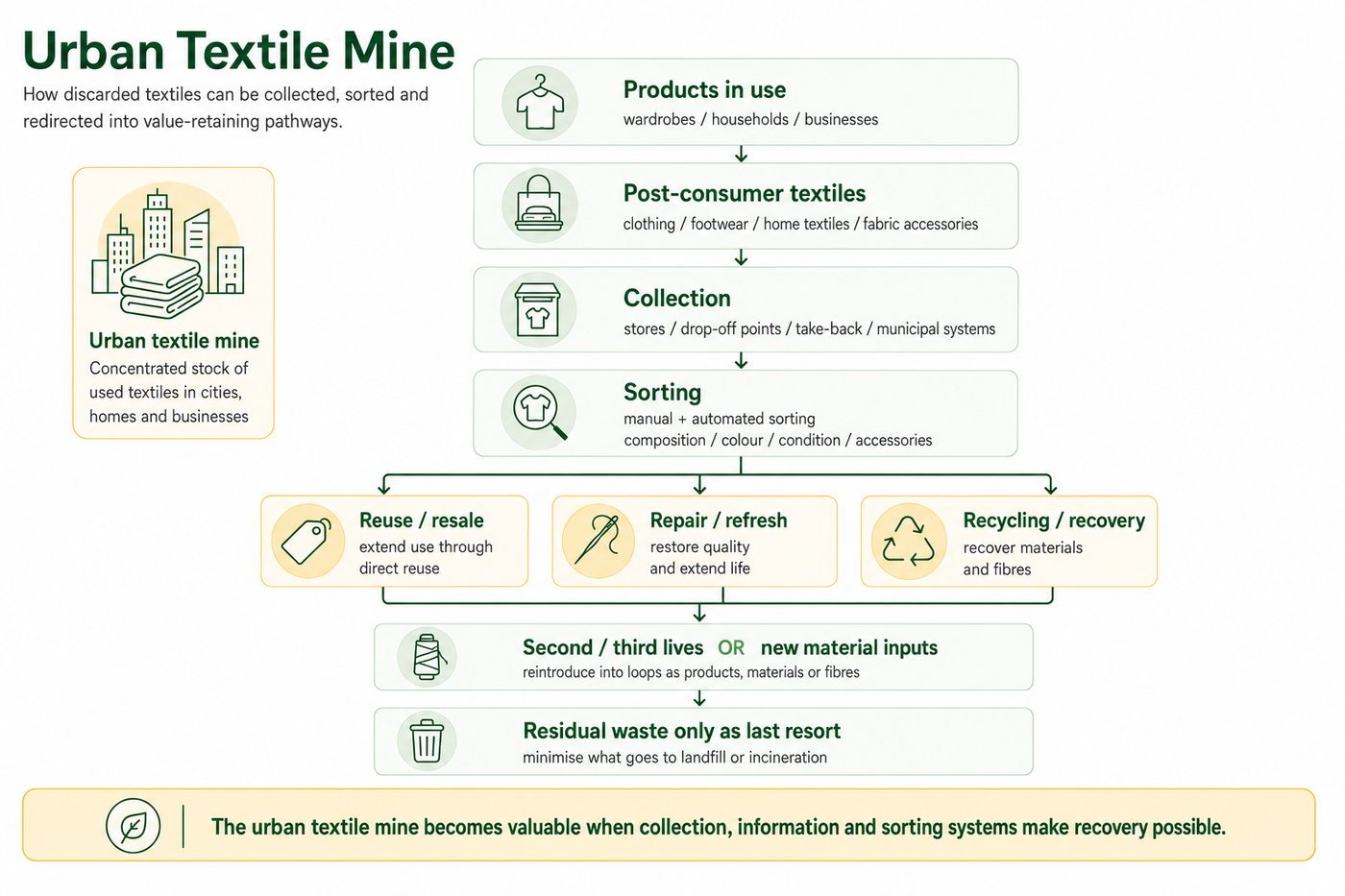
Figure 6. Urban Textile Mine — from discarded textiles to circular pathways. Urban Textile Mine: post-consumer garments, footwear, home textiles and fabric accessories as urban material stocks that can be collected, sorted and redirected towards reuse, repair, resale, recycling or recovery pathways.
RESOURCE INSIGHT: Circularity Gap Report – Textiles — Circle Economy. The global textile industry is trapped in a vicious cycle described as 'too poor, too much, too cheap': vast quantities of finite resources are turned into short-lived garments, and recycled textiles remain a drop in the ocean. Circle Economy's analysis shows that applying circular strategies could make the industry three times more circular, halve its environmental footprint and reduce textile waste. Source: https://circularity-gap.world/textiles.
RESOURCE INSIGHT: Our Vision of a Circular Economy for Fashion — Ellen MacArthur Foundation, 2023. The Foundation's vision asks the industry to design clothes that are used more, made to be made again, and made from safe recycled or renewable inputs. Getting there requires industry and government working together, significant investment, and system-wide transparency and traceability - the payoff is a resilient, thriving industry that regenerates the environment and creates distributed, inclusive growth. Source:
Source: https://www.ellenmacarthurfoundation.org/our-vision-of-a-circular-economy-for-fashion.
1.2.1 Case Study: LIPOR — Making the Urban Textile Mine Accessible
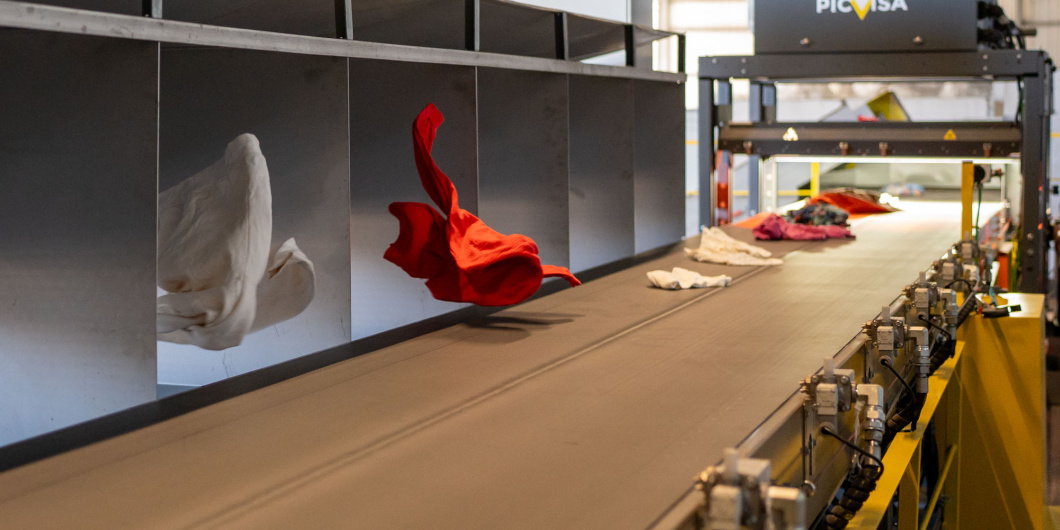
Figure 7. Portugal’s first Pilot Textile Sorting Unit. Presented by LIPOR and its associated municipalities in September 2025 within the be@t project, the pilot-industrial unit combines manual and automated sorting and can classify textiles into 14 categories according to material composition and colour. Source: LIPOR
The concept of an urban textile mine only becomes operational when systems exist to collect, identify, sort, and redirect post-consumer textiles. LIPOR, the intermunicipal waste management organisation serving eight municipalities in northern Portugal, provides a practical example of how this infrastructure can begin to take shape.
In September 2025, LIPOR and its associated municipalities presented the first Pilot Textile Sorting Unit installed in Portugal, developed within the be@t – Bioeconomy for Textiles and Clothing project. Operating at pilot-industrial scale, the unit has the capacity to process 50 tonnes of textiles per year and separate them into 14 categories according to material composition and colour. The process combines manual and automated sorting, accessory removal and baling, preparing different textile fractions for appropriate reuse or recycling pathways. LIPOR
The unit also has an experimental role. It is intended to generate data, test technologies, build knowledge across the textile and waste sectors, and assess whether the model can be scaled. LIPOR is also exploring local collection models involving recycling centres, mobile recycling centres, institutional partnerships and door-to-door collection.
This infrastructure-focused initiative is complemented by the Projeto Têxtil Circular, a separate pilot promoted by APED — the Portuguese Association of Distribution Companies — and financed by the Portuguese Environmental Fund. The project brings together textile producers, retailers, waste operators, public bodies, and other strategic partners to test the collection and management of used textiles in real conditions. It follows textiles from collection in participating stores through sorting and their subsequent destination, helping to identify existing capacities, information gaps and the technical, economic and environmental conditions required for a future national textile-waste management system. Projeto Têxtil Circular
Together, these initiatives demonstrate that discarded textiles do not automatically become circular resources. Their potential value depends on accessible collection systems, reliable information, sorting capacity, recovery technologies, and viable markets for the resulting products and materials. They also reveal a direct relationship with design: fibre blends, complex constructions, coatings, prints, and difficult-to-remove accessories can reduce sorting accuracy and restrict the recovery pathways available.
Reflection prompt
How could design decisions make a garment easier to identify, sort, disassemble and redirect towards its highest-value next use?
For designers and SMEs, the lesson is clear: the urban textile mine begins upstream. Decisions concerning material composition, colour, trims, disassembly and product information influence whether a garment can later be identified, separated and redirected towards its highest-value next use.
1.2.2 Case Example — ECOALF: Building a Material Recovery Network
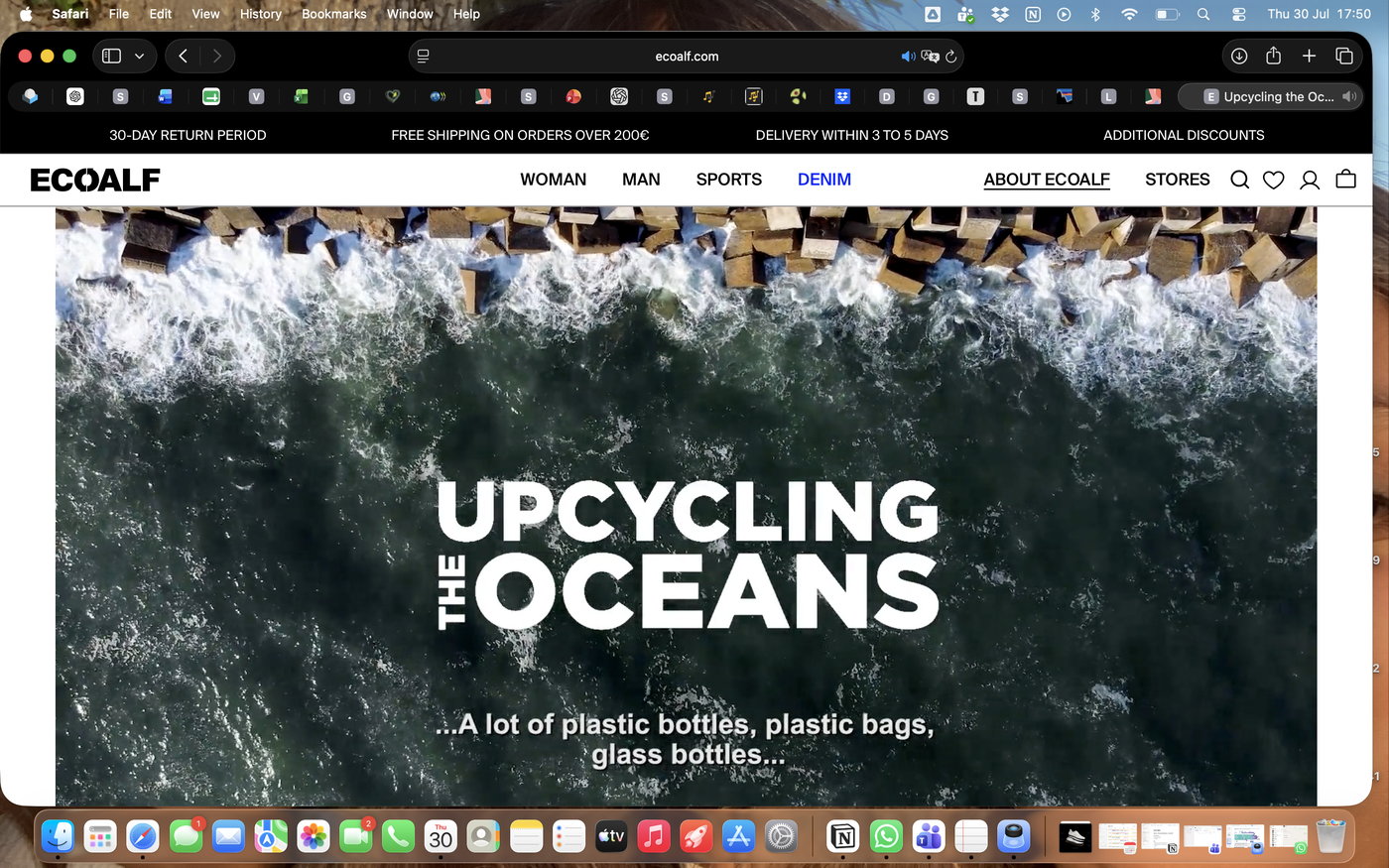
ECOALF’s Upcycling the Oceans project shows that waste only becomes a usable design resource when a system exists to recover, sort and transform it. Launched in Spain in 2015, the initiative works with fishing communities, ports, waste managers and recycling partners to collect marine litter caught in fishing nets and return it to land for sorting.
The recovered waste contains many different materials and levels of contamination. Only around 5–10% is PET suitable for transformation into ECOALF’s Ocean Yarn, a recycled polyester used in clothing, footwear and accessories. This illustrates an important reality of urban mining: the existence of waste does not automatically make it a viable material resource. Quality, separation, traceability, processing capacity and collaboration across the value chain determine what can actually return to production.
The project’s main innovation is therefore not simply a fabric made from recovered bottles. It is the creation of an organised recovery network that turns a dispersed and previously inaccessible waste stream into a potential source of material for design.
https://vimeo.com/830102855?fl=pl&fe=cm
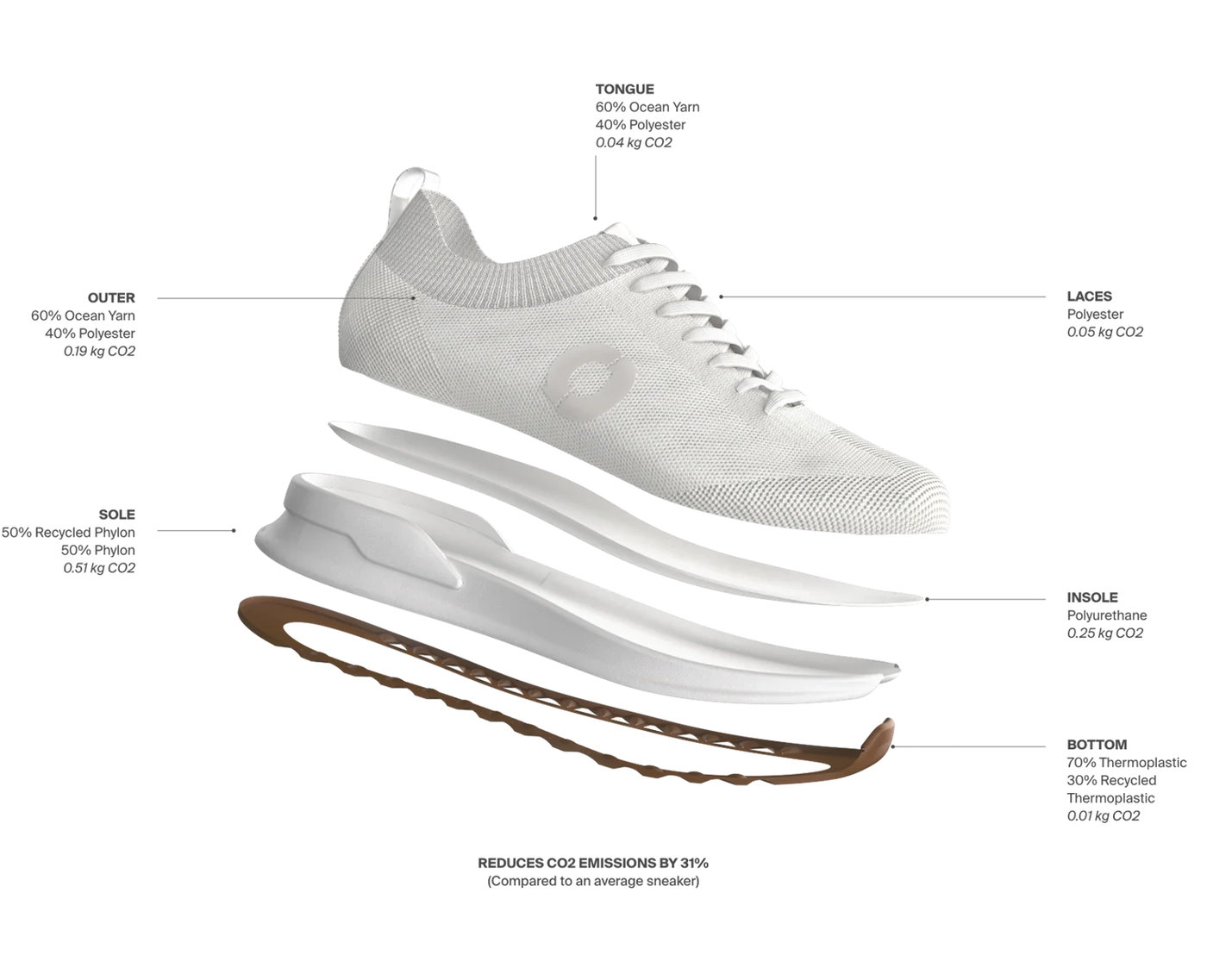
Figure 8. ECOALF’s Upcycling the Oceans project connects fishing communities, ports, waste managers and recycling partners to recover and transform marine litter. The initiative demonstrates that waste becomes a design resource only when supported by collection, sorting, and processing infrastructure. Sources: Upcycling the Oceans and Materials: Ocean Yarn
1.3 Design for Multiple Life Cycles
Designing for multiple life cycles means imagining garments not as products with a single owner or linear trajectory, but as assets that can move through successive periods of ownership, use, maintenance, repair and transformation. A garment may be worn by its first owner, repaired and resold, rented for specific occasions, adapted to changing bodies or tastes, and eventually remanufactured or recycled.
The Ellen MacArthur Foundation’s Butterfly Diagram is one of the most widely used frameworks for visualising how products and materials can circulate within a circular economy. It distinguishes between biological and technical cycles and shows different pathways for keeping products, components, and materials in circulation.
The technical cycle of the Butterfly Diagram helps situate these possibilities within a broader circular system. Its nested loops show that value is generally retained more effectively when a product remains intact through maintenance, prolonged use, sharing, and reuse. Refurbishment, remanufacturing and, finally, material recycling become relevant when the garment or its components can no longer circulate in their existing form. The aim is not for every product to pass through every loop, but to identify the pathways that preserve the greatest possible value for the longest possible time.
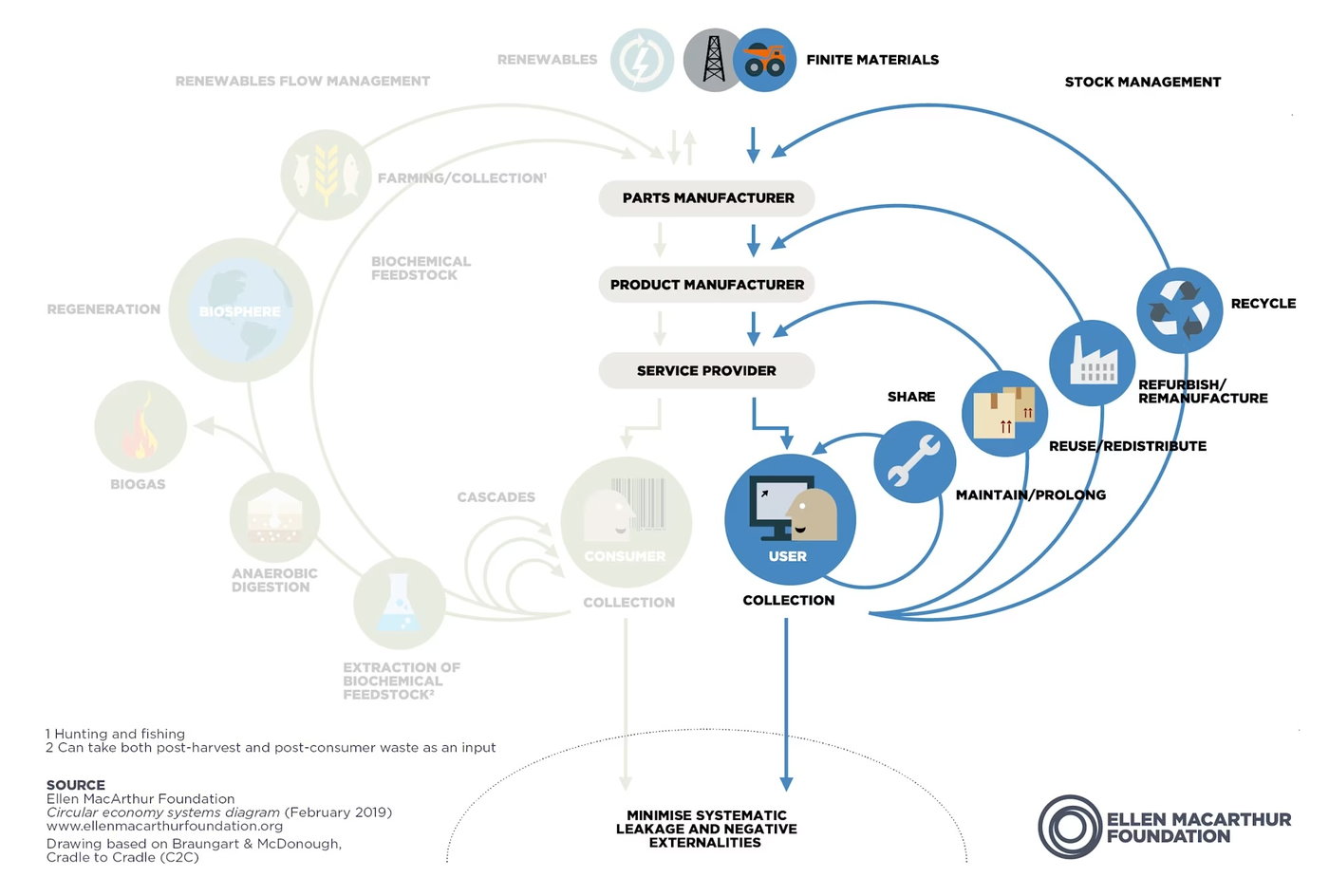
Figure 9. Technical cycle of the Butterfly Diagram. The nested loops illustrate how products, components and materials can retain value through maintenance and prolonged use, reuse and redistribution, refurbishment or remanufacturing, and, when higher-value pathways are no longer possible, recycling. Source: Ellen MacArthur Foundation, The Butterfly Diagram: Visualising the Circular Economy.
Circular design therefore prioritises versatility, durability, repairability and adaptability. Depending on the product, this may involve adjustable fits, robust seams, reinforced stress points, replaceable components, accessible construction or clear care and repair information. However, these strategies should not become a restrictive design formula. Circular fashion does not have to look modular, minimal or visibly “sustainable”, nor can circular innovation be reduced to a checklist of seams, zips and trims.
Innovation may begin with an existing garment, an underused material stream, a new fibre or manufacturing process, a digital system, a service model, or a different relationship between the designer and the user. These starting points can generate new silhouettes, construction methods, aesthetics, and forms of value. Instead of designing a conventional product first and adding circular features afterwards, designers can begin by asking what already exists, what should be preserved and how it could circulate — and allow those conditions to shape the product itself.
Extending product life is not only a question of physical durability. A garment also needs to remain desirable and meaningful to its user. Personalisation, adaptability and opportunities for user participation can strengthen emotional attachment and may encourage products to be valued and kept for longer.
Multiple life cycles also have an emotional and cultural dimension. Products that age well, retain relevance, invite personalisation or carry visible histories are more likely to be valued, cared for and passed on. Designing for multiple lives is therefore not only about extending technical durability. It is about creating products capable of acquiring new meaning and desirability across time and between users.
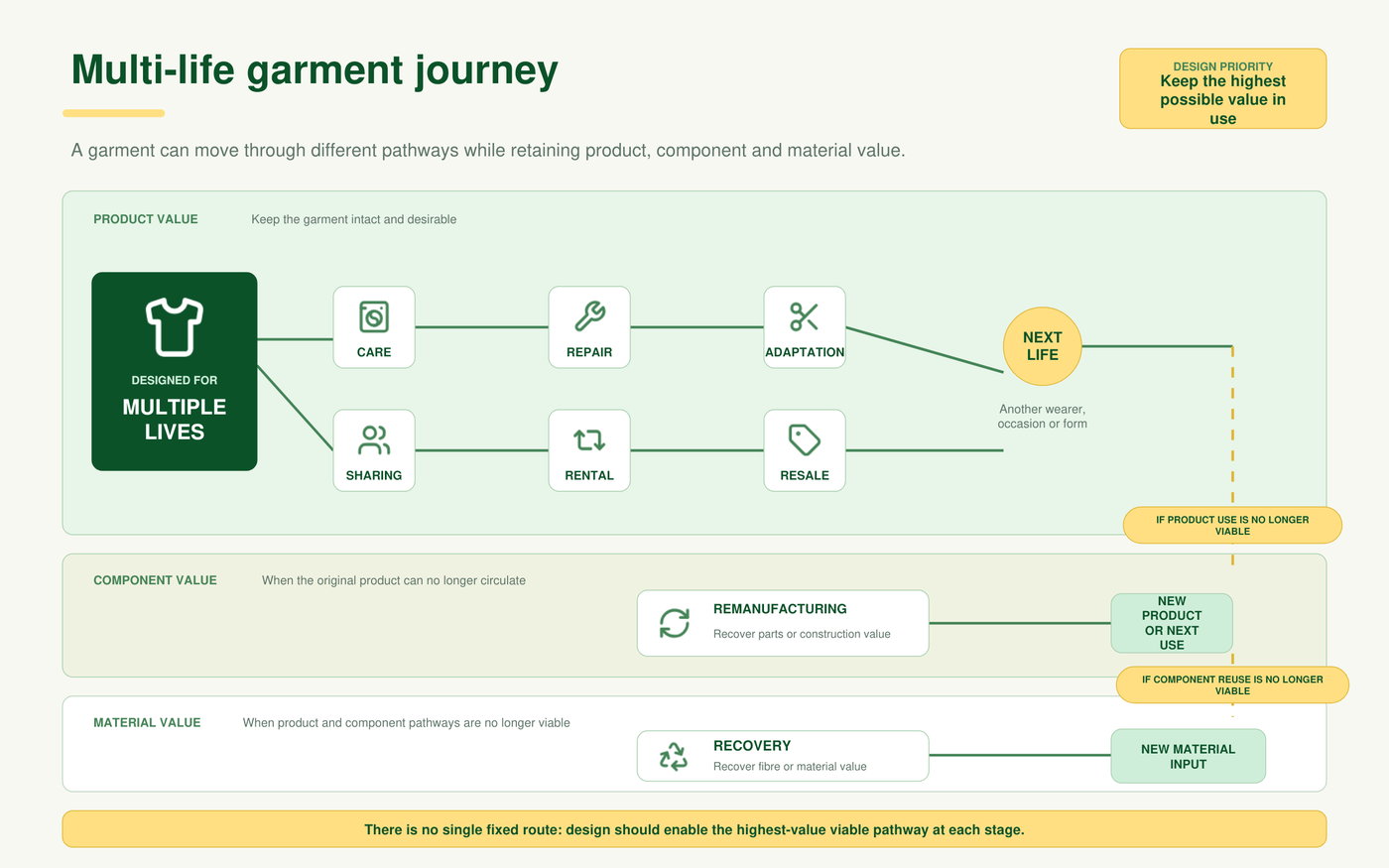
Figure 10. Multi-life garment journey. Circular design considers how garments can retain product, component and material value through care, repair, sharing, rental, resale, adaptation, remanufacturing and recovery pathways.
RESOURCE INSIGHT: Durability is Fashion’s Next Competitive Advantage — WRAP, 2026. New research by WRAP with the Leeds Institute of Textiles and Colour (27 partners, 200+ garments, 10,000+ test specimens) shows that increasing product lifetime is the single most effective way to reduce clothing's environmental impact. WRAP argues durability has moved from 'nice to have' to a commercial, regulatory and reputational issue - the brands that win will design products that last. Source: https://www.wrap.ngo/resources/report/durability-fashions-next-competitive-advantage.
1.3.1 Case Example — Miu Miu Upcycled: Existing Garments as the Design Brief
Launched in 2020, Miu Miu Upcycled reverses the conventional design process by beginning with existing garments rather than a predetermined product specification. Its first collection transformed 80 vintage dresses dating from the 1930s to the 1980s into one-off, numbered pieces. The material, construction, history, and limitations of each original garment influenced the final design.
In this model, circularity does not simply appear as an additional feature applied to a new product. The existing garment becomes the creative brief. Variation, traces of previous use and material constraints generate uniqueness and luxury value rather than being treated as defects to conceal.
The project does not, by itself, resolve questions of scale or establish a complete circular system. Nevertheless, it demonstrates how circular constraints can become a source of aesthetic and product innovation—extending an existing garment’s life while creating something that could not have been designed in exactly the same way from virgin materials.
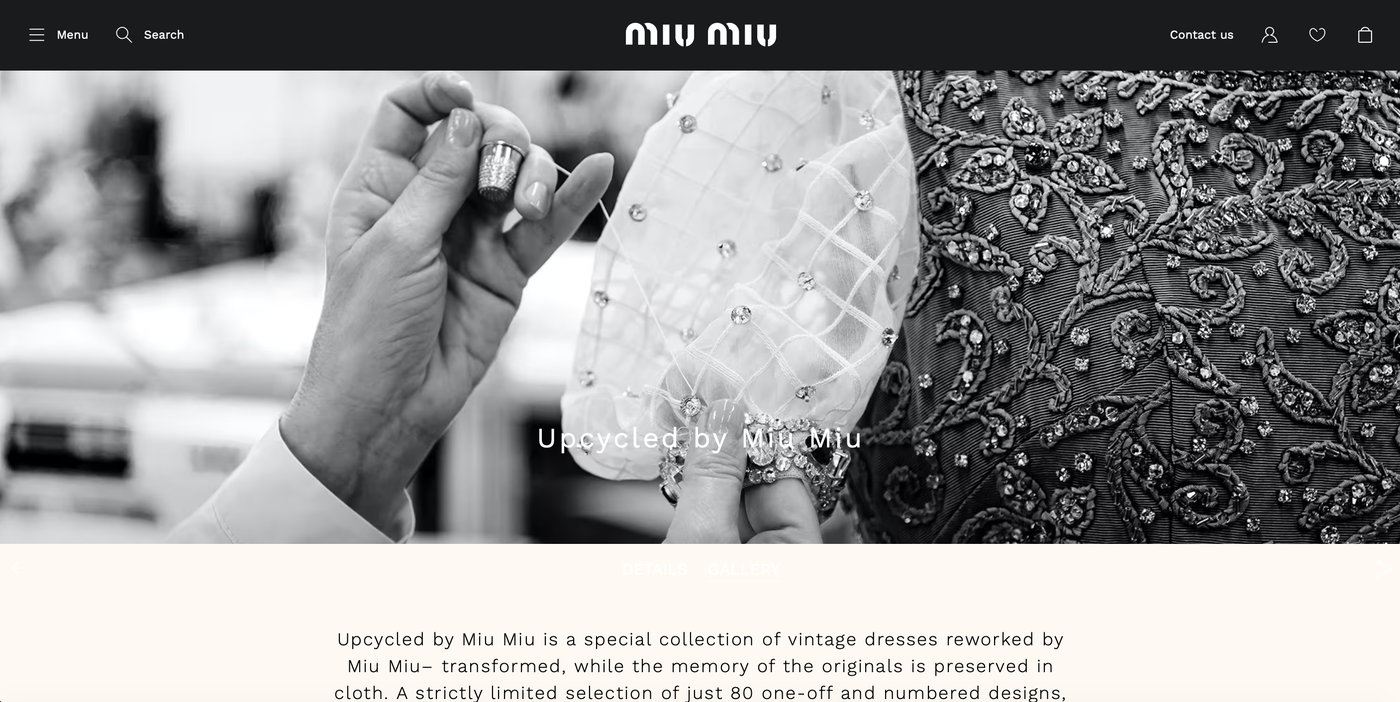
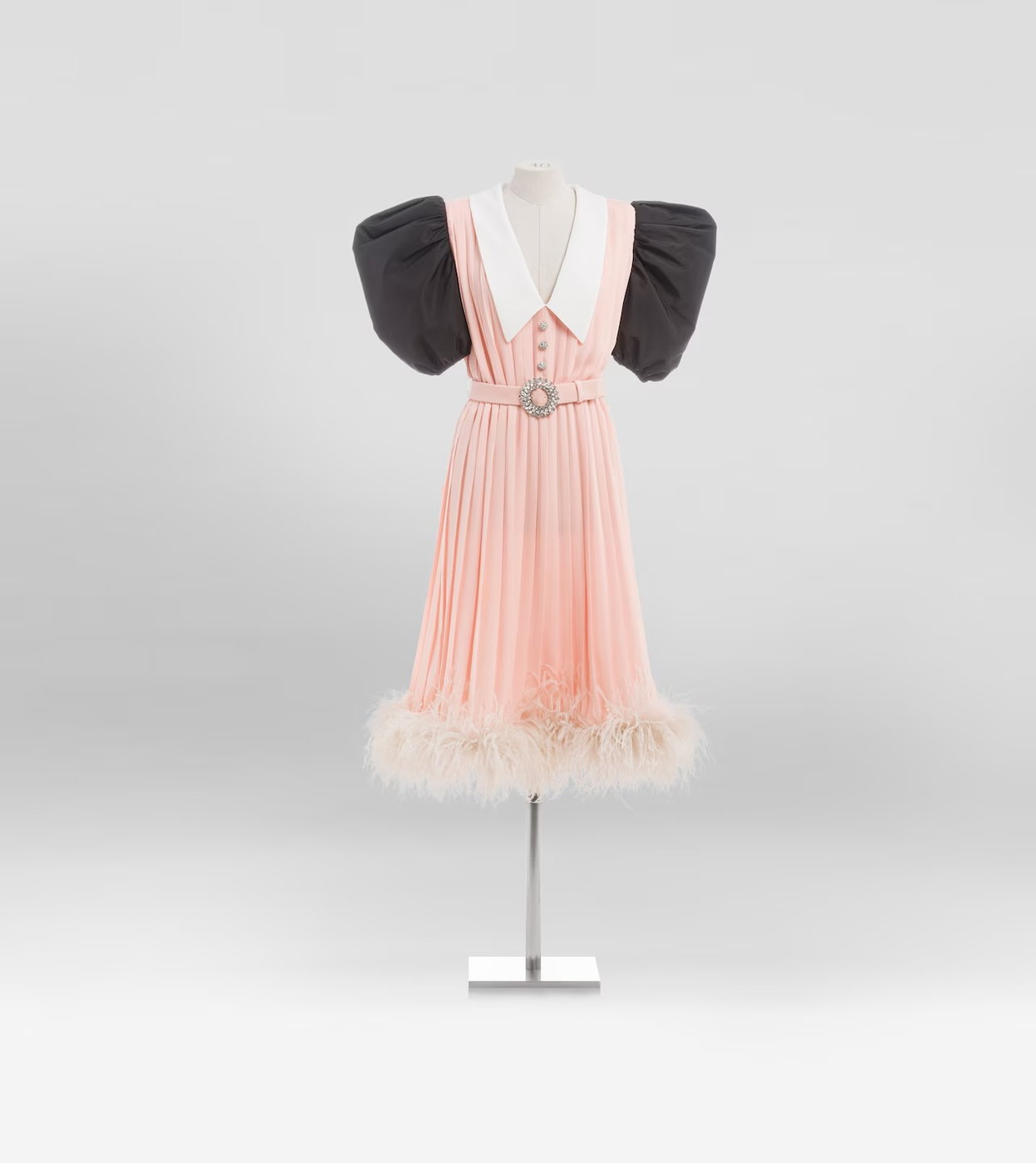
Figure 11. Miu Miu Upcycled transforms selected vintage garments into one-off luxury pieces, allowing the materials, construction and history of each original item to shape the new design. Source: Miu Miu, Upcycled by Miu Miu.
1.3.2 Case Example — Salomon INDEX: Designing a Product around Its Next Material Life
The Salomon INDEX project began not with a conventional running shoe, but with the question of what its materials could become after use. Because footwear typically combines numerous foams, rubbers, textiles and adhesives that are difficult to separate, the INDEX.01 was developed around two principal material groups: a polyester upper and a thermoplastic polyurethane (TPU) bottom unit.
The choice of materials and the intended recycling pathway influenced the shoe’s construction, colour, component architecture, and return system. After use, registered products could be returned to Salomon, separated and processed. In Europe, recovered TPU was used in the production of alpine ski boots, while polyester was directed towards new textile applications. The next life was therefore considered before the first product was designed.
More importantly, INDEX became a broader design platform rather than a single experimental product. Subsequent running-shoe iterations refined material efficiency and performance, while the same design logic informed the Brigade INDEX helmet, developed using 96% materials from one plastics family so that it could be recycled without disassembly.
Approximately 85% of the shoe by weight—the TPU bottom unit—was designed to be recycled into ski-boot components. The remaining polyester upper was intended for textile recycling, although implementation of this pathway proved more challenging.
The project demonstrates that designing for multiple life cycles does not have to mean adding modular panels or replaceable trims. Innovation can redefine material combinations, manufacturing methods, aesthetics, reverse logistics, and even the relationship between product categories. In this case, the future material pathway became part of the design brief.
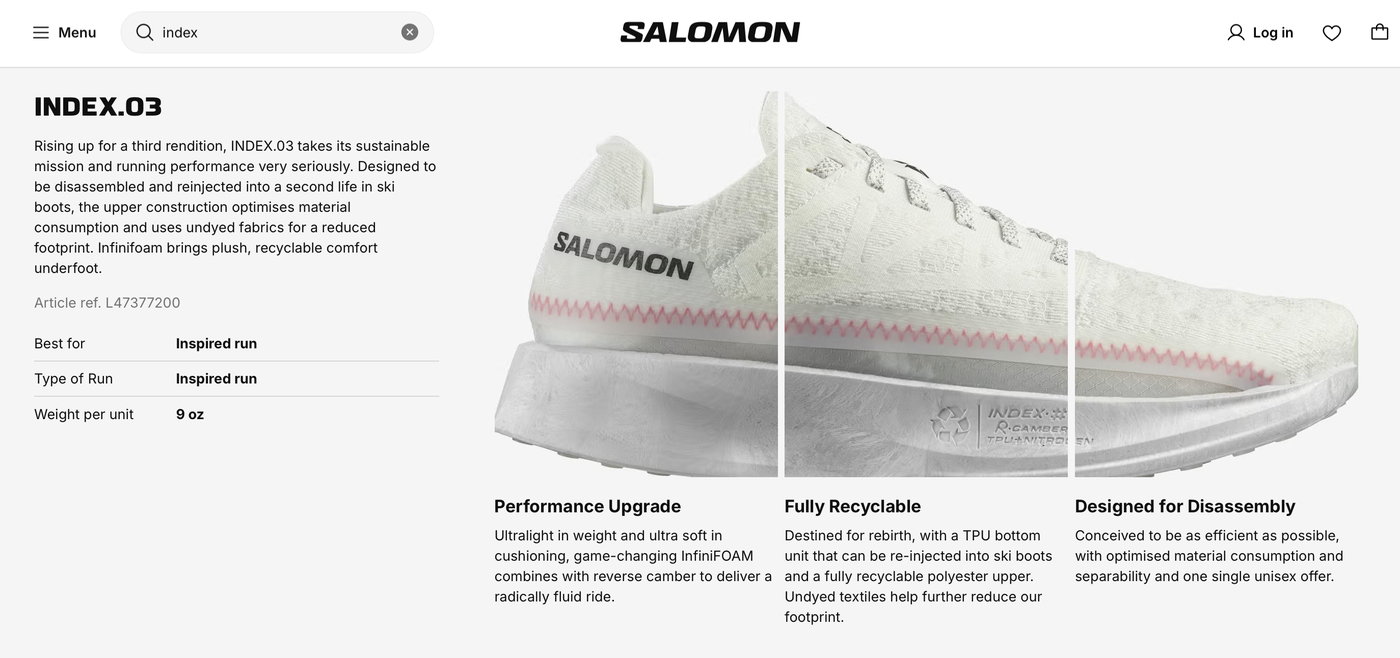
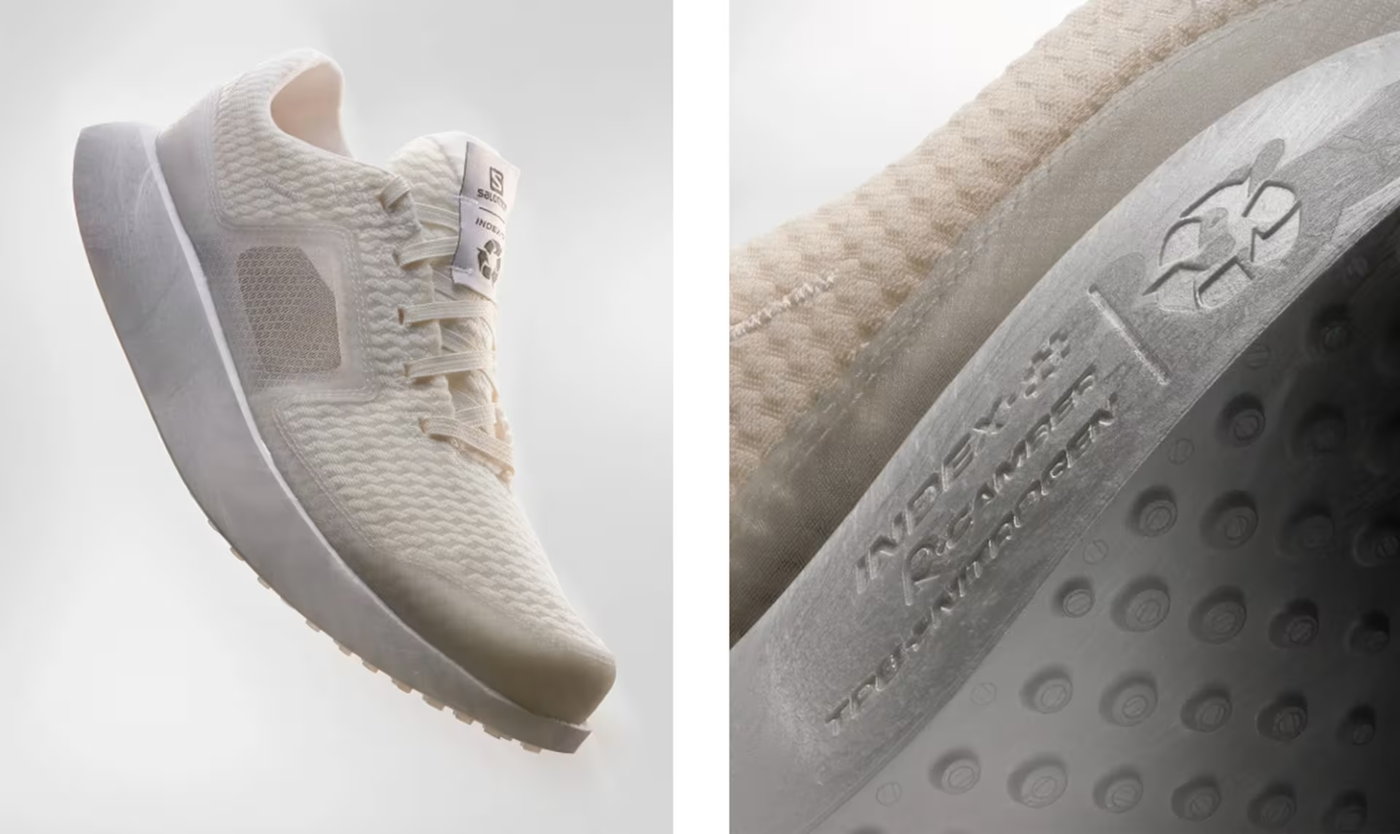
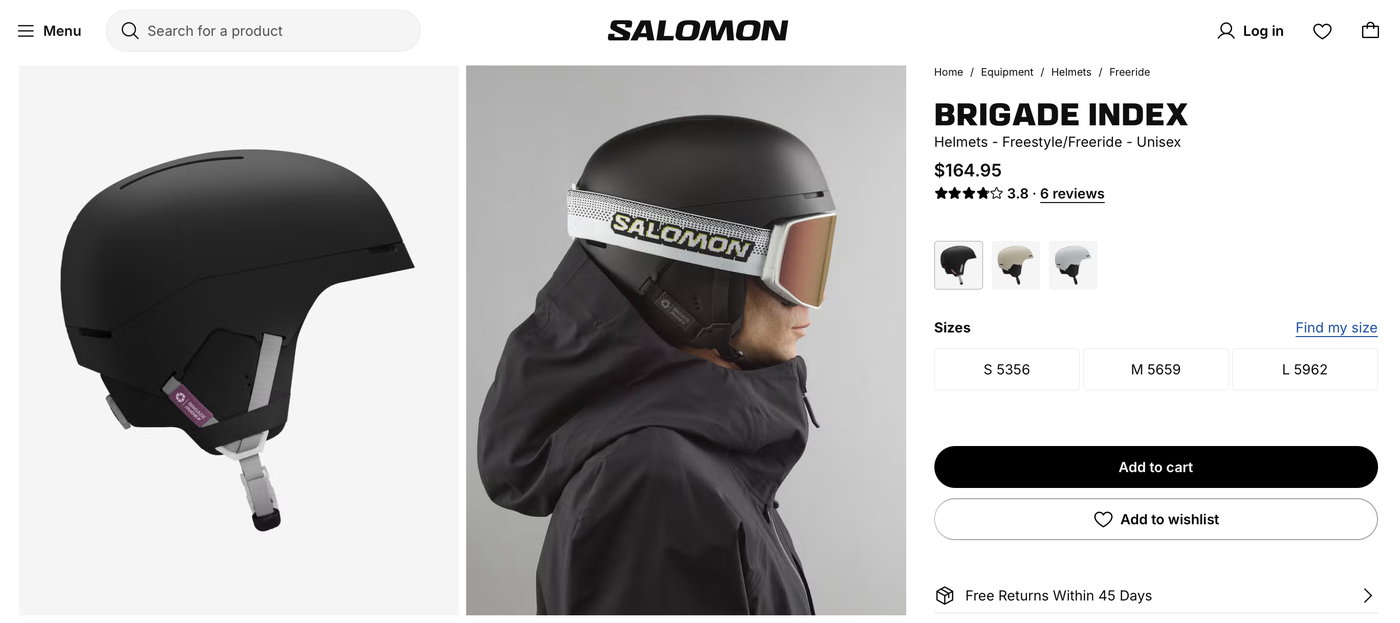
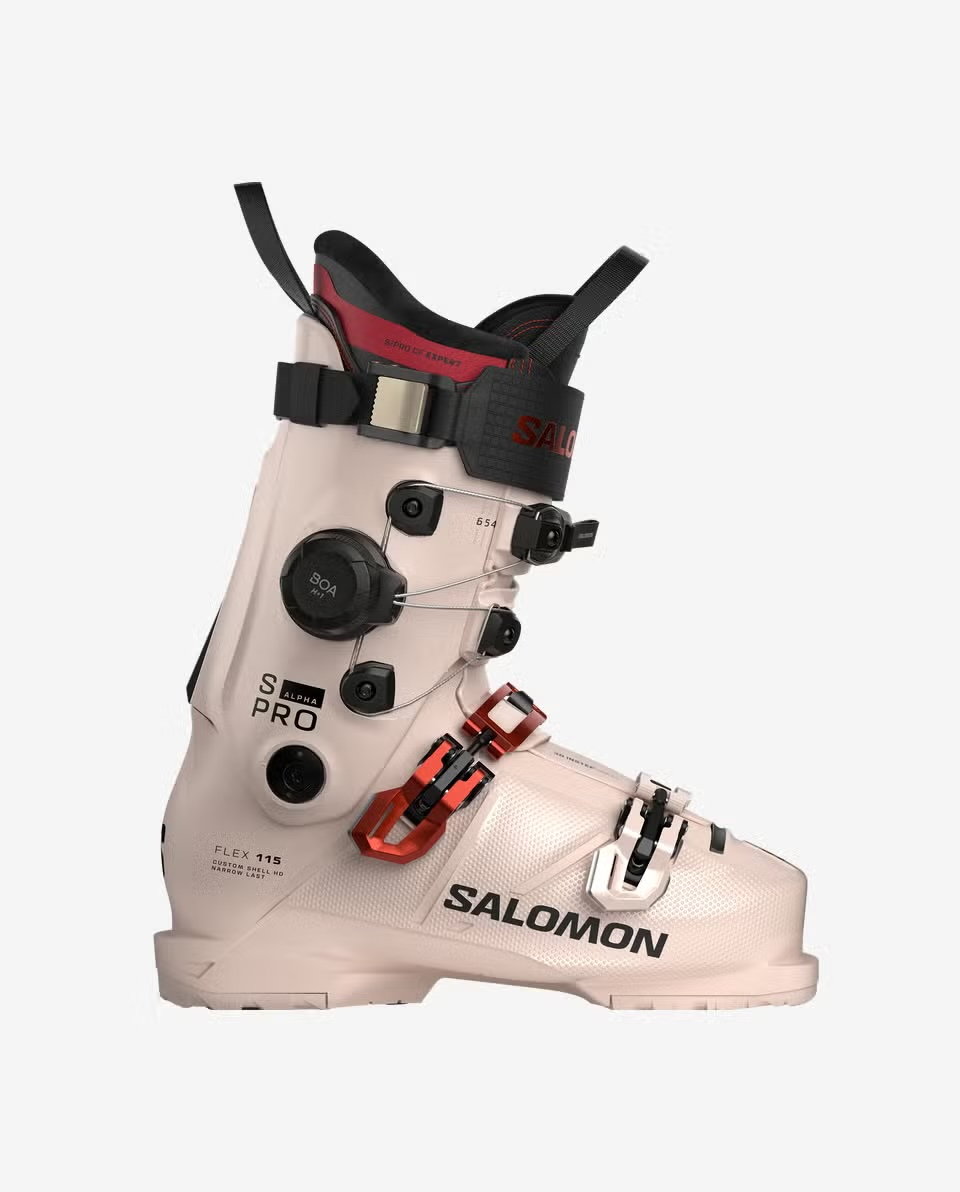
Figure 12. Salomon INDEX demonstrates a material-led approach to multiple life cycles. The intended transformation of a running shoe into feedstock for ski boots and textile applications influenced the product’s materials, construction and return system from the outset. Source: Authors’ own elaboration based on Salomon, Introducing the INDEX.01 Recyclable Running Shoe, Recycling the INDEX.01 and Salomon Unveils the Brigade INDEX Helmet.
1.4 Life Cycle Thinking and Life Cycle Assessment as Design Tools
Life cycle thinking expands the designer’s focus from the finished garment to the full journey of materials and products: raw material extraction and cultivation, fibre production, processing, manufacturing, transport, retail, use, care, repair, reuse and end-of-life. This broader view helps identify where environmental impacts occur, where value is lost and where design decisions can make the greatest difference.
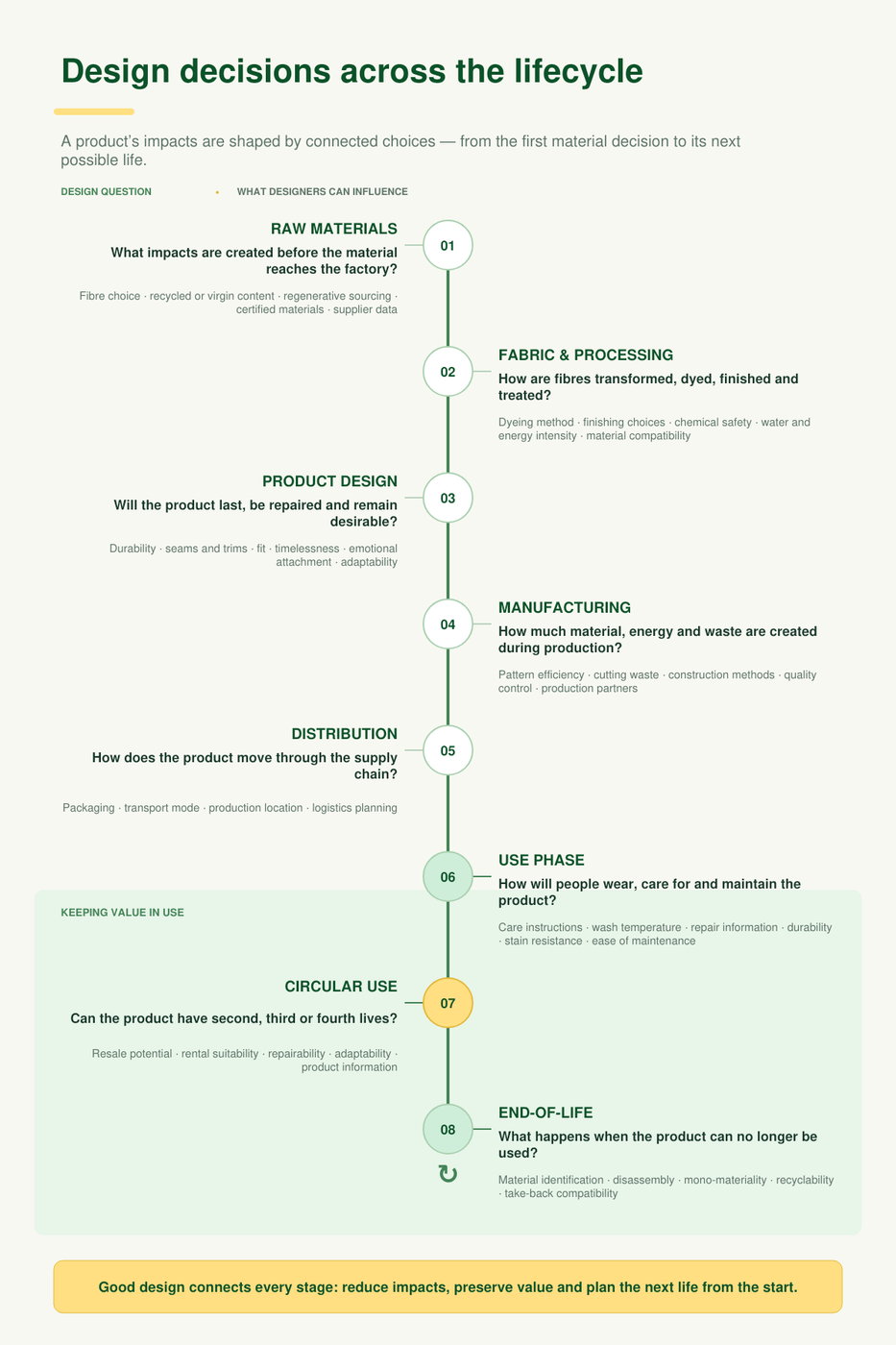
Figure 21. Design decisions across the product lifecycle. At each stage, designers can influence environmental impacts, product performance and the potential to preserve value through extended and repeated use.
Life cycle thinking and Life Cycle Assessment (LCA) are related, but they are not the same. Life cycle thinking is a design mindset, while LCA is a structured method for quantifying potential environmental impacts across a defined product system.
1.4.1 Life-Cycle Thinking and Design-Decision Tools
Eco-design strategy wheel (LiDS wheel): a practical map of eight strategies across materials, production, use and end-of-life that helps design teams choose where to intervene in the product lifecycle at the design-brief stage.
Design-for-X checklists: structured SME checklists for durability, repairability, disassembly, recyclability and mono-materiality, applied to a sketch, sample or existing product in under an hour — flagging which circular strategies the current design supports and which it blocks.
Circularity metrics at design stage: the Material Circularity Indicator (MCI) scores how restorative a product’s material flows are (0–1), alongside circularity rate and simpler design-stage proxies such as recycled-content share and mono-material component share.
Tools that support design decisions: material-selection tools (e.g. Higg MSI), digital product configurators, PLM sustainability modules and LCA-lite screening tools allow designers to compare options before the design brief is locked.
SME exercise (EQF 4/5/6): score a product concept on the eco-design wheel — one sentence per pathway (materials, production, use, end-of-life) — and estimate its MCI with the Ellen MacArthur Foundation’s free Excel tool, then reflect in one or two sentences on the single design change that would move the score most.
Added some links to facilitate the completion of the exercise:
LiDS wheel: https://www.sustainabledesignhandbook.com/tools
Ellen MacArthur MCI tool: https://www.thinkstep-anz.com/services/circular-economy/material-circularity-indicator-mci-calculator
Ecodesign and circular design are closely related, but they emphasise different questions. Ecodesign focuses on reducing environmental impacts across the product life cycle, while circular design also considers how products, components and materials can remain in use and retain value over time. LCA can help assess the trade-offs created by either approach.
Life cycle assessment is particularly valuable for revealing hotspots, trade-offs and burden shifting. A material may reduce climate impacts while increasing water use; a more durable construction may require more resources initially but perform better if the garment is worn for longer; and a recyclable material may deliver little practical benefit if appropriate collection and recycling infrastructure is unavailable.
LCA should therefore be treated as a decision-support tool rather than a final sustainability verdict. Results depend on data quality, system boundaries, functional units, allocation methods and assumptions about use and end-of-life. Environmental LCA also does not automatically assess labour conditions, cultural value, desirability, emotional durability or the fairness of value distribution. Some impacts remain methodologically difficult to represent: the current Apparel and Footwear PEFCR, for example, is expected to be further developed to address areas including biodiversity and microfibre shedding.
Key distinction: Life cycle thinking helps designers consider the whole system. LCA quantifies selected environmental impacts within a clearly defined scope. Circular design uses this evidence alongside questions of durability, repairability, adaptability and value retention.
Sources:
UNEP Life Cycle Initiative
PEFCR for Apparel and Footwear
1.4.2 LCA-Informed Design Prompts
Designers are not expected to conduct a complete LCA themselves. However, they should be able to use life cycle evidence, question its assumptions and translate findings into design decisions. The following prompts can support early-stage exploration and later design evaluation.
1.4.3 Understanding the Evidence
- What function or service is being assessed — not only what material or product?
- Which lifecycle stages are included or excluded?
- Which environmental impact categories are being measured?
- What data, assumptions and end-of-life scenarios influence the result?
1.4.4 Translating Evidence into Design
- Which lifecycle stage is likely to create the most significant impacts for this product?
- Is the proposed material lower-impact only during production, or across the full lifecycle?
- Will the product require energy-, water- or chemical-intensive care?
- Could greater durability compensate for higher initial material or production impacts?
- Can the product be repaired using accessible skills, tools and components?
- Is it likely to remain functional and desirable long enough to justify its impacts?
- Can its components be separated, sorted and recycled through available or emerging infrastructure?
- Are we reducing environmental impacts, preserving product and material value — or ideally doing both?
Try it now
take one garment from your wardrobe and map it on the Ellen MacArthur Foundation's Butterfly Diagram (free PDF, ellenmacarthurfoundation.org) — which loop keeps the most value? Then score the garment against WRAP's free Circular Design Toolkit checklist (durability, repairability, recyclability, material health) and write down two design changes that would move it to a higher-value loop.
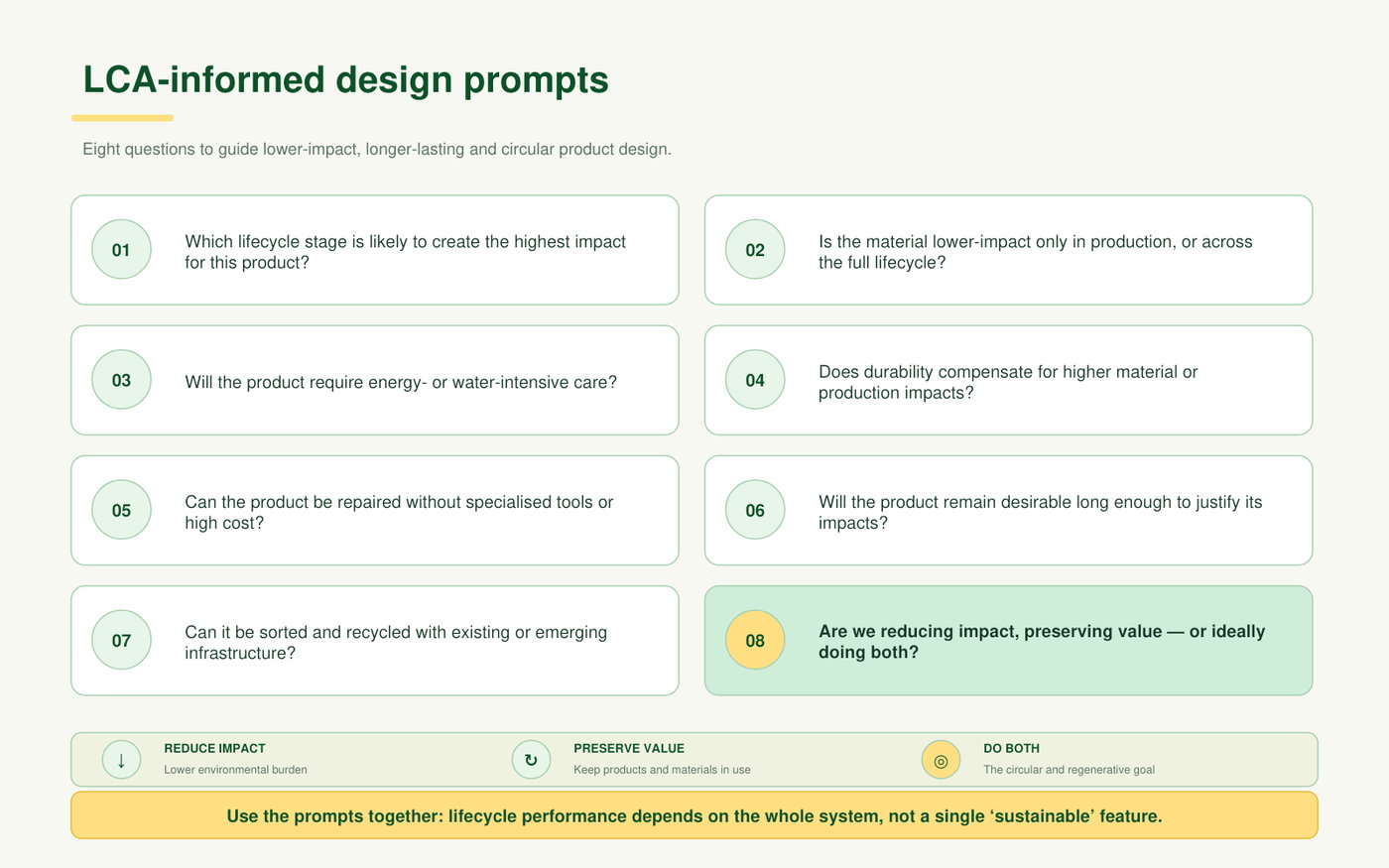
Figure 22. LCA-informed prompts for fashion designers. The questions connect life cycle evidence with decisions about materials, production, care, durability, repairability and future circulation. Source: Authors’ own elaboration based on UNEP Life Cycle Thinking, ISO 14040 and ISO 14044, the European Commission Environmental Footprint method and the Product Environmental Footprint Category Rules for Apparel and Footwear.