
Chapter 2 — full chapter
Chapter 2 — full chapter
2.2. From ESPR to Textile Specific Rules
This subchapter moves from ESPR's general framework to where textile requirements actually stand. ESPR sets the overall direction, while the detailed requirements are still being developed through the upcoming Textile Delegated Act. It introduces the JRC (Joint Research Centre) study - the European Commission's own technical research feeding those rules - and gives participants a realistic sense of when textile-specific requirements are likely to land.
The DPP Timeline for Textiles
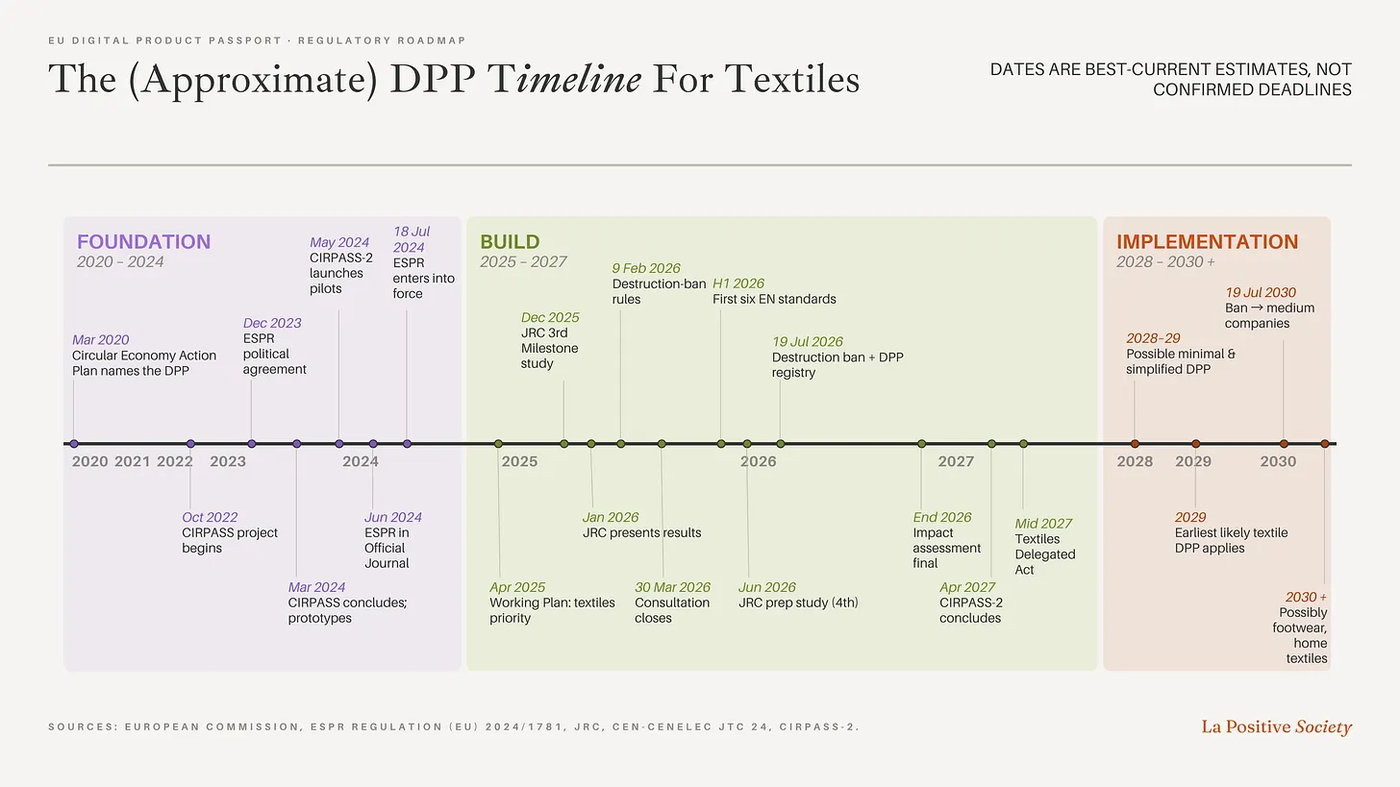
Phase 1 - Foundation (2020-2024): the idea becomes law
Textile passport prototypes were already being tested before ESPR existed - the EU was exploring what a passport could look like at the same time it was legislating that one must exist.
Phase 2 - Build (2025-2027): the evidence-gathering phase
This is where the JRC - the Joint Research Centre, the Commission's in-house scientific service - does its work. Before writing a binding delegated act, the Commission needs an evidence base, and the JRC's preparatory study on textiles is that evidence: it's building the case for what should go in the passport and how it should be tested. The study itself is not law - it's the research the law will be built from.
Phase 3 - Implementation (2029+): rules apply
Two dates matter and they're not the same: when the delegated act is adopted (currently estimated 2027), and when compliance is required (currently estimated no earlier than 2029). Everything before that - the JRC study, the consultations - is preparation, not obligation, and every date here can still move. Treat 2029 as the current direction of travel, not a locked deadline.