
Chapter 5 — full chapter
Chapter 5 — full chapter
5.3.1 Choosing a story angle
Circular storytelling can be organised through five main story angles. The appropriate angle depends on the communication goal, audience, desired response, and information available.
A product story focuses on materials, construction, durability, repairability, or other distinctive product characteristics. A process story explains how something is sourced, made, repaired, recovered, or transformed. A people story foregrounds the knowledge, labour and relationships of makers, repairers, artisans, users or communities. A use story connects the product to care, styling, memory, repair, resale or long-term ownership. A system story shows how the initiative relates to wider material flows, infrastructure, skills, collaboration, or industry change.
Each angle should answer two questions: what are we communicating, and why does it matter? A mono-material construction, for example, should not be communicated only as a technical feature. Its relevance may lie in making disassembly, sorting or recycling more feasible.
A campaign may combine angles, but it should establish a clear narrative priority. Trying to communicate every aspect at once can weaken both understanding and emotional impact.
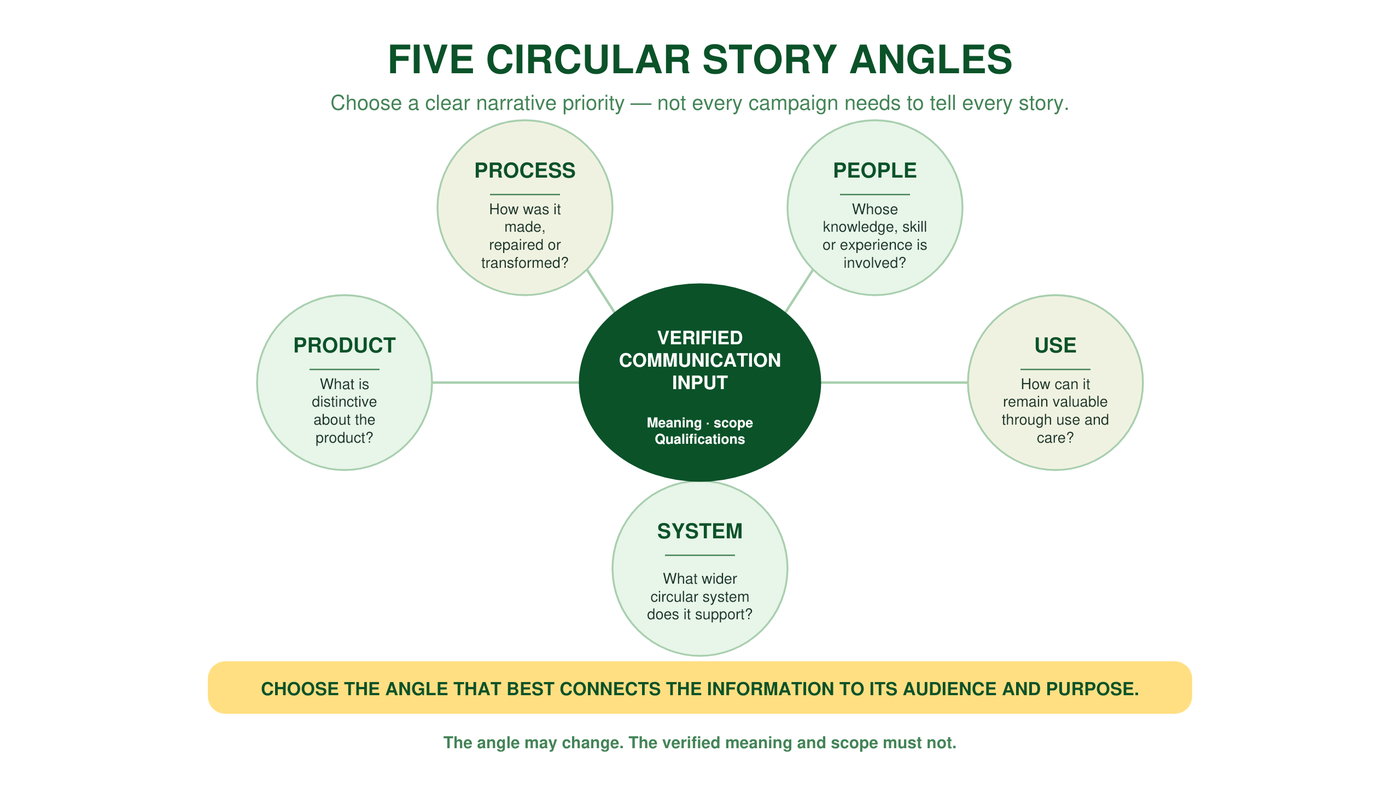
Figure 5.5. Five Circular Story Angles. Verified information can be explored through product, process, people, use, or system perspectives. Selecting a clear narrative priority helps make circular information relevant without altering its approved meaning or scope.