
Chapter 5 — full chapter
Chapter 5 — full chapter
5.2 Emotional connection and value perception
Fashion is emotional. People often buy, keep and value clothes because of identity, memory, beauty, confidence, belonging, status or attachment. This is especially relevant in higher-price segments, where the emotional connection with the brand, product, and story may be as important as the product itself.
Circular communication should not become purely technical. Verified information is necessary, but it rarely creates desire on its own. Storytelling can help circular products feel meaningful and valuable by connecting them to design, craft, material history, care, repair, memory, longevity, or human skill.
This matters because emotional value can support longer use. A garment that feels meaningful is more likely to be cared for, repaired, and kept. Communication can therefore help shift desire away from constant novelty and towards deeper forms of value.
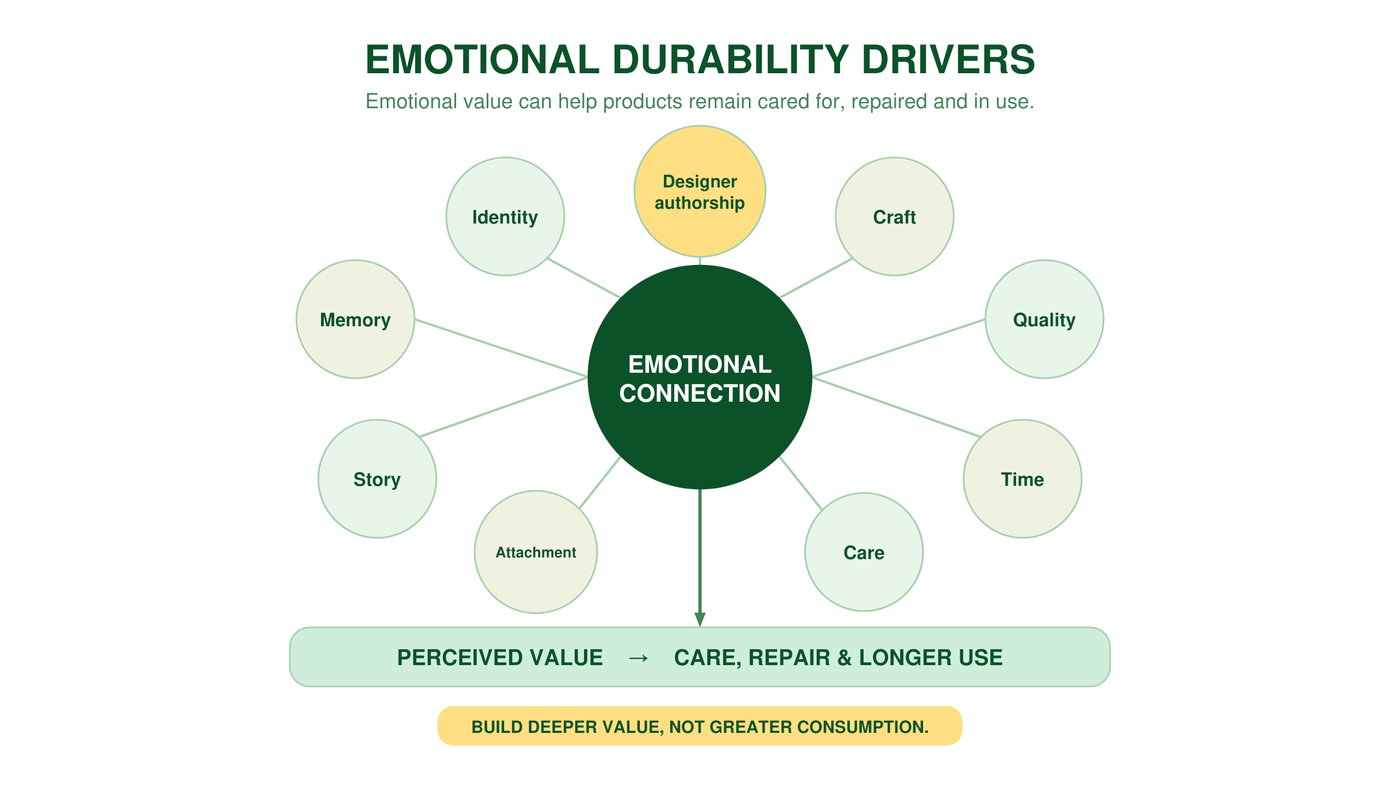
Figure 5.3. Emotional Durability Drivers. Memory, craft, identity, care, quality, attachment, story, time and designer authorship can strengthen emotional connection and perceived value, supporting care, repair and longer product use.
RESOURCE INSIGHT: The Marketing Playbook for a Circular Economy — Ellen MacArthur Foundation & Kantar, 2024. The playbook offers marketers four pathways: create scalable circular solutions, drive demand for circular propositions, make circular behaviours irresistible — “do not rely on people doing the right thing” — and hardwire circular KPIs such as customer lifetime value and revenue from circular models. Emotional connection comes from better offers, not moral pressure. Source: https://www.ellenmacarthurfoundation.org/marketing/overview