
Chapter 4 — full chapter
Chapter 4 — full chapter
4.6.1 Case example — TOAST Circle: communicating what happened next
TOAST Circle brings together the brand’s repair, exchange, resale, and creative renewal initiatives. What makes the programme particularly relevant from a communication perspective is that participation does not end when a customer hands over a garment. TOAST also explains the possible pathways that follow and reports back on some of the collective outcomes generated through the programme.
Garments and textiles entering the system may be returned to use through TOAST Reworn, creatively repaired or transformed through TOAST Renewed, remade, recycled or passed to the charity partner Traid for reuse. By making these different destinations visible, the brand gives participants greater context about what happens after an item leaves their hands.
TOAST also communicates aggregate results. Its Circle page reports that, since 2019, participants have helped give 25,232 garments a second life. It also states that its partnership with Traid has diverted 2,976 kilograms of textiles from landfill since 2023 and contributed to funding 308 scholarships through Traid’s partner organisation, READ. Reporting these outcomes helps connect individual participation with a wider collective result.
A natural next step for this kind of reporting would be to show how many, or what proportion, of collected items follow each pathway, such as reuse, repair, remaking, donation or recycling. Because these outcomes preserve product and material value to different degrees, pathway-level reporting would help participants see the full result of their contribution.
Key lesson: Closing the participation loop means communicating not only how to take part, but also what happened afterwards and what the participation achieved.
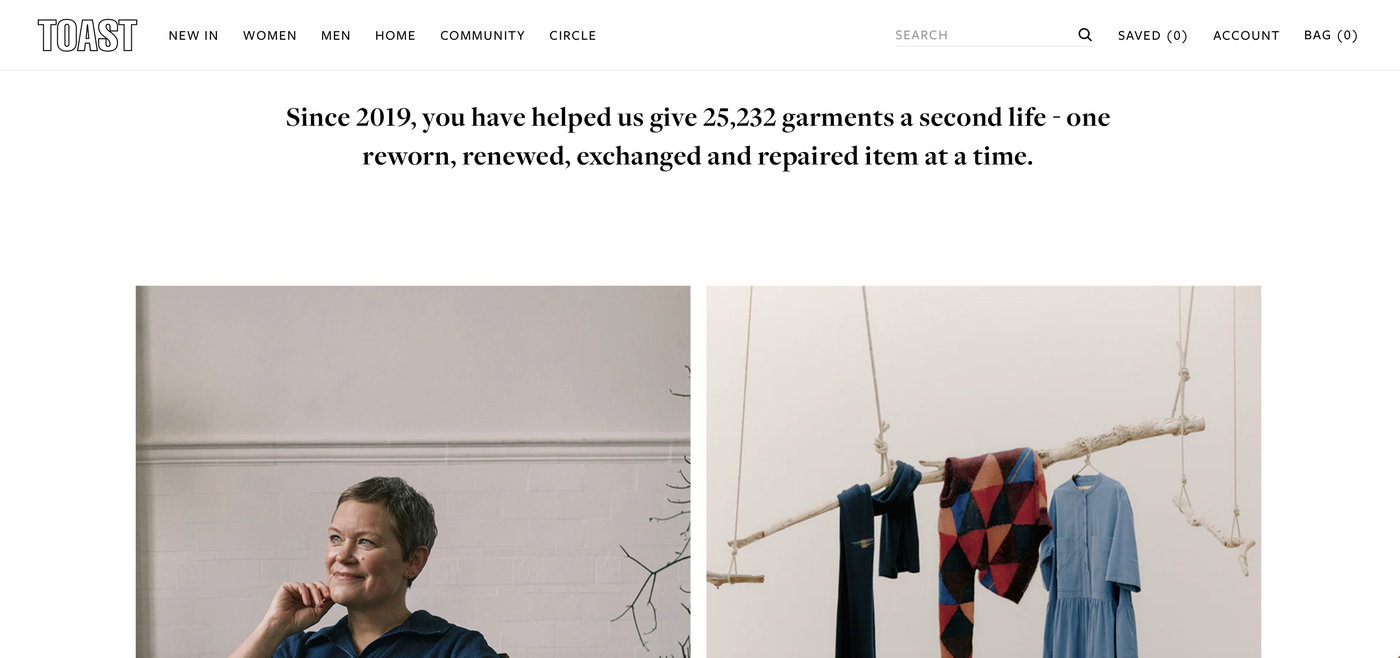
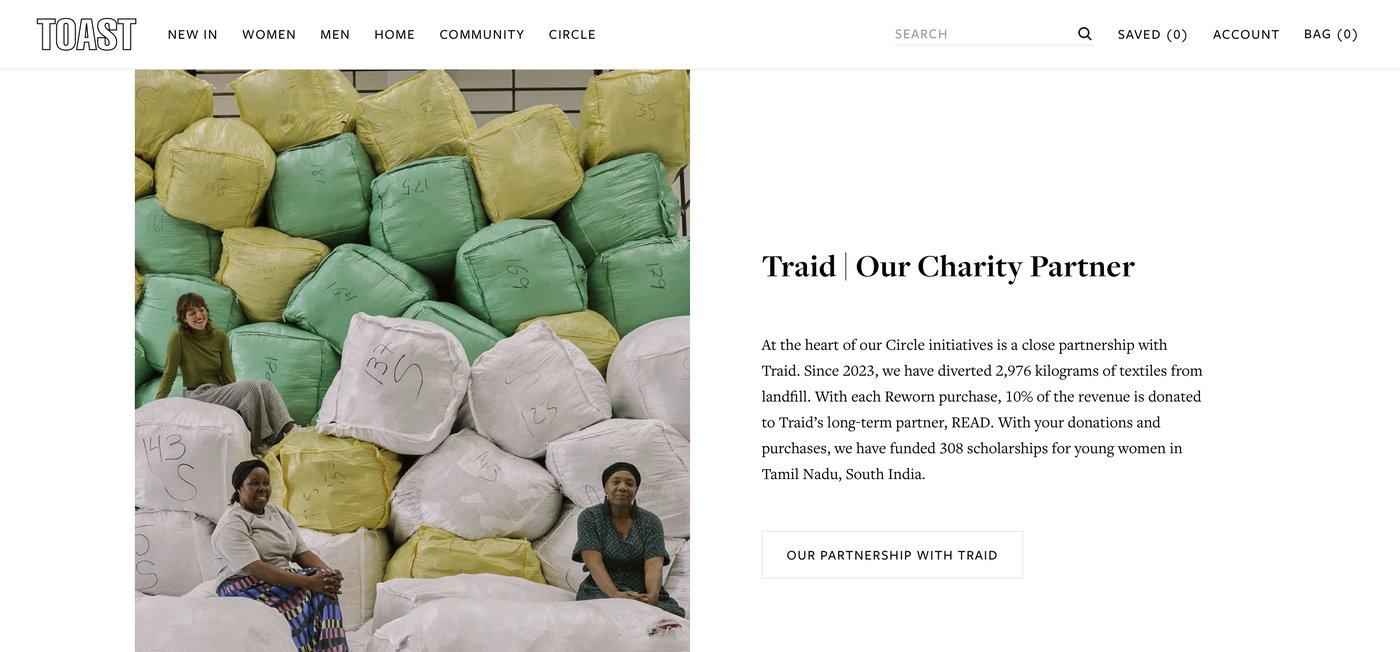
Figure 4.10. Closing the participation loop through aggregate reporting. TOAST Circle reports the collective outcomes of its circular initiatives and connects customer participation with repair, renewal, resale and social-impact results. Further disclosure of the proportion of garments following each destination pathway would provide a more complete account of what happens after return.
Thought prompt:
What does TOAST make visible after participation, and what information would still be needed to understand whether the highest possible value was retained from every returned garment?
FOR YOUR SME / BUSINESS CASE: participation can create business value. Nudie Jeans offers free repairs as a service that also drives store visits and customer loyalty, and TOAST Circle reports 25,232 garments given a second life since 2019. For e-commerce, where apparel return rates are often estimated at 20–30%, clearer fit and care communication can also reduce the cost of handling returns. Check these figures against your own data.