
Chapter 4 — full chapter
Chapter 4 — full chapter
4.1.1 Reflection exercise — What is the real barrier to participation?
The following examples illustrate how participation in circular practices depends not only on consumer motivation or communication, but also on how the service itself is designed. Nudie Jeans’ repair service and H&M’s garment collection programme enable different circular actions and reduce different barriers. Comparing them helps reveal how accessibility, practical support and incentives can influence participation — and whether the behaviour encouraged is consistent with the intended circular objective.
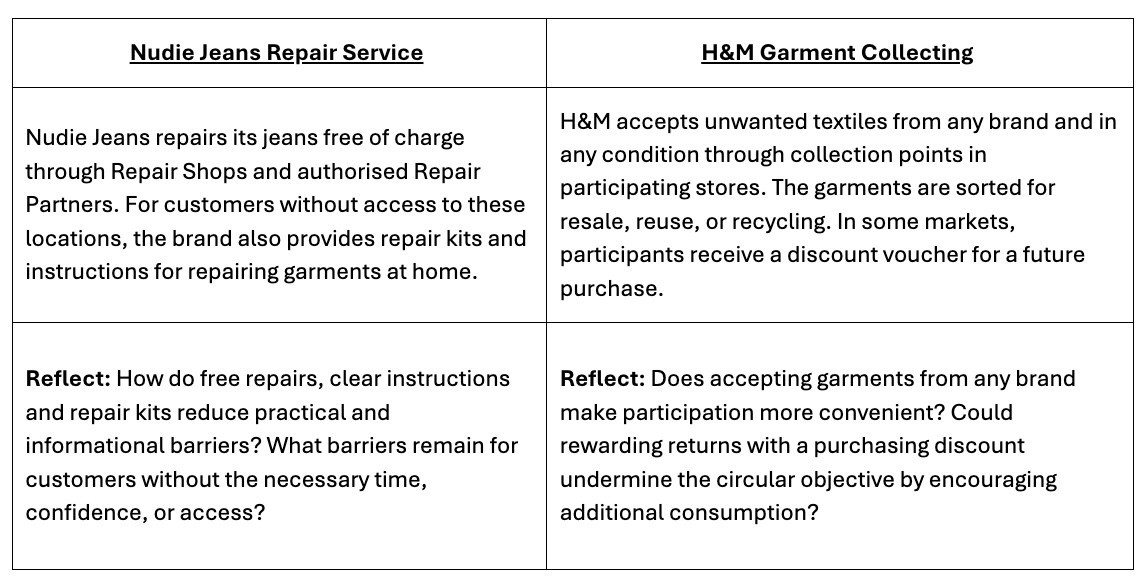
Figure 4.4. What Enables Circular Participation? The Nudie Jeans and H&M examples show how participation is shaped not only by communication, but also by service accessibility, practical support and the behaviours encouraged by incentives.
Questions for comparison
- What behaviour does each programme make easier?
- How does service design influence participation?
- What role does communication play in each case?
- Which barriers cannot be solved through communication alone?
- Does the incentive support longer product use or stimulate replacement?
Key learning: Communication can make circular services visible and understandable, but participation also depends on how accessible, affordable and coherent the service is. Incentives should be assessed not only by whether they increase participation, but also by the behaviour they encourage afterwards.