Chapter 5 — full chapter
Chapter 5 — full chapter
5.2.2. Energy efficiency and renewable energy
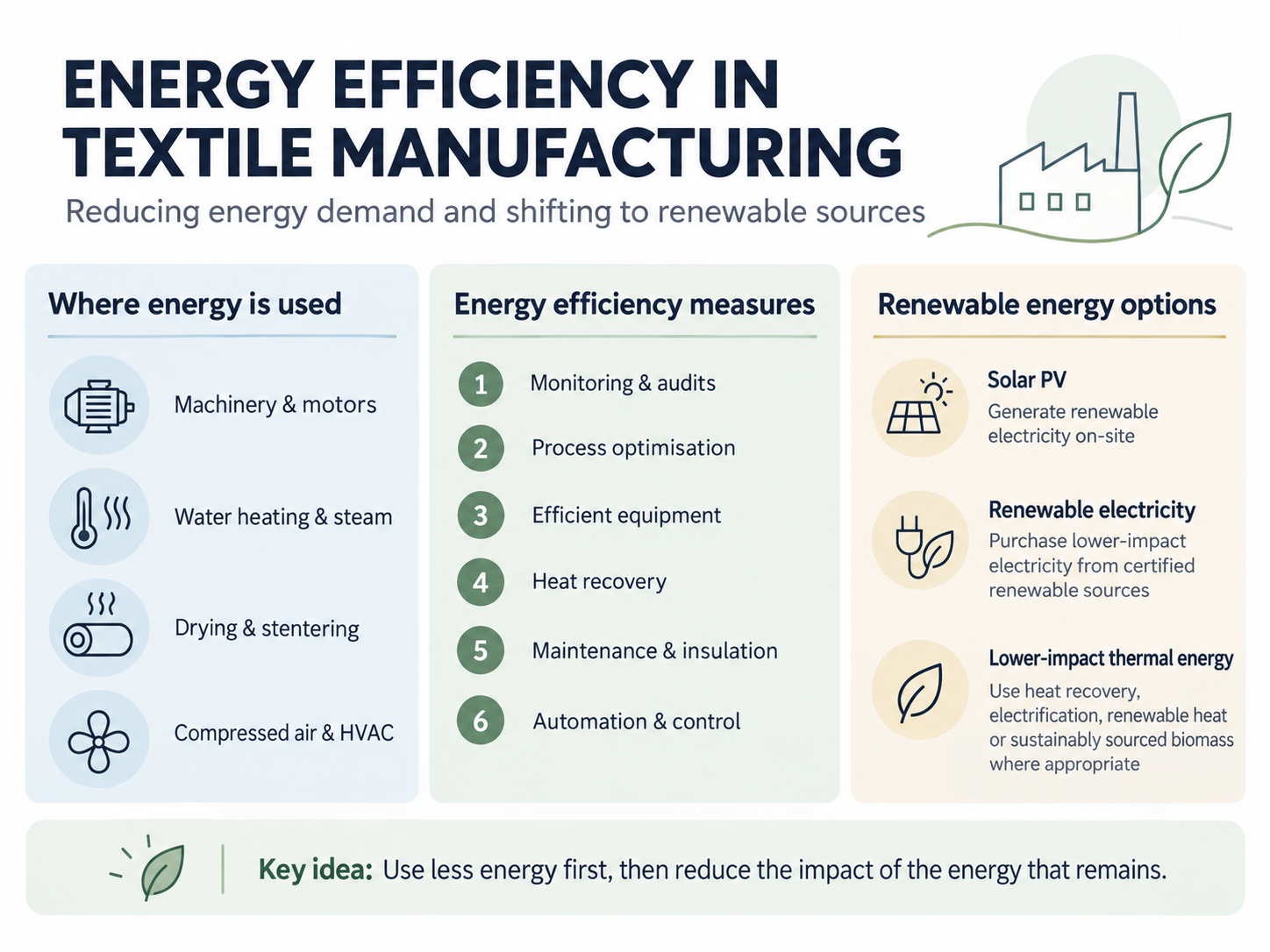
Textile production uses energy for motors, compressed air, water heating, steam, drying and finishing. Improvement should follow a hierarchy: measure demand by process, remove avoidable consumption, improve equipment and controls, recover heat where feasible, and then supply the remaining demand with lower-carbon or renewable energy (Farhana et al., 2022; Kır et al., 2024). Priorities vary by site, so total utility bills are less useful than process-level data.
For SMEs, practical actions include repairing leaks, maintaining boilers and motors, insulating hot surfaces, optimising temperatures and drying times, switching equipment off during idle periods and reviewing heat-recovery opportunities. Energy baselines and simple indicators such as kWh per kilogram of product allow teams to verify savings without reducing quality. Renewable electricity or thermal systems should be sized after efficiency measures so investment is not used to supply preventable waste.