Chapter 5 — full chapter
| Site: | FashionKIC Learning Platform |
| Course: | Sustainable Materials and Processes |
| Book: | Chapter 5 — full chapter |
| Printed by: | Guest user |
| Date: | Sunday, 1 November 2026, 3:20 AM |
Chapter 5 Production Planning and manufacturing Models
This chapter covers resource-efficient manufacturing: lean and zero-waste production, on-demand and distributed models, smart manufacturing, and the reduction of water, energy, chemical and labour impacts.
In this chapter:
- 5.1 Lean Production & Zero-Waste Manufacturing
- 5.2 Process and Resource Efficiency
- 5.3 On-demand production
- 5.4 Local and distributed manufacturing
- 5.5 Industrial symbiosis
- 5.6 Smart and Human-Centred Manufacturing
5.1 Lean Manufacturing
Lean manufacturing manages production as one connected flow, aligning quantity and quality with real demand while removing work that does not add value. In textiles, overproduction, waiting, excess inventory, transport, defects and rework are linked: improving one isolated operation can simply move delay or stock elsewhere.
SMEs can start by mapping a product family from material arrival to fulfilment, measuring lead time, work in progress, defects and changeovers. Visual management, standard work, preventive maintenance and short improvement cycles help teams address root causes. The objective is not maximum machine utilisation, but a reliable system that produces the required item at the required time with less material, energy and corrective work (de Carvalho et al., 2025).
RESOURCE INSIGHT: Lean manufacturing has a wide range of tools and concepts. By understanding what works best for which situation, you can customize your own solution and make lean methodologies work for you. Source: https://www.leanproduction.com/top-25-lean-tools/
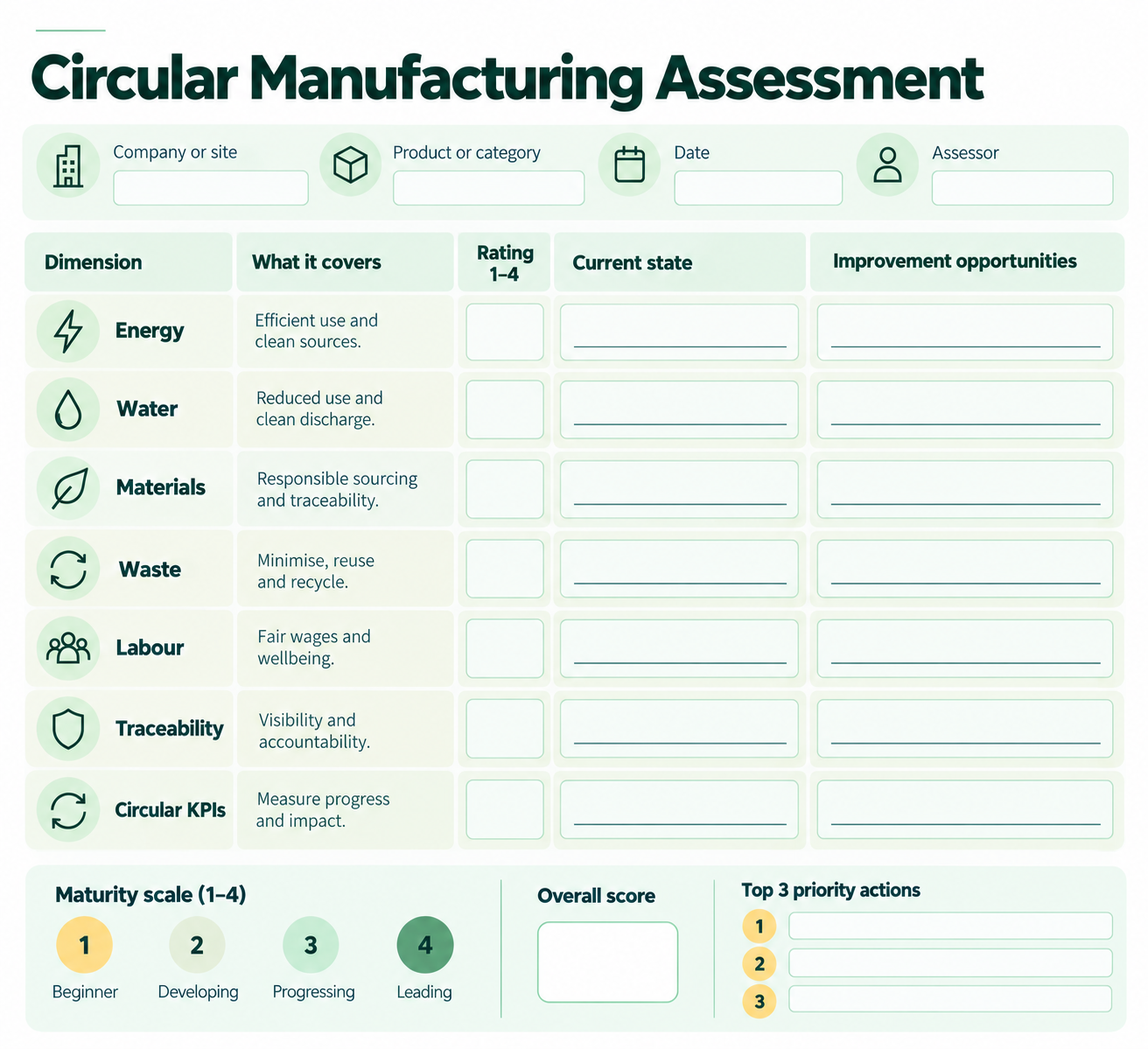
Tool — Circular Manufacturing Assessment Canvas
The Circular Manufacturing Assessment Canvas is a practical self-assessment tool that helps organisations understand how well circular manufacturing principles are integrated into their production processes.
It can be used to:
- evaluate the current level of circularity;
- identify strengths and improvement opportunities;
- prioritise actions for future development;
- monitor progress over time.
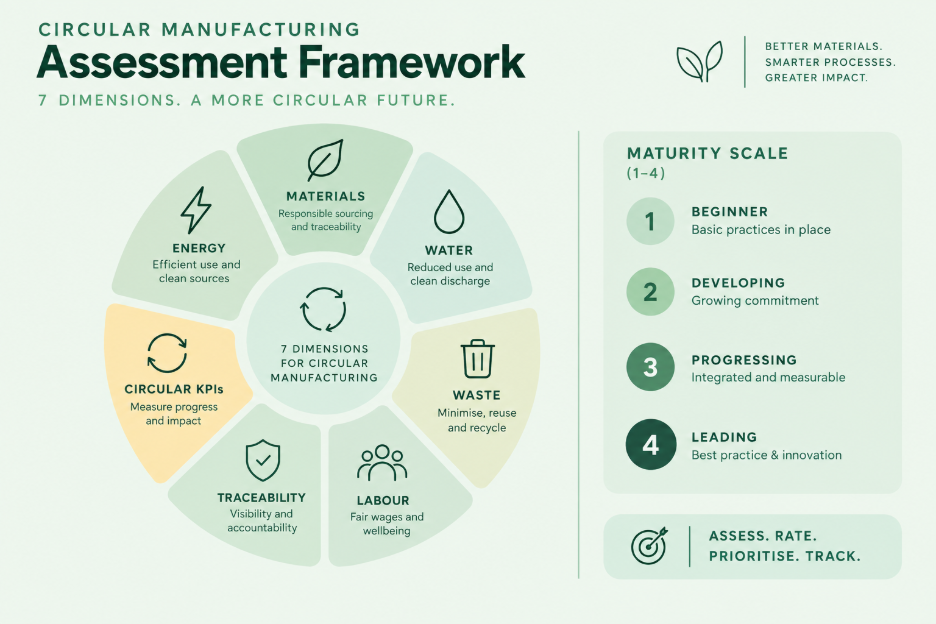
The assessment typically considers the following areas:
- Energy management
- Water management
- Material efficiency
- Waste prevention and recovery
- Workforce engagement
- Digital traceability
- Circular KPIs and continuous improvement
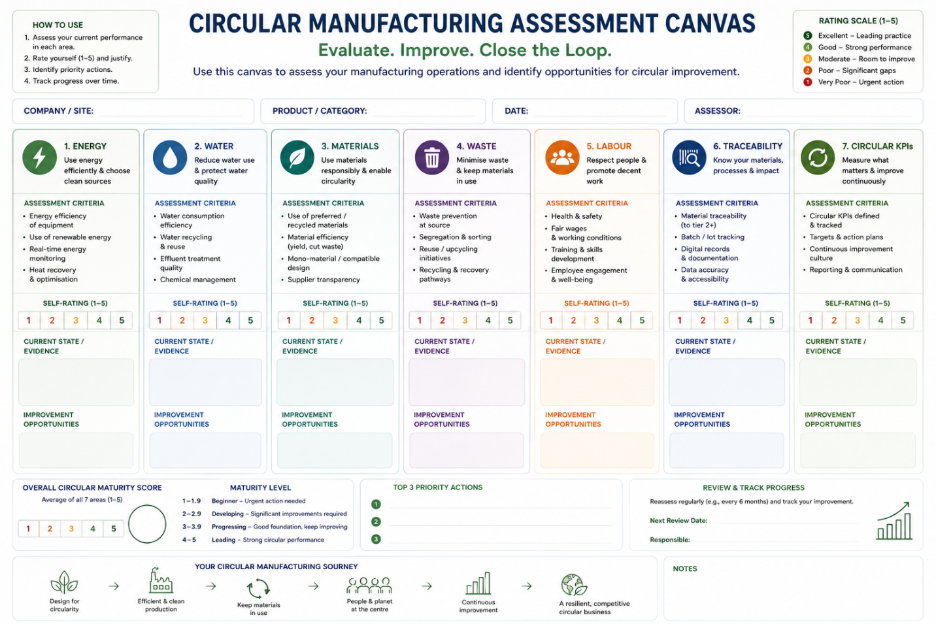
Figure 5.1. Circular Manufacturing Assessment Canvas — self-assessment of energy, water, material efficiency, waste, workforce and traceability. Credit: FashionKIC, Circular Manufacturing Assessment Canvas, 2026.
5.2 Process and Resource Efficiency
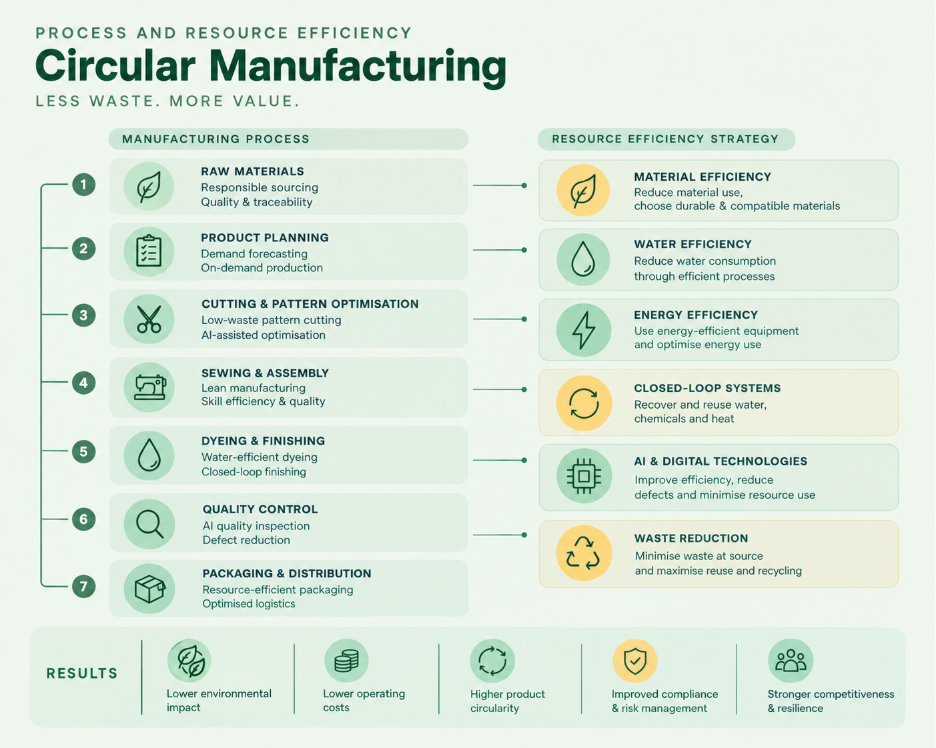
Process and resource efficiency focuses on reducing the water, energy and chemical inputs required to manufacture textile products while maintaining the required quality and performance.
Building on the material-efficiency strategies introduced in Chapter 4, this section focuses on three resource-intensive areas of textile manufacturing. Dyeing, washing, finishing and other wet-processing operations can require substantial amounts of water, heat, electricity and chemicals, and their resource profiles vary considerably depending on the process, machinery, fibre type and production conditions (Holkar et al., 2016; Kır et al., 2024).
Improving efficiency therefore requires looking at individual processes rather than treating the factory as a single resource consumer. Research on textile manufacturing shows that process-level monitoring can identify significant opportunities to reduce electricity, steam, water and other resource inputs, particularly in wet-processing operations (Kır et al., 2024).
Three areas are examined in this section:
- water efficiency and closed-loop water systems
- energy efficiency and renewable energy
- chemicals management and restricted substances
The objective is to reduce unnecessary resource use first and then improve how the remaining inputs and outputs are managed. This includes reducing freshwater demand, improving energy efficiency, increasing the use of lower-impact energy sources and preventing hazardous substances from entering production where possible (Farhana et al., 2022; Patra & Pariti, 2022).
5.2.1 Water-Efficiency and closed-loop water systems
Water-efficient manufacturing combines low-liquor-ratio technologies, water recycling, process optimisation and wastewater treatment. Closed-loop water systems recover, treat and reuse process water, reducing freshwater consumption while limiting wastewater discharge. Wet processing is one of the most resource-intensive stages of textile manufacturing. Water-efficient dyeing technologies aim to reduce freshwater consumption while maintaining colour quality and process performance. Strategies include low-liquor-ratio dyeing machines, digital colour management, foam dyeing, supercritical CO₂ dyeing, and improved process control to minimise reprocessing and wastewater generation. These technologies contribute to lower environmental impacts while reducing operating costs associated with water treatment and energy use.
Dyeing, printing, washing and finishing are particularly relevant because they can combine high water demand with complex wastewater streams. The amount and composition of wastewater varies according to fibre type, process, machinery and chemical recipe, so there is no single solution suitable for every textile facility (Holkar et al., 2016; Yaseen & Scholz, 2019).
Manufacturers can reduce water demand through approaches such as low-liquor-ratio processing, improved process control, digital printing, foam-based application systems and other low-water colouration or finishing technologies where technically appropriate. Water recovery and reuse can then reduce the demand for freshwater and the volume of wastewater discharged.
The most appropriate technology depends on the fibre, product, production volume, required finish and available infrastructure. A technology should therefore be evaluated not only by how much water it saves, but also by its energy demand, chemical requirements, product quality and ability to operate reliably at industrial scale.
Closed-loop finishing systems are designed to recover, treat and reuse water, chemicals and auxiliary substances used during textile finishing processes. Instead of treating these resources as waste after a single use, circular finishing technologies return them to the production cycle whenever technically feasible.
Typical measures include:
- low-water dyeing technologies;
- closed-loop water recycling systems;
- rainwater harvesting where appropriate;
- wastewater treatment and reuse;
- digital monitoring of water consumption.
Case Example: SAITEX
SAITEX is a denim manufacturer that uses closed-water systems in denim production and finishing. The company reports that 98% of process water is recycled and 2% evaporated, creating a zero-discharge system. Its finishing processes also include technologies such as laser finishing, air drying and water recovery, which makes the case useful for discussing how finishing can reduce freshwater use, wastewater discharge and resource loss (SAITEX; Cradle to Cradle Products Innovation Institute, 2020).
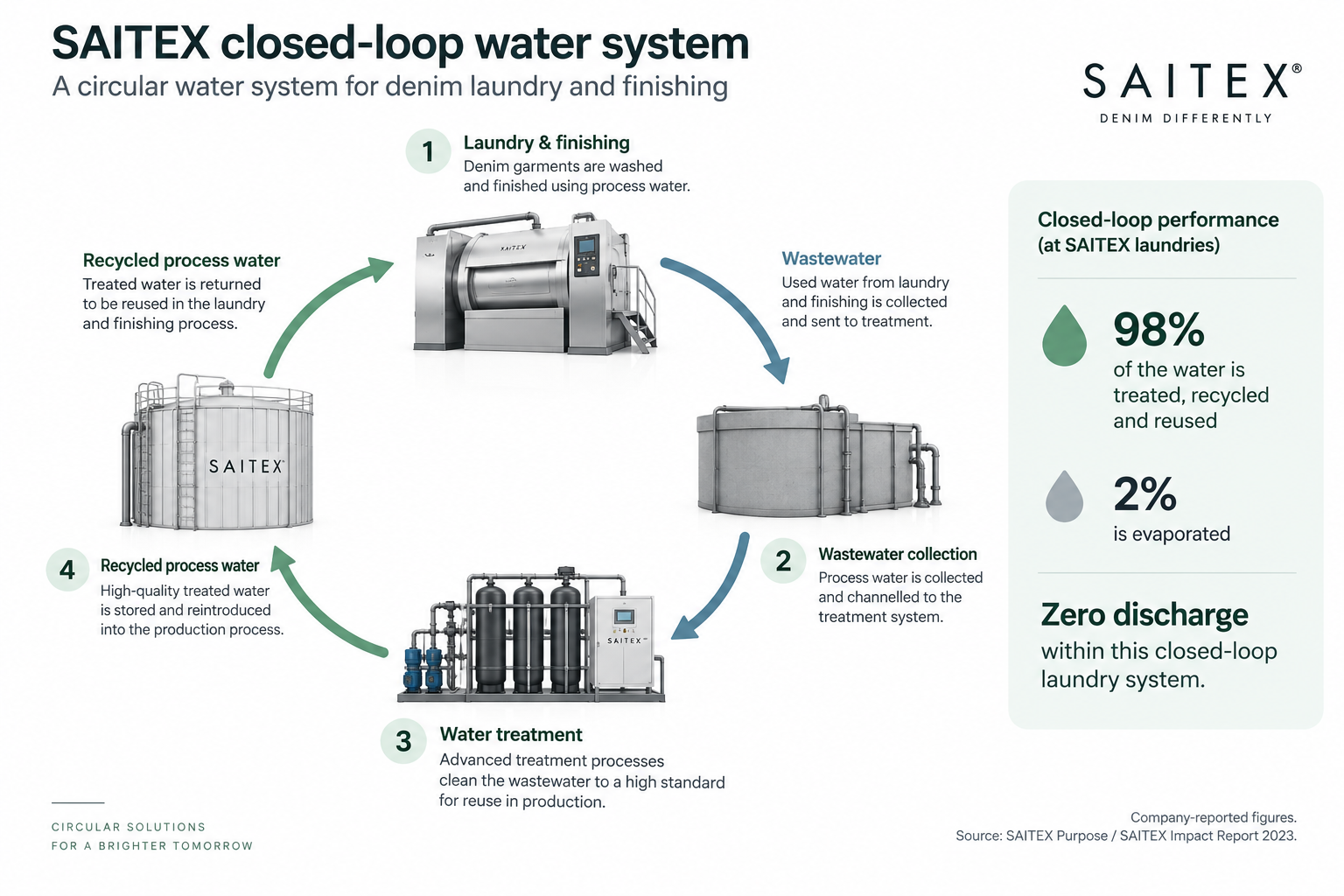
Figure 5.2 Closed-loop water system in denim laundry and finishing. Credit: FashionKIC, based on SAITEX company-reported data, 2026.
Discussion questions:
What makes SAITEX a closed-loop finishing case?
Why is water recovery important in denim production?
How can finishing choices affect both environmental impact and product quality?
Which parts of this model could be realistic for smaller manufacturers?
5.2.2. Energy efficiency and renewable energy
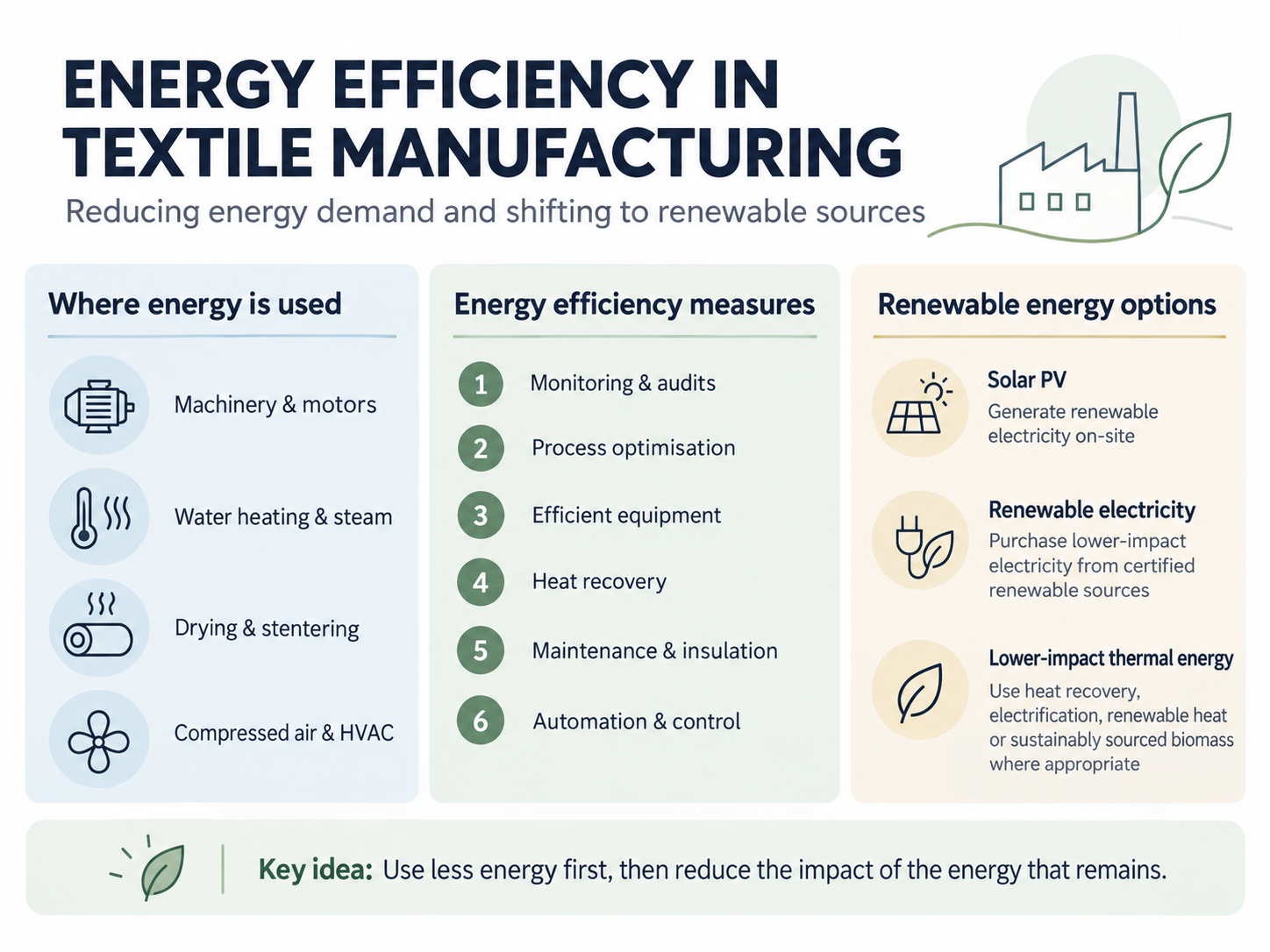
Textile production uses energy for motors, compressed air, water heating, steam, drying and finishing. Improvement should follow a hierarchy: measure demand by process, remove avoidable consumption, improve equipment and controls, recover heat where feasible, and then supply the remaining demand with lower-carbon or renewable energy (Farhana et al., 2022; Kır et al., 2024). Priorities vary by site, so total utility bills are less useful than process-level data.
For SMEs, practical actions include repairing leaks, maintaining boilers and motors, insulating hot surfaces, optimising temperatures and drying times, switching equipment off during idle periods and reviewing heat-recovery opportunities. Energy baselines and simple indicators such as kWh per kilogram of product allow teams to verify savings without reducing quality. Renewable electricity or thermal systems should be sized after efficiency measures so investment is not used to supply preventable waste.
5.2.3 Chemicals management and restricted substances
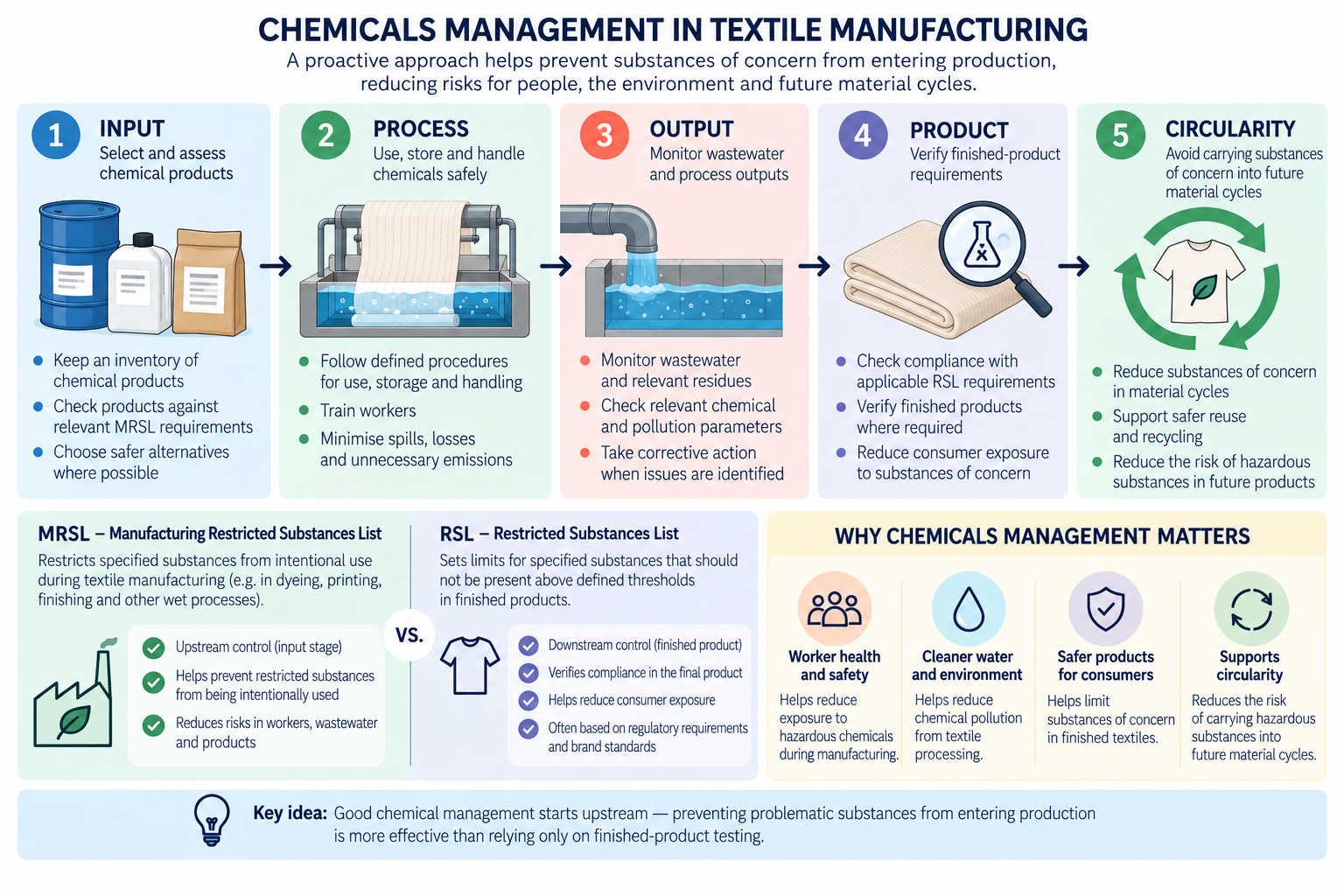
Chemicals enable colour, softness, protection and performance, but poor selection or control can harm workers, customers, ecosystems and future recycling. Effective management begins with a complete inventory, current safety data, hazard assessment, approved purchasing, correct labelling and storage, trained handling, and monitoring of wastewater, sludge and product residues.
An RSL limits substances in finished products, while an MRSL restricts hazardous chemicals used during manufacturing. Applying both shifts control upstream and reduces reliance on final-product testing. SMEs should request formulation and compliance evidence from suppliers, prefer safer substitutes, document recipes and process changes, and investigate non-conformities. Dyes, coatings and finishes should also be assessed for circularity because they may contaminate recycled feedstock or block a recovery route (Bour et al., 2023; Patra & Pariti, 2022). Clear records support audits, credible claims and Digital Product Passport data.
5.3 On-demand production
Digital product development tools introduced in Chapter 4 can also enable new production models. In this section, however, the focus shifts from how a product is designed digitally to when and in what quantity it is manufactured.
The prevailing fashion-production model relies heavily on speculative demand forecasting, creating mismatches between production and actual demand. Although transparent industry-wide data remain limited, available European studies indicate that an average of approximately 21% of textile products remain unsold (European Environment Agency, 2024).
On-demand production aligns manufacturing with actual customer demand rather than long-term sales forecasts. This approach aims at reducing resource consumption, minimises deadstock and enables greater product customisation. Digital product development, automated planning systems and flexible manufacturing technologies are essential enablers of efficient production of smaller batches while maintaining quality and responsiveness. This strategy supports product customisation, reduces financial risks and minimises the environmental impacts associated with surplus production. The scope of on-demand manufacturing is to transition fashion from a volume-driven model to a value-driven model. However, the obstacles to adoption include, firstly, the prevailing consumer culture that favors the convenience of instant fulfillment; secondly, the challenge of managing stable textile supply chains without maintaining extensive raw material inventories; and thirdly, the significant initial investment required to retool traditional, high-volume automated factory lines to accommodate dynamic, single-unit batch sizes.
Case Example: Son of a Tailor
Son of a Tailor is a Copenhagen fashion-technology company that produces garments only after an order is placed. Customers provide basic measurements for a digital sizing profile, and items are then manufactured in Europe using materials such as organic cotton, Merino wool and TENCEL™ Lyocell. The model reduces finished-goods inventory and the risk of unsold stock.
The case also shows the trade-offs of on-demand production. Custom manufacture can increase lead time and requires reliable sizing, flexible capacity and responsive logistics; a poor fit may still create returns and waste. SMEs considering this model should track fit accuracy, remakes, delivery time, material utilisation and return rates, while designing durable products that can be repaired and eventually recovered.

Figure 5.5: Son of a Tailor company looks, Copyright: Son of a Tailor, https://www.sonofatailor.com/
5.4 Local and distributed manufacturing
Local and distributed manufacturing uses regional facilities and digitally connected networks to produce closer to demand. Shorter supply chains can improve responsiveness, collaboration and traceability, while automated micro-factories make smaller batches and on-demand orders more feasible for SMEs that cannot meet large overseas minimum order quantities.
Local production is not automatically lower impact. Benefits depend on energy sources, transport, capacity utilisation, material availability, labour conditions and the efficiency of the selected technology. A business case should compare total lead time, inventory risk, quality, logistics and environmental performance with the existing route. Piloting one product family helps reveal whether faster replenishment and smaller runs actually reduce overproduction rather than simply relocating it (Bertola & Teunissen, 2018).
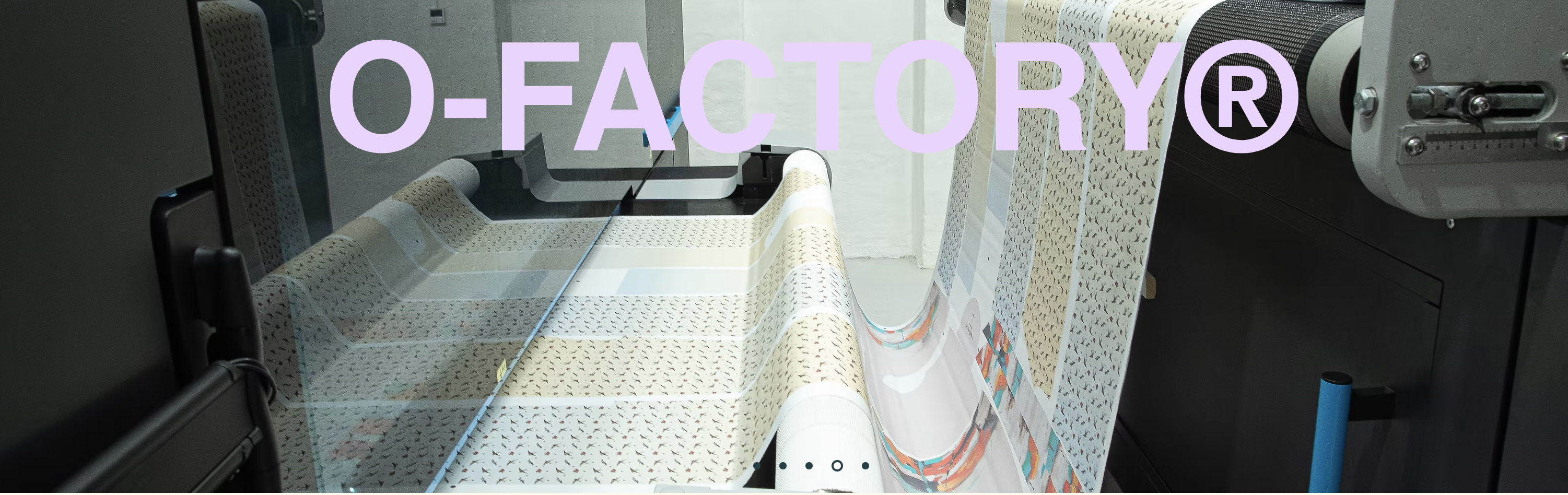
Figure 5.6 Rodinia Generation’s O-FACTORY®, a compact automated manufacturing system designed for on-demand and onshore apparel production. Credit: Rodinia Generation. Source: Rodinia Generation, O-FACTORY®.
Resource insight: Digitalisation as a lever for sustainability: the example of textile microfactories, Transition-pathways, June 2026 Source: https://transition-pathways.europa.eu/textiles/best-practices/digitalisation-lever-sustainability-example-textile-microfactories
5.5 Industrial symbiosis
Industrial symbiosis promotes collaboration between companies by transforming the waste or by-products of one organisation into valuable resources for another. In the textile sector, this may involve sharing surplus fabrics, reusing cutting scraps, exchanging recovered fibres or collaborating on common waste collection and recycling systems.
Such partnerships reduce disposal costs, improve resource utilisation and support the development of regional circular ecosystems, particularly for small and medium-sized enterprises that may not have access to individual recycling infrastructure.
However, for companies, achieving this symbiosis can become more difficult if companies lack the technology and infrastructure needed, inter-company cooperation or management support. Overcoming these challenges is what allows companies to become more resilient and efficient though circular pactices.
Case example: Kvadrat Really
Kvadrat Really illustrates industrial symbiosis by turning textile residues from other organisations into inputs for new interior products. Its material streams can include post-consumer textiles, industrial laundry waste and production residues that would otherwise have limited value.
The case's relevance lies not only in the recycling technology itself, but in the relationships between industries: one organisation’s residual textile stream becomes another organisation’s raw material. Figure 5.5 shows the Textile TableTop by Fredericia Furniture for Kvadrat. It illustrates industrial symbiosis by transforming textile residues from other organisations and production streams into durable inputs for new products.
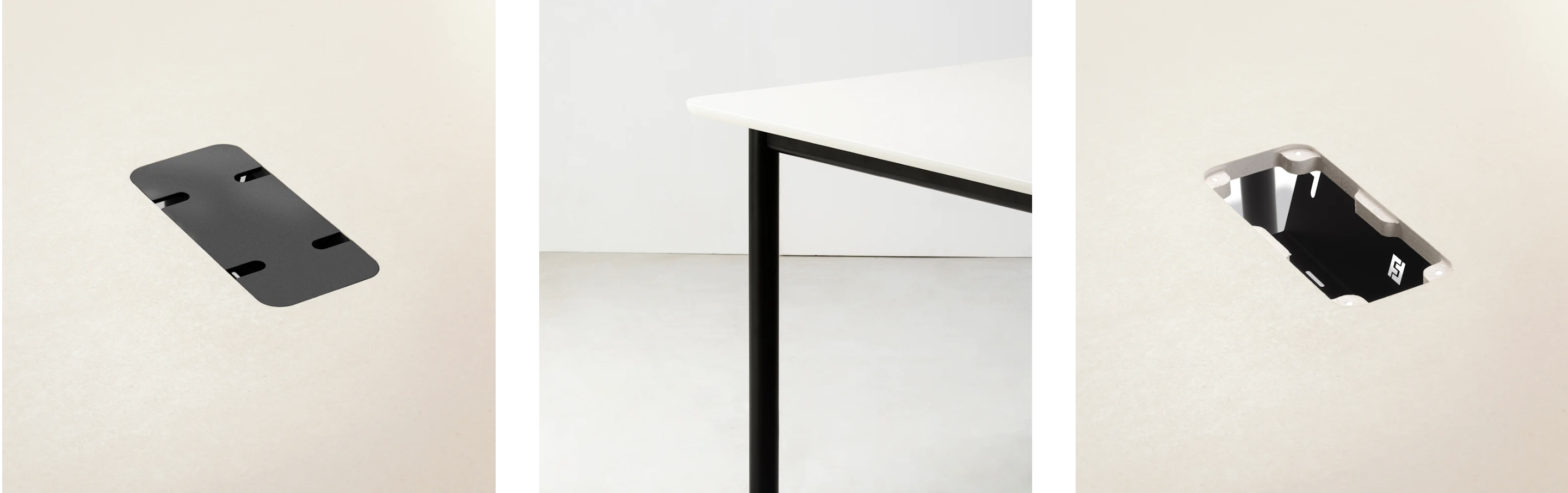
Figure 5.6 Kvadrat Really Textile Tabletop™, an engineered interior material made from 70% textile waste. Credit: Kvadrat Really. Source: Kvadrat Really, Textile Tabletop™
This requires consistent material quality, collection, logistics and collaboration between waste holders, processors and manufacturers.
Source: https://www.kvadrat.dk/en/kvadrat-really
The specific recycling and material-recovery technologies used for textile waste are examined in Chapter 6.
Resource insight: Recovery of tannery residues: industrial symbiosis models from the Italian leather value chain, Transitions-pathways, May 2026. Source: https://transition-pathways.europa.eu/textiles/best-practices/recovery-tannery-residues-industrial-symbiosis-models-italian-leather-value
5.6 Smart and Human-Centred Manufacturing
For decades, industrial automation was synonymous with high-speed, rigid machinery engineered exclusively for mass production. Today, driven by the principles of Industry 5.0, progressive manufacturers are transitioning toward Smart and Human-Centred Manufacturing. This approach redefines the factory as a collaborative ecosystem where advanced technology enhances human craftsmanship, improves ergonomics, and boosts operational agility.
At the heart of this evolution are integrated smart factory systems that connect physical production with digital intelligence, addressing the fashion supply chain’s longstanding issues: fragmented workflows, long lead times, and high defect rates. These systems require reskilling and upskilling to transform the workforce from operators to coordinators.
This modern manufacturing framework is driven by a combination of enabling technologies: IoT, AI, and computer vision.
Internet of Things (IoT) sensors are embedded directly into industrial sewing and processing equipment. These devices monitor key variables and assess operator ergonomics. The real-time data is collected by centralized artificial intelligence platforms, which utilize predictive analytics to identify operational bottlenecks, forecast equipment degradation before mechanical failure occurs, and dynamically adjust workflows to reduce physical strain on personnel.
The most effective applications of these technologies are in monitoring and quality control. Traditionally, apparel quality assurance relied on reactive, post-production visual inspections, an inefficient process susceptible to human fatigue and often resulting in late defect detection.
By utilizing computer vision, high-resolution sensors continuously scan textiles during cutting and sewing processes, with machine learning models identifying anomalies such as warping, dropped stitches, or pattern misalignments in real time.
It functions as a decision-support tool, alerting operators via augmented reality or digital displays to precisely locate defects, thereby enabling immediate correction. This approach helps reduce textile waste and eases the cognitive workload on workers.
However, transitioning to this human-centric paradigm presents substantial systemic challenges. The primary barriers to widespread adoption are the high initial costs for setting up IoT infrastructure, a real shortage of workers trained to handle AI-based systems, and the fragmented nature of the industry. Furthermore, integrating old-school machinery with modern digital twins often introduces technical friction, while brands must carefully navigate data privacy concerns regarding the monitoring of operator ergonomics. Overcoming these economic and structural hurdles will determine whether the industry can successfully scale these technologies to realize a truly resilient, smart and human-centered future for apparel manufacturing.
Case Example: SMARTEX.ai
Smartex is a Portuguese hardware-and-software company that builds "the tools for a modern textile factory." Its system retrofits high-resolution cameras and AI (computer vision and machine learning) onto existing circular knitting machines, so fabric is inspected continuously as it is knitted. When a defect appears, the system flags it or stops the machine on the spot , keeping defective fabric from ever reaching the dyehouse and eliminating the costly ripple effect of wasted processing, energy, heat, chemicals and time.
Figure 5.7 shows Smartex CORE installed on a circular knitting machine for real-time fabric inspection. The system combines computer vision, artificial intelligence and machine learning to detect defects during production and alert or stop the machine before defective fabric continues through the process.
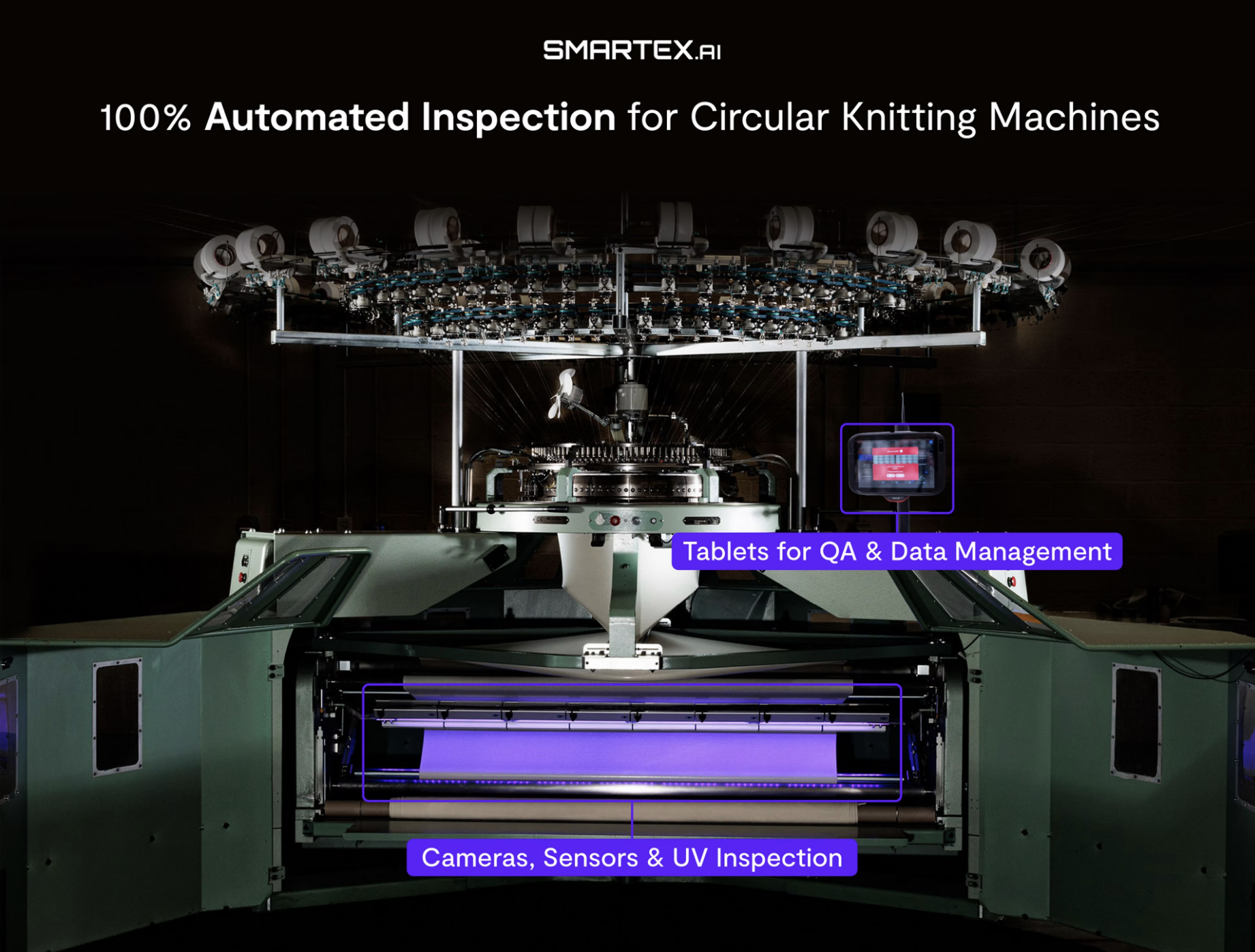
Figure 5.7 Smartex CORE installed on a circular knitting machine for real-time fabric inspection.
The system is built on three pillars: Core (resource efficiency), Fact (digital management and real-time data) and Loop (high-quality, traceable data with an indestructible labelling system). It targets Tier 2 — material production — and by 2024 was deployed across 90 sites in 10 regions, including Bangladesh, Portugal, Türkiye, India and Uzbekistan, with a stated goal of 200 more facilities by 2026.
The clearest result comes from Ekoten (Sun Tekstil Group, Izmir, Türkiye): after scaling from 10 to 17 machines, Ekoten cut its defective-fabric production by 80%, stopping an average of 20 continuous defects per machine per month and saving over 4.5 tonnes of raw fabric a year — worth about 224 t CO₂e.
Case example: Jaya Shree Textiles
Jaya Shree Textiles, is the largest linen integrated facility in India, a manufacturing division of the Indian multinational conglomerate Aditya Birla Group. Managing an annual production capacity of over 10 million meters of linen fabric, the company sought to transition from traditional, reactive floor management to a highly efficient, data-driven smart factory model.
Jaya Shree Textiles retrofitted critical machinery with vibration and thermal IoT sensors that stream real-time data to a centralised AI platform, enabling predictive maintenance and identifying mechanical degradation before breakdowns occur. This approach reportedly improved overall plant reliability by 19%. The company also implemented the Smartex computer-vision system, which uses high-speed cameras to inspect fabrics directly on operating machinery. When a dropped stitch or other anomaly is detected, the system sends a precise spatial alert to the operator’s digital console, allowing skilled workers to assess the issue and make immediate, localised corrections rather than stopping the line automatically. By supporting operators and reducing the burden of continuous visual inspection, the system helps limit fatigue, material waste and fabric downgrading, with downgrade losses reportedly reduced by 45%.