
Chapter 4 — full chapter
Chapter 4 — full chapter
4.3 Pattern architecture and material efficiency
Low-waste pattern cutting reduces the gaps between pattern pieces; zero-waste design develops garment form, pattern geometry and fabric width together so the full textile is used (Rissanen & McQuillan, 2023). Strategies include tessellating panels, sharing edges, integrating small components into gaps and testing coordinated layouts for several pieces or sizes.
For SMEs, the practical starting point is to measure marker efficiency, identify recurring offcuts and test one style at a time. Digital nesting can improve a conventional marker, but larger gains may require changing seams, silhouettes or construction. Material efficiency should therefore be treated as a design requirement, while offcuts that remain need a defined reuse or recovery route.
RESOURCE INSIGHT:
Source: Rissanen, T., & McQuillan, H. (2023). Zero Waste Fashion Design (2nd ed.). Bloomsbury Visual Arts https://research.tudelft.nl/en/publications/zero-waste-fashion-design-2/
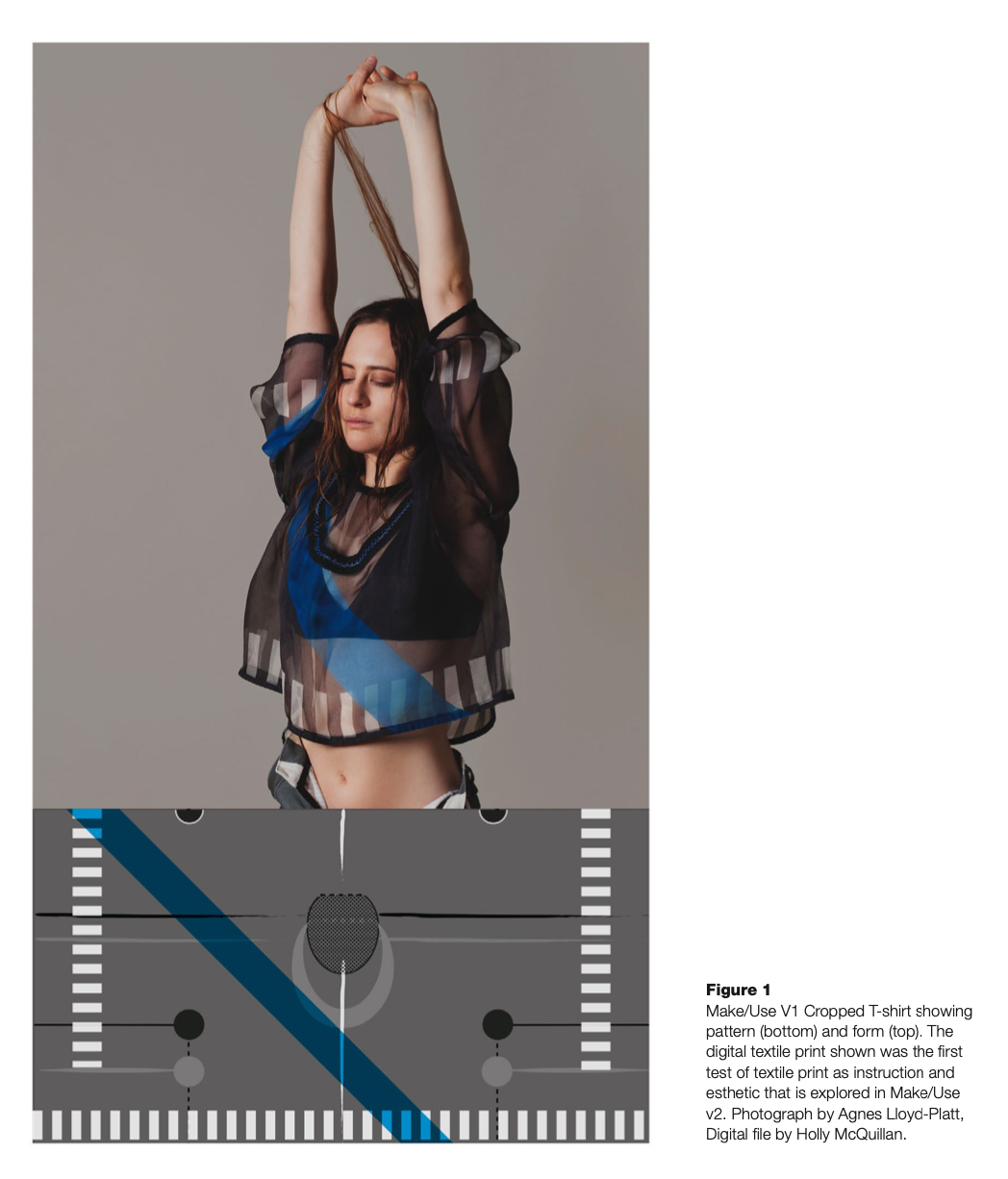
Figure 4.1. Make/Use Crop T-shirt showing the relationship between the zero-waste printed pattern and the resulting garment. Digital file: Holly McQuillan. Photograph: Bonny Beattie. Source: McQuillan et al. (2018).
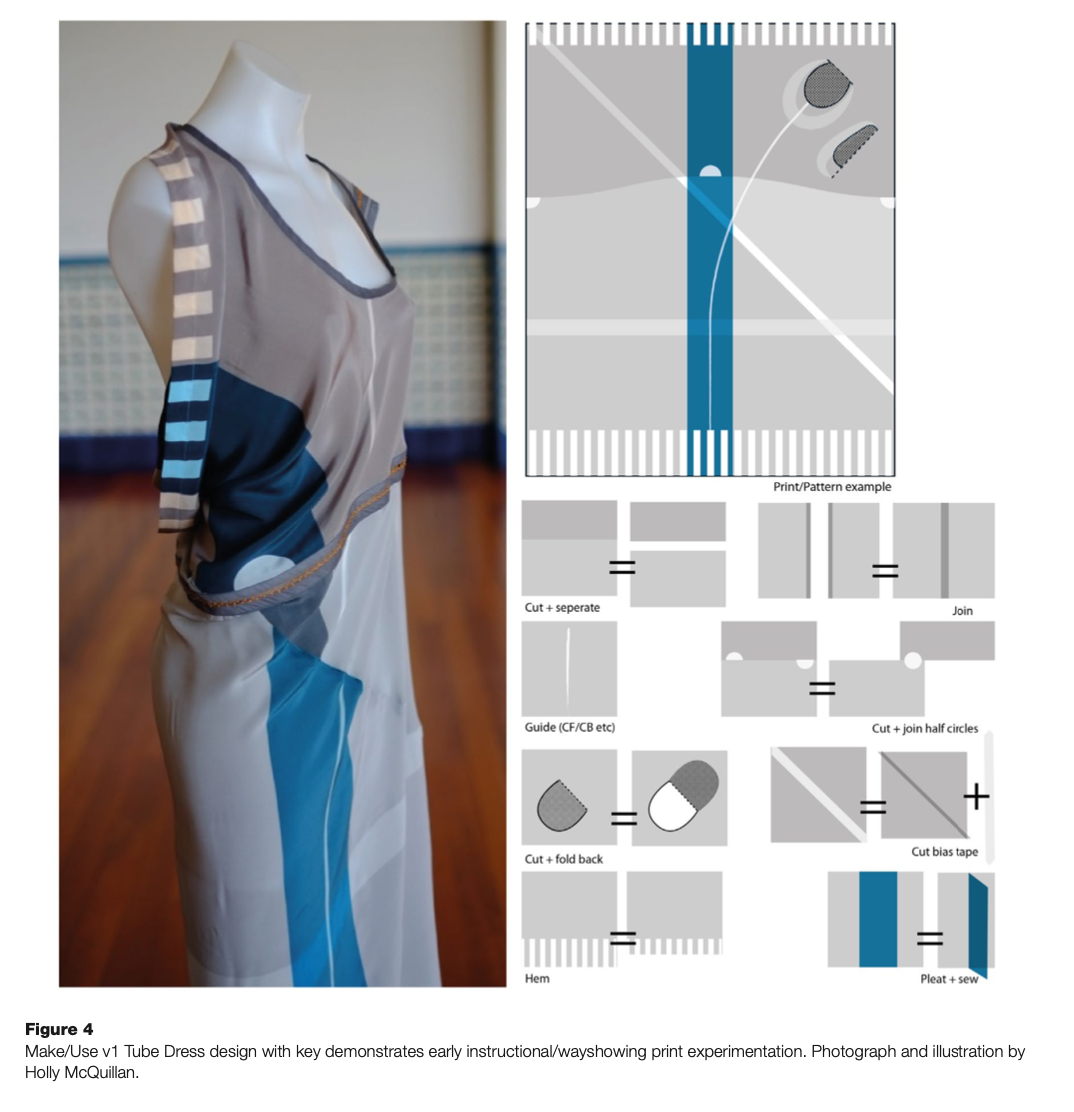
Figure 4.2. Make/Use v1 Tube Dress showing the embedded instructional system used to guide garment construction and modification. Photograph and illustration: Holly McQuillan. Source: McQuillan et al. (2018).
Source: McQuillan, H., Archer-Martin, J., Menzies, G., Bailey, J., Kane, K., & Fox Derwin, E. (2018). Make/Use: A system for open source, user-modifiable, zero waste fashion practice. Fashion Practice, 10(1), 7–33. https://doi.org/10.1080/17569370.2017.1400320