
Chapter 2 — full chapter
Chapter 2 — full chapter
2.4.1 Bacterial cellulose
Bacterial cellulose is a highly pure cellulose grown by bacteria in a liquid medium. It can form flexible or stiff sheets that may be finished to resemble paper, leather, film or other sheet materials (CORDIS, 2018; Polybion, n.d.).
Its main interest for fashion lies in high-value or niche applications, such as capsule collections, accessories, trims, packaging, experimental garments or material storytelling. Early projects have shown that bacterial cellulose can be dyed, cut, stitched and shaped once dried and conditioned (CORDIS, 2018; Polybion, n.d.).
The main limitations are scale, consistency, water use in cultivation, drying, finishing and performance. Some bacterial cellulose materials may also need coatings, backings or other treatments to achieve durability, which can affect biodegradability or recovery (Textile Exchange, 2023; Polybion, n.d.).
Resource insights:
Those are the companies pioneers in the field of Bacterial Cellulose
- Polybion — Celium™ — Mexico and Spain: Polybion grows Celium™ in Mexico through the bacterial fermentation of agro-industrial fruit waste, while also operating a commercial office in Spain.
- Bucha Bio/Rheom Materials — SHORAI™ and HIKARI™ — United States: Houston-based Bucha Bio developed SHORAI™ as a bio-based leather alternative and HIKARI™ as a translucent biomaterial before rebranding as Rheom Materials and changing its technology and portfolio.
- Modern Synthesis — United Kingdom: London-based Modern Synthesis uses bacterial nanocellulose, natural textile structures and other bio-based polymers to create high-performance coated textiles and composites for fashion, automotive and other applications.
- VTT Finland — ModernTex — Finland, United Kingdom, Sweden and Switzerland: Led by Finland’s VTT with Modern Synthesis, Lund University and Dimpora, ModernTex developed a recyclable leather-like composite combining a bio-based textile scaffold with a bacterial nanocellulose matrix.
- Gozen — LUNAFORM™ — United States and Türkiye: Gozen produces LUNAFORM™, a nanocellulose sheet grown through the controlled fermentation of microorganisms at its facility in Istanbul and used for fashion, accessories and furniture.
- Malai — India: Malai transforms coconut-processing wastewater into bacterial cellulose and combines it with natural fibres to produce compostable, leather-like sheets for accessories, footwear and interior products.
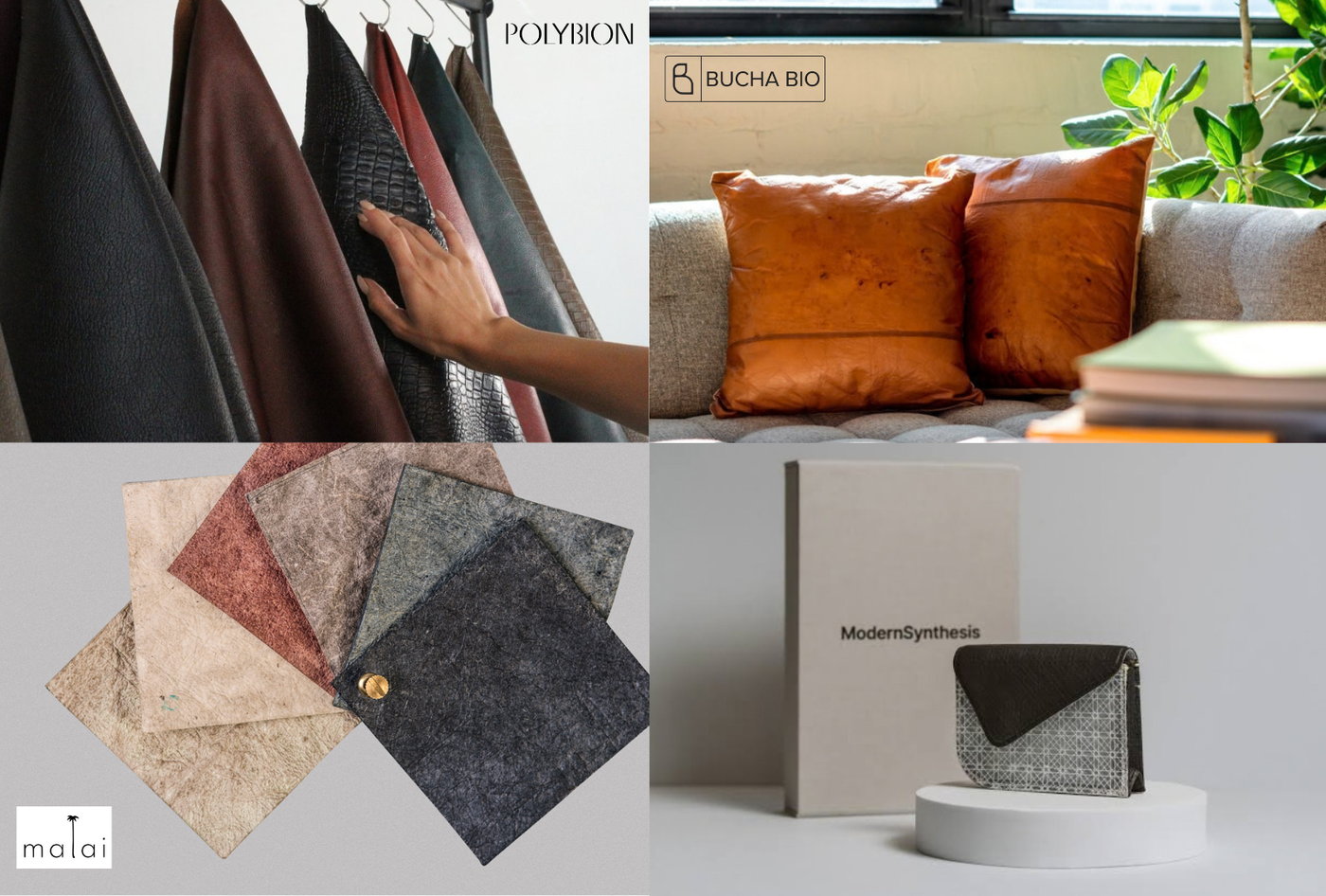
Figue 2.4 Emerging producers of Bacterial cellulose leather-like sheets, Credit: FashionKIC, 2026