Chapter 2 — full chapter
| Site: | FashionKIC Learning Platform |
| Course: | Sustainable Materials and Processes |
| Book: | Chapter 2 — full chapter |
| Printed by: | Guest user |
| Date: | Sunday, 1 November 2026, 3:20 AM |
Chapter 2. The future of Circular Materials
Chapter overview
This chapter introduces the main families of circular materials that are currently shaping textile and fashion innovation: recovered and recycled materials, regenerative materials, regenerated cellulosic fibres, bio-based materials and biofabricated materials (Textile Exchange, 2023; BIOTEXFUTURE, n.d.).
The aim is not to present any material as automatically sustainable. Instead, learners are encouraged to ask where the material comes from, how it is processed, what performance it offers, whether it is available at a realistic scale, and what can happen to it at end-of-life.
For fashion SMEs, circular material innovation can support product differentiation, reduce dependence on virgin resources, strengthen supplier stories and prepare for future regulation. However, each material choice also brings practical questions around cost, availability, quality, traceability, processing requirements and recovery routes (European Commission, 2022; Textile Exchange, 2023).
Material families covered in this chapter:
- Recovered and recycled materials, made from post-consumer or post-industrial waste streams.
- Regenerative materials, linked to land, forest or animal systems that aim to restore ecosystems while producing fibres.
- Regenerated materials, produced by dissolving natural polymers such as cellulose and reforming them into new fibres.
- Bio-based materials, made from renewable biological resources.
- Biofabricated materials, grown or produced through biological processes such as bacteria, fungi, algae or fermentation.
The pioneers of biobased materials,
In this chapter:
- 2.1 Recycled materials
- 2.2 Regenerative materials
- 2.3 Regenerated materials
- 2.4 Biobased materials
2.1 Recycled materials
Recycled materials are made by recovering existing resources and processing them into new material inputs. In textiles, this can include post-consumer garments, home textiles, production offcuts, paper waste, cellulosic textile waste, leather residues and other material streams that would otherwise be discarded (Textile Exchange, 2023; European Commission, 2026).
Using recycled materials can reduce dependence on virgin resources and help keep material value in circulation. However, successful recycling depends on collection, sorting, material identification, quality control and appropriate processing technologies (Sandin & Peters, 2018; Textile Exchange, 2025).
2.1.1 Recovered textile feedstocks (including post-consumer and post-industrial textiles)
Recovered textile feedstocks are materials reclaimed from existing textile products and manufacturing processes. They include post-industrial textiles, such as cutting scraps, fabric remnants and production offcuts, and post-consumer textiles, such as discarded garments, home textiles and returned products after use (Textile Exchange, 2025).
These feedstocks can become inputs for recycled fibres, yarns, nonwovens, insulation, fillings or other textile and non-textile applications. Their quality depends on how well they are collected, sorted and prepared. Clean, well-identified and consistent streams are easier to recycle than mixed or contaminated waste (Textile Exchange, 2025).
2.1.2 Recovered cellulose from paper/textile waste streams (clean separation systems)
Cellulose can be recovered from paper waste and cellulose-rich textile waste, such as cotton or other plant-based fibres. After contaminants are removed, the recovered cellulose can be dissolved and processed into regenerated fibres, films or other materials (Lenzing, n.d.-a; Textile Exchange, 2023).
This route can reduce dependence on virgin wood pulp and extend the life of existing cellulose resources. It is especially relevant for textile-to-textile innovation because it connects waste management, fibre regeneration and new material production (Lenzing, n.d.-a; Lenzing, n.d.-b).
The main challenges are clean separation, feedstock quality and the need for specialised processing technologies. If the input stream contains too many blends, finishes, dyes or contaminants, the quality of the regenerated material may be affected.
2.1.3 Leather waste fibres for regenerated composites
Leather manufacturing generates cutting scraps and processing residues that can be recovered instead of discarded. These leather fibres can be shredded and combined with binders to produce regenerated leather composites for accessories, footwear, upholstery, bags or other applications (European Commission, 2026). However, the environmental performance of regenerated leather composites depends on the type of binder used, the amount of recycled content, durability, repairability and possible future recovery route (European Commission, 2026; CORDIS, 2018).
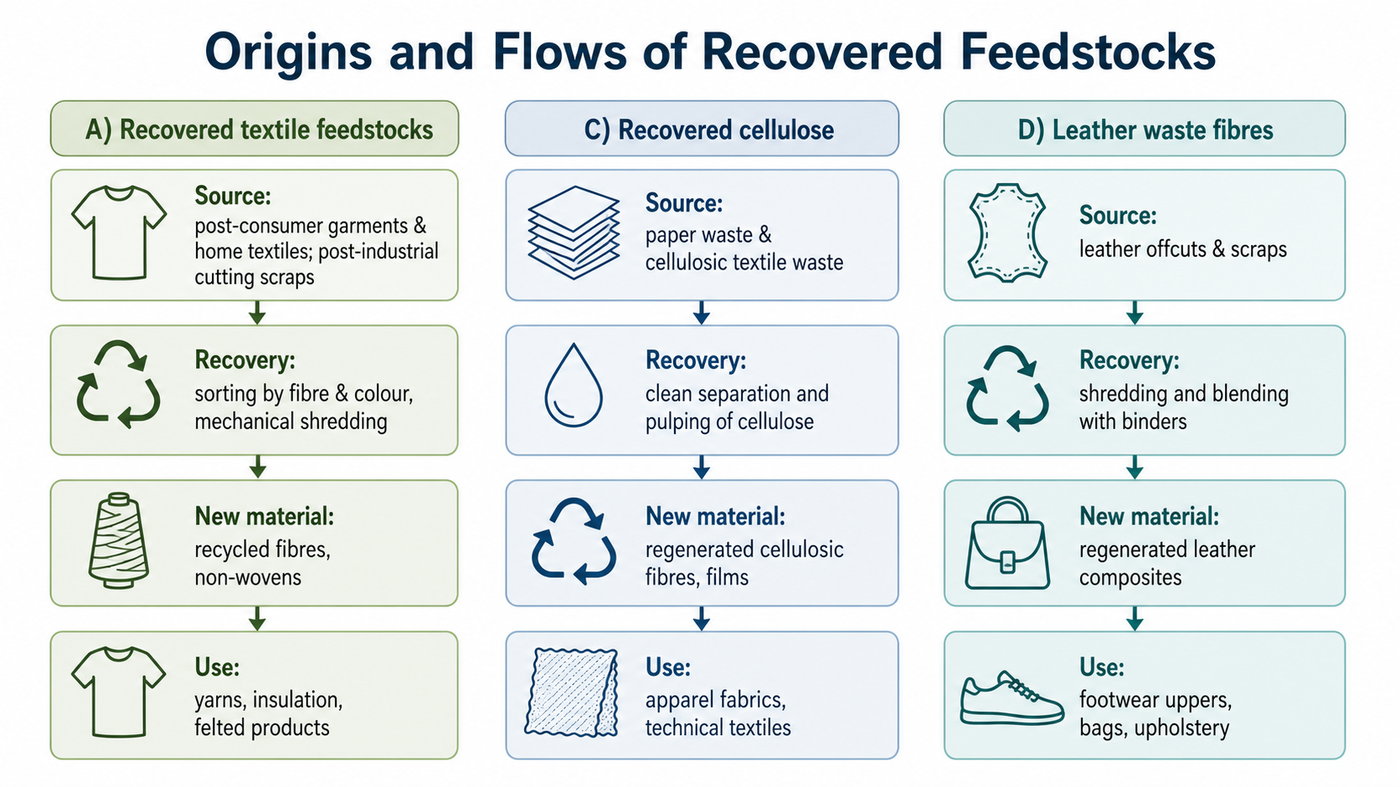
Figure 2.1.Origins and Flows of recovered feedstocks. Credit: FashionKIC, 2026
2.1.4 Designing with recycled content: opportunities and constraints
Designing with recycled content can help brands reduce reliance on virgin materials and communicate a clearer circularity story. Recycled textiles can meet many aesthetic and performance requirements, especially when designers understand the material’s properties and limitations from the start (Textile Exchange, 2025; Rutex, n.d.).
However, fibre quality may vary, colour may be less predictable, and material availability can depend on collection and sorting systems. Some recycled fibres may need to be blended with virgin fibres to achieve the required strength, softness or durability (Textile Exchange, 2025).
2.2 Regenerative materials
Regenerative materials are connected to production systems that aim to restore ecosystems while producing fibres. They are not defined only by the fibre itself, but by the way land, animals, forests or farming systems are managed (Textile Exchange, 2023; Kering, n.d.-a).
This distinction is important. A renewable material comes from a resource that can be replenished. A regenerative material goes further by being connected to practices that aim to improve soil health, biodiversity, water cycles, carbon storage or rural resilience (Textile Exchange, 2023).
In fashion, regenerative materials can come from different sources:
Regenerative plant fibres, such as cotton, hemp, flax or nettle grown in systems that aim to restore soil and biodiversity.
Regenerative animal fibres, such as wool, alpaca or cashmere connected to improved grazing, animal welfare and land management.
Regenerative forestry fibres, such as cellulosic fibres from responsibly managed forests, thinning residues, deadwood by-products or agroforestry systems.
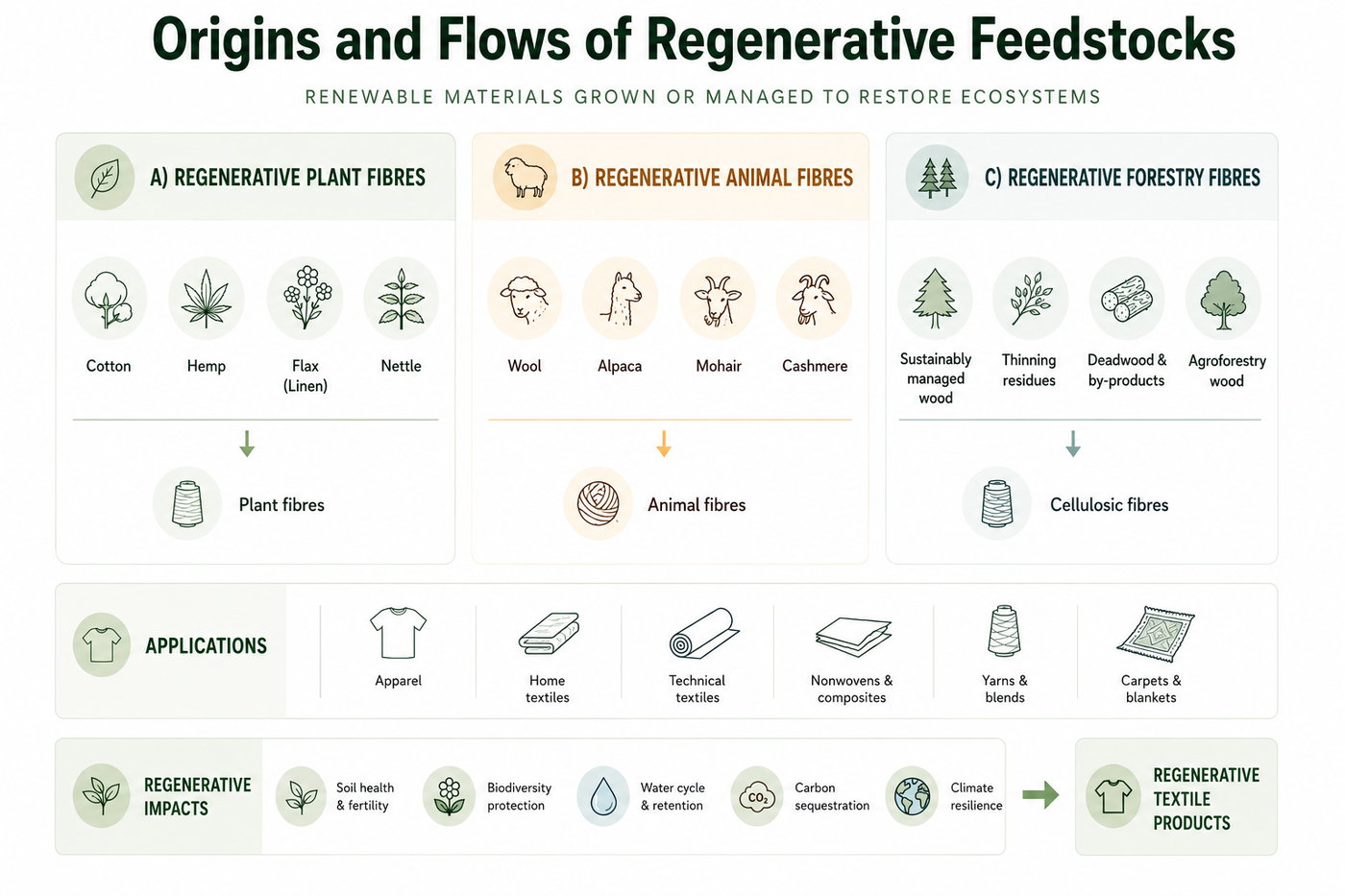
Figure 2.2. Regenerative Feedstocks, Origins and Flows. Credit: FashionKIC, 2026.
Case Example: Regenerative Agriculture Program
The Regenerative Agriculture Program supported by Kering and Inditex focuses on raw materials such as cotton, wool and leather. It works with NGOs and producers to support more regenerative sourcing systems in key regions. The case is useful because it shows that regenerative materials depend on partnerships across brands, producers, NGOs and supply-chain actors (Kering, n.d.-a; Kering, 2026).
For learners, this case can open a discussion on how large fashion groups support change at raw material level, and what smaller brands could learn from this approach when building supplier relationships.
Discussion questions:
Which raw materials are included in the programme?
Why does regenerative sourcing require long-term partnerships?
What kind of evidence would a brand need before communicating a regenerative claim?
How could a small brand start working with regenerative materials at a realistic scale?
Resource insight:
- https://www.modaes.com/global/markets/inditex-and-kering-open-doors-to-new-partners-in-their-regenerative-agriculture-project
- https://www.kering.com/en/sustainability/safeguarding-the-planet/biodiversity-strategy/stage-3-restore-and-regenerate/
- https://rin.pw/kering-inditex-regenerative-fund-hits-1m-hectares-opens-tiers-to-brands/
- https://news.sustainability-directory.com/fashion/kering-drives-fashions-shift-to-regenerative-agriculture-for-materials/#signal
Case Example: Giorgio Armani – Apulia Regenerative Cotton Project
The Apulia Regenerative Cotton Project by the Armani Group is an example of how a fashion brand can connect material innovation, agroforestry, traceability and product communication. The project focuses on regenerative cotton and ecosystem restoration, and uses digital product information to communicate suppliers and production details (Armani Group, 2023).
This case helps learners understand how regenerative material sourcing can be linked to Digital Product Passports, traceability and responsible communication (Armani Group, 2023).
2.3 Regenerated materials
Regenerated materials are made by dissolving natural polymers, mainly cellulose, and reforming them into new fibres or films. In fashion, the most common regenerated cellulosic fibres are viscose, modal and lyocell (Lenzing, n.d.-a; Lenzing, n.d.-b; Textile Exchange, 2023). Their environmental performance depends strongly on the source of the cellulose and the way chemicals, solvents, water and energy are managed during production. Closed-loop systems can recover and reuse a large share of processing chemicals, reducing emissions and waste (Lenzing, n.d.-a; Lenzing, n.d.-b).
Case study: Lenzing as a key player in sustainable textile innovation
Lenzing is a useful case study because it connects responsible wood sourcing, man-made cellulosic fibre production and circular innovation. The company produces fibres such as TENCEL™ Lyocell and TENCEL™ Modal, and has developed routes that incorporate recycled textile waste into selected new cellulosic fibres (Lenzing, n.d.-a; Lenzing, n.d.-b).
For learners, the case helps show that regenerated materials are not only about fibre chemistry. They are also about sourcing, chemical recovery, transparency, production infrastructure and supplier evidence.
2.3.1 Viscose
Viscose is one of the oldest and most widely used regenerated cellulosic fibres. It is produced by dissolving cellulose, often from wood pulp, and regenerating it into fibres through wet spinning (Lenzing, n.d.-a; Textile Exchange, 2023).
Conventional viscose production can be chemically intensive and has historically raised environmental and health concerns. Cleaner viscose systems aim to recover and reuse chemicals, reduce emissions and improve water management. However, these improvements depend on the specific producer and facility.
2.3.2 Modal
Modal is a regenerated cellulosic fibre developed as an improved form of viscose. It is often made from beech wood pulp and is valued for softness, moisture absorption, dimensional stability and higher wet strength compared with conventional viscose (Lenzing, n.d.-b).
Modal is commonly used in underwear, sportswear, loungewear, T-shirts and home textiles. As with other regenerated fibres, its sustainability depends on responsible cellulose sourcing and controlled processing systems.
2.3.3 Lyocell
Lyocell is a regenerated cellulosic fibre made by dissolving wood pulp using a solvent-based process. It is often presented as a lower-impact regenerated fibre because modern lyocell production can recover and reuse most of the solvent in a closed-loop system (Lenzing, n.d.-a).
The fibre is valued for softness, strength, moisture management and comfort. It can be used in apparel, home textiles and some technical applications. Its wider adoption may be limited by higher production costs, specialised manufacturing infrastructure and the availability of responsibly sourced dissolving pulp.
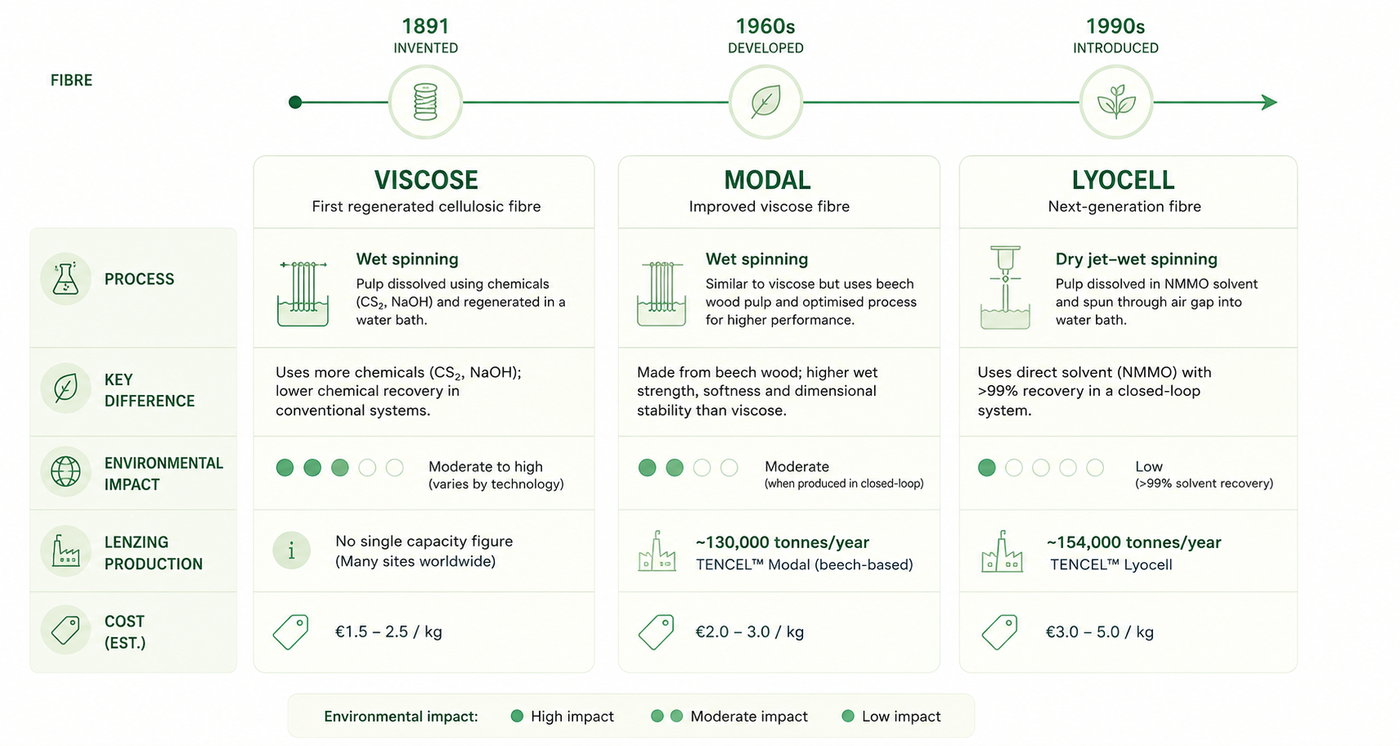
Figure 2.3. Regenerated cellulosic fibres. Credit: FashionKIC, 2026
2.4 Biobased materials
Bio-based materials are made from renewable biological resources, such as plants, algae, fungi, bacteria, agricultural side streams or other forms of biomass. Biofabricated materials are created using biological processes, such as microbial growth, fungal growth, algae cultivation or fermentation (BIOTEXFUTURE, n.d.; Textile Exchange, 2023).
These materials are important because they offer possible routes away from fossil-based inputs and open new ways to design textiles, coatings, films, leather-like materials, foams, dyes and packaging. Some can be processed using existing textile knowledge, while others require new manufacturing systems (Hottle et al., 2013). However, many are still emerging, expensive, produced in limited quantities or available mainly through specialised suppliers.
2.4.1 Bacterial cellulose
Bacterial cellulose is a highly pure cellulose grown by bacteria in a liquid medium. It can form flexible or stiff sheets that may be finished to resemble paper, leather, film or other sheet materials (CORDIS, 2018; Polybion, n.d.).
Its main interest for fashion lies in high-value or niche applications, such as capsule collections, accessories, trims, packaging, experimental garments or material storytelling. Early projects have shown that bacterial cellulose can be dyed, cut, stitched and shaped once dried and conditioned (CORDIS, 2018; Polybion, n.d.).
The main limitations are scale, consistency, water use in cultivation, drying, finishing and performance. Some bacterial cellulose materials may also need coatings, backings or other treatments to achieve durability, which can affect biodegradability or recovery (Textile Exchange, 2023; Polybion, n.d.).
Resource insights:
Those are the companies pioneers in the field of Bacterial Cellulose
- Polybion — Celium™ — Mexico and Spain: Polybion grows Celium™ in Mexico through the bacterial fermentation of agro-industrial fruit waste, while also operating a commercial office in Spain.
- Bucha Bio/Rheom Materials — SHORAI™ and HIKARI™ — United States: Houston-based Bucha Bio developed SHORAI™ as a bio-based leather alternative and HIKARI™ as a translucent biomaterial before rebranding as Rheom Materials and changing its technology and portfolio.
- Modern Synthesis — United Kingdom: London-based Modern Synthesis uses bacterial nanocellulose, natural textile structures and other bio-based polymers to create high-performance coated textiles and composites for fashion, automotive and other applications.
- VTT Finland — ModernTex — Finland, United Kingdom, Sweden and Switzerland: Led by Finland’s VTT with Modern Synthesis, Lund University and Dimpora, ModernTex developed a recyclable leather-like composite combining a bio-based textile scaffold with a bacterial nanocellulose matrix.
- Gozen — LUNAFORM™ — United States and Türkiye: Gozen produces LUNAFORM™, a nanocellulose sheet grown through the controlled fermentation of microorganisms at its facility in Istanbul and used for fashion, accessories and furniture.
- Malai — India: Malai transforms coconut-processing wastewater into bacterial cellulose and combines it with natural fibres to produce compostable, leather-like sheets for accessories, footwear and interior products.
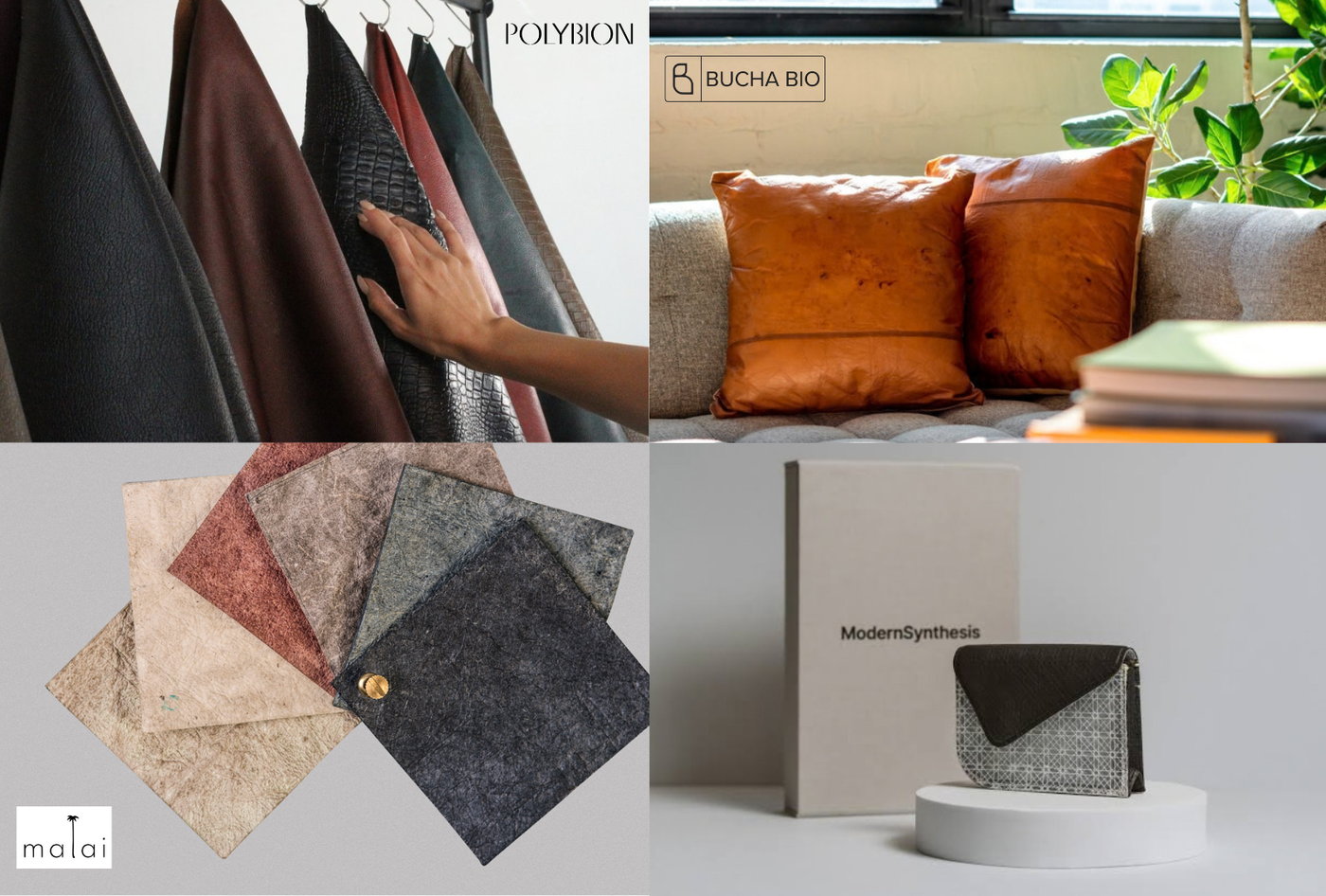
Figue 2.4 Emerging producers of Bacterial cellulose leather-like sheets, Credit: FashionKIC, 2026
2.4.2 Mycelium-grown fibrous mats
Mycelium-grown materials are made using the root-like structure of fungi. Instead of extracting a fibre from a plant or animal, the material is grown through a biological process. Mycelium can be cultivated on plant-based or agricultural side streams and shaped into sheets, foams or composite materials (MycoWorks, n.d.; Ecovative, n.d.; SQIM, n.d.).
In fashion, mycelium materials are most often explored as alternatives to leather, foam, packaging or structural components rather than as conventional woven or knitted fabrics. They are interesting because they can be grown into a desired shape, use renewable biological inputs and offer new possibilities for lower-impact material development (MycoWorks, n.d.; Ecovative, n.d.).
Useful questions for designers and SMEs include:
- What is the mycelium grown on?
- Is the material flexible, rigid, foam-like or leather-like?
- Does it need a coating or backing to perform well?
- Is it suitable for the intended product use?
- Can it be repaired, reused or safely recovered?
- Is the supplier able to provide consistent quality and traceability?
- Is the material commercially available or still at prototype stage?
Resource Insights:
Those are pioneer companies in mycelium grown materials
- Ecovative/Forager — AirLoom™ Hides — United States: Ecovative’s Forager platform grows continuous mycelium sheets for AirLoom™ Hides, intended for handbags, footwear, apparel and accessories, alongside MycoFlex®, a compostable pure-mycelium foam for cushioning and related applications.
- SQIM/Ephea — Italy: SQIM is the biotechnology platform behind Ephea, a family of 100% pure-mycelium mats grown and finished in Italy for premium fashion, accessories and luxury design; production is currently at pilot scale and available for collaborations.
- MycoWorks — Reishi™ — United States: MycoWorks grows Reishi™ using its Fine Mycelium™ process, which directs fungal mycelium into dense, interlocking structures that are subsequently tanned and finished to create premium sheets for fashion, footwear, furniture and automotive applications.
- ZVNDER / FUNGISKIN — Germany / Romania: ZVNDER makes leather-like sheets and accessories in Berlin from tinder-fungus fruiting bodies traditionally harvested and processed by families in Transylvania, Romania. Technically, FUNGISKIN is mushroom-cap material rather than cultivated mycelium leather.
- MycoFutures / Myco™ — Canada: Montréal-based MycoFutures is piloting a plastic-free, circular mycelium material with a leather-like appearance for hospitality accessories and commercial interiors.
- MYCL / MYLEA — Indonesia: MYCL develops MYLEA, a sheet material grown from mushroom mycelium and agricultural residues for footwear, fashion and interior applications.
- NEFFA / MycoTEX — Netherlands: NEFFA’s MycoTEX technology grows mycelium-based material directly into three-dimensional forms, aiming to produce seamless garments and products with less cutting and sewing waste.
2.4.3 Algae-based biopolymer fibres
Algae-based materials use seaweed, microalgae or algae-derived compounds as renewable biological inputs. These materials can be used in different ways: as fibres, yarns, dyes, coatings, films, foams or biopolymer blends.
In textiles, algae-based innovation is often linked to alginate or seaweed-derived polymers. These can be processed into fibre-like materials or combined with other fibres to create fabrics. Some companies are also exploring algae-based dyes and pigments as alternatives to conventional colour chemistry.
Algae-based materials are interesting for circular fashion because algae can grow without agricultural land and can be connected to marine or aquatic biomass systems. They may also offer opportunities for lower-impact colouration, bio-based fibres and new material stories around water, oceans and regenerative resources.
Resource Insights:
These are pioneer companies in algae based materials:
- Keel Labs— United States: Keel Labs’ Kelsun® is a bio-based, plastic-free fibre made from seaweed biopolymers for woven, knitted and nonwoven textile applications.
- Algaeing — Israel: Algaeing develops renewable, algae-derived colourants for textiles, including Algadye™ for dyeing and Algaink™ for printing.
- Living Ink Technologies — United States: Living Ink converts discarded algae biomass into ALGAE BLACK™ pigments and ALGAE INK™, replacing petroleum-derived carbon black in textile printing, footwear and other applications.
- Origin by Ocean — Finland: Origin by Ocean refines invasive and farmed seaweed into ingredients such as OceanThix™ alginate, which can be used in textile-printing pastes, natural fibres and biodegradable materials.
- SMARTFIBER / SEACELL™ — Germany: SMARTFIBER produces SEACELL™, a cellulose-based textile fibre containing approximately 19% brown seaweed for apparel, sportswear and interior textiles. Unlike Kelsun®, it is primarily a cellulosic fibre incorporating seaweed, rather than a fibre formed mainly from seaweed biopolymers.
Case example: BIOTEXFUTURE
BIOTEXFUTURE is a useful case study because it focuses on the transition from petroleum-based raw materials towards bio-based textile alternatives. It brings together research and industry partners to test and scale new material approaches, including bio-based polymers and textile applications.
For learners, this case helps show that bio-based materials are not only individual fibres or isolated experiments. They are part of a wider innovation system involving research, suppliers, brands, manufacturers and infrastructure (BIOTEXFUTURE, n.d.).
Discussion questions:
- What problem is BIOTEXFUTURE trying to address?
- Why does replacing petroleum-based inputs require collaboration between research and industry?
- Which barriers might appear when moving from a lab material to a textile product?
- How could SMEs participate in this kind of innovation ecosystem?
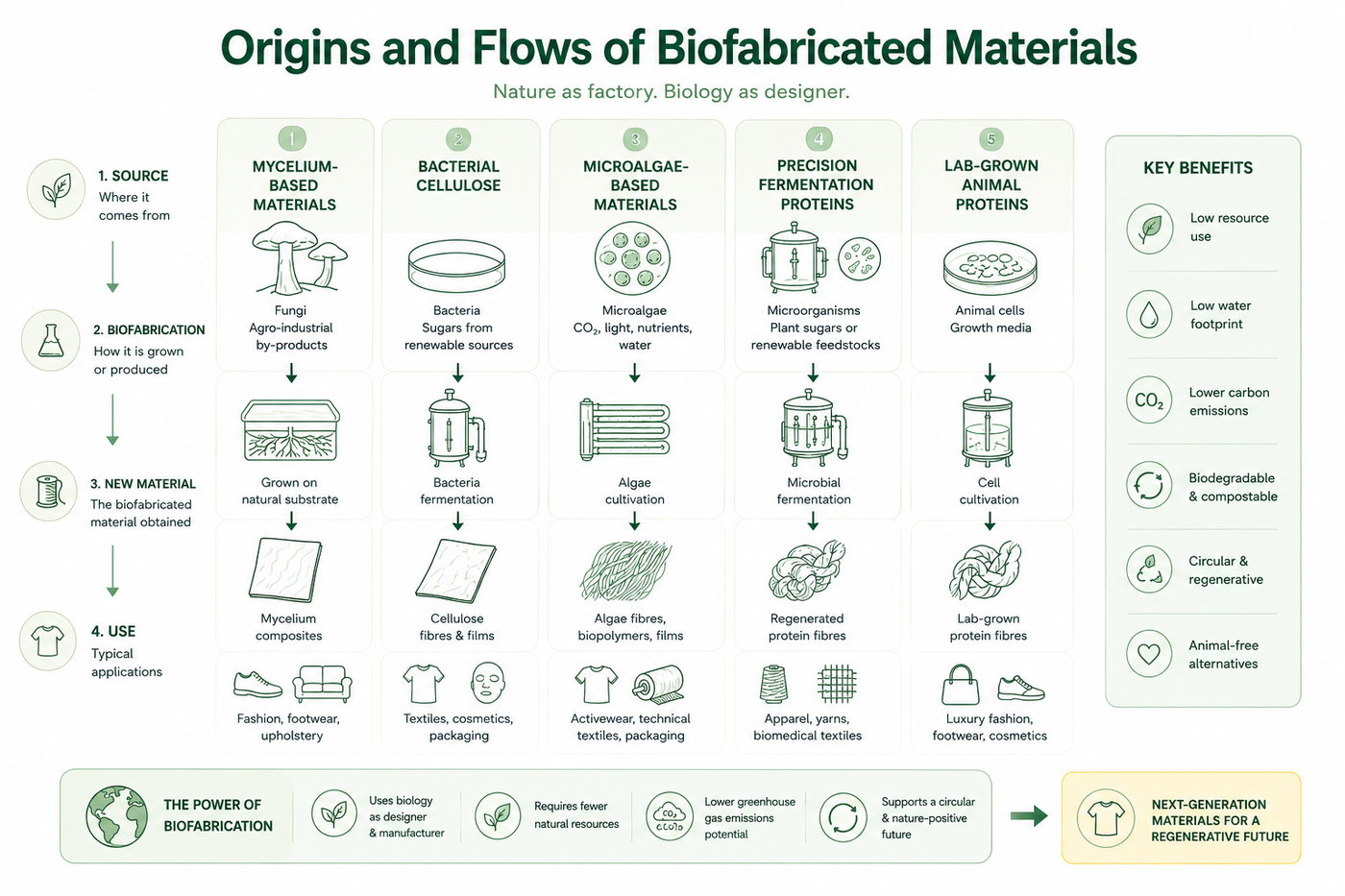
Figure 2.4. Biofabricated materials grown origins and flows, Credit: FashionKIC, 2026