
Chapter 1 — full chapter
Chapter 1 — full chapter
1.4 A Global Roadmap
UNEP’s Sustainability and Circularity in the Textile Value Chain outlines three core, interconnected priorities and nine specific building blocks to achieve a fully circular sector.
Three Core Priorities:
Shifting Consumption Patterns: Moving away from overconsumption and promoting sustainable business models.
Improved Practices: Optimizing production processes, material choices, and product care to minimize environmental footprints.
Infrastructure Investment: Scaling shared recovery, sorting, and recycling facilities globally.
Nine Building Blocks
- Adopting circular business models globally.
- Addressing overconsumption and overproduction.
- Designing products to minimize impacts and support circularity.
- Improving product care to boost durability.
- Optimizing production through resource efficiency and pollution elimination.
- Ensuring a just transition that addresses social and labor issues.
- Shifting raw materials to sustainable or recycled sources.
- Improving shared infrastructure for sorting and processing.
- Diverting all waste from landfills and incineration.
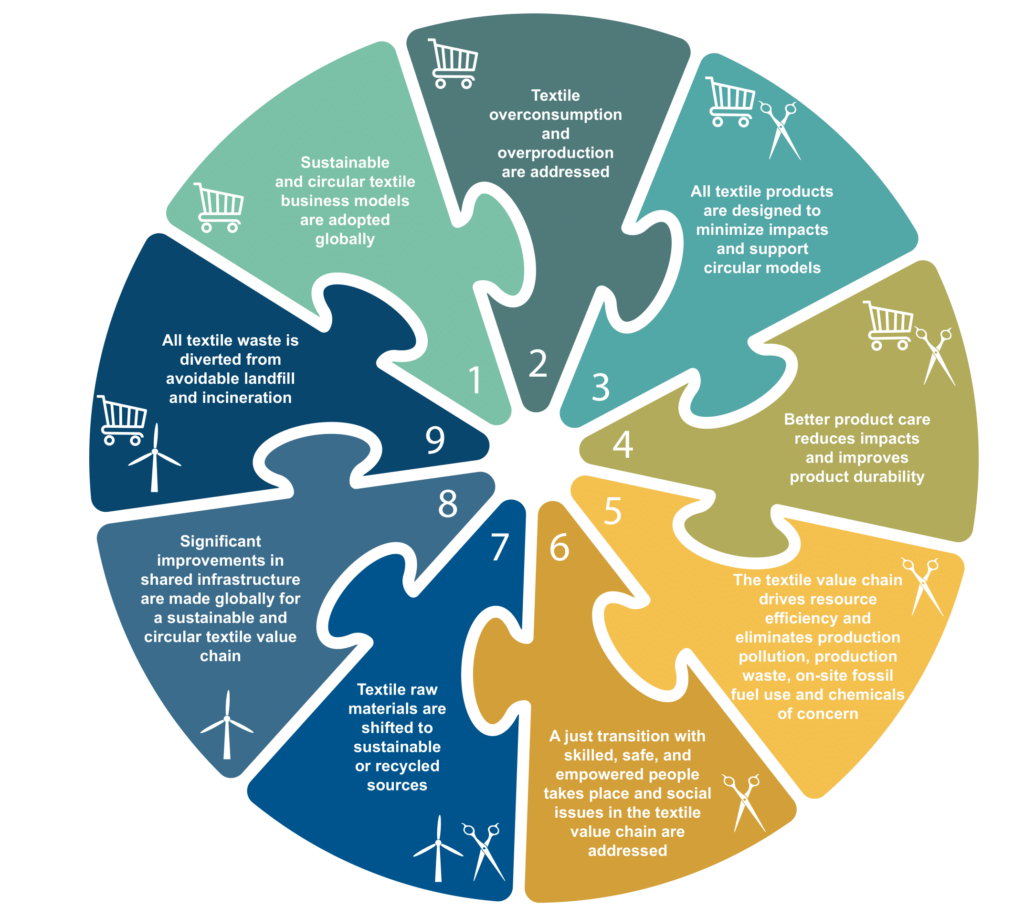
Figure 1.5. UNEP Sustainability and Circularity in the Textile Value Chain — three core priorities and nine building blocks. Copyright UNEP. Source: https://www.unep.org/resources/publication/sustainability-and-circularity-textile-value-chain-global-roadmap
Core Action Areas for Brands & Designers
Design for Longevity and Circularity: Move away from trend-driven, disposable fashion. Designers must prioritize mono-materials (which are easier to recycle), durable construction, and timeless aesthetics so garments stay in use longer.
Adopt Circular Business Models: Shift revenue streams from volume-based sales to circular service models. This includes launching resale platforms, offering garment repair services, and implementing take-back schemes to maintain ownership or responsibility over a product's lifecycle.
Eliminate Hazardous Chemicals: Align production with zero-discharge standards. Substituting toxic dyes and finishes with safe alternatives ensures that products can be safely recycled without circulating harmful toxins.
Build Transparent Supply Chains: Map out tiers from raw material extraction to final assembly. Brands must provide clear, accessible product information—such as digital product passports—to help consumers make informed choices and assist recyclers in identifying fabric compositions.