Chapter 1 — full chapter
| Site: | FashionKIC Learning Platform |
| Course: | Sustainable Materials and Processes |
| Book: | Chapter 1 — full chapter |
| Printed by: | Guest user |
| Date: | Sunday, 1 November 2026, 3:20 AM |
Table of contents
- Chapter 1. Circular Textile Systems: Materials, Processes & Flows
- 1.1 Why Transition to Circular Textile Systems?
- 1.2 The butterfly diagram for Fashion
- 1.3 The 10R Framework: Reduce, Reuse, Recycle, Rethink, Refuse, and Repair.
- 1.4 A Global Roadmap
- 1.5 Key environmental, social and economic challenges
- 1.6 Implementation challenges and opportunities
Chapter 1. Circular Textile Systems: Materials, Processes & Flows
This chapter introduces the foundations of circular textile systems. Learners explore why the transition from a linear to a circular model matters, the butterfly diagram, the 6R framework, a global roadmap, and the main environmental, social and economic challenges facing the textile and fashion sector.
In this chapter:
- 1.1 Why Transition to Circular Textile Systems?
- 1.2 The butterfly diagram for Fashion
- 1.3 The 6R Framework: Reduce, Reuse, Recycle, Rethink, Refuse, and Repair.
- 1.4 A Global Roadmap
- 1.5 Key environmental, social and economic challenges
- 1.6 Implementation challenges and opportunities
1.1 Why Transition to Circular Textile Systems?
The textile and fashion industry has traditionally operated through a linear model: resources are extracted, transformed into products, used and eventually discarded. This approach depends on a continuous supply of virgin resources and loses much of the value already invested in materials and products when they become waste.
A circular textile system takes a different approach. It aims to keep products, components and materials in use for longer, reduce unnecessary resource use and create realistic routes for reuse, repair and material recovery. This requires decisions across the whole value chain, rather than focusing on recycling alone (Ellen MacArthur Foundation, 2017; European Commission, 2022).
Looking across the value chain
The Fashion Impact Toolkit, developed by Global Fashion Agenda and Deloitte, offers a useful overview of the textile value chain. It maps activities from raw material production and processing to manufacturing, distribution, consumer use, collection and sorting, while also showing circular routes such as reuse, repair, resale, remanufacturing and recycling.
The map helps show an important point: impacts and circular opportunities are connected. A decision made during material sourcing or product design can influence manufacturing impacts, product longevity and the recovery options available later.
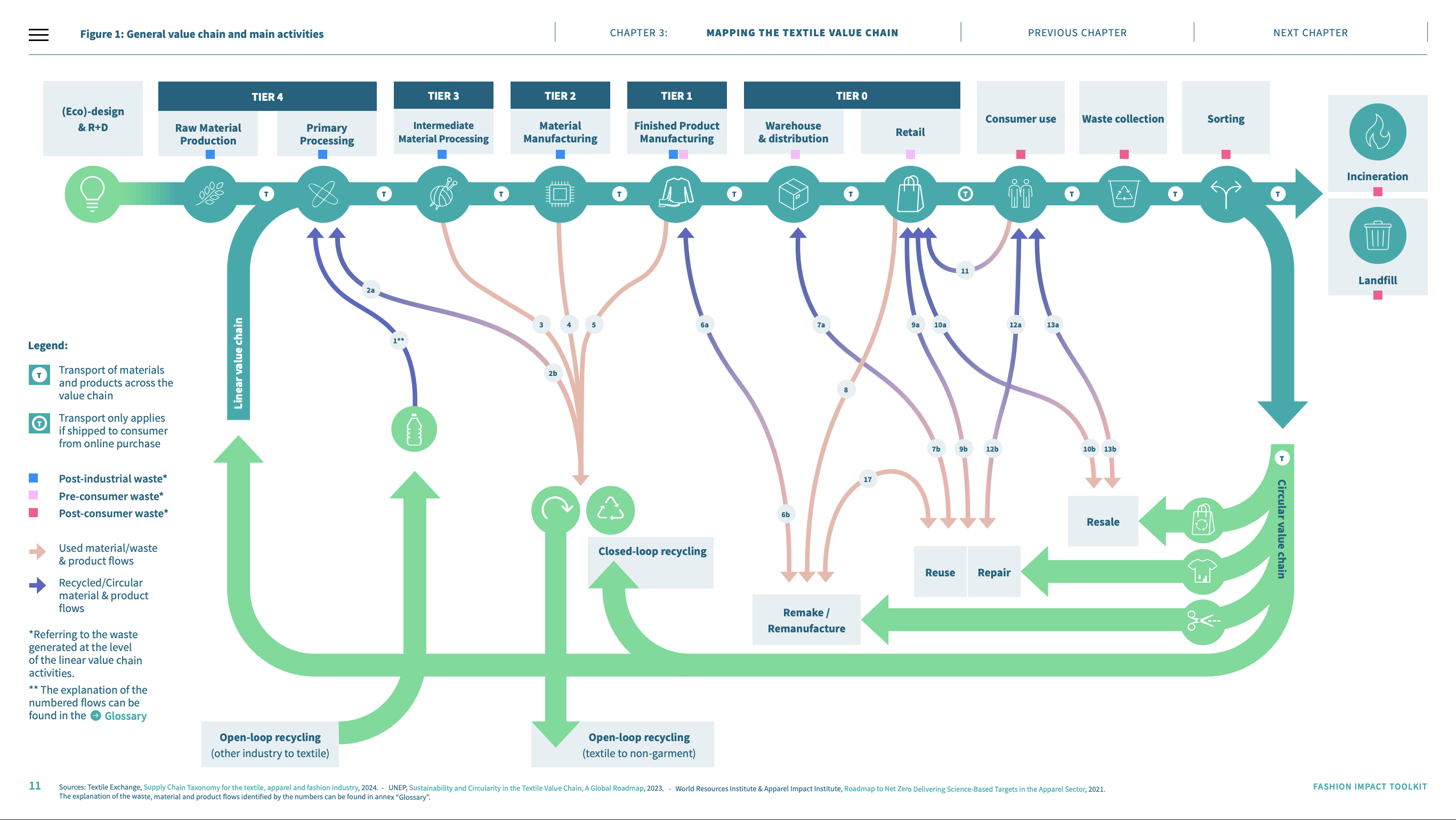 Figure 1.1. Textile value chain and circular flows. Source: Global Fashion Agenda & Deloitte Global, Fashion Impact Toolkit, 2025, Figure 1, p. 11.
What does this mean for SMEs?
For SMEs, circularity does not mean changing everything at once. A useful starting point is to identify where the company has the greatest influence: material sourcing, product design, manufacturing, supplier relationships, product use or recovery.
Looking across the value chain can help identify where resources are being lost, where impacts can be reduced and where collaboration with suppliers, manufacturers, customers or recovery partners may be necessary.
Key takeaway: Circularity is not a single action at the end of a product’s life. It depends on connected decisions made across the textile value chain.
Resources
- Ellen MacArthur Foundation. (2017). A new textiles economy: Redesigning fashion’s future.
- European Commission. (2022). EU strategy for sustainable and circular textiles.
- Global Fashion Agenda & Deloitte. (2025). Fashion Impact Toolkit. https://globalfashionagenda.org/resource/fashion-impact-toolkit/
Tool — systems mapping
Systems mapping visualizes the broader network around a product, highlighting actors, processes, infrastructure, and relationships that enable circularity. Instead of focusing solely on material or the final garment, it considers fiber producers, yarn suppliers, fabric manufacturers, dyeing and finishing facilities, garment makers, brands, users, repair services, resale platforms, collectors, sorters, and recyclers. This tool is vital because many barriers to circularity are systemic. A garment may be technically recyclable, but without a collection system, sorting infrastructure, or recycling partners, that route is unrealistic. Similarly, repairability depends on spare parts, repair knowledge, customer access, and affordable business models. Systems mapping shows that circularity relies on collaboration across the entire value chain, not just on design. It can be used as a visual strategy tool to redesign traditional linear value chains into interconnected, circular ecosystems.
The recommended systems mapping toolkit is developed by H&M foundation and can be found here: https://hmfoundation.com/system-map-toolkit-and-guiding-material/
How to read the map
The System Map combines three layers:
- Value chain: the main stages from fibre production to consumption and end of use.
- Carbon emissions: indicative emissions across different stages, highlighting hotspots.
- Systemic forces: wider influences such as power structures, cultural norms and economic incentives.
The map also shows key actors, leverage points and colour-coded flows connecting different parts of the system, including regulation, capital, innovation and demand.
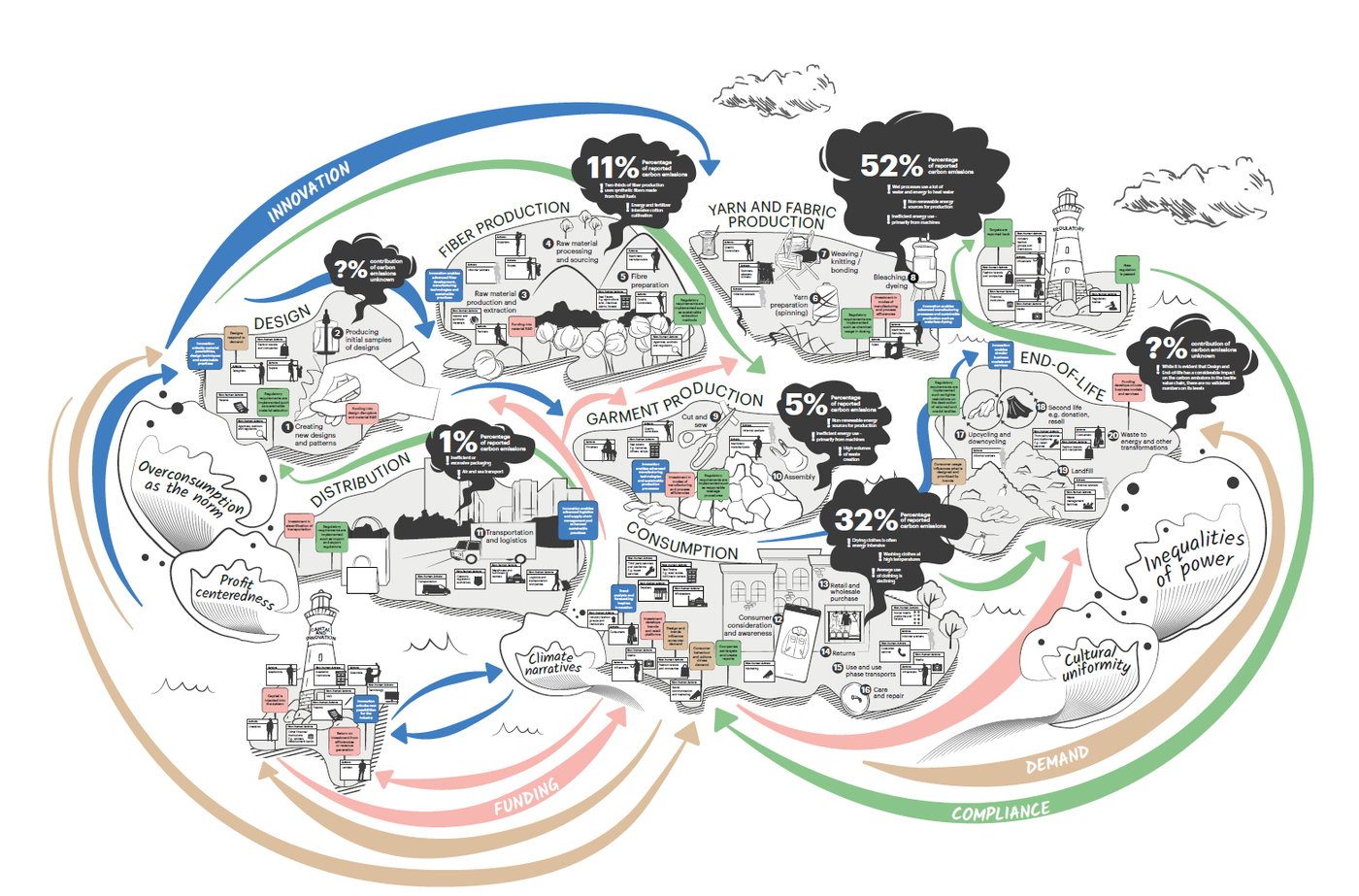
Figure 1.2 H&M Foundation System Map Toolkit. Copyright H&M Foundation. Source: https://hmfoundation.com/system-map-toolkit-and-guiding-material/
1.2 The butterfly diagram for Fashion
The butterfly diagram, popularized by the Ellen MacArthur Foundation, is a visual framework that illustrates how a circular economy keeps materials and products in continuous use.
The diagram gets its name from its two distinct "wings," which separate material flows into two main loops:
The Biological Cycle (left wing): applies to suitable renewable materials that have been designed and processed so they can safely return to biological systems at the end of their useful life [1, 2].
The Technical Cycle (right wing): keeps textile products, components and materials in circulation through strategies such as reuse, repair, refurbishment, remanufacturing and recycling.
The model emphasizes that inner loops (such as direct reuse or repair) preserve more value and energy than outer loops like recycling. It also highlights that the two cycles must remain separate to prevent contamination and waste.
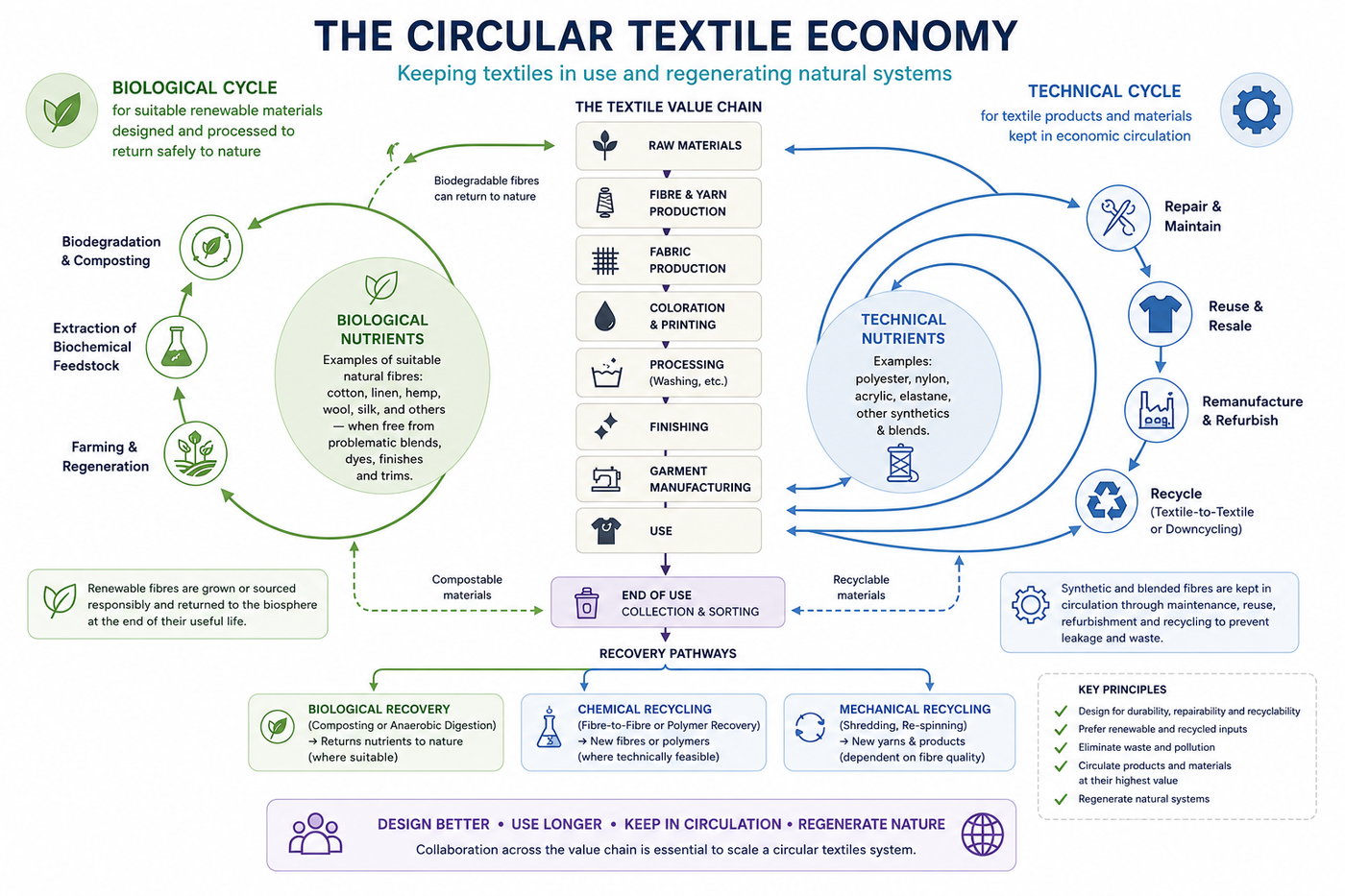
Figure 1.3. Fashion’s Butterfly Diagram. Credit: FashionKIC, Fashion’s Butterfly Diagram, 2026, adapted from Ellen MacArthur Foundation, 2017
Resource Insight: Ellen Mac Arthur Foundation, Circular Economy Systems Diagram, 2019. Drawing based on Baungard & McDonough, Cradle 2 Cradle (C2C) https://www.ellenmacarthurfoundation.org/circular-economy-diagram
1.3 The 10R Framework: Refuse, Rethink, Reduce, Reuse, Repair, Refurbish, Remanufacture Repurpose, Recycle, and Recover
The 10R framework offers a simple way to organise circular strategies in fashion and textiles beyond recycling alone. It encourages designers, brands and consumers to act earlier in the product life cycle by refusing unnecessary products or materials, rethinking how products are designed and used, reducing resource consumption and waste, reusing products and materials for longer, repairing garments to extend their life, and recycling materials when higher-value options are no longer possible. This order reflects the logic of circular economy R-frameworks, where strategies that avoid resource use or keep products at higher value are prioritised before lower-value material recovery routes such as recycling (Potting et al., 2017; OECD, 2024).
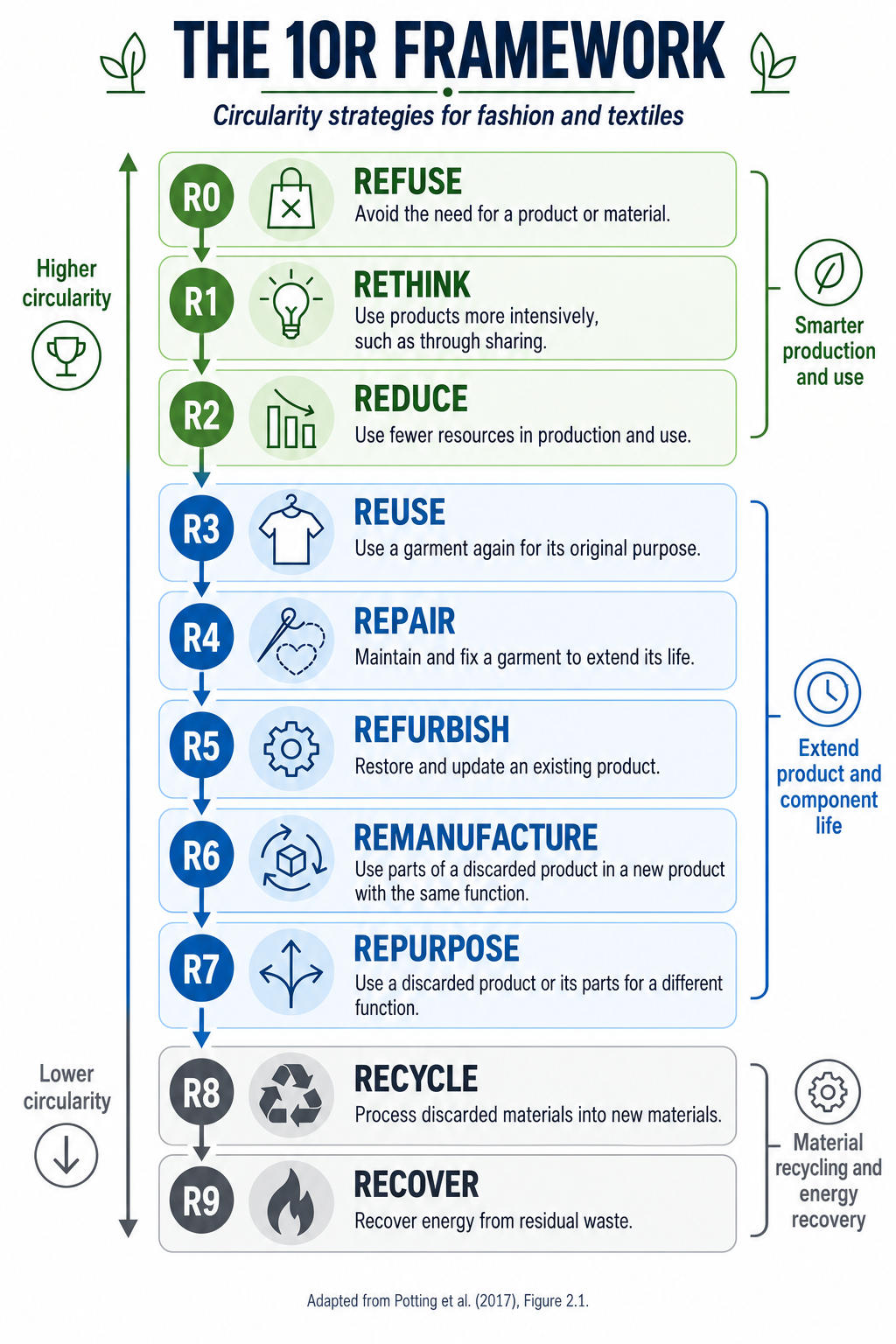
Figure 1.4. The 10R Framework. Credit: FashionKIC, adapted from Potting et al. (2017)
Resource insight: Potting, J., Hekkert, M., Worrell, E., & Hanemaaijer, A. (2017). Circular economy: Measuring innovation in product chains (PBL publication no. 2544). PBL Netherlands Environmental Assessment Agency. https://www.pbl.nl/sites/default/files/downloads/pbl-2016-circular-economy-measuring-innovation-in-product-chains-2544.pdf
1.4 A Global Roadmap
UNEP’s Sustainability and Circularity in the Textile Value Chain outlines three core, interconnected priorities and nine specific building blocks to achieve a fully circular sector.
Three Core Priorities:
Shifting Consumption Patterns: Moving away from overconsumption and promoting sustainable business models.
Improved Practices: Optimizing production processes, material choices, and product care to minimize environmental footprints.
Infrastructure Investment: Scaling shared recovery, sorting, and recycling facilities globally.
Nine Building Blocks
- Adopting circular business models globally.
- Addressing overconsumption and overproduction.
- Designing products to minimize impacts and support circularity.
- Improving product care to boost durability.
- Optimizing production through resource efficiency and pollution elimination.
- Ensuring a just transition that addresses social and labor issues.
- Shifting raw materials to sustainable or recycled sources.
- Improving shared infrastructure for sorting and processing.
- Diverting all waste from landfills and incineration.
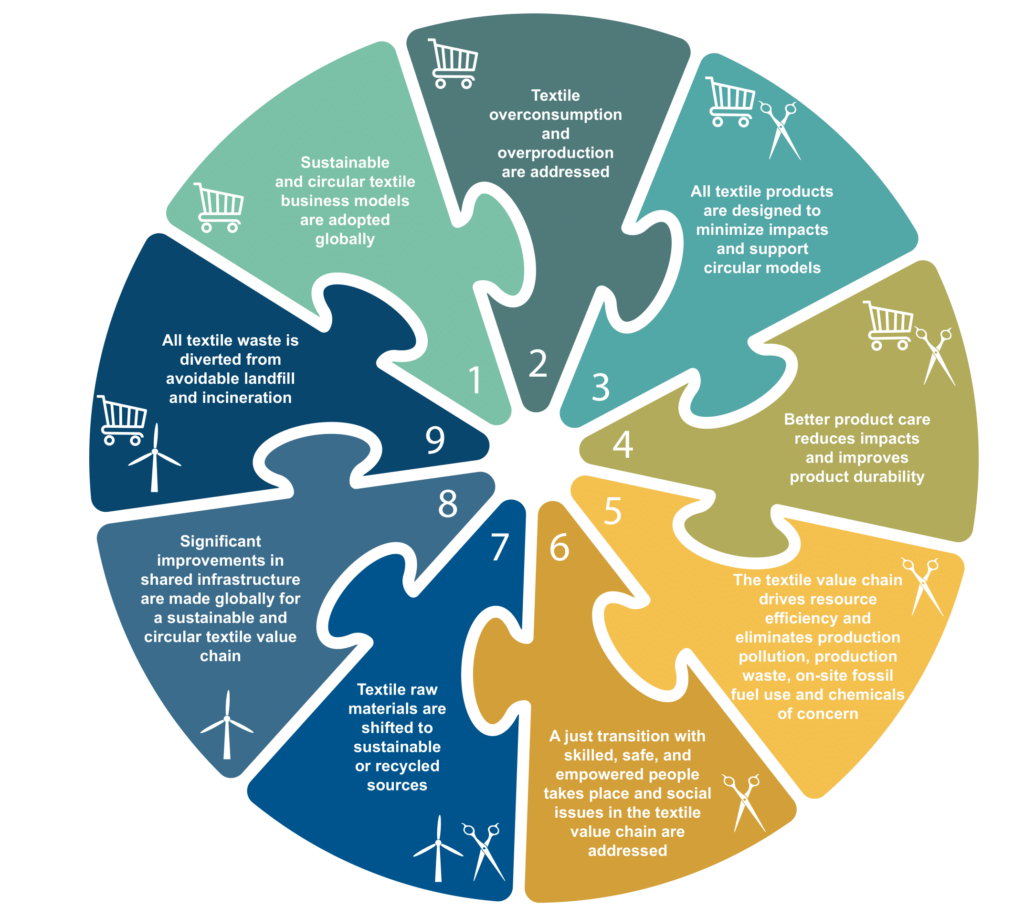
Figure 1.5. UNEP Sustainability and Circularity in the Textile Value Chain — three core priorities and nine building blocks. Copyright UNEP. Source: https://www.unep.org/resources/publication/sustainability-and-circularity-textile-value-chain-global-roadmap
Core Action Areas for Brands & Designers
Design for Longevity and Circularity: Move away from trend-driven, disposable fashion. Designers must prioritize mono-materials (which are easier to recycle), durable construction, and timeless aesthetics so garments stay in use longer.
Adopt Circular Business Models: Shift revenue streams from volume-based sales to circular service models. This includes launching resale platforms, offering garment repair services, and implementing take-back schemes to maintain ownership or responsibility over a product's lifecycle.
Eliminate Hazardous Chemicals: Align production with zero-discharge standards. Substituting toxic dyes and finishes with safe alternatives ensures that products can be safely recycled without circulating harmful toxins.
Build Transparent Supply Chains: Map out tiers from raw material extraction to final assembly. Brands must provide clear, accessible product information—such as digital product passports—to help consumers make informed choices and assist recyclers in identifying fabric compositions.
1.5 Key environmental, social and economic challenges
The textile and fashion industry faces interconnected environmental, social and economic challenges throughout the product life cycle, from raw material extraction to end-of-life management. These challenges should not be treated as separate problems because improvement in one area may create impacts elsewhere. For this reason, circular textile decisions need to be supported by life-cycle thinking, reliable information and an understanding of trade-offs. The following sections explore these challenges across the textile value chain, focusing on climate impact, life-cycle emission hotspots, water use and pollution, chemicals, resource use, biodiversity, labour conditions, transparency, waste, energy, animal welfare and the trade-offs that connect them (Figure 1.6).
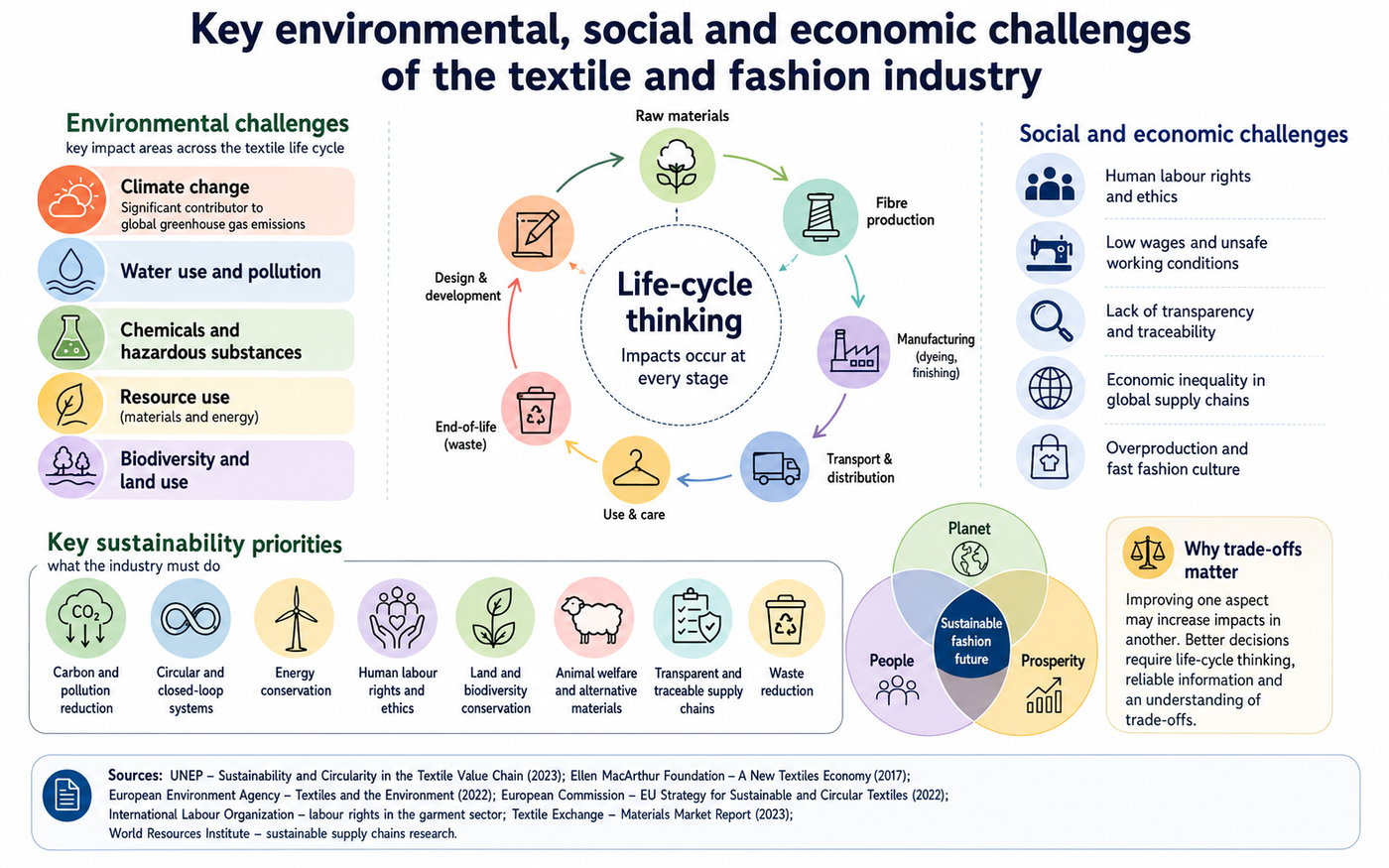
Figure 1.6. Overview of key environmental, social and economic challenges in the textile and fashion industry. Credit: FashionKIC, Challenges Overview Diagram, 2026.
1.5.1 Climate impact and carbon footprint
Climate impact is one of the main environmental challenges in textile and garment systems. Estimates vary according to methodology, sector scope and system boundaries, but the apparel and footwear industries are frequently estimated to generate around 8-10% of global carbon emissions, while one overview also reports approximately 1.2 billion tonnes of CO2 equivalent linked to textile industry emissions (Leal Filho et al., 2022). These figures should be treated as indicative rather than fixed, because results depend on what is included, for example fibre production, textile processing, garment manufacturing, transport, retail, use and end-of-life.
Product-level carbon footprints also vary significantly. A recent life-cycle study of five cotton garment types in China reported values ranging from 2.42 kg CO2e for childrenswear to 38.64 kg CO2e for fatigues, with T-shirts at 9.18 kg CO2e and workwear at 20.25 kg CO2e (Wang et al., 2025). These differences show why it is risky to use a single carbon figure for “a garment” without specifying the product type, material, production context, energy mix, transport assumptions, number of wears and care practices.
1.5.2 Life-cycle emission hotspots
Emissions occur across the full textile value chain. Fibre production, yarn production, fabric manufacturing, dyeing, finishing and garment manufacturing can be highly energy intensive, particularly when electricity and heat are generated from fossil fuels. Transport and distribution also matter because clothing supply chains are often international: the Carbon Trust notes that a large share of emissions embodied in clothing crosses borders between production and consumption regions (Carbon Trust, 2011). The use phase can also be significant, especially when products are washed frequently, tumble-dried, ironed or dry-cleaned. In a cotton T-shirt example, the Carbon Trust estimated around 15 kg CO2 over the product lifetime, with around half or more linked to use-phase activities under the assumptions used in the study (Carbon Trust, 2011).
This means that carbon reduction strategies should address the whole system. They may include selecting lower-impact fibres, reducing overproduction, improving durability, using renewable energy, increasing energy efficiency in spinning, weaving, knitting, dyeing and finishing, designing for longer use, encouraging lower-impact care, and planning realistic reuse, repair and recovery routes.
1.5.3 Water use, chemicals and pollution
Water use and pollution are major concerns across fibre cultivation, dyeing, printing and finishing. The European Parliament reports that textile production is estimated to be responsible for about 20% of global clean water pollution, mainly from dyeing processes (European Parliament, 2025). Safer chemistry, wastewater treatment, lower-impact colouration and careful finishing choices are important because dyes, coatings and chemical treatments can affect both environmental performance and future recovery options.
1.5.4 Resource use, biodiversity and land impacts
Textiles rely on land, water, energy, fossil resources, forests, agricultural systems and animal-based materials. Natural, synthetic, recycled and bio-based materials all have different impacts and constraints. A natural fibre is not automatically low impact, and a recycled fibre is not automatically circular if the product is not durable, repairable or recoverable.
1.5.5 Labour rights and working conditions
Circularity also has a social dimension. Textile supply chains can involve low wages, unsafe working conditions, excessive overtime and limited labour rights. A circular transition should therefore consider not only material flows, but also the people and organisations involved in producing, repairing, collecting, sorting and recovering textile products.
1.5.6 Transparency, traceability and accountability
Greater transparency and traceability are needed to support responsible sourcing, credible claims and better recovery decisions. Without reliable product information, it is difficult for customers, repairers, sorters, recyclers or regulators to know what a product is made of, how it was produced and which recovery route is realistic.
1.5.7 Trade-offs and life-cycle thinking
No single material or process solves all sustainability challenges. A material may reduce fossil-based content but increase land or water impacts. A durable synthetic product may last longer but be harder to recycle. A compostable material may only be suitable for biological recovery if the full product, including dyes, finishes, threads and trims, has been designed for that route. Life-cycle thinking helps learners recognise these trade-offs and make more balanced decisions.
1.6 Implementation challenges and opportunities
Circularity is not achieved by changing a single material, but by building strong supplier relationships, ensuring traceability, and integrating circular criteria into sourcing decisions.
Adopting circular materials and processes offers fashion SMEs opportunities to improve sustainability, strengthen competitiveness, and respond to evolving market and regulatory demands. However, successful implementation requires overcoming several practical challenges:
Material sourcing and supplier engagement
Choosing circular materials depends on sourcing reliable suppliers who provide consistent quality, transparent information, and certifications or traceability. Since many circular materials are emerging, limited in availability, or produced by specialized suppliers, challenges include minimum order sizes, lead times, and costs, barriers for SMEs. Building strong supplier relationships is vital. SMEs should inquire about origin, whether materials are recycled, regenerative, or bio-based, supporting certifications, processing needs, production compatibility, and end-of-life disposal. Collaboration ensures better decisions and prevents choosing materials solely based on perceived sustainability.
Cost and availability
Circular materials may be costlier, less available, or have longer lead times, making adoption challenging for SMEs with tight margins and small volumes. However, value extends beyond price, including regulatory compliance, product differentiation, sustainability messaging, reduced waste, perceived quality, customer loyalty, and new market access. SMEs should begin with a single product, collection, or material stream to test feasibility, gather feedback, and build confidence gradually.
Consumer expectations continue to drive demand for sustainable products that also deliver quality, durability, aesthetics and fair prices. Transparent communication supported by credible certifications is essential to build trust and avoid misleading environmental claims. Effective messaging should detail materials, origin, and responsible use, including fiber content, recycled or certified components, supplier info, production location, care instructions, end-of-life guidance, and certifications.
Innovation and collaboration across the value chain enable SMEs to access new materials, technologies, and expertise through partnerships with suppliers, manufacturers, researchers, and industry networks. Repair and resale platforms can extend product life, while universities, research centers, and industry networks provide technical support and innovation opportunities. Certification bodies and digital traceability providers enhance transparency and credible claims. Innovation often begins with small steps: testing recycled fibers, simplifying product materials, improving durability, partnering with local repair services, or collecting returned products.
Integrating circular materials into product development workflows means incorporating circularity into material selection, supplier evaluation, and production planning from the earliest stages, allowing sustainability to become part of routine business practice rather than an isolated initiative.
The choices made at this stage determine which recovery pathways remain possible later in the product life cycle. Chapter 6 explores these end-of-life and material recovery routes in more detail.
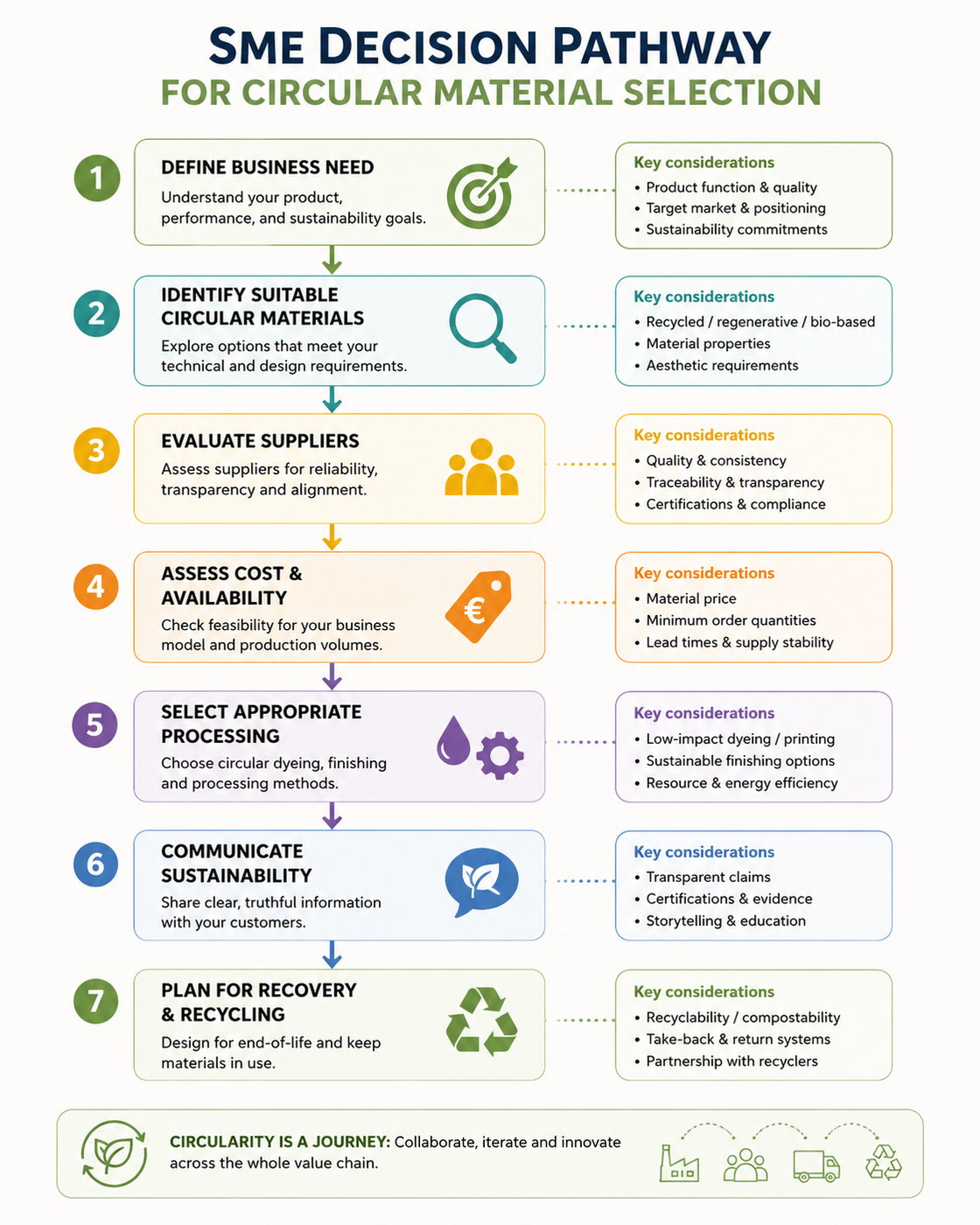
Figure 1.7. Implementation challenges and opportunities for fashion SMEs adopting circular materials and processes. Credit: FashionKIC, 2026