
Chapter 1 — full chapter
Chapter 1 — full chapter
1.3 The 10R Framework: Refuse, Rethink, Reduce, Reuse, Repair, Refurbish, Remanufacture Repurpose, Recycle, and Recover
The 10R framework offers a simple way to organise circular strategies in fashion and textiles beyond recycling alone. It encourages designers, brands and consumers to act earlier in the product life cycle by refusing unnecessary products or materials, rethinking how products are designed and used, reducing resource consumption and waste, reusing products and materials for longer, repairing garments to extend their life, and recycling materials when higher-value options are no longer possible. This order reflects the logic of circular economy R-frameworks, where strategies that avoid resource use or keep products at higher value are prioritised before lower-value material recovery routes such as recycling (Potting et al., 2017; OECD, 2024).
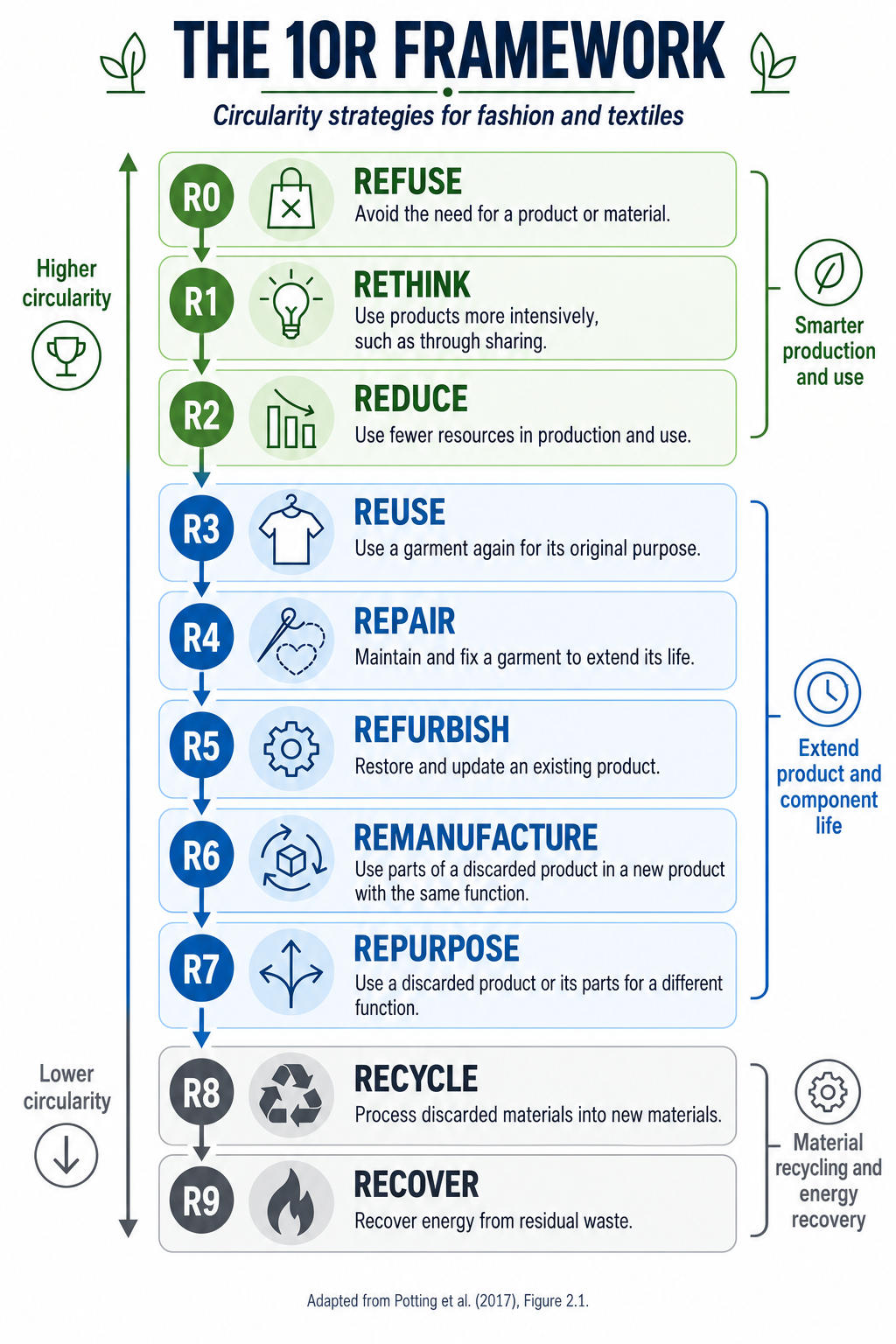
Figure 1.4. The 10R Framework. Credit: FashionKIC, adapted from Potting et al. (2017)
Resource insight: Potting, J., Hekkert, M., Worrell, E., & Hanemaaijer, A. (2017). Circular economy: Measuring innovation in product chains (PBL publication no. 2544). PBL Netherlands Environmental Assessment Agency. https://www.pbl.nl/sites/default/files/downloads/pbl-2016-circular-economy-measuring-innovation-in-product-chains-2544.pdf