
Chapter 2 — full chapter
Chapter 2 — full chapter
2.4 Digital Pattern Making and Zero-Waste Design
Conventional cutting wastes 10–30% of fabric before a garment is even sewn. Zero-waste design eliminates this loss by making the fabric width a design constraint from the first sketch, and digital pattern-making tools have turned it from a craft practice into an industrially viable strategy.
2.4.1 Letting the Fabric Decide: Zero-Waste Pattern Making
Zero-waste fashion design reverses conventional logic: instead of imposing a silhouette on the fabric and discarding what falls between the pieces, the fabric dictates the garment's form. The key principles are interlocking patterns (pieces fit together like a puzzle and use the full fabric width), geometric and modular forms (rectangles, triangles, trapezoids that tessellate easily), and layout planning at the concept stage, so silhouette and pattern geometry are developed together. The approach is both ancient and modern: the Japanese kimono, the Indian sari, and early European tunics naturally avoided waste through rectangular construction; contemporary pioneers such as Julian Roberts (subtraction cutting), Timo Rissanen, Holly McQuillan (open-source patterns), and Mark Liu reconnected this heritage with modern practice. The new digital layer, CAD pattern making, simulation, and automated marker making in tools such as CLO3D, Optitex[35], and Browzwear, allows designers to plan and optimize fabric utilization on screen before cutting, and to combine zero-waste cutting with the broader eco-design agenda: durability, repairability, adaptable sizing, and modular redesign of remnants (aligned with ISO 14006 eco-design guidelines).
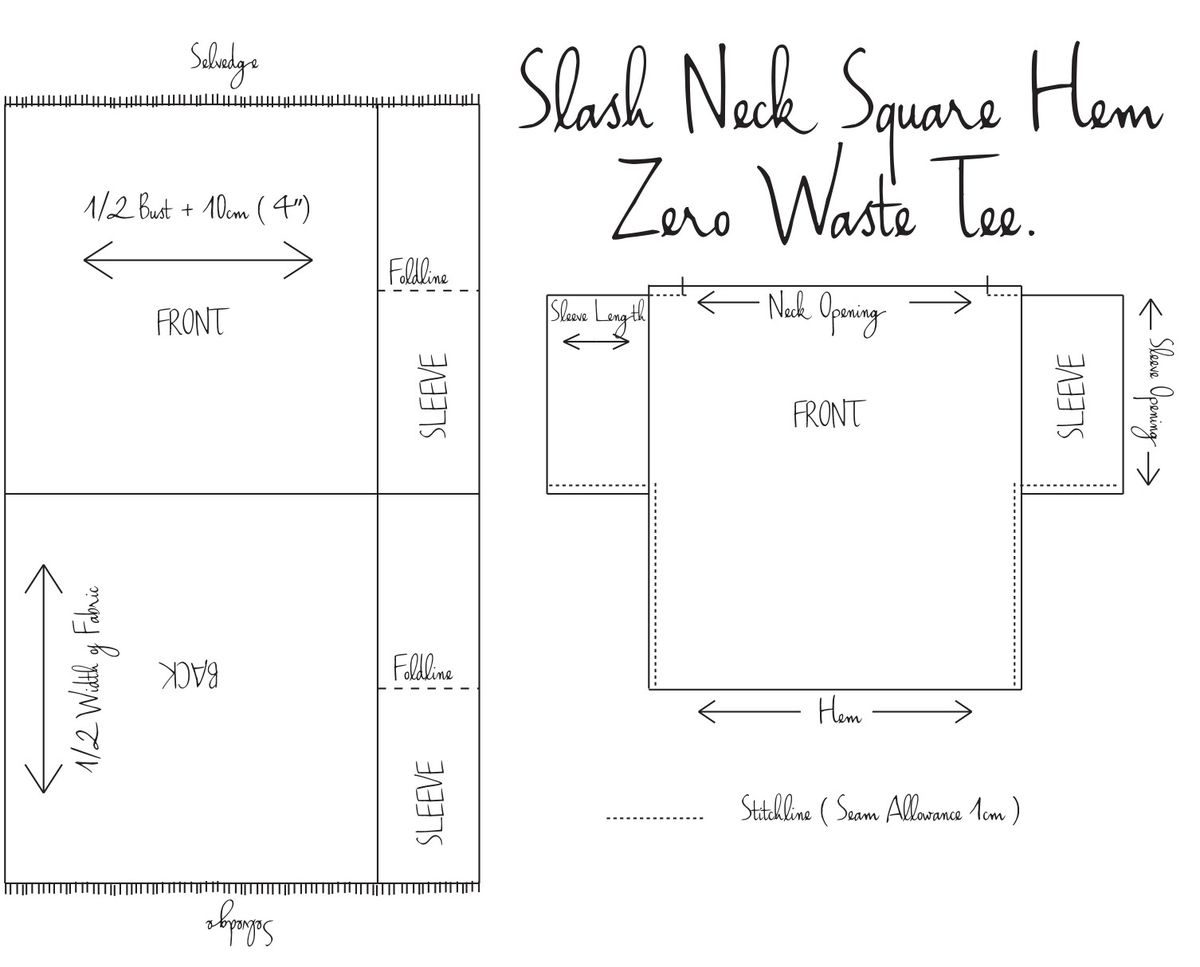
Figure 2.11, Zero-waste T-shirt pattern: the garment is designed inside the full fabric width, leaving no offcuts.
2.4.2 Case example: Timo Rissanen, the zero-waste hoodie
Timo Rissanen's zero-waste hoodie (2009) is one of the most influential documented examples of the method: the complete hoodie, body, sleeves, hood, pockets, facings, interlocks inside a single rectangle of fabric 172 cm wide, with every piece serving the garment. Rissanen published the pattern and reasoning openly, and the project became a reference point for the academic and industrial development of zero-waste practice.
At the brand level, Tonlé builds its entire production model on full material utilization: garments are cut for maximum fabric use, remaining scraps are transformed into new clothing and accessories, and the smallest offcuts become handwoven yardage, treating waste as raw material rather than a cost. Eileen Fisher[16] pairs recycled materials with its take-back program, returning used garments to the production cycle as renewed products. The combined insight: industrial digital tools (marker-making efficiency, digital grading) and craft methods (creative reuse of offcuts) are complementary; one maximizes efficiency, the other adaptability.
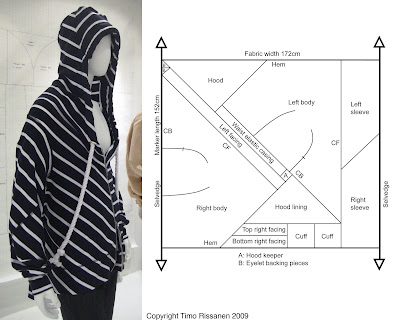
Figure 2.12, Timo Rissanen's zero-waste hoodie: garment and full-width interlocking pattern. (Source: https://zerofabricwastefashion.blogspot.com/2009/09/hoodie-attempt-to-explain.html)
2.4.4 Case example: PATLAB, pattern engineering and prototyping
PATTLAB (Pattern Laboratory), based in Olot, Girona, works as an external technical department for brands with no pattern room of their own: digital pattern development in Gerber AccuMark, digitization of physical patterns, grading, 3D simulation, prototypes from an in-house sample room, and fittings on site or online, with every pattern delivered as a documented package including measurement table and sewing chart. Single patterns from an adaptable library and real-size plotting billed by the sheet convert the fixed costs of industrial pattern engineering, licensed CAD, plotter, pattern maker, sample room, into per-unit ones that a brand producing two collections a year can actually carry.
The material saving is indirect but measurable: sampling waste is a function of how many physical prototypes a garment needs before it fits, and simulation before the first cut, shrinkage testing on the production fabric, and fittings prepared with the garment measured in advance each reduce that count. The insight for SMEs: access to industrial pattern accuracy is now rented by the unit, and accuracy upstream is what keeps fabric out of the bin downstream.
Figure 2.13, PATTLAB (Pattern Laboratory), Olot: pattern engineering, prototyping and real-size plotting offered as a per-unit service to brands without an in-house pattern room. (Source: https://www.pattlab.com/en/)
← PreviousNext: 2.5 Modular Parametric Tesselation Tutorial →