Chapter 5 — full chapter
Chapter 5 — Responsible Storytelling and Campaign Design
Chapter purpose
This chapter explores how verified sustainability and circularity information can be translated into meaningful narratives, visual communication, and campaign concepts. It focuses on the creative decisions that follow compliance and substantiation: why the information matters, which story angle to use, how to build emotional relevance, how to visualise circular value and how to invite an appropriate response without broadening or exaggerating the verified meaning.
Chapter overview
This chapter explores how verified sustainability and circularity information can be transformed into responsible storytelling and campaign design. It focuses on the creative work that begins after information has been checked for legal admissibility, scope, and substantiation.
Learners will examine how to identify why verified information matters, develop an appropriate story angle and emotional hook, translate circular value into visual and channel-specific communication, and use digital tools and AI responsibly. The chapter concludes with a structured campaign-design process that helps preserve the meaning, qualifications and limitations of the verified input while making it relevant, engaging, and actionable.
Time: ≈ 2.5–4.5 h · reading & activities (2 h) · assignment (1–3 h) · quiz (10 min).
Introduction
Storytelling does not begin with a blank page or an untested sustainability claim. It begins with information that has already been checked for legal admissibility, scope, and substantiation using the principles and tools introduced in Chapters 1 and 2.
The creative task is not to make that information sound stronger. It is to make its verified meaning understandable, relevant, and engaging. Storytelling may connect a material, product feature, service or initiative to people, use, care, craft, memory or wider systems. However, it must not broaden the scope of the approved information, omit necessary qualifications or imply benefits that the evidence does not support.
Responsible storytelling therefore connects verified information with meaning, emotion, visual language, and an appropriate action. It helps audiences understand why something matters without turning a limited improvement into a wider environmental promise.
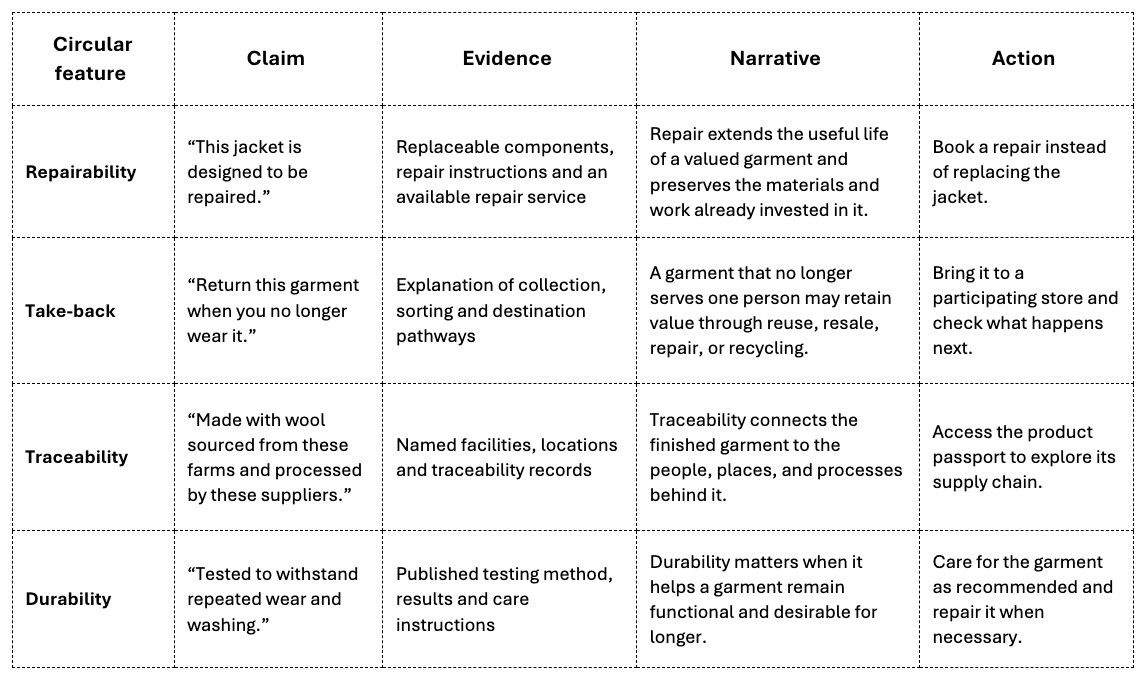
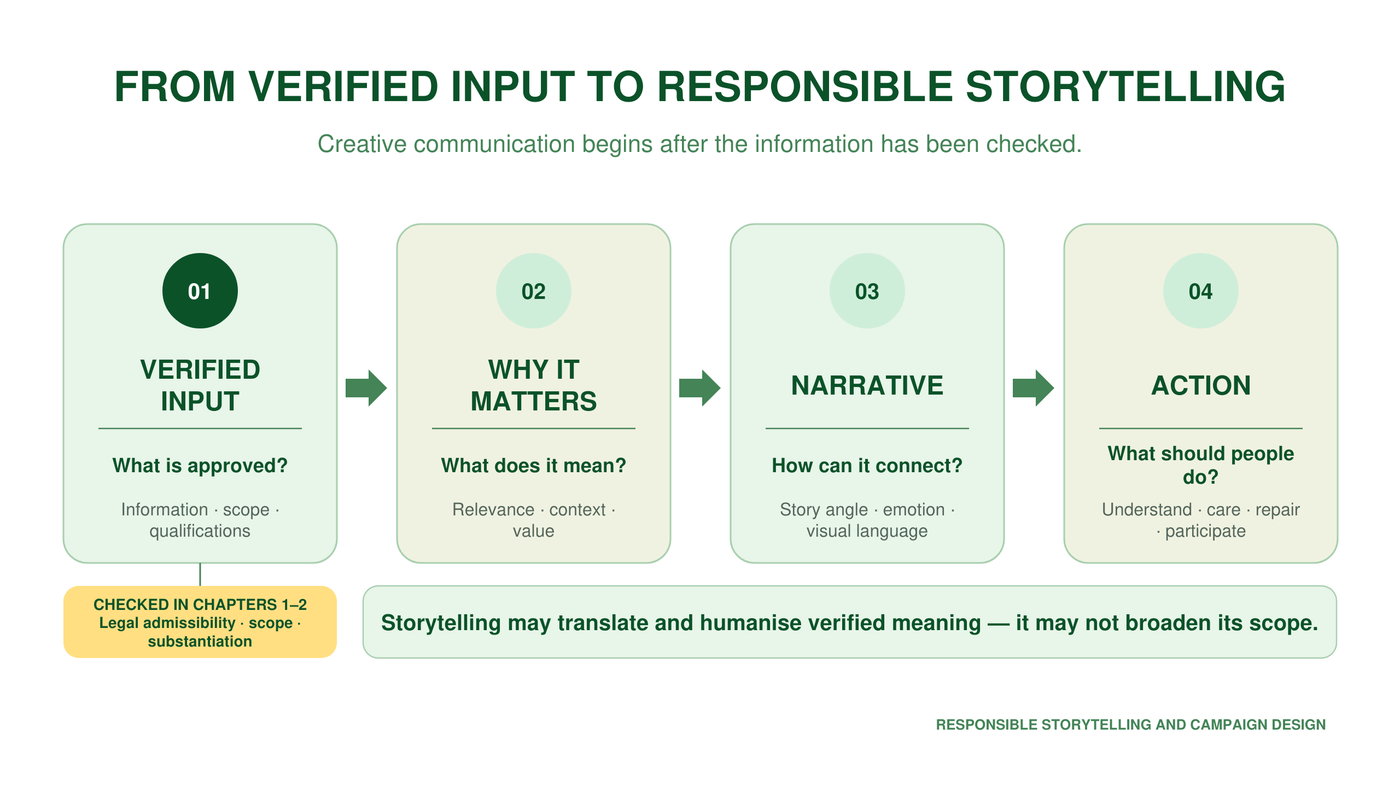
Figure 5.1. From Verified Input to Responsible Storytelling. Responsible storytelling begins with information already checked for legal admissibility, scope and substantiation, and translates its verified meaning into relevance, narrative and appropriate audience action without exaggerating or broadening it.
In this chapter:
- 5.1 The verified communication handover
- 5.2 Emotional connection and value perception
- 5.3 Building the circular story
- 5.4 Content strategy and digital tools
- 5.5 Designing the circular campaign
- 5.6 Case studies