Chapter 4 — full chapter
| Site: | FashionKIC Learning Platform |
| Course: | Digital Tools and AI for Sustainable Fashion |
| Book: | Chapter 4 — full chapter |
| Printed by: | Guest user |
| Date: | Sunday, 1 November 2026, 3:20 AM |
4.1 Digital and Additive Manufacturing: Current Technology Overview and New Manufacturing
Conventional manufacturing spends money before it makes anything. Molds, dies, lasts, and setup are paid for up front, which is why the minimum order quantity exists and why a batch is produced against a forecast rather than against a demand. Additive manufacturing removes that fixed cost: the machine reads a file, so the first part and the thousandth carry the same tooling burden, and geometric complexity is free. This changes the economics of small series, personalization, and on-demand production more than it changes what a factory can physically make.
This section maps the technology families and their fashion applications, then states plainly where the limits are. The binding constraint is not the hardware but the printable feedstock, which is why footwear components are already an industrial reality while wearable garments remain experimental.
4.1.1 Building Layer by Layer: How Additive Manufacturing Works
Additive manufacturing (AM) is the process of combining materials to create objects from 3D CAD models, typically layer by layer, the opposite of subtractive methods. Its defining property is 'free complexity': complex geometries carry no cost penalty, and no tools, molds, or fixtures are required. The workflow connects directly to Chapter 2: CAD model, export (STL, AMF, 3MF), slicing, and machine instructions. ISO/ASTM 52900 classifies AM into seven categories; the most relevant for fashion are material extrusion (FDM/FFF, PLA, ABS, flexible TPU), vat photopolymerization (SLA/DLP), and powder bed fusion (SLS/MJF). Applications span personalized orthopedic insoles, mass-produced midsoles, limited series, experimental luxury pieces, 3D-printed uppers, and rapid prototyping and tooling.
Advantages: complex geometries, tool-less production, faster development, cost-effective personalization, minimal production waste, and on-demand output without inventory.
Limitations: high machine and material costs, slow build speeds, anisotropic mechanical properties, surface roughness, and post-processing needs.
AM is a complementary technology whose sweet spot lies in complexity, customization, and small volumes. The decisive constraint is materials: additive manufacturing in fashion is advancing unevenly not because the machines are lacking but because the printable feedstock is: progress is gated by materials science rather than by hardware. This is why footwear is already a real application while wearable garments are not yet. Shoes and their components, midsoles, insoles, and increasingly whole uppers, tolerate, and often benefit from, the properties that today's printable polymers (TPU and other elastomers, photopolymer resins) actually deliver: controlled stiffness, energy return, durability, and lattice structures that tune cushioning zone by zone. Soft apparel asks the opposite of a material, drape, stretch, breathability, launderability, and next-to-skin comfort, and the polymers that print well remain too rigid, too dense, non-breathable, and poor at recovering their shape, so 3D-printed "garments" stay largely in the couture, runway, and experimental domain rather than in everyday clothing. Closing that gap depends on new materials: softer, fiber-forming printable polymers; multi-material and graded-property printing that combines rigid and flexible zones in one part; bio-based and recyclable feedstocks; and hybrid routes that pair additive processes with whole-garment 3D knitting. For a sustainable design engineer, the lesson is twofold, match the technology to where it is genuinely ready (hard, structured, customized components), and treat the material itself, ideally monomaterial and recyclable, as the real design variable that will decide when additive manufacturing finally reaches the body.
4.1.2 Case example: Danit Peleg, 3D-printed fashion from home printers
In 2015, the Israeli designer Danit Peleg produced the first fashion collection 3D-printed entirely on desktop home printers, building lace-like textile structures from flexible FDM filament; the follow-up 'Create Your Own' bomber jacket (2016) let customers customize and print a garment on demand. The case demonstrates the promise this section describes, distributed, on-demand, waste-free garment production from a digital file, together with its current limits: hand feels, print times, and durability still confine fully printed garments to experimental and couture contexts (danitpeleg.com).

Figure 4.1, Danit Peleg's collection, the world's first fashion collection 3D-printed entirely on home desktop printers (2015). (Source: danitpeleg.com)
4.1.3 Case example: Adidas × Carbon, Futurecraft 4D
The Adidas–Carbon collaboration turned additive manufacturing from a prototyping tool into a mass-production tool. Using Carbon's Digital Light Synthesis process (a fast vat-photopolymerization technology), Adidas developed a workflow to print hundreds of thousands of Futurecraft 4D midsoles cost-effectively, single-piece lattice structures whose density and geometry are tuned zone by zone for cushioning, stability, and energy return, doing with one material and one process what conventionally requires multiple foams and assembly steps.
The strategy is selective adoption: 3D printing is applied to the functionally critical component, not the whole shoe, while Futurecraft STRUNG extends the data-driven logic to uppers through robotic fiber placement that puts each thread where performance data requires it. For the course's argument, the case demonstrates both faces of digital manufacturing: radical performance differentiation through geometry, and a realistic industrial path, brands adopt AM where it adds most value, reducing overproduction and inventory without abandoning conventional assembly.

Figure 4.2, Lattice midsole produced by digital light synthesis (Adidas Futurecraft 4D line). (Press image © adidas[7]-www.adidas.com )adidas[7]
Tools: Style3D
Simulation engine for deformable materials behind an end-to-end platform (Studio, Fabric, Atelier, Simulator, AI) connecting digital design to production; positioned for brands and manufacturers building digital product-creation workflows that reduce waste and speed decisions. Source: https://www.style3d.com.
4.2 Digital Textile Printing
Screen printing charges for the decision, not the cloth. Engraving a set of screens is a fixed cost paid before the first meter runs, which sets a minimum order, pushes designers toward conservative repeats, and makes a sample expensive enough to discourage iteration. Inkjet deposition removes the screen, so the hundredth design costs the same to start as the first and a run of ten meters is as viable as a run of ten thousand.
This section covers the machinery architectures and the economics they enable, and then qualifies the environmental claim. The saving is not in the printhead but in the chain around it: pre-treatment, ink chemistry, fixation, and washing determine the footprint, and a digital press used to accelerate conventional overproduction produces waste faster than an analog one.
4.2.1 Ink on Demand: The Economics of Digital Textile Printing
Digital printing transfers a digital image directly onto fabric, most commonly via inkjet. Drop-on-substrate deposition reduces material waste compared with analog setups, and the absence of screen preparation removes the fixed costs that make small runs uneconomical.
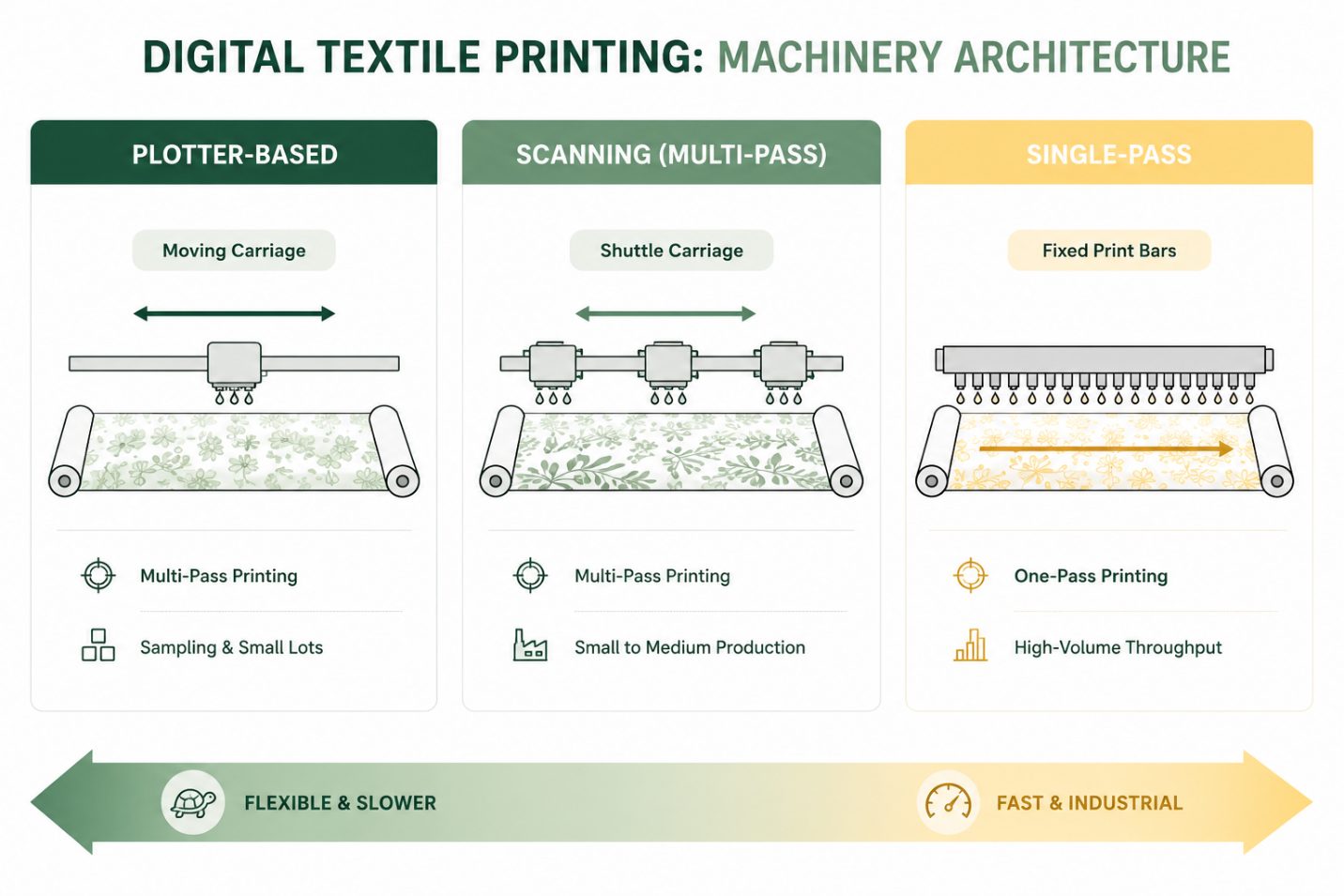
Figure 4.3, Digital textile printing: the three machinery architectures, plotter-based, scanning (multi-pass) and single-pass, from flexible sampling to industrial throughput. (Source: course material)
Compared with screen printing, digital workflows can reduce water and energy demand and nearly eliminate the risk of overproduction in short runs, but the actual footprint depends on fiber-specific pre-treatments, ink chemistry, and post-treatments. Dye-based systems (reactive, acid, disperse) typically require water-intensive fixation and washing; pigment-based inks are the leading 'waterless' route, fixed by dry-curing a binder film, at the expense of dispersion stability, hand feel, and durability. Print quality is governed by ink–substrate interaction, roughness, porosity, fiber chemistry, which is where color management (colorimetry, spectral measurement, QC software) meets production: right-first-time color is both a quality requirement and a waste-prevention strategy.
Beyond efficiency, digital printing is a key enabler of localized, on-demand production, printing small, customized runs close to the point of use instead of shipping bulk goods across continents. Research from the Center for Circular Design at University of the Arts London frames this as a design opportunity as much as a technical one: Rebecca Earley's work combines AI, digital printing and hand-making to develop guidelines for circular, local and urban textile and clothing processes, printing biobased and upcycled materials in short, regionally rooted runs (Earley, 2024; HEREWEAR project). The wider literature on digital textile printing for sustainable localized production makes the same point: the environmental gains are realized only when digital printing is paired with on-demand volumes, low-impact inks and biobased or reused substrates, not when it is used simply to accelerate conventional overproduction (Digital Textile Printing: Opportunities and Challenges for Sustainable Localized Production, 2025).
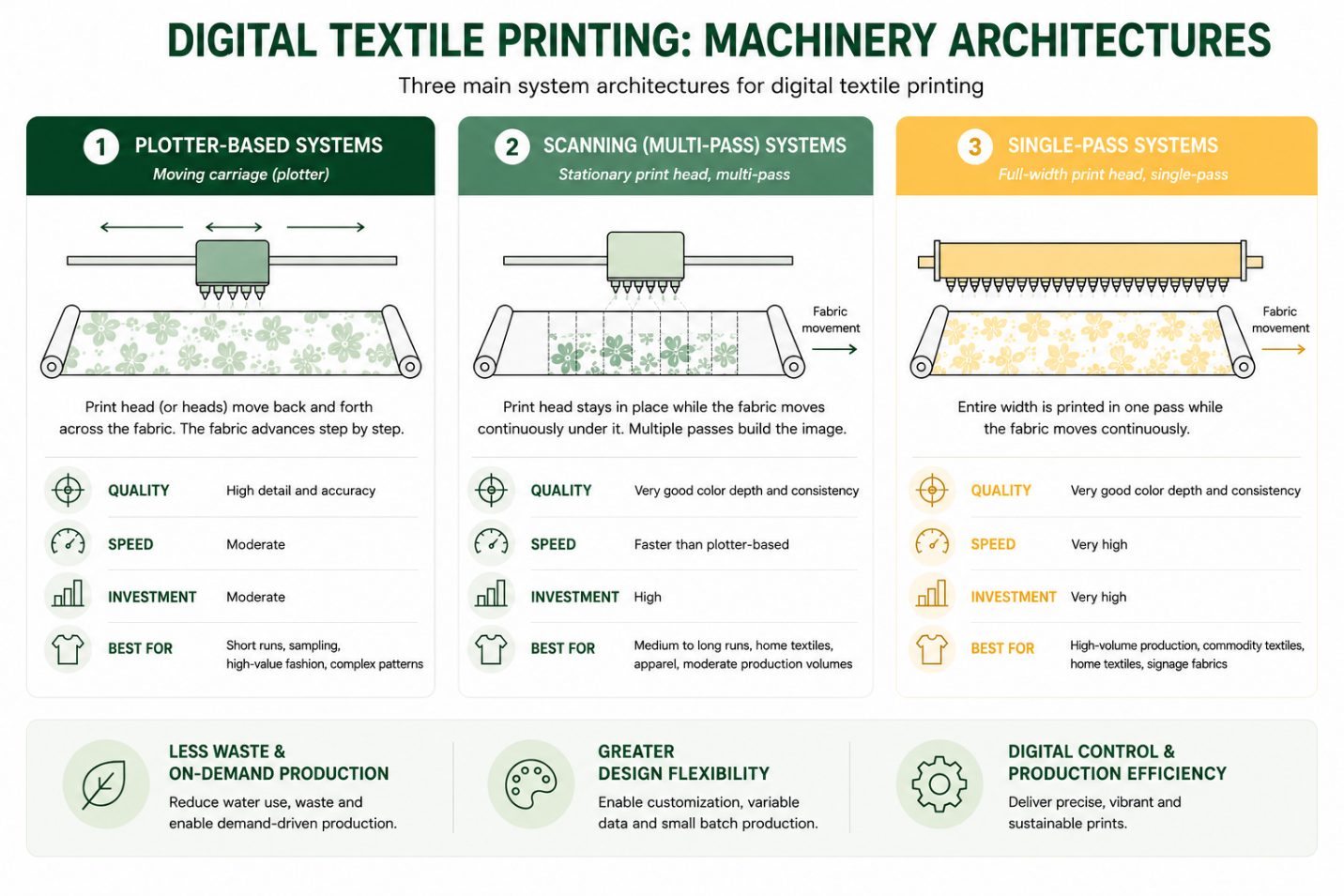
Figure 4.4, Digital textile printing machinery architectures: plotter-based, scanning (multi-pass), and single-pass systems, from flexible sampling to industrial throughput.
4.2.2 Case example: Carriage House Printery (Kornit Digital)
Carriage House Printery, presented by Kornit Digital in a short video case study, built a custom-fabrics business 'from the ground up' on digital textile printing, memorably, with a printer installed 'in a barn'. A family-scale operation offers made-to-order printed fabrics in small batches, serving designers and small brands that rotary screen printing economics would turn away: no screens, no minimum runs, no setup waste.
The case illustrates the entry-barrier collapse this section describes. Where analog printing requires industrial infrastructure and volume commitments, drop-on-demand deposition makes the smallest viable print business a single machine, and locates production close to demand. It is digital printing's sustainability argument in its purest form: print only what is sold, where it is sold.
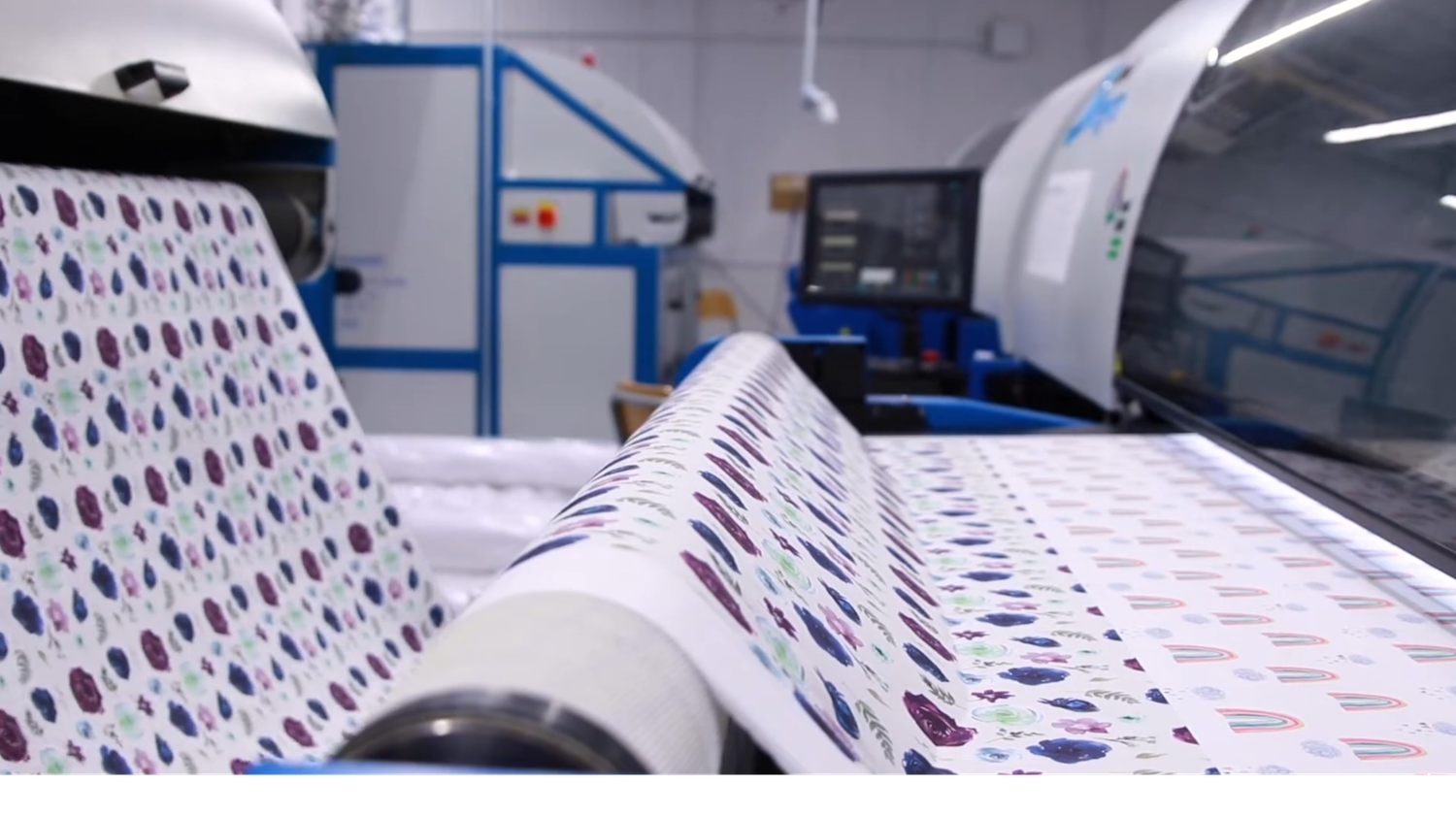
Figure 4.5, Frame from the Kornit × Carriage House Printery video case study. (Source: kornit.com)
4.3 On-Demand Manufacturing and Mass Customization: Small Collections, Couture, Sartorial
Every garment produced to forecast is a bet placed on a customer who has not yet appeared, and the industry loses that bet often enough that unsold stock is treated as a normal operating cost rather than a failure. The preceding sections removed the barriers that made the bet necessary: without screens, tooling, or sampling rounds, the batch stops being the unit at which production becomes affordable. What remains is a question of sequence, whether the garment is made before the sale or after it.
This section maps the models that inversion makes viable, from web-to-print and made-to-order to micro-factories and mass customization, and the regulatory pressure now pushing the same direction. It also states the costs honestly: longer lead times, higher unit prices, single-item logistics, and the unresolved question of whether personalization reduces consumption or stimulates it.
4.3.1 Sell First, Produce Second: The On-Demand Model
Producing to forecast means overproducing; on-demand means sell first, produce second. Digital technologies make it economically viable: digital printing removes setup costs, additive manufacturing removes tooling, 3D knitting produces garments with minimal cutting waste, and virtual prototyping removes sampling rounds. The resulting spectrum runs from web-to-print platforms and made-to-order collections to local print hubs, micro-factories, small collections, couture, and sartorial production. Mass customization occupies the strategic middle ground, personalised products at near-mass prices, combining body scanning, parametric design, and flexible production; platforms coordinate the chain from customer configuration to delivery, while blockchain and IoT can track items through their lifecycle. Regulation now reinforces the model: the EU's ESPR framework includes a ban on destroying unsold garments, direct pressure toward accurate planning, smaller volumes, and made-to-order. The limits deserve equal attention: longer delivery times, higher unit costs, single-item logistics, and the open question of whether personalization at scale reduces waste or stimulates consumption.
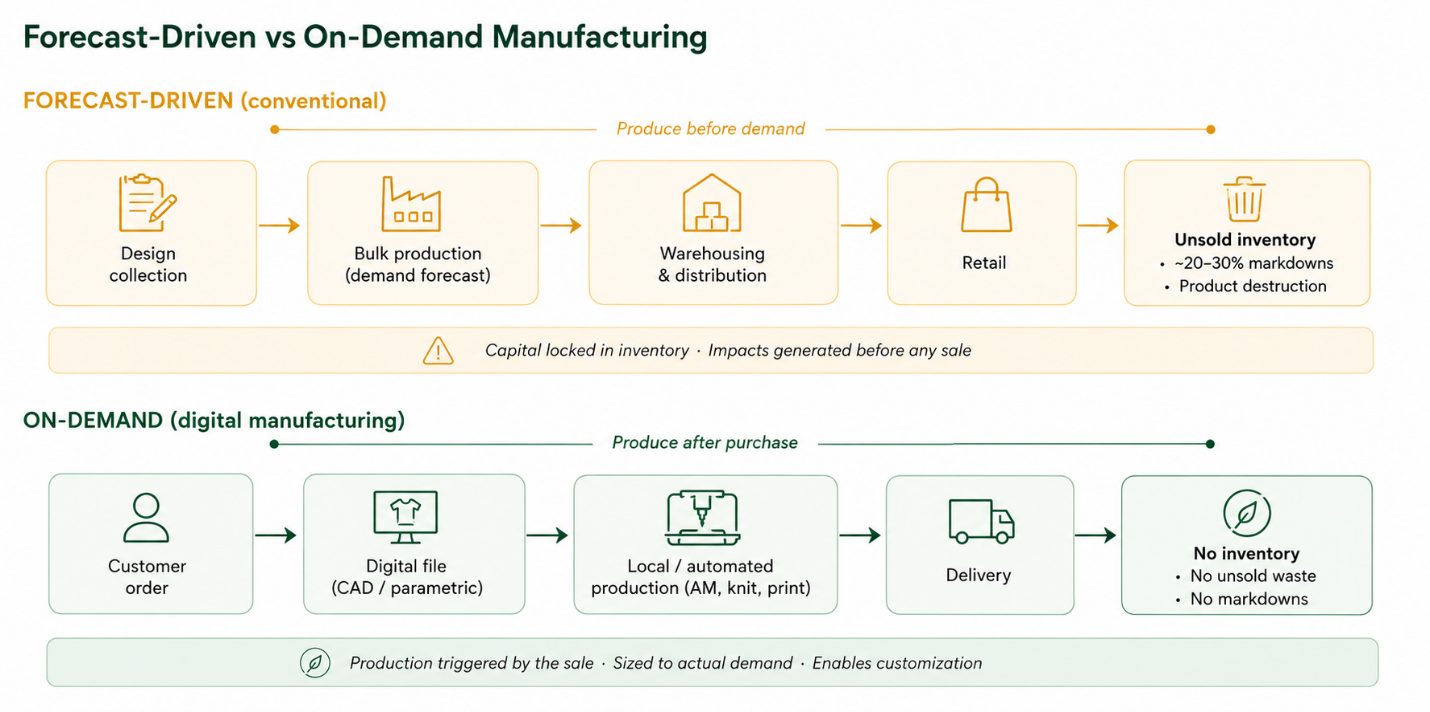
Figure 4.6, Forecast-driven vs on-demand production: producing after the sale eliminates inventory risk and unsold stock. (Diagram: course material)
4.3.2 Case example: Napapijri, Circular Series
The same logic extends beyond footwear: Napapijri applies mono-material engineering to outerwear, and whole-garment 3D knitting achieves comparable mono-material integration in knitwear.
The Circular Series, launched with the Infinity jacket and extended to the Rainforest and Skidoo lines, is engineered as a true mono-material system: the outer fabric is ECONYL® regenerated Nylon 6 by Aquafil, and filling and trims are also Nylon 6, so the entire garment can enter the ECONYL® Regeneration System without disassembly. A take-back program completes the loop: customers can return the jacket after two years, and the material is regenerated into new yarn of virgin-equivalent quality (econyl.aquafil.com; Ellen MacArthur Foundation, circular economy examples).
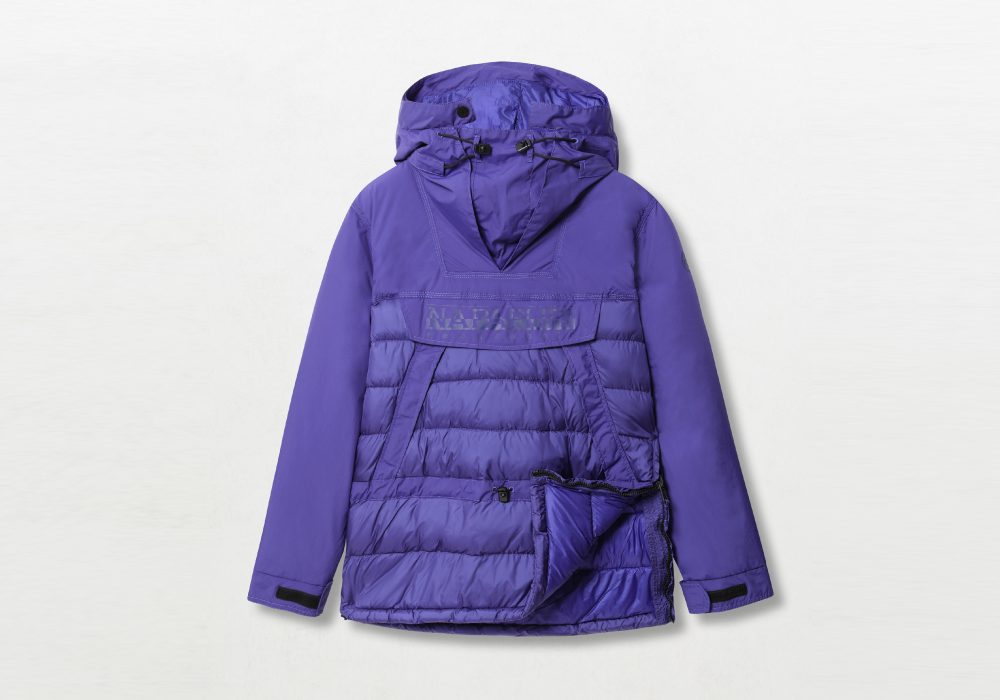
Figure 4.7, Napapijri Circular Series, the Infinity jacket, made from mono-material ECONYL® regenerated nylon and engineered for full recyclability. (Source: napapijri.com)
4.3.3 Case example: Fused Footwear & Zellerfeld, print-to-order footwear
Fused Footwear demonstrates the on-demand model at its most radical: fully 3D-printed, monomaterial shoes (flexible TPU) produced one pair at a time, to order, without adhesives, stitching, or layered assemblies. There is no inventory, no size curve gamble, no unsold stock, a shoe exists only after it is bought. The monomaterial architecture supports clear end-of-life scenarios: the shoe can be treated as a single material system, shredded and reprocessed rather than dismantled.
Beyond the product, the case illustrates the structural shift additive manufacturing enables: a micro-brand operating without industrial plants, tooling investment, or supply chains, relying on digital files and distributed printing. Design authorship, production, and material responsibility are held in the same hands, an emerging template for small-scale, potentially circular fashion economies where the barrier to entry is a design file and a print farm rather than a factory contract.
The same logic is being industrialized by Zellerfeld, the Hamburg-based 3D-printed footwear platform: shoes are printed to order in a single material (ZellerFoam, a proprietary TPU), with no stitching, gluing, or manual assembly; they are washable and, at end of life, can be returned, shredded, and reprinted into new pairs. The open platform hosts designs by established brands, such as Moncler's 3D-printed Trailgrip concept, and independent designers alike, turning footwear production into an upload-and-print service (zellerfeld.com; Designboom, 2023; 3Dnatives, 2023).
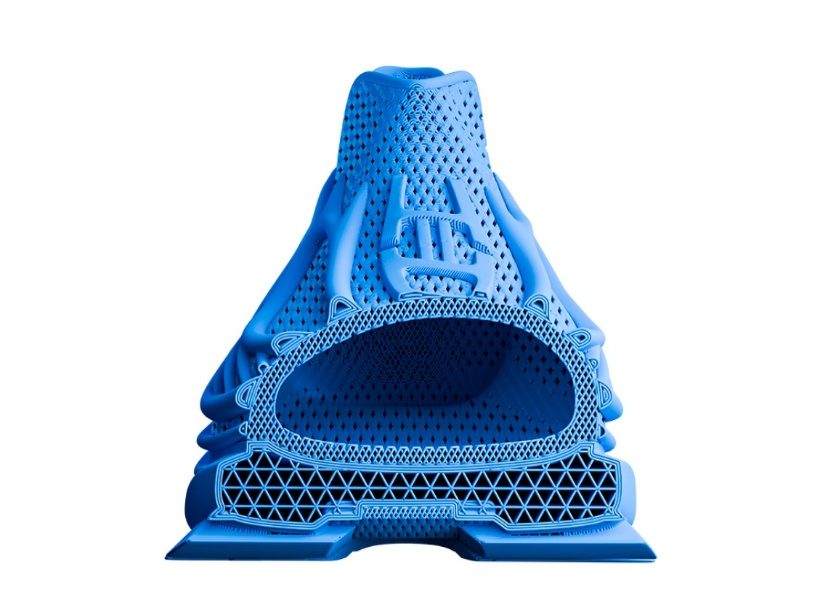
Figure 4.8, Monomaterial 3D-printed footwear: a Zellerfeld cutaway (left) shows how zones of different stiffness are achieved through structure alone within a single material; right, a pair of Fused Footwear. (Source: zellerfeld.com)
← PreviousNext: 4.4 AI × Manufacturing: Process Optimiza... →
4.4 AI × Manufacturing: Process Optimization, Defect Detection, Predictive Maintenance
A production line already generates the data needed to run itself better. Vibration, temperature, color readings, and images of every meter produced exist at the machine and, in most factories, are discarded within seconds. What changes with machine learning is not the sensing but the interpretation: the same signals a skilled operator reads intermittently can be read continuously, and a defect caught in the first meter costs a fraction of one caught at final inspection.
This section introduces the vocabulary in plain terms, then follows AI across the production workflow, from in-line inspection to color management and predictive maintenance, translating each application into its material effect in fabric, ink, energy, and equipment life. It also weighs the cost side, since the data infrastructure and skills these systems require are precisely what SMEs are least likely to have.
Try it now
Draw an order-to-delivery flowchart for a made-to-order T-shirt printed digitally: order → file → print → finish → ship.
Note where inventory and waste disappear compared with a batch-produced equivalent.
4.4.1 Teaching Machines to See Defects: AI on the Production Line
A plain-language toolbox: Artificial Intelligence (systems performing tasks requiring human-like judgment), Machine Learning (models that learn patterns from data to predict), Deep Learning (multi-layer neural networks, strongest on image-based tasks), Automation (rule-based task control, often combined with AI for adaptive decisions). In digital printing, a representative case for the industry, AI supports automated color matching, image upscaling, in-line defect detection through computer vision, and predictive maintenance that anticipates equipment failures from sensor data; beyond the printer, robotic automation handles feeding, fixation, cutting, folding, sorting, and packaging. Every application has a sustainability translation: fewer reprints means less ink, fabric, water, and energy; predictive maintenance means longer equipment life; automated color management means right-first-time production. The same AI/IoT stack extends to quality control and sustainability tracking across TCLF production, feeding the reporting systems of Chapter 5. The critical view: AI adoption requires investment, data infrastructure, and skills that can strain SMEs, and Industry 5.0 thinking insists AI should support human decisions with transparent reasoning, not replace them.
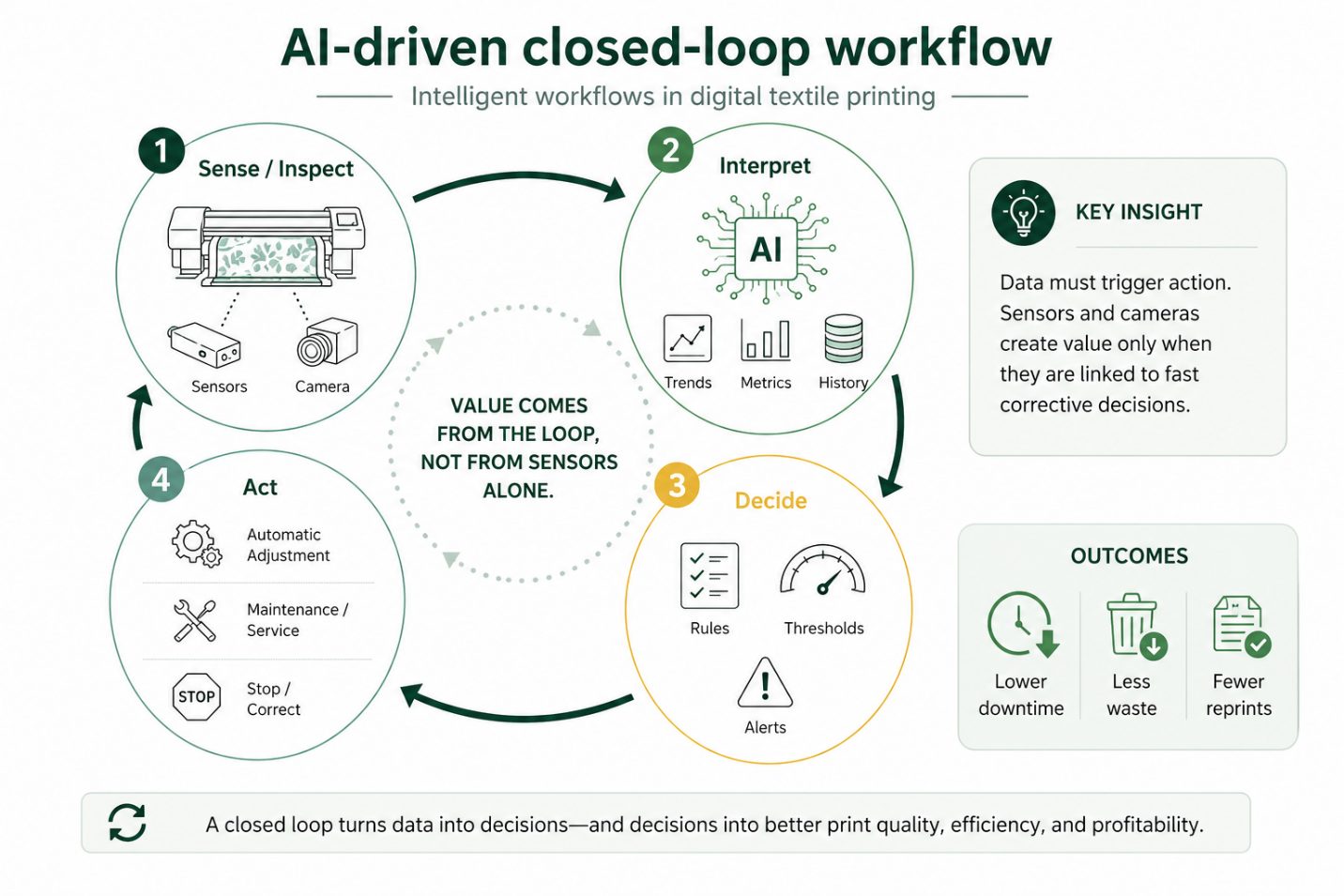
Figure 4.9, AI-driven closed-loop workflow in digital textile printing: sensor data feeds interpretation, decision, and automated action.
4.4.2 Case example: Predictive maintenance in digital printing
A 2025 predictive-maintenance study on digital printing equipment (Mithun Kumar et al., ShodhKosh 6(3s)) shows the full closed-loop architecture this section describes. A multi-sensor testbed, vibration, temperature, acoustic, and optical signals, feeds a hybrid CNN–LSTM model that predicts faults and Remaining Useful Life, combined with digital twin simulation to test maintenance decisions before applying them.
The reported results quantify the sustainability translation: predictive performance of R² ≈ 0.94 and F1 ≈ 0.93, unplanned downtime reduced by ~32%, maintenance costs by ~24%, and material waste by ~18%. Data becomes value only when converted into actions, alert, intervention, avoided scrap. The complementary industrial example is Durst's Hawk AI in-line inspection: camera vision detects defects such as missing nozzles and corrects them during production (https://www.durst-group.com/de/landing-page/durst-hawk-ai), closing the inspect–decide–act loop at production speed.
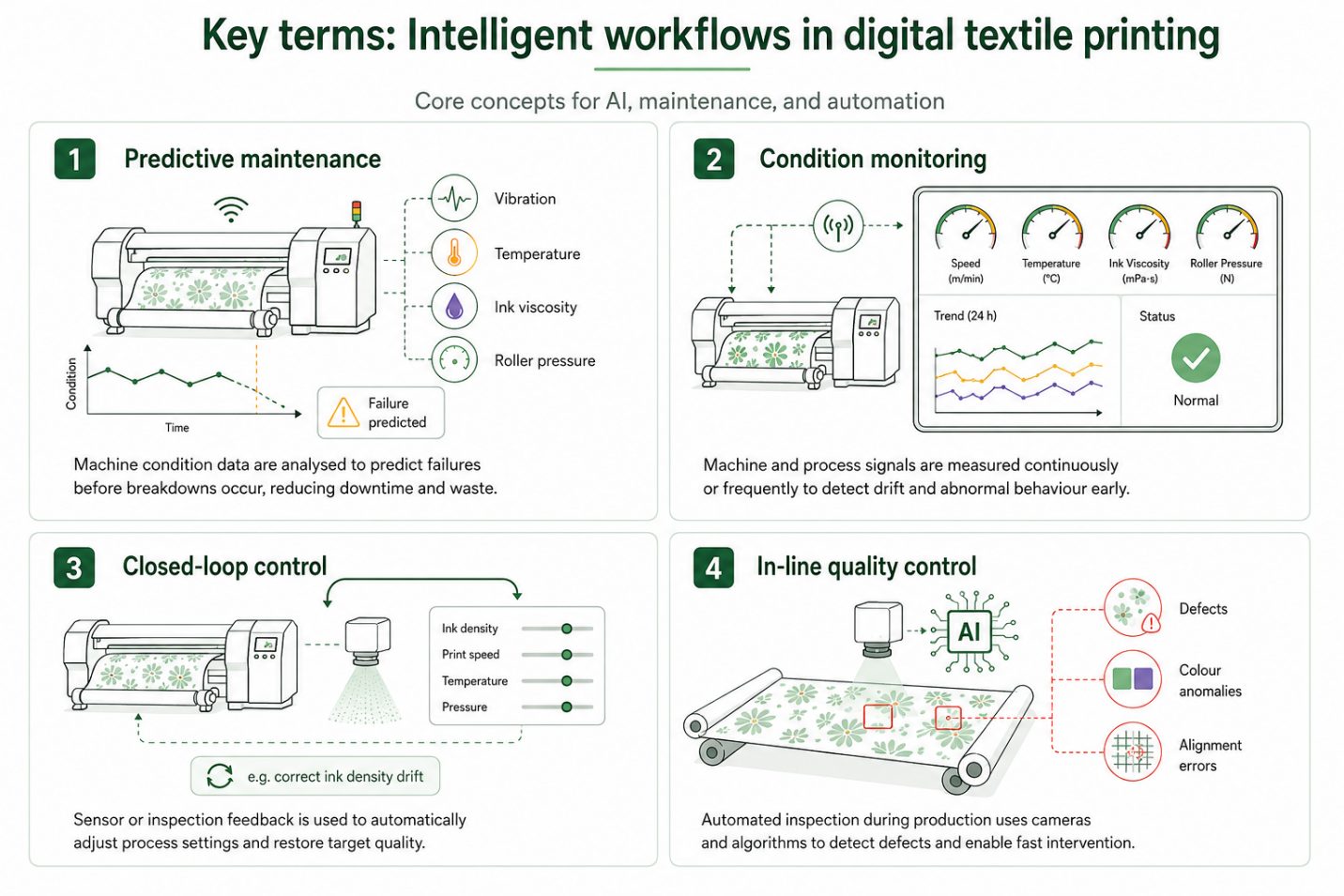
Figure 4.10, Core concepts of intelligent printing workflows: predictive maintenance, condition monitoring, closed-loop control, in-line quality control.
4.4.3 Case example: Smartex, seeing the defect before the dye bath
Smartex builds fabric quality control for circular knitting: a camera and edge computing unit mounted on the machine inspects the tube of fabric as it is produced, classifies defects in real time, and stops the machine when a periodic fault appears. The defect classes are the ones that matter industrially, holes, needle lines, oil spots, contamination, and above all elastane faults, which are close to invisible in greige fabric and typically surface only at the dyeing stage, when the roll has already absorbed water, chemistry, and energy. The system logs every meter produced, so quality data becomes a traceable production record rather than an operator's note.
The economics follow from where in the chain the error is caught. A knitting fault found in the first meters costs the yarn already knitted; the same fault found after dyeing costs the whole roll plus the entire wet processing footprint. The company reports defective production reduced to near zero, and in a documented deployment at Tintex Textiles, an average of seven rolls saved per machine per month. Founded in Porto and now operating across Europe, the United States, and China, it is the clearest industrial instance of this section's argument: inspection is worth automating not because machines see better than people, but because they see continuously.
4.4.4 Case example: sewts, teaching robots to handle cloth
Automation stopped at the sewing room for a physical reason. Industrial robots are built for rigid parts whose position is known once they are gripped, and a piece of fabric is the opposite: it deforms as it is picked up, so its geometry after the grasp cannot be read from its geometry before. This is why garment assembly remained manual while almost every other manufacturing sector automated, and why production followed low labor costs rather than machines.
sewts, a Munich deep-tech company, attacks that specific problem by combining computer vision with simulation, giving robots what it calls human-like perception of soft materials: the system predicts how a deformable textile will behave when grasped, and adjusts the motion accordingly. Its first deployments target industrial laundries with sewts.VELUM, where limp, wet-handled textiles must be fed into folding machines, with garment production as the longer-term horizon. The strategic significance for Europe is direct. If the labor intensity of textile handling falls, the calculation that moved assembly offshore weakens, and localized production of the kind described in 4.3 becomes a question of engineering rather than of wage arbitrage.