Chapter 3 — full chapter
| Site: | FashionKIC Learning Platform |
| Course: | Digital Tools and AI for Sustainable Fashion |
| Book: | Chapter 3 — full chapter |
| Printed by: | Guest user |
| Date: | Sunday, 1 November 2026, 3:20 AM |
3.1 Virtual Reality, Digital Twins, and Avatars
Every digital prototyping workflow needs a body before it needs a garment. The avatar is that body: a parametric or scanned geometry that carries the measurements, posture, and surface behavior against which a design is fitted, evaluated, and presented. Where an analog workflow can only test fit by cutting a sample, an avatar makes the same question answerable as a simulation, provided the underlying morphology is accurate enough to be trusted.
This section examines how avatars are constructed, from standardized size libraries and brand-specific blocks to 3D body scans and statistically generated populations, and what each source implies for fit accuracy and demographic coverage. It then introduces the digital twin, the persistent data object that binds a virtual model to its physical counterpart across design, production, and use, and virtual reality as the environment in which these models are reviewed at scale. Together they establish the representational layer on which the remainder of the chapter depends.
3.1.1 Fitting Before Making: Avatars and Digital Twins
In 3D fashion platforms such as CLO3D, Browzwear, or Style3D, designers create or customize digital body models matching real human measurements, height, bust, waist, hip, posture, and test how garments fit different body shapes and sizes before anything is physically made. Avatars can be generated from standard-size libraries, derived from 3D body scans, or built with tools such as Blender's Human Generator. This is the fashion application of the digital twin concept: a precise virtual representation of a physical asset, a body, a garment, an entire product, kept consistent with its physical counterpart, while Digital Product Creation (DPC) extends the idea across the whole lifecycle. Artificial intelligence accelerates avatar creation, lifelike faces, poses (CLO3D's AI pose generator), motion (Mixamo[9] libraries), with one caveat for fashion use: for garment development, full control over body measurements and their interaction with patterns remains essential. The sustainability and inclusivity gains are concrete: testing fit digitally across diverse body types reduces sample rounds and supports size-inclusive design.
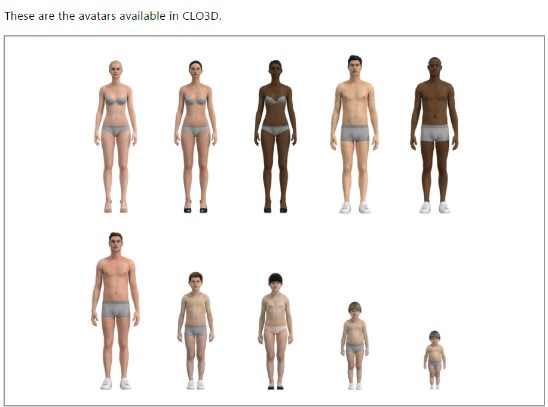
Figure 3.1, Avatar size libraries in CLO3D: standard body models across genders, ages, and sizes. (Source: CLO3D)
3.1.2 Case example: Alvanon, AlvaForms
Alvanon[1], the market leader in sizing technology, illustrates the physical-to-digital transition of the entire fitting infrastructure. Its cloud-based Body Platform hosts over 6,000 virtual 'AlvaForms' representing diverse body shapes; the same forms are available as precisely crafted physical mannequins in classic, soft, and tailored versions for women, men, and children, off-the-rack, personalized, or fully customized.
The virtual AlvaForms are compatible with the major 3D simulation platforms, so a brand can develop and grade garments on the same body, digital during development, physical during final validation, across all its suppliers worldwide. The result is a working digital twin system deployed at industry scale: fewer fit samples shipped between continents, consistent sizing across product lines, and a shared, measurable definition of fit that also supports size-inclusive design.
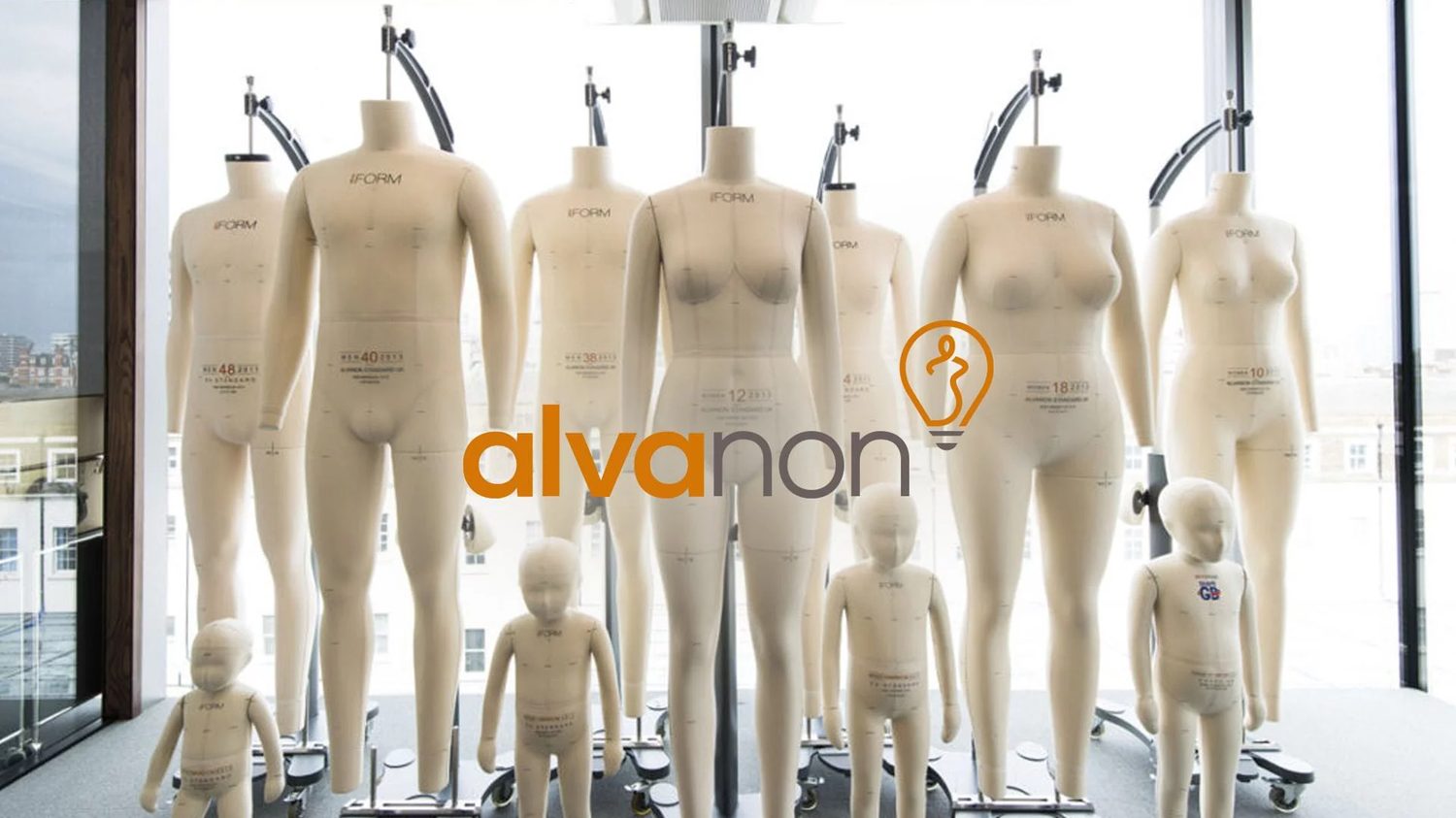
Figure 3.2, Alvanon physical AlvaForms, the physical counterpart of the digital AlvaForms body platform. (Source: https://alvanon.com/products)
← PreviousNext: 3.2 Digital Fabrics and Garment Simulation →
3.2 Digital Fabrics and Garment Simulation
Digital fabrics make virtual garments behave like real ones. This section explains the physics behind fabric simulation, how real textiles are digitized, and how construction and fit analysis keep virtual fashion connected to physical production. Along the way, we will look at the main tools designers actually use, 3D garment-simulation suites such as CLO3D, Browzwear (VStitcher), and Style3D, and material-digitization systems such as Vizoo's xTex.
Tools
- CLO3D, Browzwear, Style3D, Marvelous Designer, 3D garment design, simulation, and fitting
- Blender (+ Human Generator), Adobe Substance Painter, avatar modelling, texturing, rendering
- Alvanon AlvaForms, digital sizing platform; 3D body scanners; Vizoo, fabric digitization
- Mixamo, motion libraries; CLO AI pose generator, avatar posing and animation
- Metail, Zugara and AR try-on platforms, consumer-facing virtual fitting
3.2.1 Making Pixels Behave Like Cloth: Fabric Simulation
Digital fabrics are virtual versions of real materials, cotton, silk, denim, leather, with measurable properties: bending rigidity (stiffness in draping), tensile behavior (resistance to stretching), and shear (response to bias-direction forces), in relation to weight and thickness. Simulation engines compute how the fabric's mesh interacts with the avatar's body mesh; particle distance (mesh resolution) balances fidelity against speed. Realism comes from data: PBR texture maps, texture, normal, displacement, roughness, metalness, make materials respond to light like their physical counterparts. Construction keeps the process honest: digital garments are built from pattern pieces stitched on the avatar exactly as physical garments are, and analysis tools such as CLO3D's Fit Map color-code fabric tension from blue (loose) through green (ideal) to red (too tight), letting designers detect and correct fit issues instantly. The benefits compound: faster iterations, drastically fewer physical prototypes, consistent fit across sizes, better team communication, and lower sampling costs and emissions.
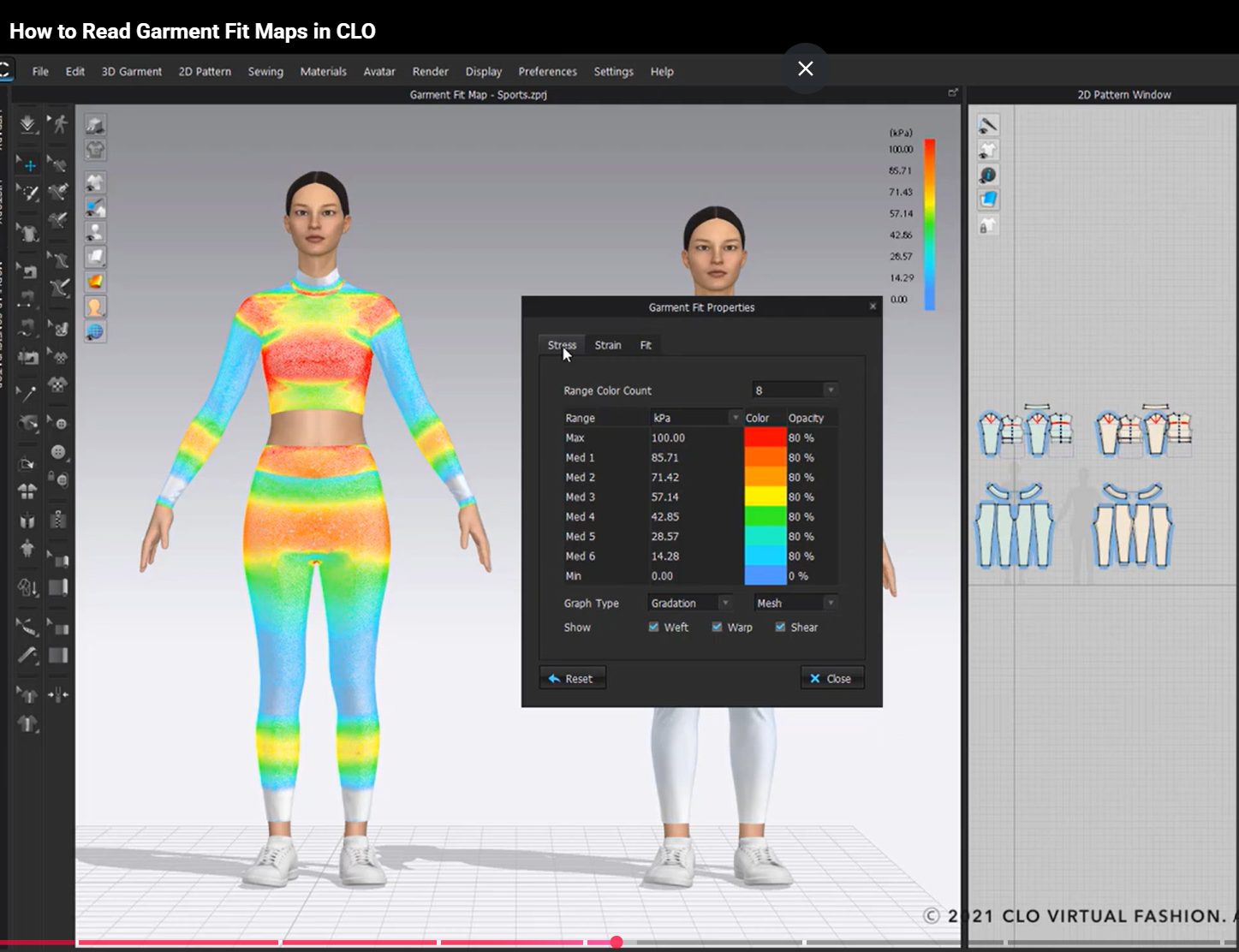
Figure 3.3, Fit Map in CLO3D: color-coded fabric tension, from loose (blue) to critical (red), used to detect and correct fit issues digitally. (Source: CLO3D)
3.2.2 Case example: Vizoo, xTex material scanning, Browzwear XStitch.
Vizoo's xTex scanning system shows how physical textiles enter the digital pipeline. The scanner captures colour, texture, shine, and weave structure, including surface relief in wool, denim, or jacquard, and produces complete PBR material packages (texture, normal, displacement, roughness, metalness maps) that react realistically to light in any major 3D software.
Fabric mills and brands use it to build digital fabric libraries: a physical swatch is scanned once, then draped, tested, and presented digitally unlimited times. Sample yardage no longer needs to travel between mill, brand, and manufacturer for every seasonal development cycle, the digital sample behaves like the physical one, and the physical shipment happens only for validated candidates. For SMEs, scanning services and shared libraries lower the entry barrier to fully digital material workflows.
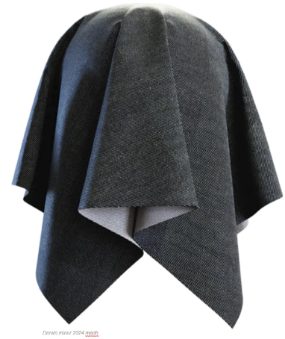
Figure 3.4, (left) PBR fabric render from scanned textile data: digital denim draping with physically accurate light response. (right) Vizoo’s xTex™ A4 scanner (Source: https://www.vizoo3d.com)
Another tool for digitalization is the Browzwear Learning Hub. VStitcher builds accurate virtual twins of physical garments; the Fabric Analyzer measures real fabric properties and applies them digitally, so digital samples behave like the physical product; Stylezone supports cloud review of collections
3.2.3 Case example: the Prato Textile Museum archive, from heritage fabrics to digital materials
The Museo del Tessuto di Prato (museodeltessuto.it), Italy's largest center for the study and conservation of historic and contemporary textiles, over 10,000 artifacts and the historical memory of a district that has meant textiles since the Middle Ages, shows what digitalization means upstream of design: turning a physical archive into a searchable library of digital materials. Three initiatives make the point. The research project Prato Phygital (University of Florence with the Museo del Tessuto and the Prato manufacturer Marini Industrie SpA) develops a fabric-digitization procedure and applies it to dynamic models rendered in interactive digital environments; fabrics are selected for both historical significance and technical feasibility, and Marini Industrie has digitized archival fabrics no longer in production, reviving out-of-production heritage textiles as digital twins without re-weaving them. The Prato Heritage Hub (Museo del Tessuto with the Comune di Prato and PIN) equips textile companies with 'Heritage Manager' cataloging software and has produced thousands of high-resolution images of archival fabrics and yarns. And the Textile Library (opened 2021) has cataloged and digitized more than 200 contemporary yarn, fabric, and raw-material samples focused on sustainability and innovation. For a design engineer, the lesson is direct: once a fabric's construction, color and behavior are digitized, a centuries-old archive becomes an input to 3D design and garment simulation, heritage patterns can be re-used, restyled and virtually prototyped with no physical sampling, and a regional industrial memory becomes shared digital infrastructure for circular, localized production.
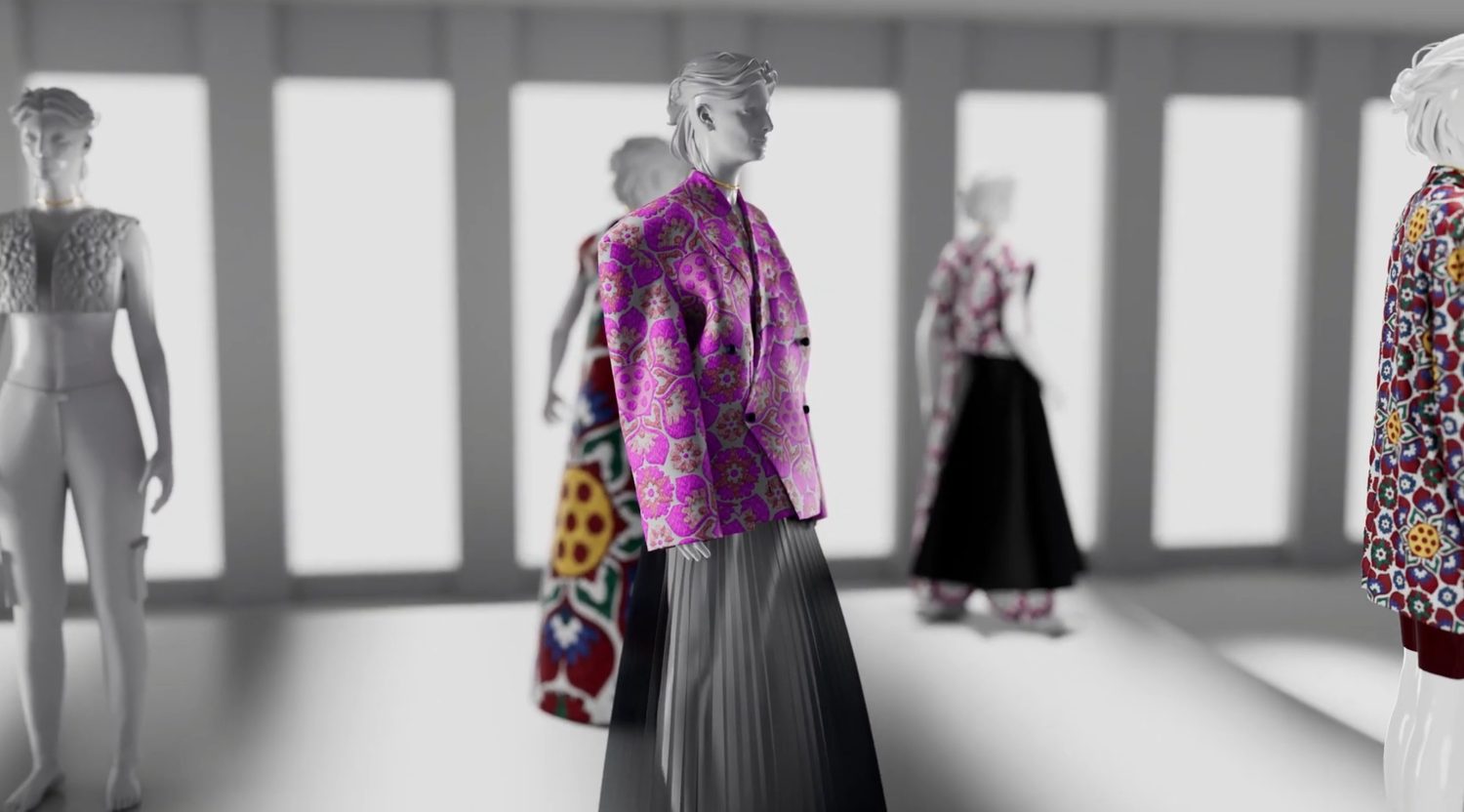
Figure 3.5, Digitizing the Prato textile archive: the Museo del Tessuto and the Prato Phygital project turn historic fabrics into digital materials. (Source: museodeltessuto.it)
3.2.4 The Digital Sampling Loop
A digital sample is a 3D garment that serves as a stand-in for a physical one in the development loop. The loop it replaces is expensive: traditionally, every fit or print change means a new physical sample, a courier trip, and a wait. Digital sampling compresses that cycle, fit iterations, colorways and print placements are tested on screen, and only the final validation needs fabric. The loop is closed when the digital sample is approved: reviewed on the avatar for fit (Fit Map), on the fabric for drape, and on the garment for print placement. Every approved digital sample is one fewer physical sample to sew, ship, and discard. The same logic applies to customers: virtual fit cuts e-commerce returns, which are, in effect, physical samples of the wrong size shipped back.
3.3 AR Try-On and Virtual Fitting Rooms
E-commerce inverted the order of fit: the garment is shipped before it is tried, and the return leg is how the customer resolves a question the platform could not answer. The result is the sector's largest hidden cost, paid in transport, repackaging, and stock that comes back unsellable. Virtual fitting moves that question in front of the purchase, extending the same garment simulation used in design (3.2) to a body that belongs to the buyer rather than to a size chart.
This section covers how the pipeline works, from body measurement to avatar to simulated drape and size recommendation, and then examines its deployment at retail scale, where the environmental case rests less on the novelty of the experience than on the logistics it removes.
3.3.1 Trying On Without Touching: How AR Fitting Works
The typical workflow: the user provides measurements, manually, via 3D scanner, or through a mobile camera, and the software builds an avatar recognizing body type and proportions; selected garments are placed virtually with simulated fabric behavior (folds, stretch, drape); the user adjusts size, color, and length interactively while the system recommends optimal sizing; the choice connects directly to the e-commerce platform. The technology stack combines augmented reality, 3D body scanning, fit software (CLO, Browzwear, Metail, Zugara), and AI models that predict the ideal size for each body type. Implementations across physical and online channels are associated with a 20–30% reduction in return rates, alongside higher customer satisfaction and increased sales of personalized products. Beyond retail, the same immersive technologies serve production: in Industry 5.0 settings, AR glasses overlay instructions and quality guidance onto the worker's view, while VR supports immersive training and collaborative design reviews.
For your SME / business case: virtual fitting can cut e-commerce returns by 20–30%, for a €1M online turnover with 25% returns, that is roughly €50–75k of avoided returns handling per year, before counting emissions.
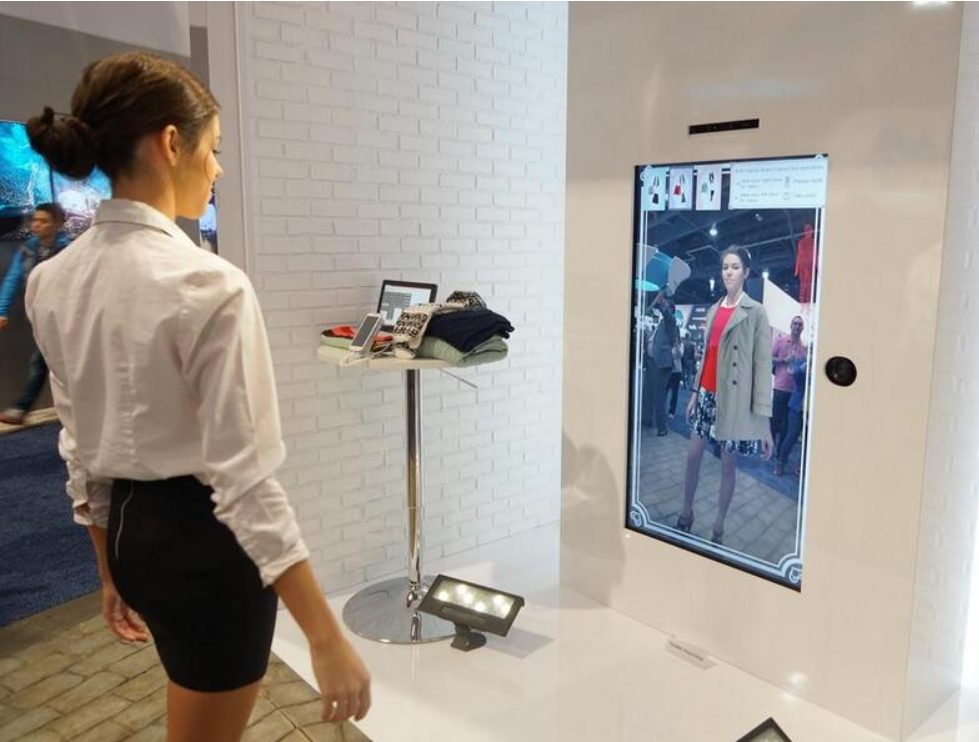
Figure 3.6, Virtual fitting room in retail: AR mirror-based garment try-on. (Source: Toshiba, CES 2015)
3.3.2 Case example: Zara, AR try-on
Zara's digital try-on[12] deployment, analyzed in Zara's digital try-on deployment documentation, integrates AR-based virtual fitting into a global retail chain: customers visualize garments on themselves via the app and in-store touchpoints, AI-driven size recommendations reduce mis-purchases, and fitting data feeds back into sizing and design decisions. Combined with 'Size-at-Home' self-measurement solutions, the fitting experience follows the customer across channels.
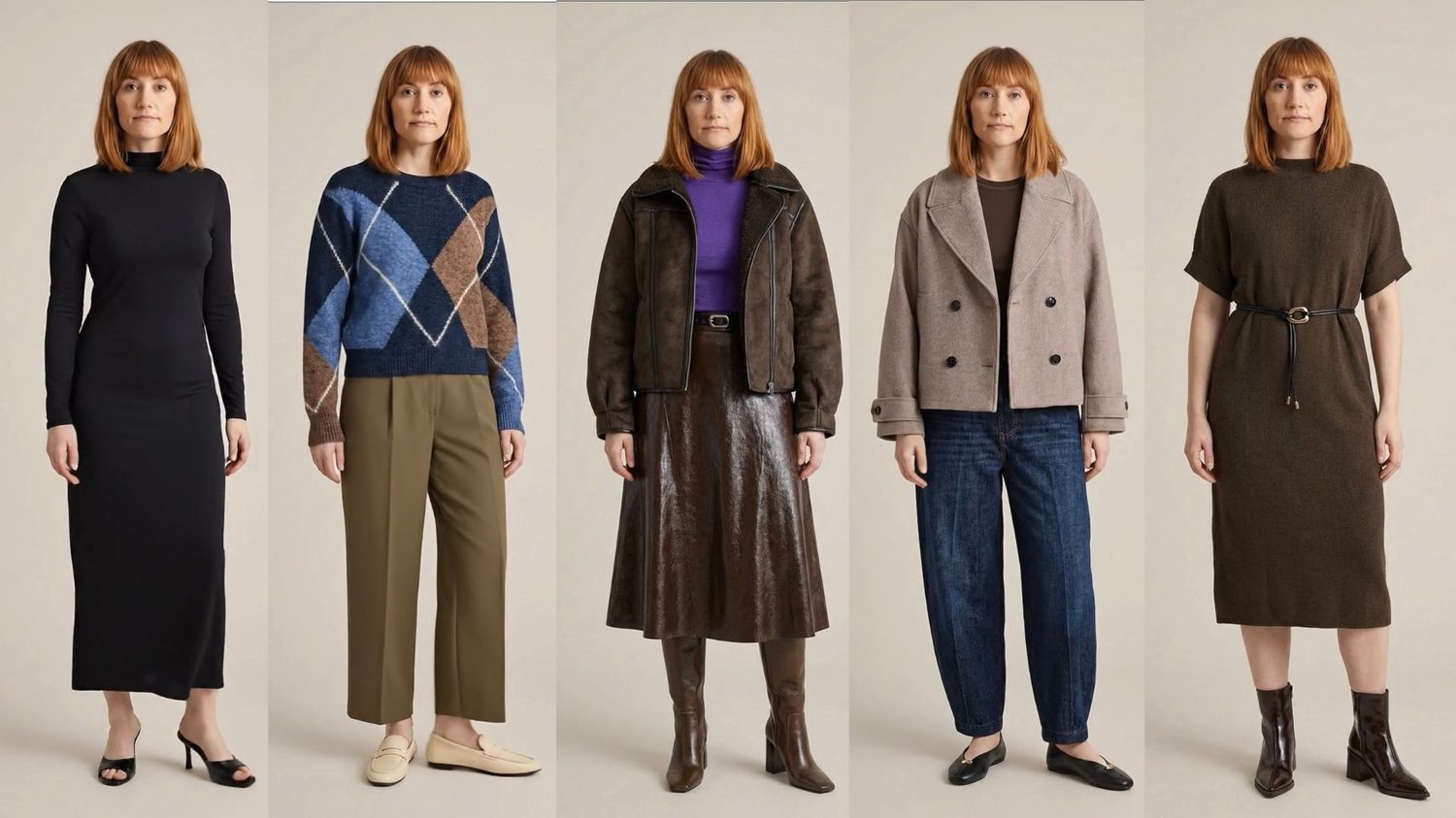
Figure 3.7, Zara's AR try-on: pointing a phone at the store window brings the look to life. (Source: Zara)
3.4 AI Visualization: Digital Photoshoots and Virtual Models
Once a garment exists as an accurate 3D model, the image of it no longer requires the object. Sample, studio, model, and crew were never the product; they were the apparatus for producing pictures, and rendering replaces that apparatus with computation. What follows is a shift in where the cost of a campaign sits, from logistics and reshoots to modeling time and compute, and a shift in what a photograph attests to, since the image can now precede the garment or stand in for one that will never be made.
This section covers how that imagery is produced, from rendering and virtual models to generative acceleration of scenes and variations, and then examines digital-only fashion, where the asset itself is sold. The recurring question is not whether the output is convincing but what it replaces: substitution for physical production is an environmental gain, addition to it is not.
3.4.1 Shooting Without a Studio: AI Rendering and Virtual Models
Rendering is the final step that makes virtual clothes look real: a high-quality 'photograph' of the 3D design computed from textures, colors, lighting, and movement in tools such as CLO3D, Blender, or Substance. The digital photoshoot replaces or complements the physical one: garments are simulated on posed, animated avatars that generate complete campaigns before a single sample exists, cutting the costs, logistics, and emissions of travel, sets, and reshoots. Virtual models and digital fashion icons extend this to gaming, social media, and the metaverse, where garments may exist only digitally. Generative AI accelerates every stage, rendering and upscaling, scene generation, model diversity, campaign variation, and is now integrated into all major 3D suites. The implications require critical attention: transparency toward consumers, representation and body diversity, the economics of creative work, and the energy footprint of rendering and AI inference. The sustainability case rests on what digital production replaces.
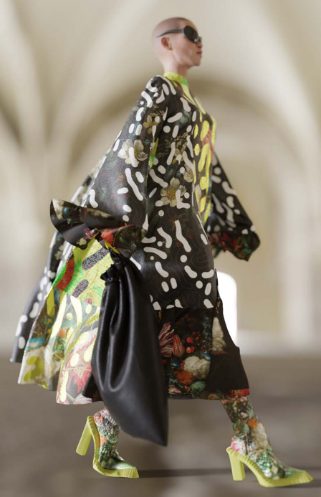
Figure 3.8, Rendered digital fashion look: presentation-quality visualization produced entirely in 3D. (Source: Amsterdam Fashion Institute)
3.4.2 Case example: DressX × Bershka, digital-only fashion
The partnership between DressX, the leading digital-only fashion platform, and Bershka (Inditex group) brought a digital fashion collection to a mass-market audience in 2022. Customers purchased garments that exist only as digital assets: they upload a photo (or use AR), and receive the image 'wearing' the garment through CGI compositing, no fabric, no shipping, no returns.
The case shows virtual fashion functioning as product and sales channel simultaneously: revenue generated with no physical production, a mainstream fast-fashion audience introduced to digital-only garments, and a live experiment in whether digital items can absorb part of the demand for newness that drives overconsumption. It also sharpens this section's critical questions: a digital garment has near-zero material footprint per wear, but its value depends on the same attention economy that fuels fast fashion, substitution or addition remains the key empirical question.
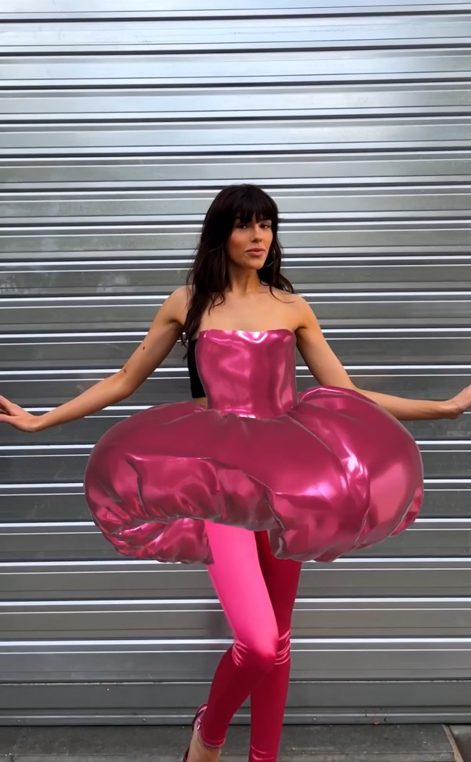
Figure 3.9, look from the DressX[3] × Bershka digital collection. Sources: https://store.dressx.com/collections/bershka-x-dressxDressX[3]https://store.dressx.com/collections/bershka-x-dressx