Chapter 4 — full chapter
4.5 Compliance Across Global Value Chains
Fashion products often combine design in one country, materials from several others, assembly elsewhere and sales across multiple markets. Compliance therefore has three interacting layers: the law where production occurs, the requirements of each destination market, and contractual or voluntary requirements imposed by customers, retailers or certification schemes.
SMEs frequently depend on suppliers for declarations, certificates, test reports, transaction documents, and facility information. That dependence makes supplier collaboration essential, but it does not remove the brand or importer's responsibilities. Requirements should be written into specifications and purchase agreements, evidence should be checked before claims are approved, and records should be linked to the correct style, colour, batch or production period.
A practical compliance chain starts with the product-market brief. It converts legal and voluntary requirements into supplier instructions, identifies acceptable evidence, and assigns internal owners. Production evidence then enters a controlled product record that supports labelling, market access, and claims. Information from returns, complaints, repairs, and recovery should feed back into the next design brief.
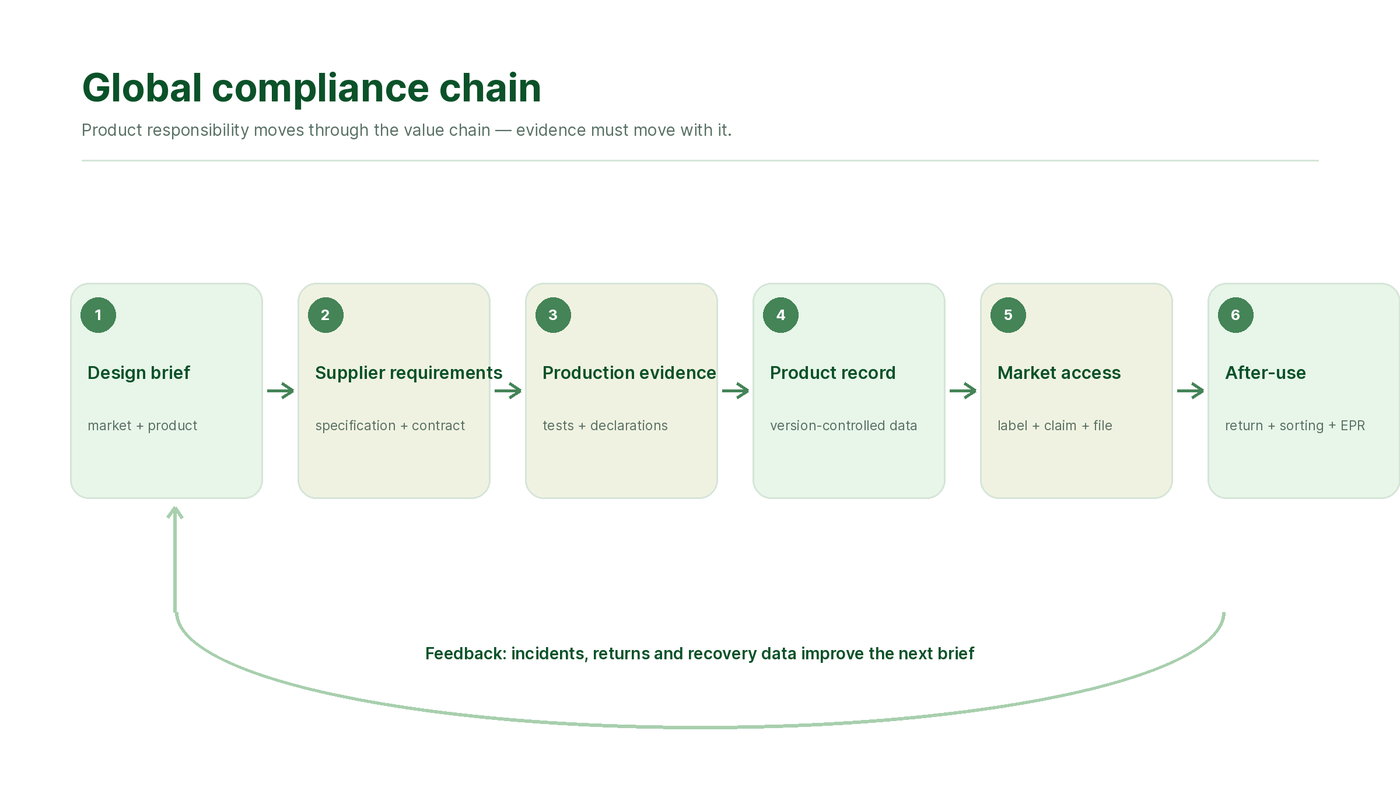
Figure X. Global compliance chain. Requirements and evidence must remain connected from the design brief and supplier specification to production, market access and after-use responsibility, with feedback informing the next product.
Table 3.4. Minimum supplier evidence controls
| Evidence item | Ask the supplier | Internal control |
|---|---|---|
| Bill of materials | Full fibre and component composition, including trims, coatings and finishes. | Approve one controlled version and record every specification change. |
| Chemical compliance | Current declarations, test reports and applicable restricted-substance evidence. | Check market, product and date scope; escalate gaps before production. |
| Certification | Certificate number, holder, scope, site, validity and transaction documents where required. | Verify the certificate with the scheme or certification body and control logo use. |
| Social or facility evidence | Site identity, subcontractors, audit or programme records and corrective actions. | Assess risk and remediation, not only the presence of an audit. |
| Claims evidence | Source records and calculation method for content, origin, or impact data. | Match evidence to exact wording, product version and approval owner. |
| DPP-ready data | Structured identifiers and data that can be maintained, shared, and updated. | Define data owner, access rights, retention and change process. Define data owner, access rights, retention and change process. FOR YOUR SME / BUSINESS CASE (added): build the minimum product record for one hero product in about 2 hours: product ID + version, bill of materials, fibre composition, supplier and facility, certificates with validity dates, test reports, care/repair information and the intended recovery route. Cost example: a missing supplier declaration can block an environmental claim and force re-testing at €300–1,500 per test; a complete version-controlled record avoids repeat audits and prepares you for DPP and EPR data requests. |