Chapter 4 — full chapter
4.4 Voluntary Standards, Certifications and Other Assurance Tools
Voluntary schemes can help companies verify organic or recycled content, chemical safety, process controls, environmental management, social performance, or chain of custody. Their usefulness depends on fit. A product-level harmful-substance test does not verify factory labour conditions. A certified environmental management system does not prove that every product has a low impact. A membership programme does not automatically certify a consumer claim.
Start with the evidence need, not with the most familiar logo. Then check scope, criteria, assurance model, chain-of-custody requirements, certificate holder, validity, transaction documentation and permitted claim wording. This avoids “certificate collecting” and helps SMEs focus resources on the risks and claims that matter most.
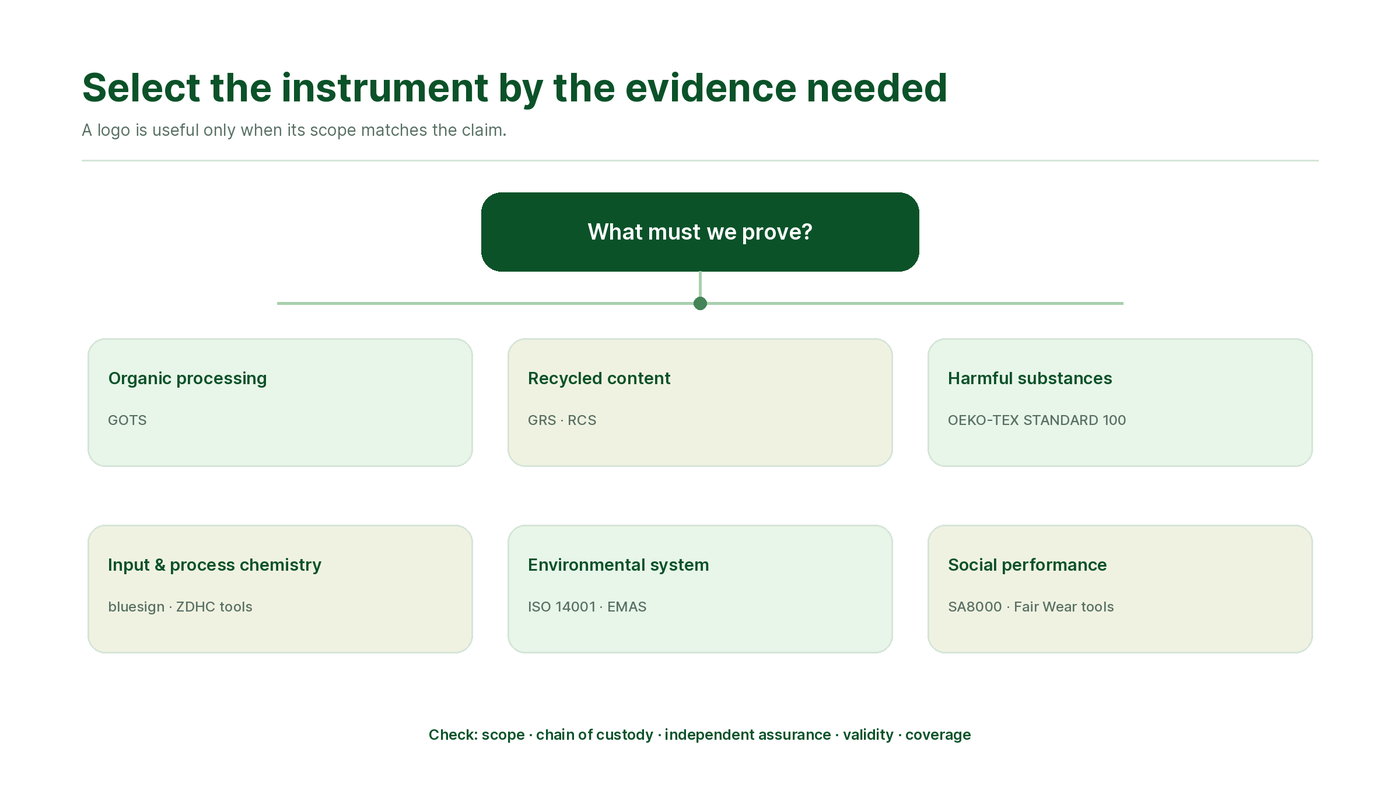
Figure X. Standards and assurance selection map. Select the instrument according to the question that needs evidence, then verify its scope, chain of custody, assurance process, validity, and coverage.
CASE STUDY: Vathos Apparel — Greece. Topic: Traceability & Certifications. Vathos Apparel is a Greek apparel producer certified under GOTS and OEKO-TEX, showing how voluntary standards and certifications translate into verifiable, lower-impact production. Its certification stack is a practical example of the assurance tools in this section — evidence an SME can use to substantiate sustainability claims.