Chapter 3 — full chapter
3.6 Prioritizing Responses for SMEs
For SMEs, circular transition cannot mean attempting to change everything at once. Prioritisation should begin with a clear understanding of which environmental, social, technical, and economic issues are most relevant to the organisation, its stakeholders, products, and value chain.
Materiality assessment can help identify the issues that require the greatest attention. Relevant topics may include material sourcing, durability, textile waste, chemical safety, water use, repairability, supplier transparency, labour conditions, product information, take-back systems, and recyclability. Materiality should not be reduced to a reporting exercise: it can inform product briefs, sourcing requirements, investment decisions and partnership priorities.
Stakeholder mapping then identifies who influences, or is affected by, each decision. Designers and internal teams may control product architecture, material specifications, and communication. Suppliers, manufacturers, repair partners, sorters, recyclers, logistics providers, resale platforms, municipalities and regulators may determine whether the intended circular pathway is operationally possible.
Possible responses should subsequently be compared according to their expected impact and feasibility. Some actions may be implemented directly, such as removing unnecessary trims or improving care information. Others require partnerships, investment, or infrastructure, such as advanced recycling, take-back logistics, or digital product passport systems.
Company-level tools such as B Impact can support this process by connecting product circularity with wider questions of governance, workers, communities, environmental impact and customers. Such frameworks do not replace circular design. They help identify the organisational and governance conditions required to support it.
ESG as a prioritisation lens. ESG is commonly used to describe the environmental, social, and governance dimensions through which a company assesses its wider responsibilities, risks, and impacts. In the context of circular fashion, it can help SMEs connect product-level circularity decisions with broader business considerations — from sourcing and biodiversity to working conditions, supplier relationships, data ownership and accountability for claims.
Environmental considerations may include traceability, certifications, biodiversity and sourcing impacts; social considerations include fair wages, safe working conditions, freedom of association and the prevention of child or forced labour; and governance covers areas such as supplier evaluation, codes of conduct, audits, data responsibilities and accountability. ESG does not replace circular design, but it can help identify the organisational conditions needed to support it.
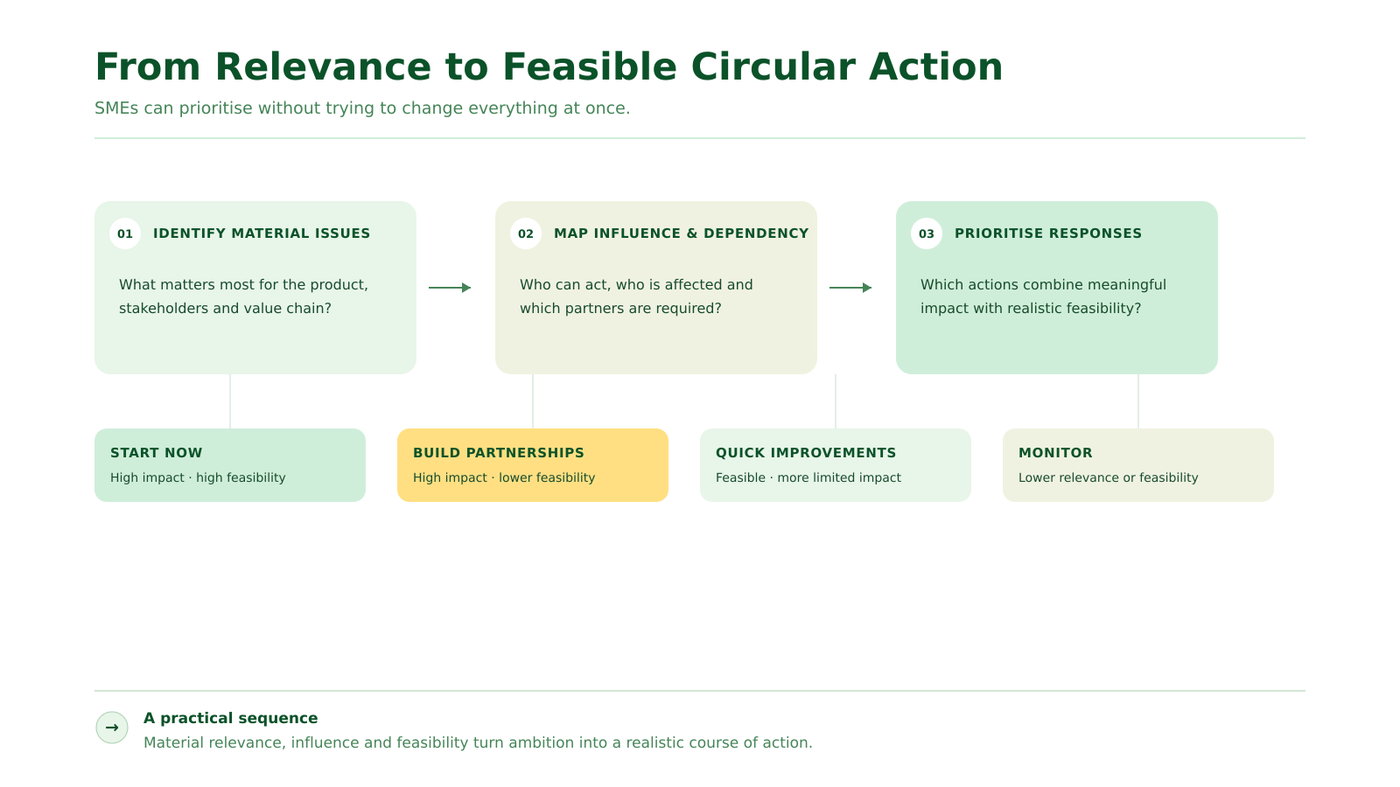
Figure X. From material relevance to feasible circular action. SMEs can prioritise circular strategies by identifying their most material challenges, mapping the actors required for implementation, and comparing possible responses according to expected impact and feasibility.
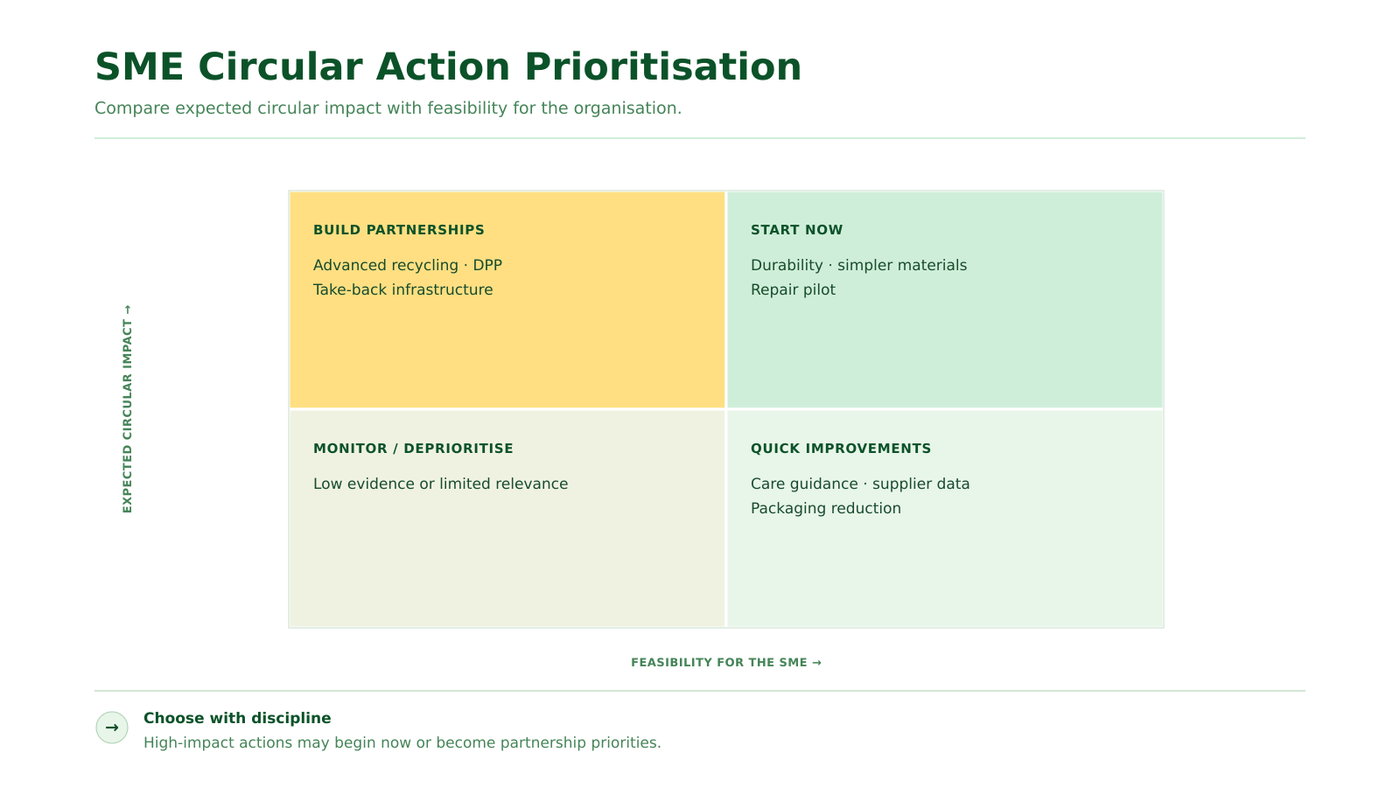
Figure X. SME circular action prioritisation. Circular strategies should be selected by comparing their expected impact with feasibility, available resources, evidence, and partnership requirements.
GFA RESOURCE: Fashion CEO Agenda 2025 — Global Fashion Agenda, 2025. The Agenda distils industry consensus into five priorities — Respectful and Secure Work Environments, Better Wage Systems, Resource Stewardship, Smart Material Choices and Circular Systems — each with defined ambitions and immediate, short-term actions. For SMEs it advises prioritising by materiality: adapt actions to your company’s baseline, resources and most material issues rather than attempting everything at once. Circular Systems ambitions include designing all products fit for the circular economy, reducing overproduction and growing revenue from circular business models. Source: https://globalfashionagenda.org.
FOR YOUR SME / BUSINESS CASE: use a 2×2 impact–feasibility matrix on five candidate circular actions. Example: replacing mixed trims with mono-material equivalents can add roughly 2–5% to unit cost but improves recyclability and can lower future EPR sorting fees; removing one colourway from your range can cut fabric stock by about 15–20% and reduce overproduction write-offs. Score each action 1–3 for expected impact and 1–3 for feasibility, then implement the two top-scoring actions within 90 days.