Chapter 1 — full chapter
1.4.4 Translating Evidence into Design
- Which lifecycle stage is likely to create the most significant impacts for this product?
- Is the proposed material lower-impact only during production, or across the full lifecycle?
- Will the product require energy-, water- or chemical-intensive care?
- Could greater durability compensate for higher initial material or production impacts?
- Can the product be repaired using accessible skills, tools and components?
- Is it likely to remain functional and desirable long enough to justify its impacts?
- Can its components be separated, sorted and recycled through available or emerging infrastructure?
- Are we reducing environmental impacts, preserving product and material value — or ideally doing both?
Try it now
take one garment from your wardrobe and map it on the Ellen MacArthur Foundation's Butterfly Diagram (free PDF, ellenmacarthurfoundation.org) — which loop keeps the most value? Then score the garment against WRAP's free Circular Design Toolkit checklist (durability, repairability, recyclability, material health) and write down two design changes that would move it to a higher-value loop.
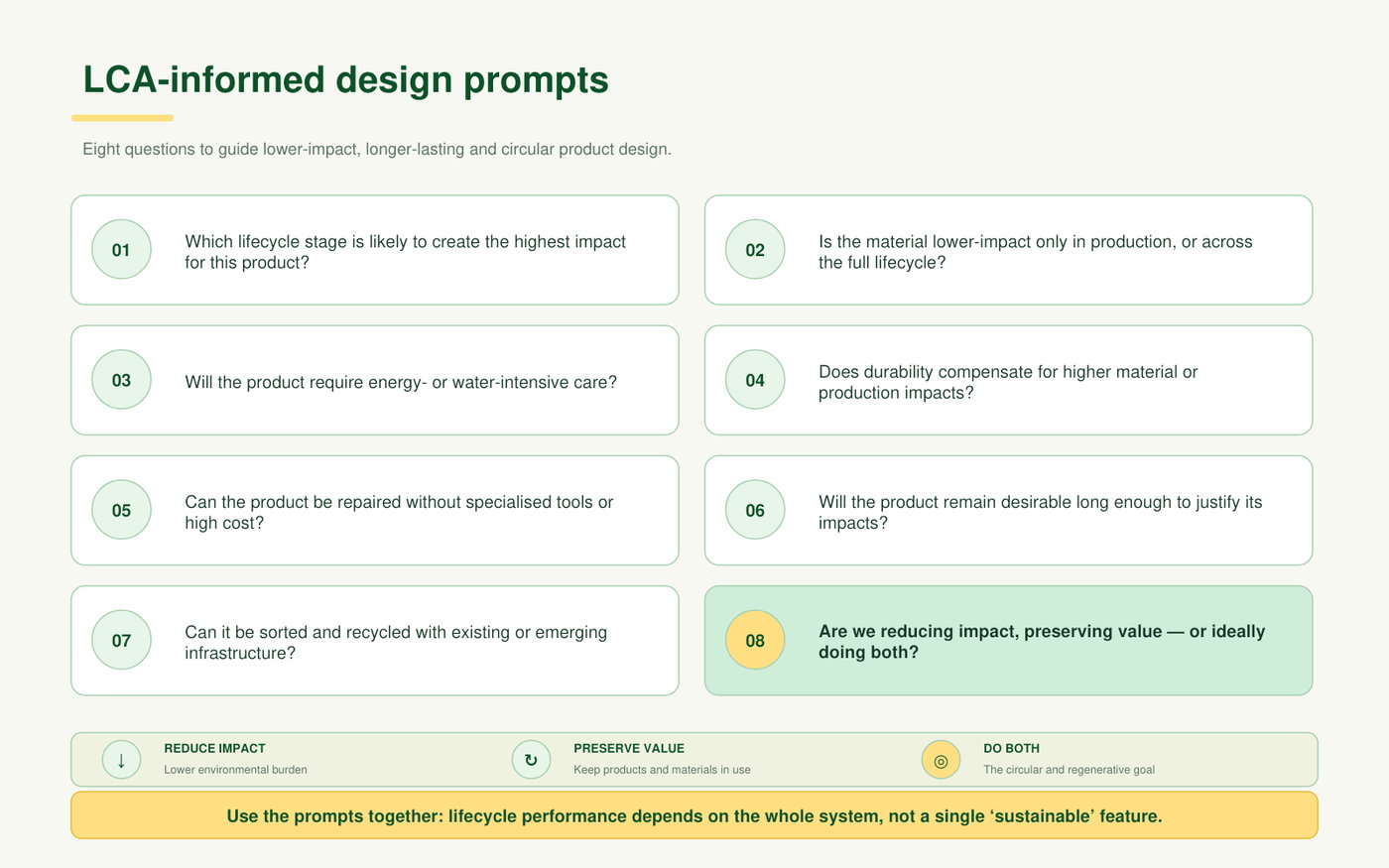
Figure 22. LCA-informed prompts for fashion designers. The questions connect life cycle evidence with decisions about materials, production, care, durability, repairability and future circulation. Source: Authors’ own elaboration based on UNEP Life Cycle Thinking, ISO 14040 and ISO 14044, the European Commission Environmental Footprint method and the Product Environmental Footprint Category Rules for Apparel and Footwear.