Chapter 1 — full chapter
1.3 Design for Multiple Life Cycles
Designing for multiple life cycles means imagining garments not as products with a single owner or linear trajectory, but as assets that can move through successive periods of ownership, use, maintenance, repair and transformation. A garment may be worn by its first owner, repaired and resold, rented for specific occasions, adapted to changing bodies or tastes, and eventually remanufactured or recycled.
The Ellen MacArthur Foundation’s Butterfly Diagram is one of the most widely used frameworks for visualising how products and materials can circulate within a circular economy. It distinguishes between biological and technical cycles and shows different pathways for keeping products, components, and materials in circulation.
The technical cycle of the Butterfly Diagram helps situate these possibilities within a broader circular system. Its nested loops show that value is generally retained more effectively when a product remains intact through maintenance, prolonged use, sharing, and reuse. Refurbishment, remanufacturing and, finally, material recycling become relevant when the garment or its components can no longer circulate in their existing form. The aim is not for every product to pass through every loop, but to identify the pathways that preserve the greatest possible value for the longest possible time.
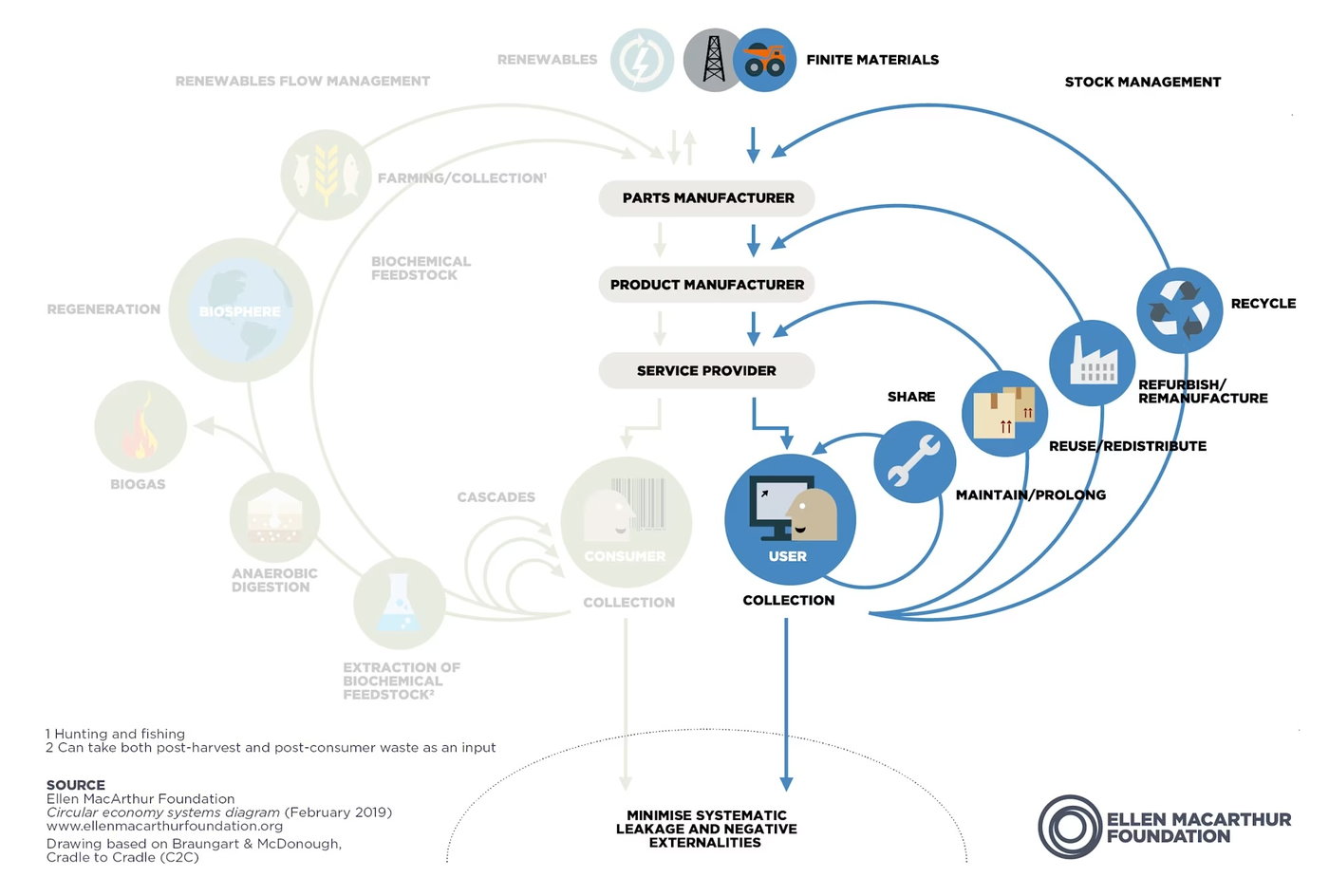
Figure 9. Technical cycle of the Butterfly Diagram. The nested loops illustrate how products, components and materials can retain value through maintenance and prolonged use, reuse and redistribution, refurbishment or remanufacturing, and, when higher-value pathways are no longer possible, recycling. Source: Ellen MacArthur Foundation, The Butterfly Diagram: Visualising the Circular Economy.
Circular design therefore prioritises versatility, durability, repairability and adaptability. Depending on the product, this may involve adjustable fits, robust seams, reinforced stress points, replaceable components, accessible construction or clear care and repair information. However, these strategies should not become a restrictive design formula. Circular fashion does not have to look modular, minimal or visibly “sustainable”, nor can circular innovation be reduced to a checklist of seams, zips and trims.
Innovation may begin with an existing garment, an underused material stream, a new fibre or manufacturing process, a digital system, a service model, or a different relationship between the designer and the user. These starting points can generate new silhouettes, construction methods, aesthetics, and forms of value. Instead of designing a conventional product first and adding circular features afterwards, designers can begin by asking what already exists, what should be preserved and how it could circulate — and allow those conditions to shape the product itself.
Extending product life is not only a question of physical durability. A garment also needs to remain desirable and meaningful to its user. Personalisation, adaptability and opportunities for user participation can strengthen emotional attachment and may encourage products to be valued and kept for longer.
Multiple life cycles also have an emotional and cultural dimension. Products that age well, retain relevance, invite personalisation or carry visible histories are more likely to be valued, cared for and passed on. Designing for multiple lives is therefore not only about extending technical durability. It is about creating products capable of acquiring new meaning and desirability across time and between users.
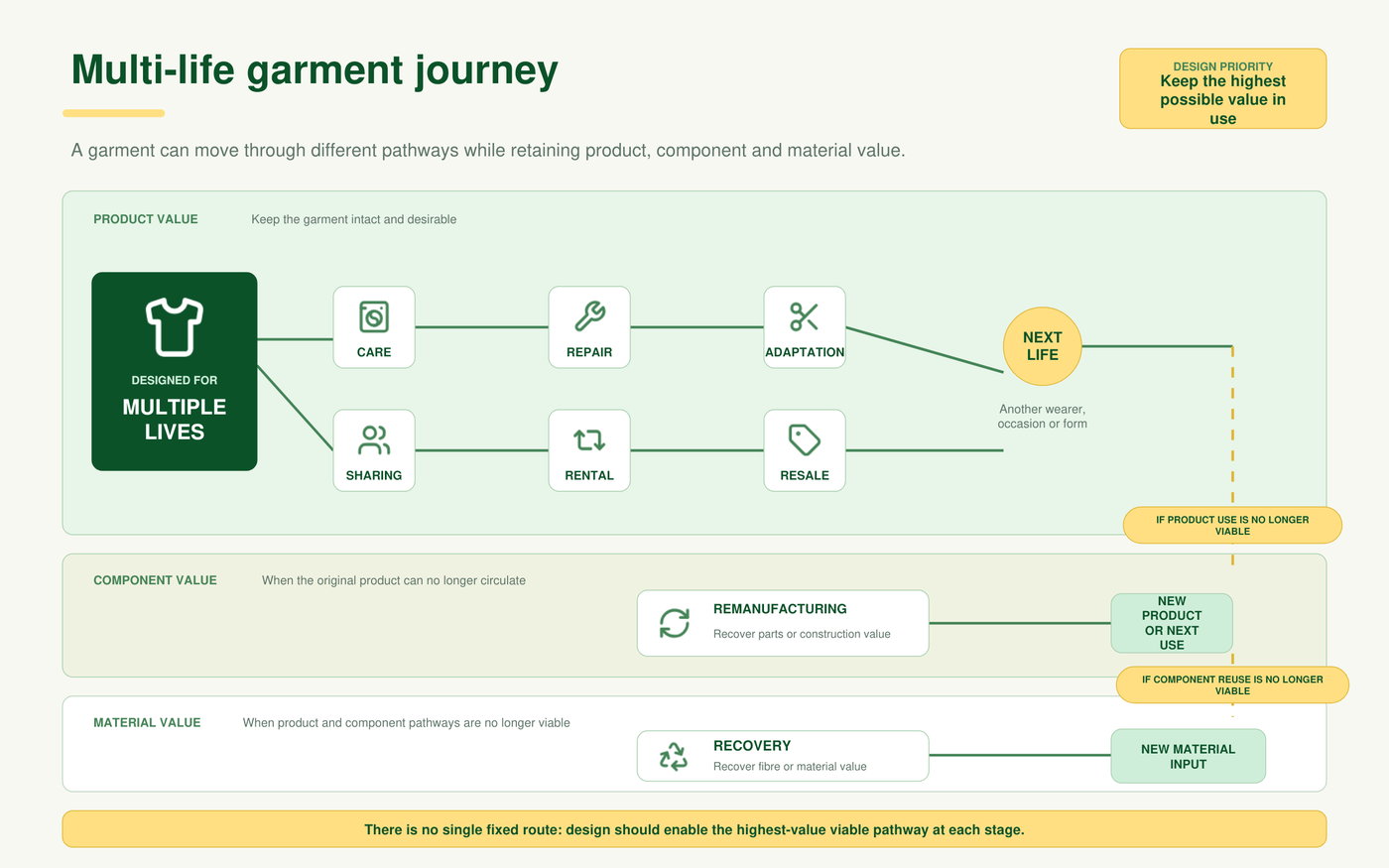
Figure 10. Multi-life garment journey. Circular design considers how garments can retain product, component and material value through care, repair, sharing, rental, resale, adaptation, remanufacturing and recovery pathways.
RESOURCE INSIGHT: Durability is Fashion’s Next Competitive Advantage — WRAP, 2026. New research by WRAP with the Leeds Institute of Textiles and Colour (27 partners, 200+ garments, 10,000+ test specimens) shows that increasing product lifetime is the single most effective way to reduce clothing's environmental impact. WRAP argues durability has moved from 'nice to have' to a commercial, regulatory and reputational issue - the brands that win will design products that last. Source: https://www.wrap.ngo/resources/report/durability-fashions-next-competitive-advantage.