Chapter 1 — full chapter
1.2.1 Case Study: LIPOR — Making the Urban Textile Mine Accessible
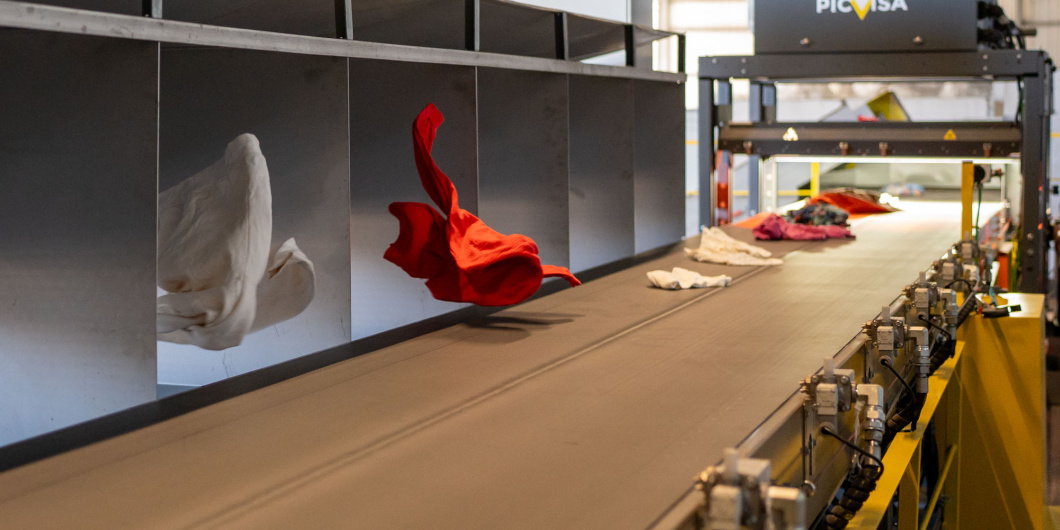
Figure 7. Portugal’s first Pilot Textile Sorting Unit. Presented by LIPOR and its associated municipalities in September 2025 within the be@t project, the pilot-industrial unit combines manual and automated sorting and can classify textiles into 14 categories according to material composition and colour. Source: LIPOR
The concept of an urban textile mine only becomes operational when systems exist to collect, identify, sort, and redirect post-consumer textiles. LIPOR, the intermunicipal waste management organisation serving eight municipalities in northern Portugal, provides a practical example of how this infrastructure can begin to take shape.
In September 2025, LIPOR and its associated municipalities presented the first Pilot Textile Sorting Unit installed in Portugal, developed within the be@t – Bioeconomy for Textiles and Clothing project. Operating at pilot-industrial scale, the unit has the capacity to process 50 tonnes of textiles per year and separate them into 14 categories according to material composition and colour. The process combines manual and automated sorting, accessory removal and baling, preparing different textile fractions for appropriate reuse or recycling pathways. LIPOR
The unit also has an experimental role. It is intended to generate data, test technologies, build knowledge across the textile and waste sectors, and assess whether the model can be scaled. LIPOR is also exploring local collection models involving recycling centres, mobile recycling centres, institutional partnerships and door-to-door collection.
This infrastructure-focused initiative is complemented by the Projeto Têxtil Circular, a separate pilot promoted by APED — the Portuguese Association of Distribution Companies — and financed by the Portuguese Environmental Fund. The project brings together textile producers, retailers, waste operators, public bodies, and other strategic partners to test the collection and management of used textiles in real conditions. It follows textiles from collection in participating stores through sorting and their subsequent destination, helping to identify existing capacities, information gaps and the technical, economic and environmental conditions required for a future national textile-waste management system. Projeto Têxtil Circular
Together, these initiatives demonstrate that discarded textiles do not automatically become circular resources. Their potential value depends on accessible collection systems, reliable information, sorting capacity, recovery technologies, and viable markets for the resulting products and materials. They also reveal a direct relationship with design: fibre blends, complex constructions, coatings, prints, and difficult-to-remove accessories can reduce sorting accuracy and restrict the recovery pathways available.
Reflection prompt
How could design decisions make a garment easier to identify, sort, disassemble and redirect towards its highest-value next use?
For designers and SMEs, the lesson is clear: the urban textile mine begins upstream. Decisions concerning material composition, colour, trims, disassembly and product information influence whether a garment can later be identified, separated and redirected towards its highest-value next use.