Chapter 4 — full chapter
4.1. One Data Set, Many Obligations
This subchapter introduces the core idea that the same product data collected for the DPP can also support Textile Labelling requirements, Extended Producer Responsibility reporting, and claims made under the Empowering Consumers Directive. This reframes the Digital Product Passport as a shared resource rather than an isolated task.
Collecting product data for the DPP does more than satisfy the Ecodesign for Sustainable Products Regulation (ESPR). The ESPR establishes an EU DPP registry, but this registry does not store the complete DPP itself — the passport data is held by the responsible economic operator or a DPP service provider, with the registry storing the information specified by the relevant legal framework. Structured well, the same underlying data can also support:
- Textile Labelling Regulation (TLR): fibre composition data you've already gathered for the DPP can carry over to labelling requirements, and the ongoing TLR revision may extend this further to cover origin, care, and size information.
- Empowering Consumers Directive: the substantiated data behind your product backs up any environmental claims you make, protecting you against greenwashing accusations.
- Waste Framework Directive (Extended Producer Responsibility): the revised Waste Framework Directive requires all EU Member States to introduce mandatory textile EPR schemes, with fees eco-modulated according to sustainability criteria such as durability and recyclability. Durability, repairability and recyclability data collected for the DPP may therefore become relevant to future EPR reporting, though the EU's own criteria for how fees should be modulated have not yet been finalised.
- Note: Member States have until June 2027 to transpose the Directive into national law, and until April 2028 to have EPR schemes operational.
- REACH and General Product Safety Regulation (GPSR): chemical composition and producer/traceability details support both chemical safety compliance and broader product safety obligations.
The DPP itself remains the legal requirement under ESPR, but the data collection effort behind it doesn't stop there. Structured well, it becomes reusable across your entire compliance landscape.
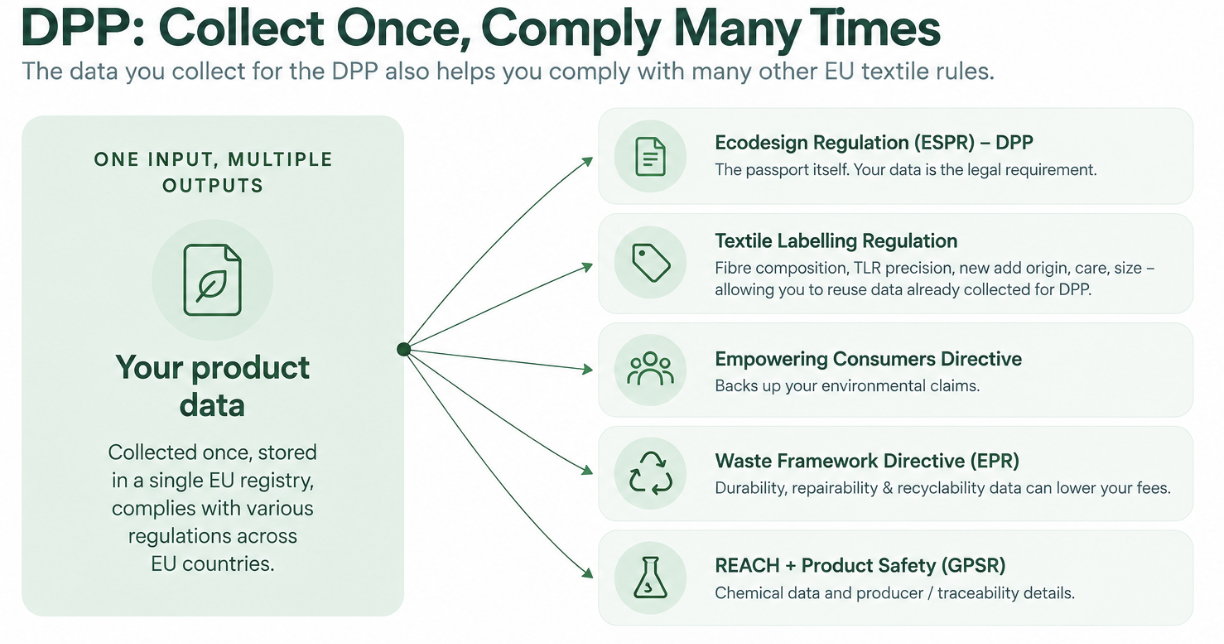
Figure 4.1. One Input, Multiple OutputsDPP data collected once can be reused across multiple EU regulatory requirements, supporting more efficient compliance and reducing duplication.
Why This Reframing Matters. Many organizations treat each regulation as a separate project, with separate teams collecting overlapping data multiple times. This is inefficient and increases the risk of inconsistency between what's reported where.
Reframing the DPP as a shared resource rather than an isolated task changes the operating model:
- Collect once — build your product data collection process around a single, well-structured source.
- Store centrally — the EU registry (or your internal system feeding it) becomes the single source of truth.
- Reuse across obligations — the same dataset flows out to labelling, consumer claims, EPR reporting, and safety documentation.
This is the "collect once, comply many times" principle: effort invested in getting DPP data right pays dividends across the rest of your regulatory obligations.
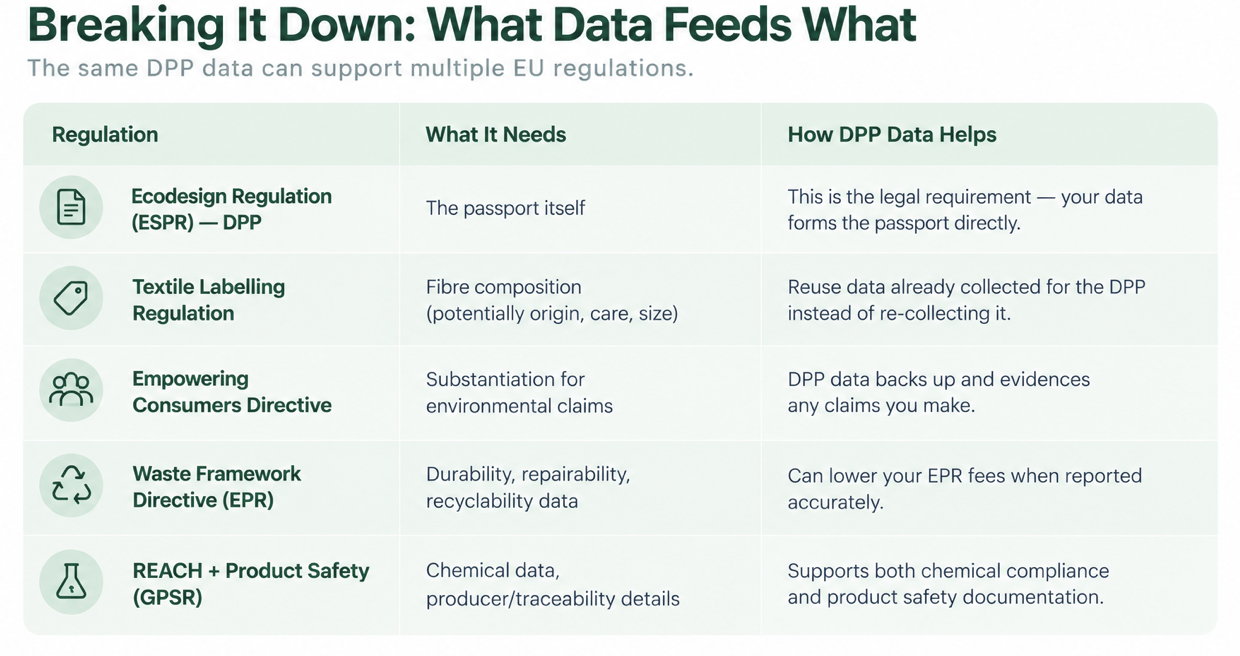
Figure 4.2. How DPP Data Supports Multiple EU RequirementsThe figure illustrates how data collected for the DPP can also support related EU regulatory requirements, reducing duplication and enabling more efficient compliance.