Chapter 3 — full chapter
3.1.1 From data field to data requirement
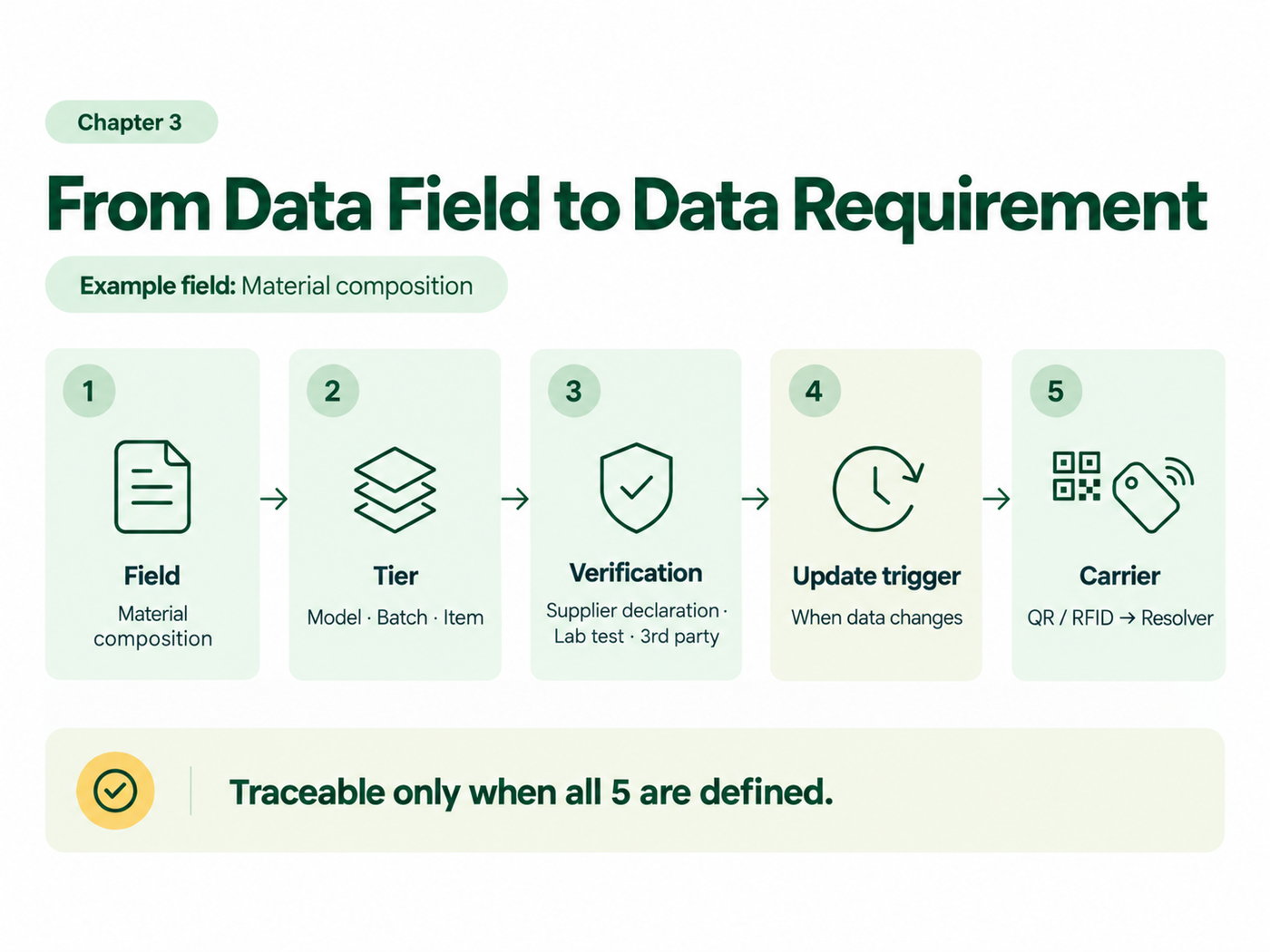
A data requirement is more than a field name. A textile DPP’s identification and performance data spans product identity (GTIN, model/batch IDs, HS/TARIC customs codes), producer and operator identification (manufacturer, importer, facility GLNs, EORI numbers), material composition, environmental indicators, durability, and end-of-life information, roughly 50 data points in the JRC’s preparatory study. For an SME, “material composition” only becomes usable traceability data once it is defined at a specific level of the three-tier model introduced in Chapter 2 (model, batch, or item) and paired with a rule for how it is captured, verified, and refreshed. A requirement therefore has four dimensions: the field itself, the tier at which it is recorded, the level of confidence behind it (declared by a supplier, tested in a lab, or certified by a third party), and the update trigger that tells the business when the value needs to change. A further distinction matters in practice: primary data, collected directly from a business’s own supply chain, carries more weight than generic or industry-average data used as a placeholder where primary data is not yet available. Treating “data requirements” as a static checklist, or leaning permanently on generic data, is one of the most common reasons a DPP looks complete on paper but fails the first time someone actually queries it.