Chapter 1 — full chapter
1.1.1 From Physical Product to Digital Identity
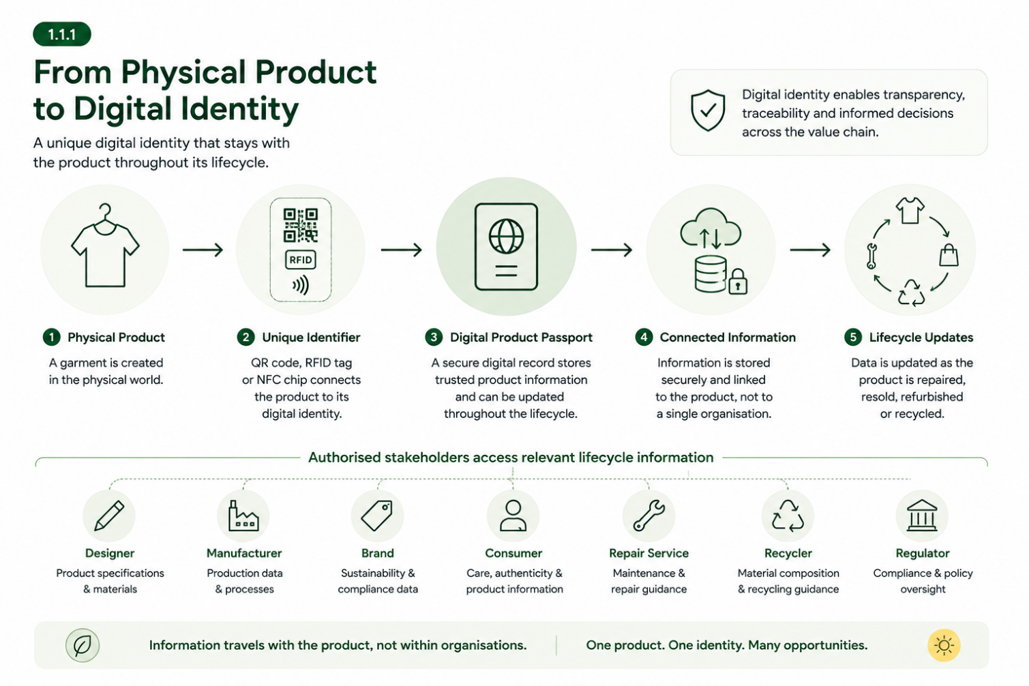
A Digital Product Passport (DPP) gives every product a unique digital identity that remains linked to it throughout its lifecycle. Using technologies such as QR codes, RFID tags, or NFC chips, a physical garment is connected to a digital record containing reliable product information. Unlike traditional labels, which provide only limited static data, a DPP can be updated as the product is repaired, resold, refurbished, or recycled.
This digital identity enables information to travel with the product rather than remaining within individual organisations. As a result, all authorised stakeholders can access relevant lifecycle information, supporting transparency, traceability, and more informed decision-making across the fashion value chain.