Chapter 5 — full chapter
5.5 Designing the circular campaign
The Circular Campaign Brief brings the chapter’s principles together in a practical campaign-design process. It begins by defining the communication goal, audience, barrier, and desired action or understanding. The barriers identified through the Circular Engagement Journey in Chapter 4 provide a useful starting point. A campaign designed to increase take-back participation will require a different narrative and call to action from one intended to explain a material choice or strengthen trust in a repair service.
The verified communication input then establishes what the campaign may communicate, and which scope, qualifications or limitations must remain visible. The creative team can identify why this information matters, select a story angle, and develop an emotional hook, visual direction, and combination of content formats and channels.
Before release, the campaign should be reviewed as a complete audience experience, using the credibility principles from Chapter 1 and the Claim Checker Worksheet from Chapter 2. Learners should consider whether its language and visuals preserve the verified meaning, whether important limitations are visible, and whether the campaign could use circularity as a reason to encourage unnecessary consumption.
Finally, success indicators should relate to the campaign’s actual goal. These might include customer understanding, repair bookings, take-back participation, use of care information, resale engagement, reduced confusion, or improved trust.
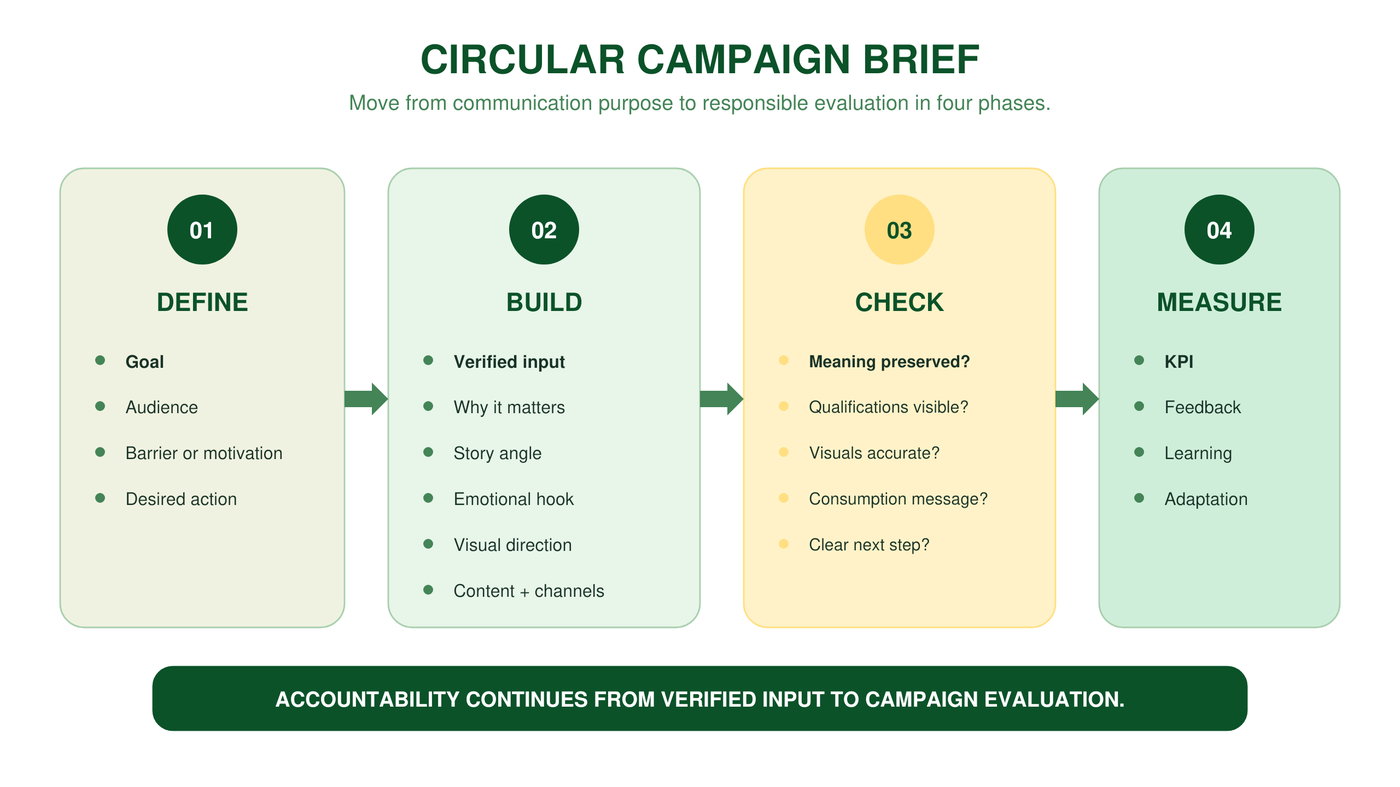
Figure 5.13. Circular Campaign Brief. The framework connects communication goals and audience barriers with verified information, creative development, responsible review, and measurable outcomes.
RESOURCE INSIGHT: The New Playbook for Fashion PR — The Business of Fashion, 2025. PR is being reshaped by new visibility channels — Substack newsletters, affiliate networks and AI-powered search — so earned-media playbooks built for an earlier era no longer reach circular-campaign audiences. BoF argues PR teams must rebuild how they establish brand credibility across these shifting platforms. Source: https://www.businessoffashion.com/case-studies/marketing-pr/case-study-the-new-playbook-for-fashion-pr/
- TRY IT NOW: pick one real campaign — GANNI × Vestiaire Collective, Chloé × Mifuko, PANGAIA × Coral Gardeners or Patagonia “Don’t Buy This Jacket” — and complete a one-page Circular Campaign Brief for it: goal, audience, barrier, key claim, evidence, emotional hook, story angle, visual direction, greenwashing risk check and success indicators. Free: the brief framework in section 5.5 and the Miro Creative Brief template.
- FOR YOUR SME / BUSINESS CASE: storytelling without evidence is now a business risk. A single unsubstantiated campaign visual can prompt complaints or regulatory scrutiny, while an internal sign-off process involving sustainability, legal and marketing teams need not be lengthy. Specific, verifiable claims (e.g. "free repairs in our store since 2019") are also far easier to defend than generic "sustainable" language.