Chapter 5 — full chapter
5.4.2 Using digital tools and AI responsibly
Digital tools can make circular information more accessible and actionable. QR codes, digital product information, interactive care guidance, repair tutorials, virtual product visualisation and take-back instructions can connect communication with practical participation.
AI can support parts of the communication workflow by helping to structure information, adapt language for different audiences, generate initial variations, or identify recurring customer questions. However, these uses create particular risks in sustainability communication. AI may introduce unsupported language, remove important qualifications, produce unrealistic imagery, reproduce bias, obscure authorship, or make a limited improvement appear more significant than it is.
Responsible AI use also requires considering its own environmental footprint. Training and running AI systems requires computing infrastructure, energy and water, and resource use increases with the scale and frequency of computation. For a brand communicating sustainability, this creates an important consistency question: AI should be used where it provides a clear benefit, rather than automatically generating multiple images, videos, texts or iterations simply because the technology is available. Lower-compute alternatives, existing assets and human-led processes may sometimes be sufficient.
Human editorial control is therefore essential. AI-generated content should be checked against the verified input, reviewed for scope and accuracy, and assessed for misleading visual or emotional implications. The use of AI should also respect copyright, representation, and organisational disclosure requirements.
AI can assist translation, information structuring and creative development, but it cannot determine whether a sustainability statement is adequately supported or whether its own use is proportionate to the task. Accuracy, judgement, accountability and responsible use of resources remain human responsibilities.
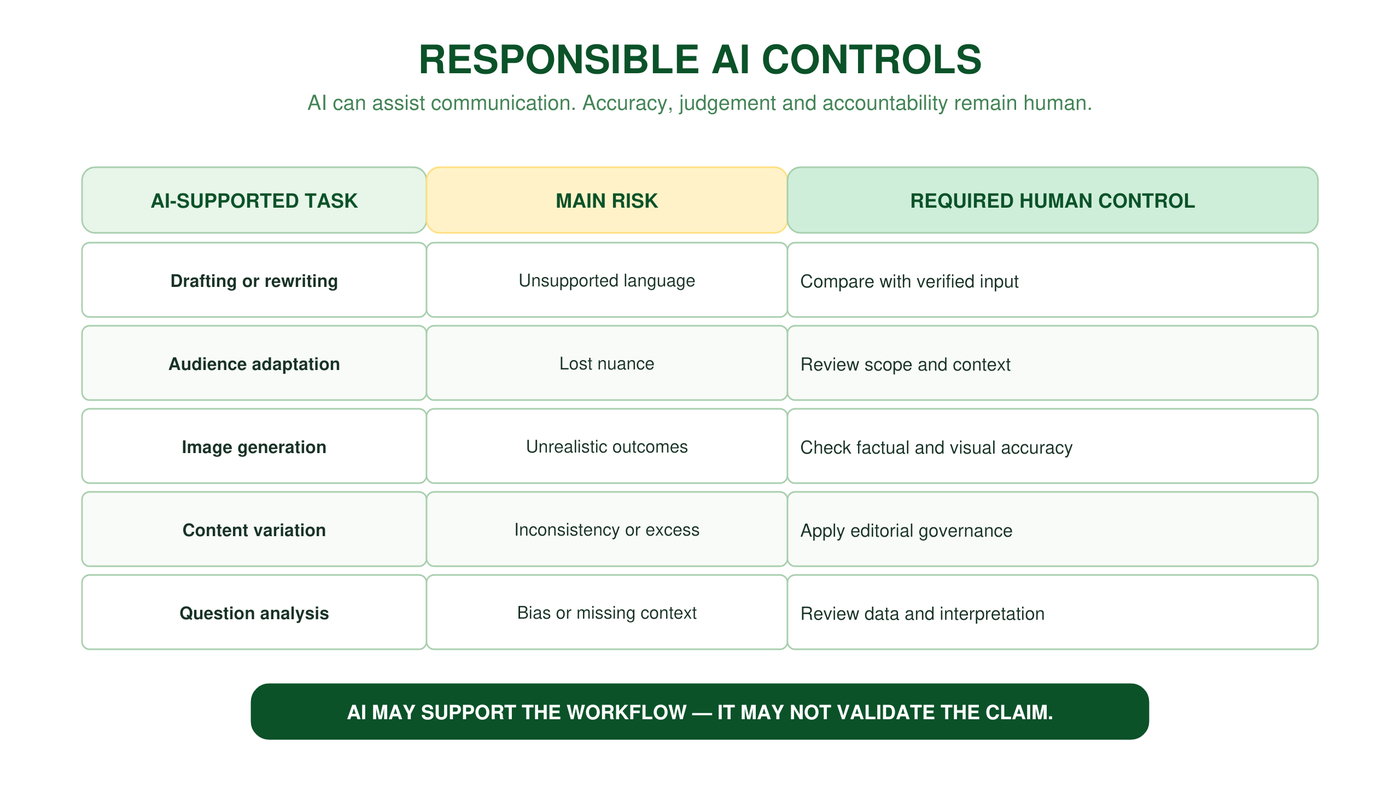
Figure 5.12. Responsible AI Controls. AI can support sustainability communication tasks, but each use introduces specific risks that require human review to preserve accuracy, context, consistency and accountability.