Chapter 5 — full chapter
5.3.2 Translating the story into visual language
Visual language shapes how a circular story is understood and whether it feels credible, desirable, and culturally relevant. Photography, casting, styling, colour, composition, typography, and moving image do not simply decorate the message. They influence the meaning audiences take from it.
Generic sustainability codes, such as leaves, natural backgrounds, muted palettes or words such as “conscious” and “natural”, may create an environmental impression without communicating anything specific. They can also make different initiatives appear interchangeable or give weak information more significance than it deserves.
Visual decisions should therefore emerge from the verified input and chosen story angle. A repair story might show tools, hands, seams, damage and renewed use. A durability story could show repeated wear, material quality, or styling across time. A story about craft or designer authorship should represent the people, skills and processes involved accurately and respectfully.
Visual language must not imply a wider environmental benefit than the information supports. Its role is to make the story visible and emotionally resonant, not to compensate for missing evidence.
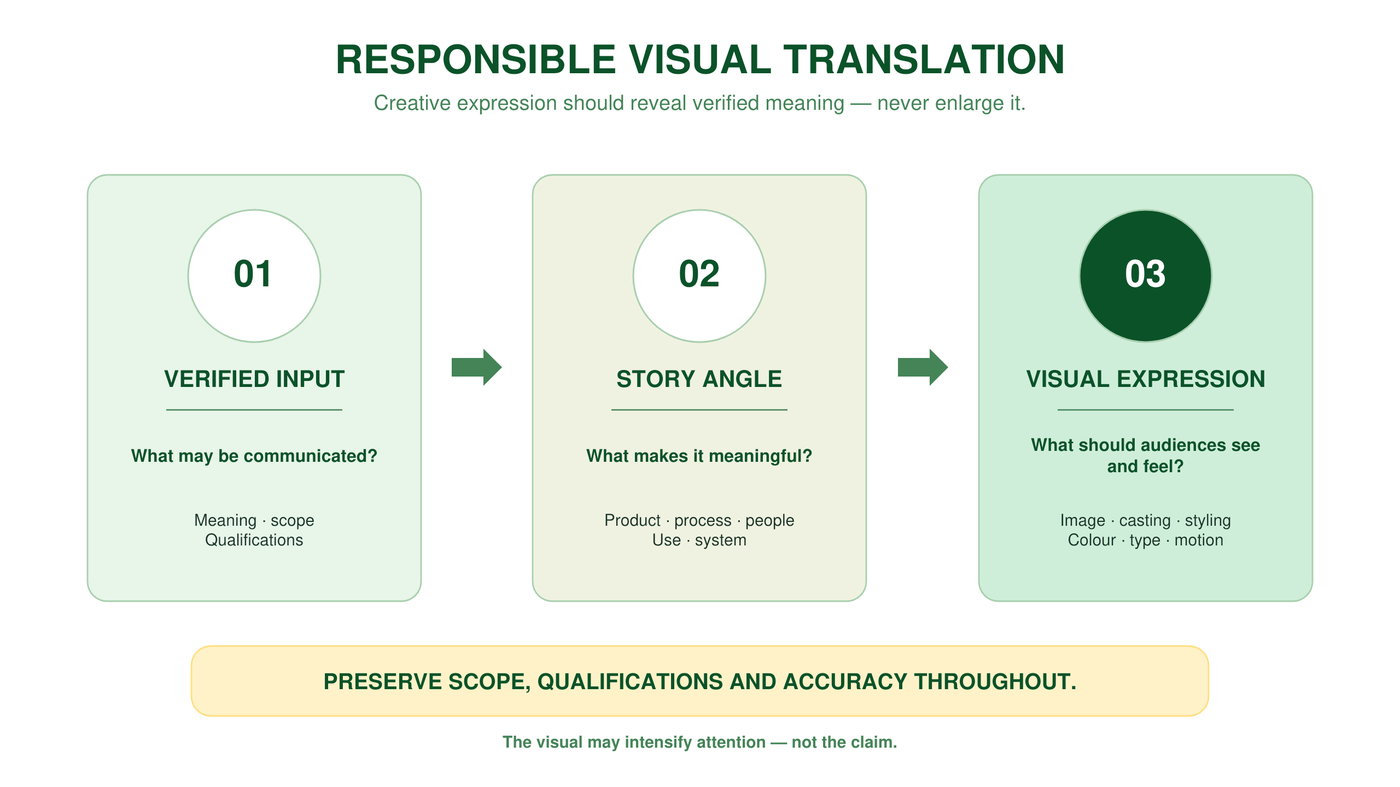
Figure 5.6. Responsible Visual Translation. Visual expression should develop from verified information and a defined story angle, preserving the scope and qualifications of the original input while making its meaning visible and engaging.