Chapter 4 — full chapter
4.4.1 Mini case example — Vestiaire Collective: trust infrastructure in resale
Person-to-person resale platforms depend on trust. Buyers need confidence that products are authentic, accurately described, fairly priced, and safe to purchase. Sellers, in turn, need clear processes for payment, communication, shipping, and dispute resolution.
Vestiaire Collective is a useful example because its resale model is built around several layers of trust: detailed product information, condition descriptions, seller profiles, buyer protection, authentication and quality control. Together, these mechanisms reduce uncertainty and help make second-hand luxury fashion feel more credible, desirable, and socially accepted.
From a communication perspective, the important lesson is that trust is not created by brand messaging alone. It is supported by the information, verification mechanisms, and transaction safeguards that surround the exchange. In resale, these elements become part of the customer experience and part of the value proposition itself.
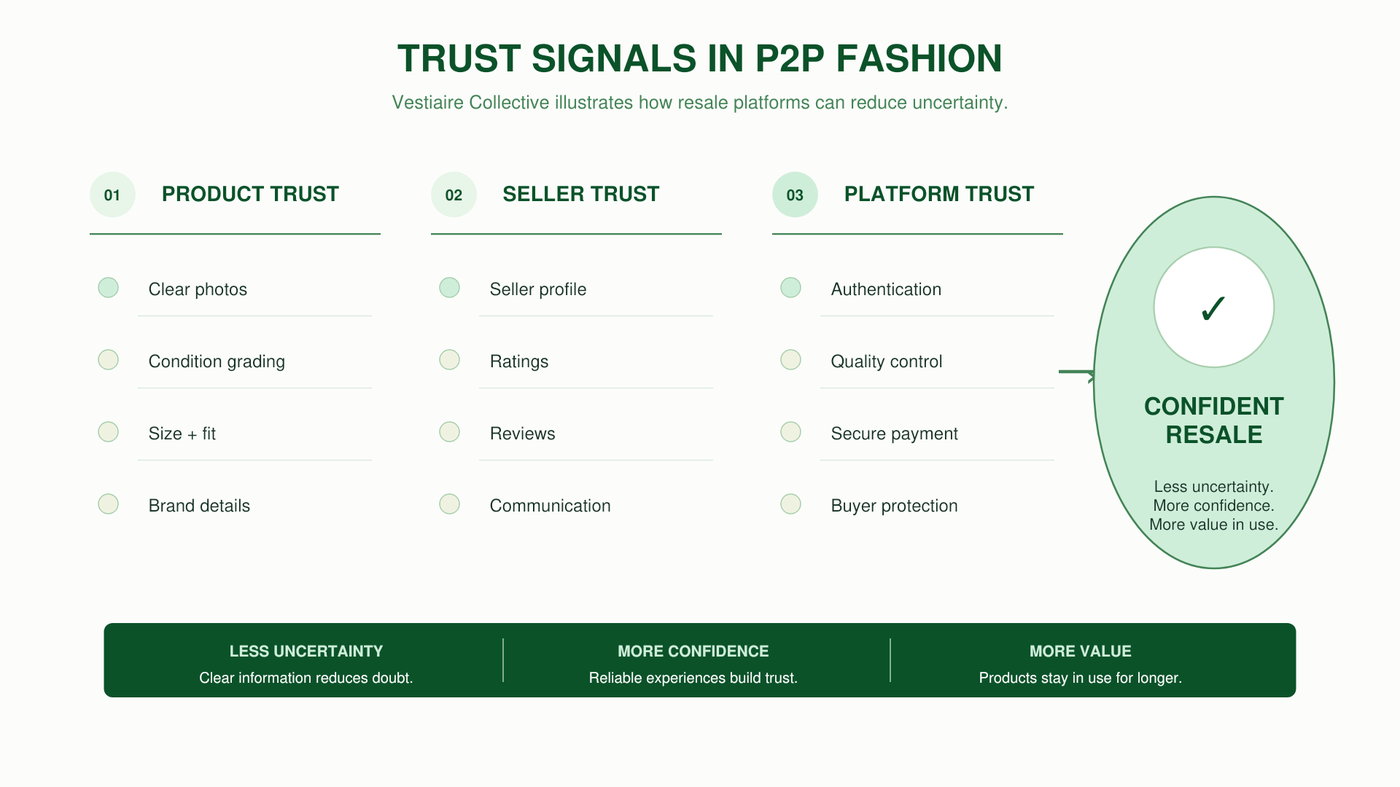
Figure 4.7. Trust signals in P2P fashion: Vestiaire Collective. Vestiaire Collective illustrates how resale platforms can reduce uncertainty through product information, seller reputation, authentication, quality control and transaction protection, making second-hand fashion easier to trust and participate in.