Chapter 4 — full chapter
4.3 Circular loyalty loops
Circular loyalty programmes can use incentives to support behaviours that keep products and materials in use for longer. Rather than rewarding only repeat purchases, they can recognise actions such as care, repair, return, resale, rental, sharing, participation in workshops or long-term ownership.
The key design question is what behaviour the incentive is reinforcing. A repair credit, take-back voucher or resale benefit can support product life extension, but poorly designed rewards may simply stimulate another new purchase. Circular loyalty therefore depends not only on offering a benefit, but on ensuring that the reward is aligned with the circular outcome the programme is intended to support.
A useful loyalty loop connects action, value and return: the customer participates in a circular action, receives a meaningful benefit, and is encouraged to remain engaged with the product, service or brand without necessarily increasing the consumption of new products.
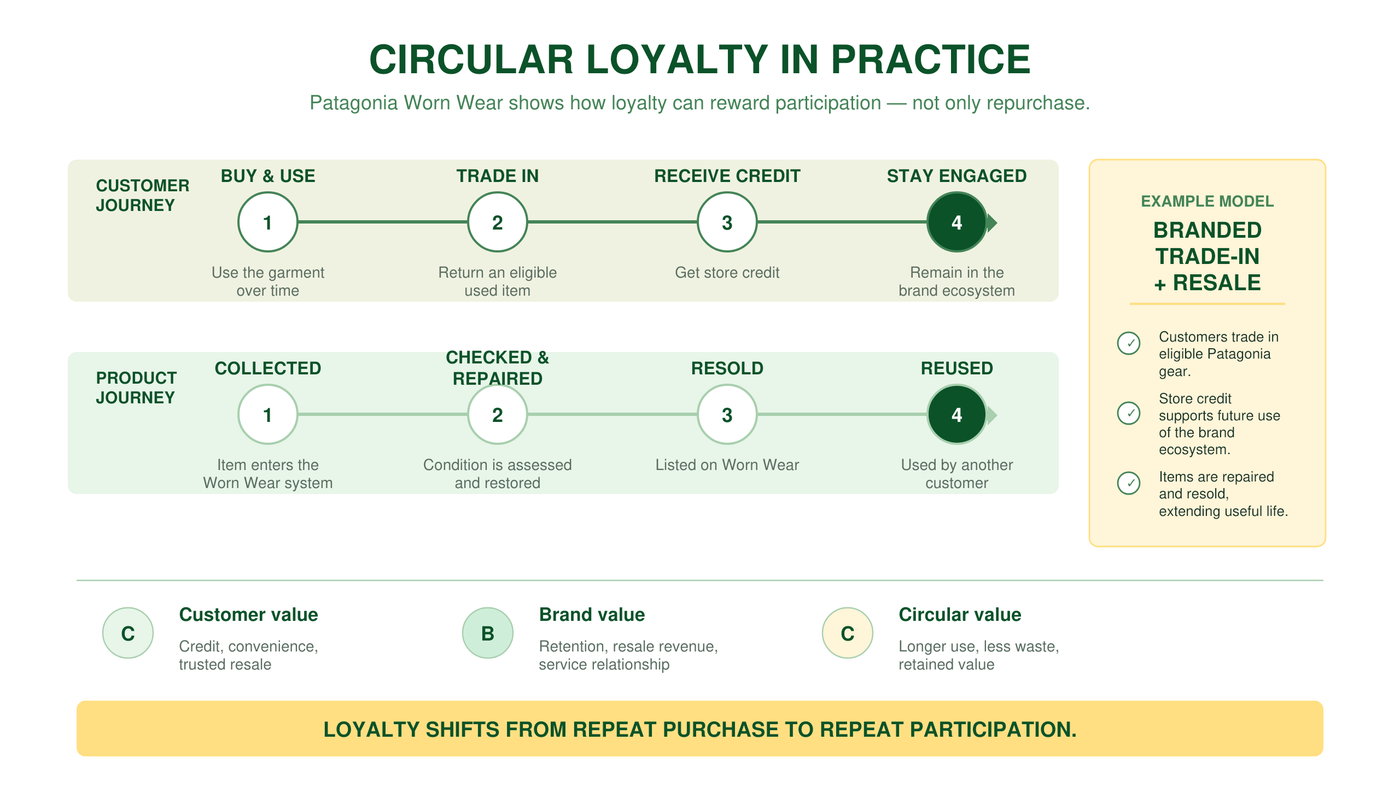
Figure 4.6. Circular loyalty in practice: Patagonia Worn Wear. The Patagonia Worn Wear programme shows how loyalty can move beyond repeat purchase by connecting trade-in, store credit, repair, resale and reuse, keeping products in circulation while maintaining an ongoing relationship with the customer.
RESOURCE INSIGHT: Creating Value from Sustainable Products — Deloitte, 2023. Deloitte’s survey of 311 Canadian business leaders and 1,008 consumers found leaders overestimate consumer trust: shoppers are sceptical and confused by the proliferation of claims, question premium prices, and increasingly expect sustainability to be the default. The route to loyalty: purpose-driven brands that provide clearer, better information — trust is the currency of circular loyalty loops. Source: https://www.deloitte.com/content/dam/assets-shared/docs/industries/consumer/2023/gx-consumer-creating-value-from-sustainable-products-aoda.pdf.