Chapter 4 — full chapter
4.2 From the attitude-action gap to participation design
The attitude-action gap describes the distance between what people say they value and what they actually do. In fashion, consumers may say they care about sustainability but still buy low-cost, low-quality or fast-changing products. They may support repair in principle but never use repair services. They may like the idea of resale but feel uncertain about quality, hygiene, fit, or trust.
This gap should not be treated as consumer hypocrisy. It often reflects structural barriers. Circular options may be too expensive, too difficult to access, poorly explained or not emotionally appealing enough.
Communication can help reduce the gap when it responds to a specific barrier. If the barrier is lack of knowledge, use education. If the barrier is distrust, show evidence. If the barrier is inconvenience, simplify instructions. If the barrier is low desirability, improve storytelling and visual language.
The practical question is: what prevents this person from acting, and what communication would make the next step easier?
Try it now
Map the attitude–action gap for one circular service you know: list three structural barriers (price, convenience, trust, access) and one communication response to each. Then check a real example — TOAST Circle, Nudie Jeans Free Repairs Forever or Patagonia Worn Wear — and note which barriers the service itself removes and which remain for communication to address.
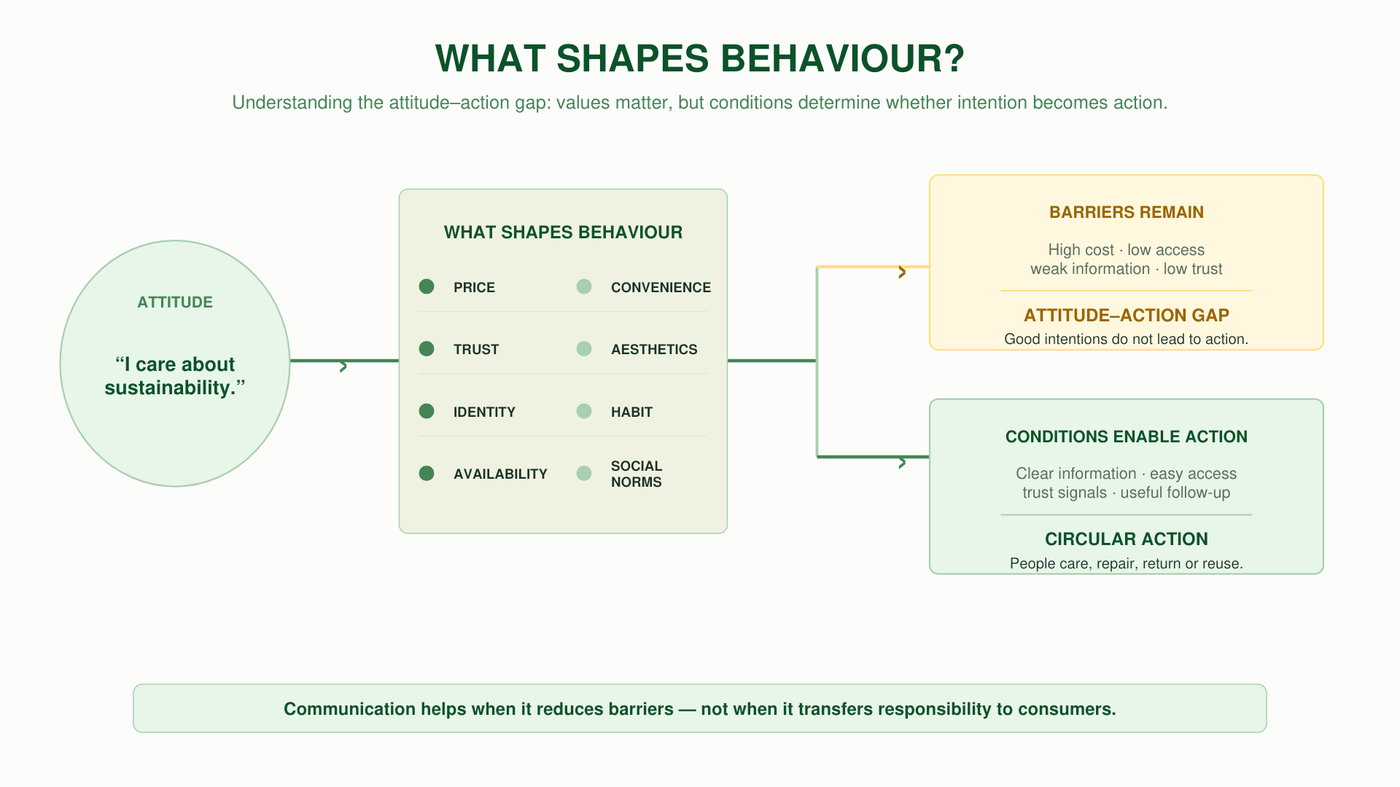
Figure 4.5. What shapes behaviour? Understanding the attitude–action gap.Consumer behaviour is influenced by factors such as price, trust, convenience, and identity. Circular action becomes more likely when communication and services reduce barriers and make participation easier.
RESOURCE INSIGHT: The Green Divide Report — NielsenIQ, 2023. NIQ quantifies the attitude–action gap: 70% of global consumers say sustainable living is important, yet only 19% (the “Green Dividers”) consistently act. The gap is a design problem — brands close it by making sustainable choices easy, visible and worth the switch, rather than appealing to intention alone. Source: https://nielseniq.com/global/en/insights/report/2023/how-to-turn-green-consumer-intentions-into-sustainable-actions/.