Chapter 3 — Full chapter
3.5.1 Worked example — Communicating the ISTO. Repair Program across the stakeholder ecosystem
ISTO. is a Portuguese clothing brand that offers a repair service designed to keep its garments in use for longer. The service is currently available at its Campo de Ourique store. Customers can bring their garments to the store or email photographs in advance to check whether a repair is possible. Small tears, loose stitching and buttons on ISTO. garments are repaired free of charge, while trouser-length and shirt- or jacket-sleeve adjustments cost €10. Customers receive an estimated collection date after the garment has been assessed. ISTO. Repair Program
The completed matrix shows how information about this service can be organised for five stakeholder roles: garment owners, store staff, customer-service staff, the repair team, and management. The public-facing service information is based on ISTO.’s current Repair Program page. The internal information sources, ownership roles, workflows and reporting mechanisms marked with an asterisk are illustrative applications of the matrix rather than confirmed descriptions of ISTO.’s internal processes.
The example demonstrates that stakeholder adaptation does not require different versions of the service. Its scope, conditions and limitations remain consistent, while the level of detail, format, timing and feedback mechanism change according to each stakeholder’s role and decision context.
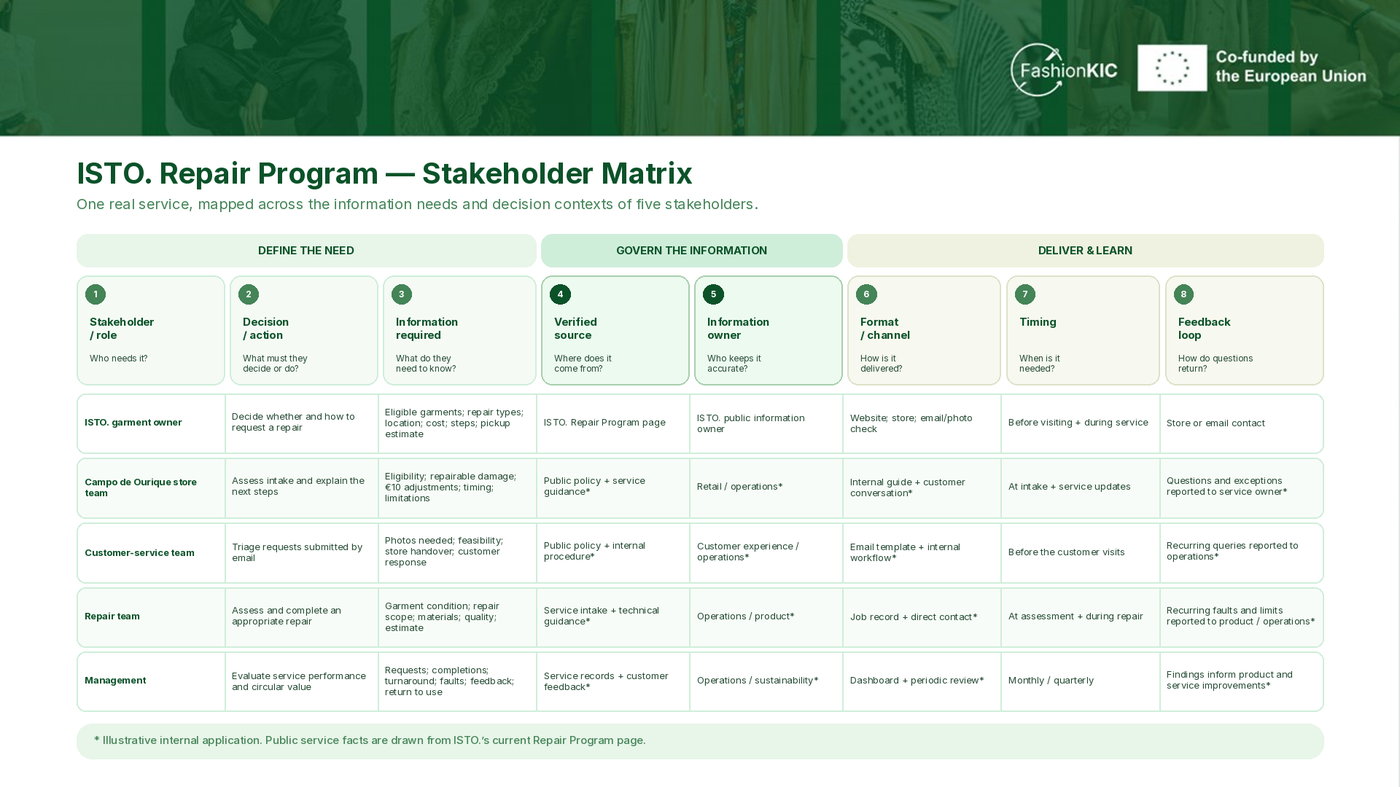
Figure 3.6. Applying the Stakeholder Information and Communication Matrix to the ISTO. Repair Program. The example maps how information about one repair service can be organised for different stakeholder roles while maintaining a consistent description of its scope, conditions, and limitations.