Chapter 6 — full chapter
Tool — Recovery Route Map
Use this map as an application tool for the strategies introduced in Chapter 1. Select one textile product and record six assessment factors: condition, fibre composition, construction, trims, dyes and finishes, and available recovery infrastructure. Then compare the feasible routes, starting with the highest-value option that the available evidence and partners can support.
The objective is to turn circular principles into a justified operational decision. Record why each option was accepted or rejected, the partner and preparation required, expected output quality, destination and any information gaps. A route is credible only when technical suitability, logistics, economics and market demand align (Boorsma et al., 2022; Huygens et al., 2023).
For an SME pilot, record the volume and frequency of returns, storage needs, transport distance, preparation steps, partner capacity, rejection rate, process yield and verified destination of each output. Review the results after every batch so that design requirements, customer information and partner agreements can be improved using evidence rather than collection totals.
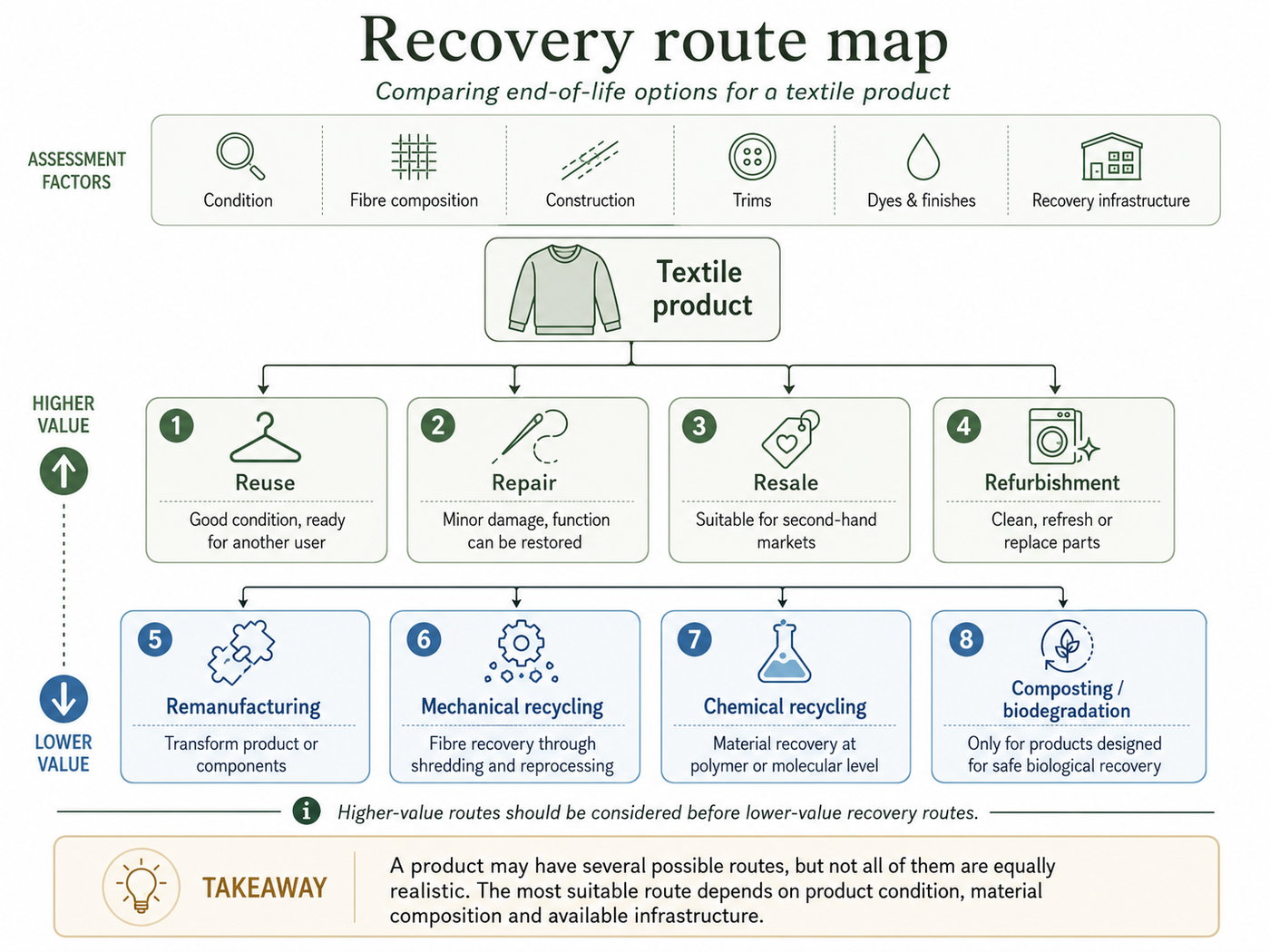
Figure 6.3. Recovery route map — comparing end-of-life options for one product by condition, composition and available infrastructure. Credit: FashionKIC, Recovery Route Map, 2026.