Chapter 6 — full chapter
6.2.6 Textile waste logistics
Textile waste logistics refers to how textile waste is stored, transported, grouped, and delivered to the right partner. This is especially important for SMEs, because small volumes can be difficult to process economically.
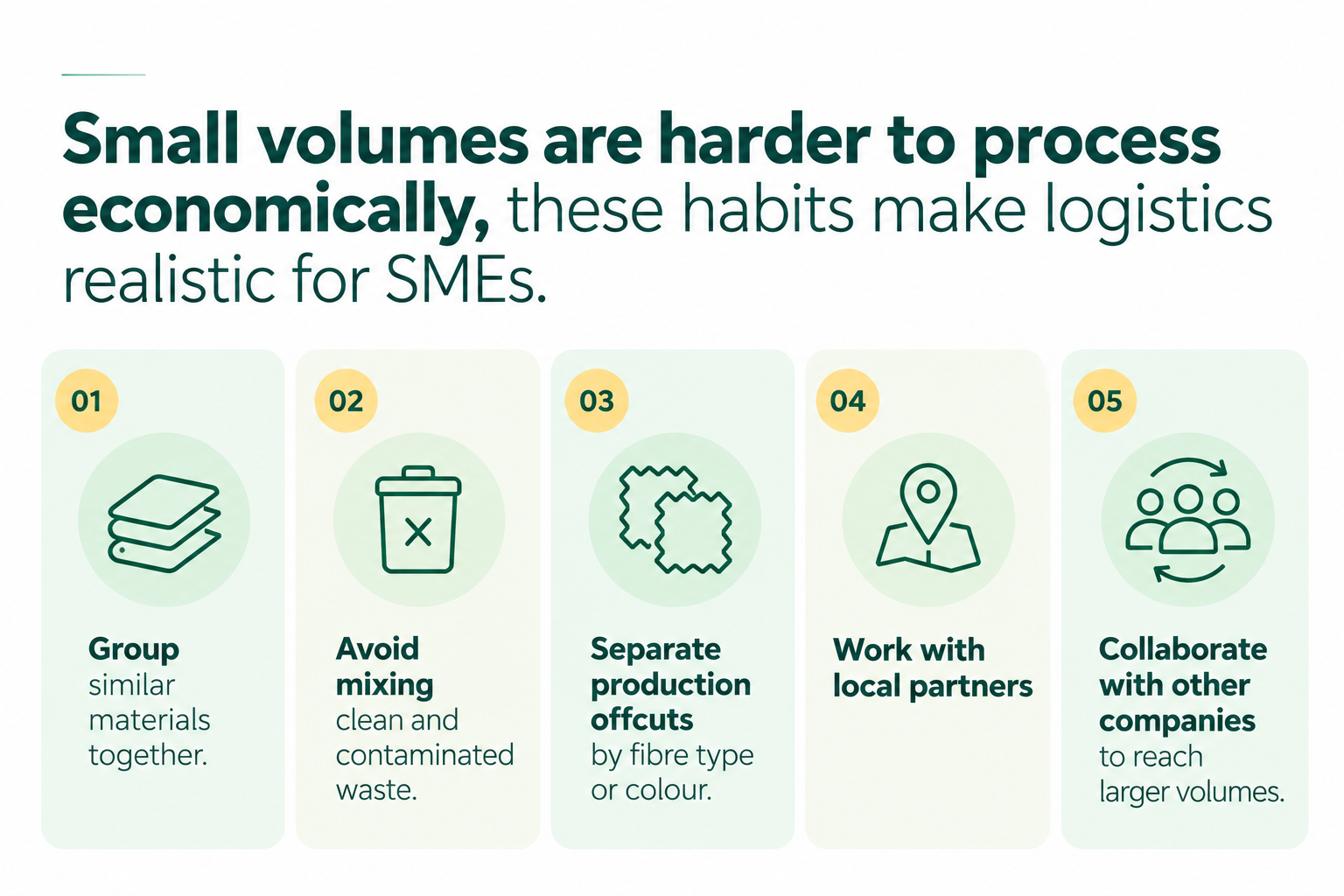
To make logistics more realistic, SMEs may need to:
- group similar materials together
- avoid mixing clean and contaminated waste
- separate production offcuts by fibre type or colour
- work with local partners
- collaborate with other companies to reach larger volumes