Chapter 6 — full chapter
6.2.2 Reverse logistics
Reverse logistics manages the movement of products and materials back through the fashion value chain after they leave a manufacturer, retailer or user. It includes customer returns, unsold stock, production surplus and textiles collected after use. Collection captures these streams; reverse logistics determines how they are transported, consolidated, assessed and directed towards resale, repair, reuse, recycling or other treatment.
These routes depend on the item’s condition and origin. An unworn customer return may be restocked, a damaged garment may be repaired, and used clothing may need sorting before a suitable destination can be identified. Keeping information about where items came from, what they contain and how they were handled helps preserve their value. It also allows organisations to plan transport and sorting around the volumes collected. The number of items taken back is therefore a measure of collection, not evidence that those items have been recovered (Colombo et al., 2025).
Reverse logistics can be challenging because it requires organisation, storage, transport and clear responsibilities. Before launching a take-back scheme, companies need to understand what will happen to the collected products.
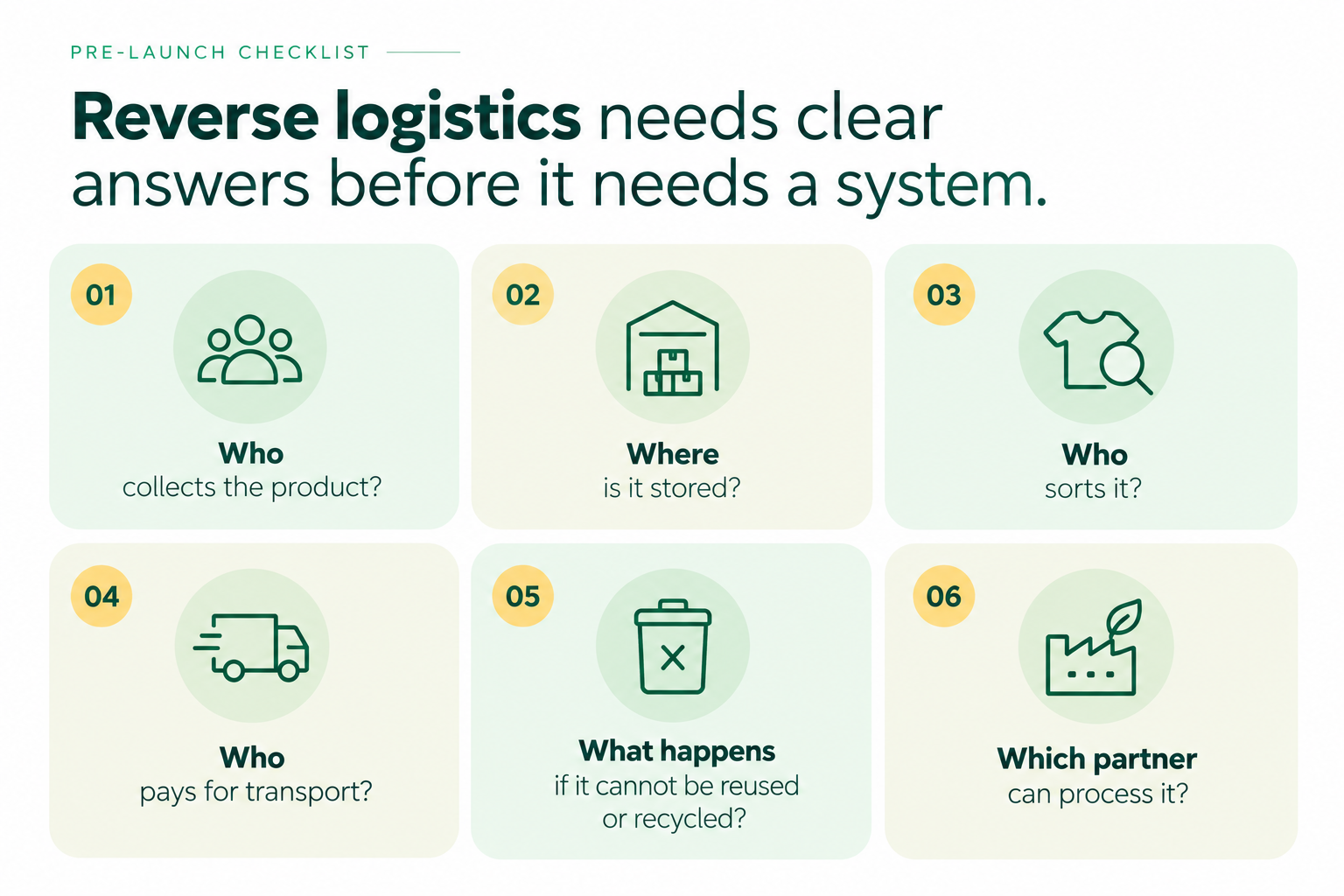
Figure 6.3. Reverse logistics checklist for planning textile take-back and recovery systems, covering collection, storage, sorting, transport and processing responsibilities. Credit: FashionKIC, Reverse Logistics Checklist, 2026
Useful questions include:
- Who collects the product?
- Where is it stored?
- Who sorts it?
- Who pays for transport?
- What happens if the product cannot be reused or recycled?
- Which partner can process it?
Before launch, assign responsibility for every answer and test the route with a small batch. Record transit time, handling cost, rejection reasons and verified destinations so the system can be improved before volumes increase.
← PreviousNext: 6.2.3 Case study: Reverse Resources Platform →